

Riding the Surge: A Review of 94 Approved FSMPs in China – Is Domestic Production Outshining Imports?
Socrates once said, “Those most likely to succeed are not necessarily the most talented, but those who excel at seizing opportunities and forging ahead.” In the venture capital sector, VCs with a keen “nose” for opportunity can often anticipate market trends and be the first to secure successful exits.Foods for Special Medical PurposesIn the blue ocean of the market, there is a group of people who have seized the wave.
Orange Bureau’s analysis reveals that in recent years, China’s market for foods for special medical purposes (FSMP) has seen undercurrents of significant change, drawing attentionVCs in Early-Stage ProjectsevenIndividual InvestorsAlready placed bets in this field.
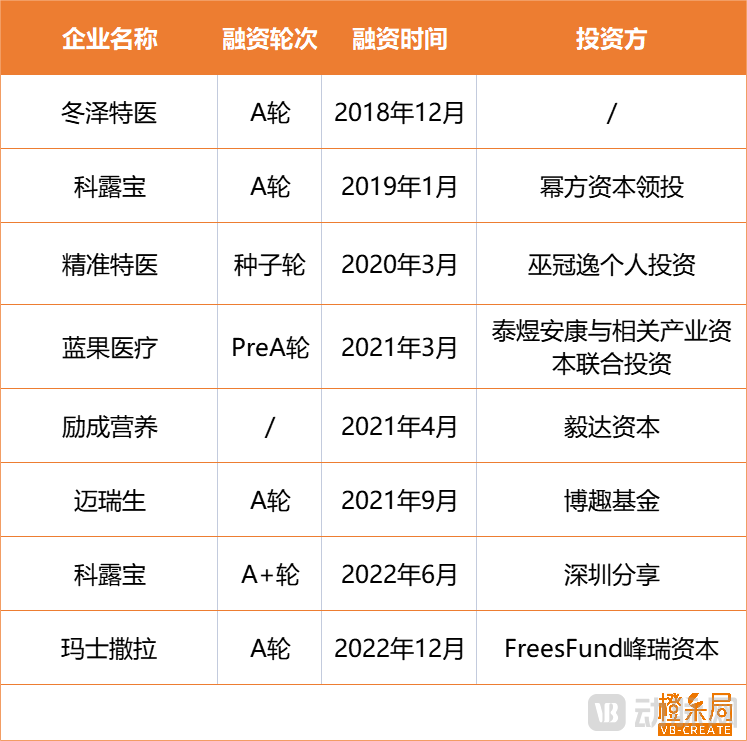
Financing Events in China’s FSMP Sector Over the Past Five Years (Compiled by VCBeat Orange Bureau, as of February 8, 2023)
What potential does China’s market for foods for special medical purposes (FSMP) hold that has drawn the attention of venture capital firms? In what direction is this sector currently evolving? Let us examine this from the perspective of approved94 Foods for Special Medical Purposes(See the full list at the end of the article.) Let’s take a closer look.
I. Most approved FSMPs are domestically produced, with pharmaceutical and food companies each accounting for half
To gain a clear understanding of the current status of foods for special medical purposes (FSMP) in China, we can start by examining the “origins” of the 94 approved FSMP products—EnterpriseDepart.
1. Over 60% of Approved FSMPs Are from China
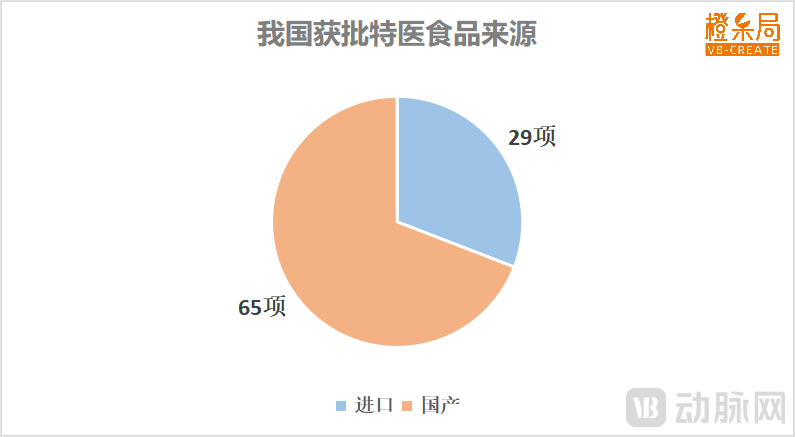 Sources of FSMP Approved in China
“FSMP” is the abbreviation for “Foods for Special Medical Purposes.” Since the United States first defined medical foods (which are equivalent to FSMPs in the U.S.) in 1988, the market has been steadily expanding. According to a research report by Transparency Market Research, the global market size for FSMPs increased from RMB 58.3 billion in 2014 to RMB 81.48 billion in 2020, and byThe market size is expected to reach $33 billion by 2030.。
China’s special medical purpose formula (FSMP) industry started relatively late, appearing somewhat inferior compared to many European and American countries where nutritional awareness awakened earlier. According to data from iiMedia Research, the market size of FSMP in China was approximately RMB 7.7 billion in 2020, accounting for less than 5% of the global FSMP market. However, in terms of compound annual growth rate (CAGR), China’s FSMP market achieved a remarkable CAGR of 31% from 2016 to 2020.
In terms of the review process, the approval of imported foods for special medical purposes is more complex—Clinical trials must be re-conducted, and approval will only be granted upon compliance with China’s drug and food standards.This has given domestically produced foods for special medical purposes (FSMP) a first-mover advantage. According to statistics, among the 94 FSMP products approved in China, those manufactured domestically account for65 Models, imported foods include29 Models, Quantity of Domestically Produced FoodAccounting for over 60%。
It is evident that the development of domestically produced foods for special medical purposes (FSMP) in China is gaining significant momentum. As an increasing number of Chinese enterprises focus on and invest in the research and development of FSMP, more compliant products are becoming available on the market.
2. In 2016, China’s FSMP market witnessed a “startup boom”

Background and Founding Year of Companies with Approved FSMP Products in China
These 94 FSMP products originate from38 Domestic and Overseas Companies(Branches of Nestlé, Abbott, Mead Johnson, and other companies in various regions are counted as part of their headquarters.) Most overseas enterprises approved in China were established earlier and enjoy high brand recognition, while startups have yet to enter the Chinese market.
Most enterprises in China were established after 2000, with a pronounced surge observed in 2016, when seven companies were founded. This explosive growth may be attributed to three major factors:
First, the standardization of policies related to foods for special medical purposes.
Regulations related to foods for special medical purposes began to be gradually improved around 2016. In 2015, the revised Food Safety Law of the People's Republic of China was passed,China’s FSMPs have only recently shed the drug registration regulatory model and been granted the status of “food.”, and stipulates that foods for special medical purposes (FSMP) must be registered with the food and drug regulatory authority under the State Council. This policy has significantly shortened the cycle from research and development to market launch for FSMP, bolstering the confidence of many companies that were previously “on the sidelines” to enter the market.
In 2016, the government centrally issued6 Laws and Regulations, establishing a framework for FSMPs covering registration, production, distribution, and promotion, thereby regulating their development. Since then, the development of FSMPs in China has gradually moved onto the right track.
Second, the optimization of the market’s entrepreneurial environment.
In 2016, China ushered in a wave of entrepreneurship. According to statistics from the National Development and Reform Commission, by the end of 2015, the total number of angel investment and venture capital firms in China approached3,000 companies, the amount of capital under management exceeded1 trillion yuan, China became second only to the United StatesThe Second Largest Hub for Venture Capital Investment. In addition, the state has introduced subsidy policies related to entrepreneurship to encourage business startups. With support from both the government and the market, China witnessed a “startup boom” in 2016, and many manufacturers of foods for special medical purposes (FSMP) were established during this period, riding on this favorable momentum.
Third, national health awareness is beginning to take shape.
In 2016, the State Council released"Outline of the 'Healthy China' Planning Program", calling on the public to prioritize health issues. Through extensive science popularization and educational campaigns, people’s health awareness has gradually improved, leading them to recognize that nutritional products can help enhance their health status. Meanwhile, there has been a shift in both consumer attitudes and willingness to purchase nutritional products—Nutritional Foods Transition from High-End Consumer Goods and Gifts to Essential Dietary Supplements. According to statistics from iiMedia Research, China's health supplement sales reached RMB 144.6 billion in 2016, a year-on-year increase of 12.8%.
In summary, the confluence of favorable timing, advantageous conditions, and strong public support—driven by policy incentives, a surge in entrepreneurial enthusiasm, and heightened public health awareness—sparked the boom in the establishment of foods for special medical purpose (FSMP) companies in 2016.
3. Pharmaceutical and food companies share equal prominence in the FSMP market
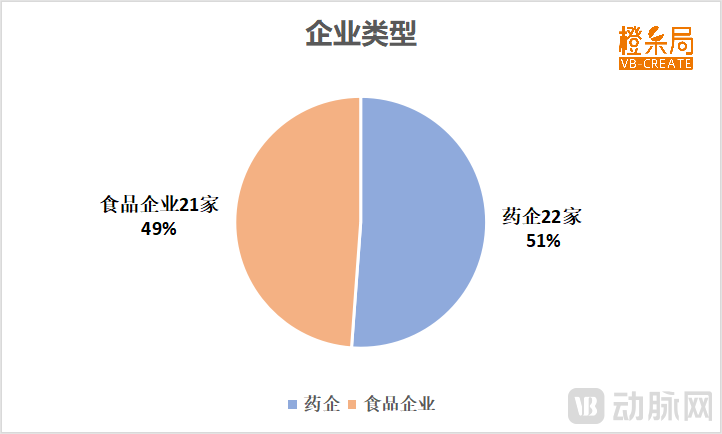 Types of FSMP Manufacturers
From the perspective of enterprise types, the market for foods for special medical purposes is primarily dominated by pharmaceutical companies and food companies, with these two types of enterprises accounting for nearlyEach accounts for half.(FSMP manufacturers are classified as food enterprises). However, pharmaceutical companies and food enterprises adopt slightly different approaches when entering the FSMP sector.
For food enterprises, the greatest challenge in developing foods for special dietary uses lies in researching the clinical efficacy of foods for special medical purposes and navigating the registration and approval process.
Foods for Special Medical Purposes (FSMPs) must meet the medical needs of specific patient populations, imposing stringent requirements on nutritional formulation and necessitating guidance from professionals with medical expertise. Furthermore, in terms of regulatory approval, FSMPs are required to undergo application and registration, clinical trials, and submission of clinical trial reports, among other procedures, placing them at a disadvantage compared to pharmaceutical companies.
On the pharmaceutical company side, while these firms are well-versed in processes such as regulatory registration and clinical trials, venturing into the food industry presents a steep learning curve, as the two sectors are vastly different.
Since foods for special medical purposes (FSMPs) are, ultimately, still food products, their sensory attributes—color, aroma, and taste—must be taken into account. In contrast, pharmaceuticals prioritize therapeutic efficacy, and most drug products do not need to consider palatability.
Secondly, pharmaceutical sales channels are relatively mature. However, foods for special medical purposes (FSMP) are different; without physician guidance, many consumers do not proactively purchase FSMP. Therefore, if pharmaceutical companies equate food product development with generic drug development and treat their sales strategies as equivalent to those for prescription drugs, the outcomes are inevitably suboptimal.
Additionally, pharmaceutical production lines cannot be shared with food manufacturing; therefore, pharmaceutical companies developing and producing foods for special medical purposes (FSMP) must reconfigure their production lines, leading to increased costs.
In summary, both pharmaceutical and food companies encounter challenges in regulatory approval, formula R&D, and sales channels when venturing into the specialized medical food sector through cross-industry expansion. Meanwhile, each party possesses distinct advantages. If these complementary strengths can be effectively integrated, the development of China’s specialized medical food industry will accelerate significantly.
II. Special Infant Formula Opens the Door to China’s FSMP Market, with Stable Annual Approval Numbers
From the perspective of product types, foods for special medical purposes (FSMP) can be mainly divided into two categories: infant formula for special medical purposes and formula foods for special medical purposes. These can be further subdivided into more than ten types based on criteria such as target population, symptoms, and whether they provide complete nutrition.
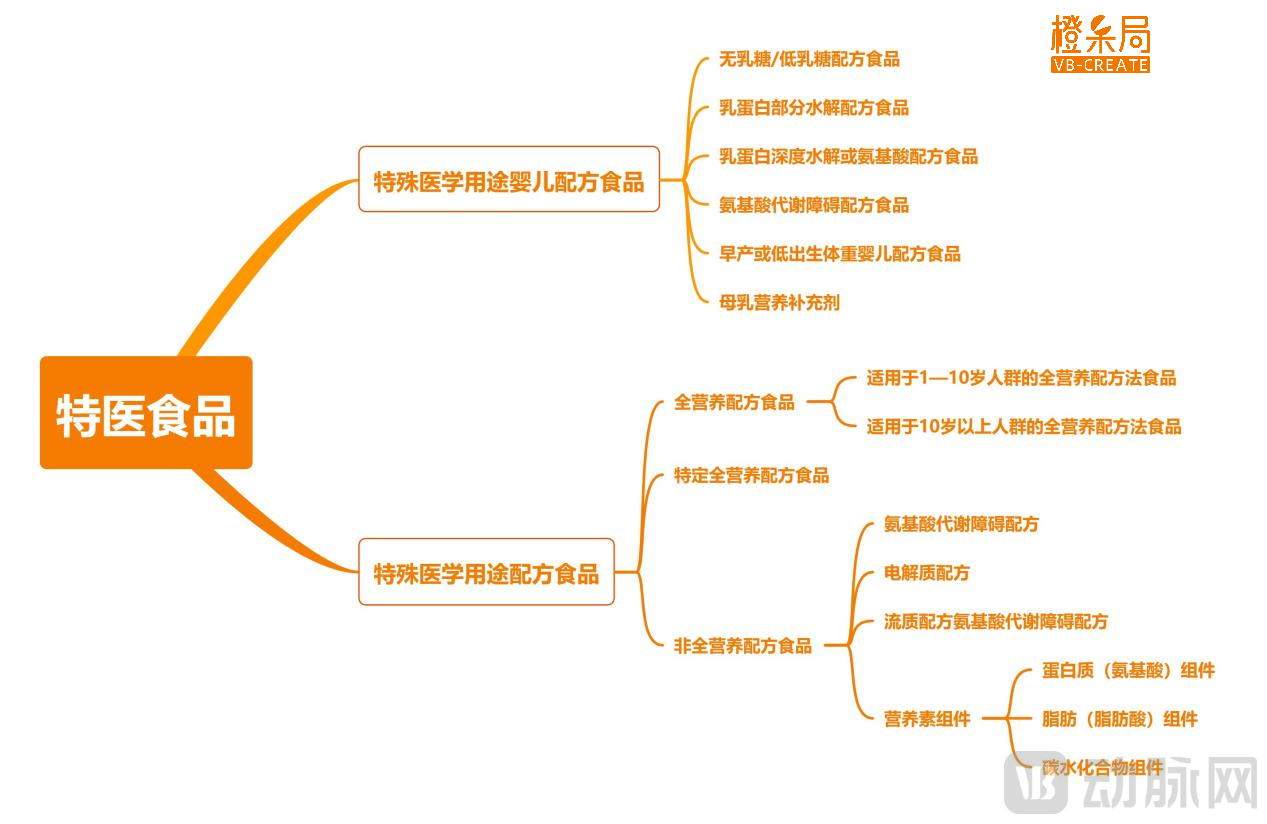 Types of Foods for Special Medical Purposes
(Note: The 13 common types of disease-specific nutritional formulas are: ① Diabetes; ② Respiratory diseases; ③ Renal diseases; ④ Tumors/Cancer; ⑤ Liver diseases; ⑥ Sarcopenia; ⑦ Inflammatory bowel disease; ⑧ Trauma, infection, surgery, and other stress conditions; ⑨ Food protein allergy; ⑩ Refractory epilepsy; ⑪ Gastrointestinal malabsorption and pancreatitis; ⑫ Fatty acid metabolism disorders; ⑬ Obesity and bariatric surgery.)
1. In terms of population proportion, there are more products targeting infants and toddlers.
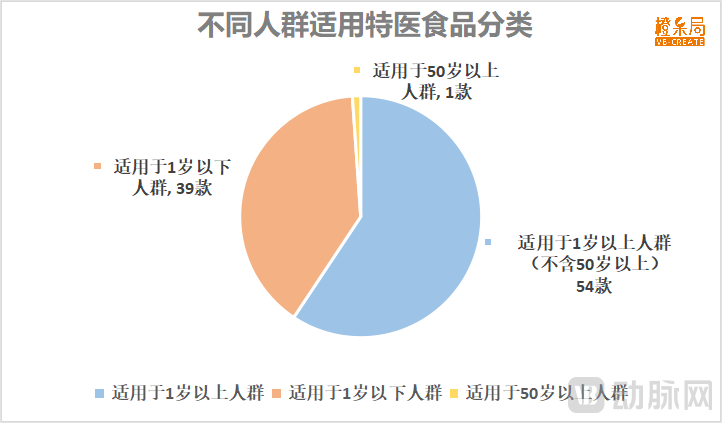 Classification of Target Populations for Foods for Special Medical Purposes
Although, in terms of quantity, applicable toPopulation Aged 1 Year and Olderof FSMP productsGreater Quantity, but when calculated by population proportion,0–12 Months of Ageinfant and young child FSMP products are significantlyHigher proportion. This is sufficient to demonstrate that China’s FSMP sector places significant emphasis on the infant and young child market.
As nutritional awareness continues to rise, the younger generation has begun to embrace “scientific parenting,” setting higher standards and personalized requirements for infant and toddler nutrition, and demonstrating a willingness to pay for their children’s health. This consumer demographic and their evolving demands have further spurred the emergence of specialized medical foods for infants and young children.
However, by comparison, medical foods specifically formulated for the population aged 50 and above are currently scarce. Among the 94 products, onlyItem 1The product is targeted at individuals aged 50 and above.
Although,This does not mean that this is the only FSMP suitable for the elderly,Because many FSMPs approved for individuals aged over 1 year or over 18 years are also suitable for the elderly. However, given the unique physiological characteristics of older adults,"We indeed need more medical foods specifically designed for the elderly population."
According to data released by the National Health Commission in June 2022, China’s population aged 60 and above reached 267 million by the end of 2021, accounting for 18.9% of the total population. Driven by this substantial market demand, foods for special medical purposes (FSMP) tailored to the elderly are poised to become a new growth opportunity in the future.
2. The number of approvals has remained stable at around 15 per year
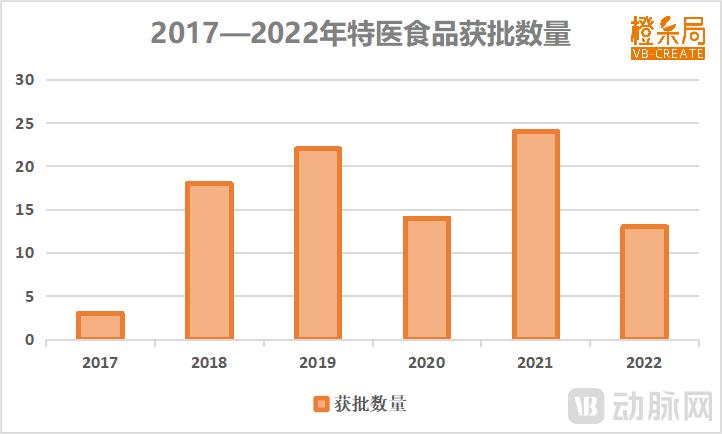
Number of FSMP Approvals by Year
Since the approval of the first special medical purpose food in 2017, the number of such products in China has experienced explosive growth, with an average annual approval rate ofMore than 15 items. Slight declines were observed in 2020 and 2022, likely due to the impact of the pandemic. However, the number rebounded rapidly in 2021, reaching a historical high of 24 items. This indicates that the FSMP (Foods for Special Medical Purpose) sector recovered swiftly from force majeure events, with expanding market demand.
3. FSMP for infants started strong but lost momentum; the first formula for specific complete nutritional needs was approved in 2022
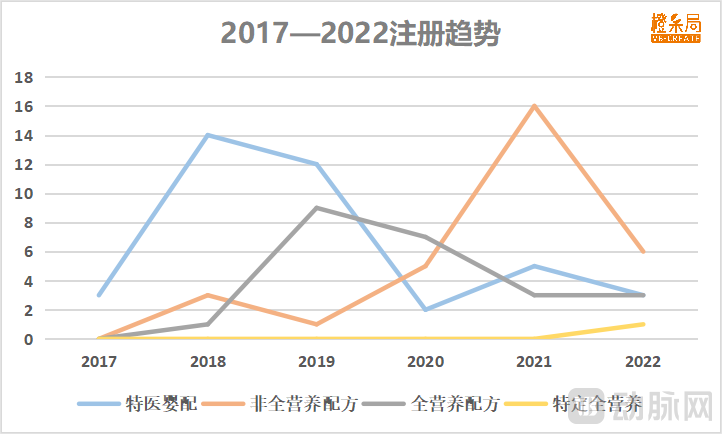
Historical Trends in the Registration of Foods for Special Medical Purposes
Broadly speaking, foods for special medical purposes (FSMP) can be mainly classified intoFSMP for infants, non-complete nutritional formulas, complete nutritional formulas, disease-specific complete nutritional formulasFour categories. Among them, FSMP for infants and young children is the easiest to understand, primarily referring to special dietary foods for infants and young children. Non-nutritionally complete formulas, nutritionally complete formulas, and disease-specific nutritionally complete formulas are mainly differentiated by their functional indications.
As the name suggests,Non-Complete Nutritional Formula FoodsRefers to foods for special medical purposes that can meet part of the nutritional needs of the target population and are not suitable as the sole source of nutrition.Complete Nutritional Formula FoodsRefers to foods for special medical purposes that can serve as the sole source of nutrition to meet the nutritional needs of the target population. Additionally,Specific Complete Nutritional FormulaCompared with complete nutritional formulas, the target population is limited to patients with specific diseases and those in special medical conditions.
From the registration trends of various types of foods for special medical purposes over the years,Foods for Special Medical Purposes (FSMP) for InfantsRegarded as the "pioneer" of China's foods for special medical purposes (FSMP), yet it exhibits"Open High, Close Low"trend. In recent years, special medical purpose infant formula has not been as popular as it was in 2018 and 2019, with attention shifting to the population aged one year and older. Complete nutritional formula foods and non-complete nutritional foods have remained lukewarm, maintaining a relatively stable state.
It is worth noting that, inThe First Disease-Specific Formula Food for Special Medical Purposes Emerged in 2022, filling a long-standing gap in China’s FSMP sector, diversifying the range of FSMP products, and undoubtedly marking a significant milestone in the history of FSMP registration.
III. The outlook for online channels of foods for special medical purposes (FSMP) is positive, yet they still face the challenge of “difficult hospital access.”
In terms of sales, foods for special medical purposes (FSMPs) differ from other nutritional products. The purchasing process for FSMPs is more complex, requiring patients to undergo clinical consultation at a hospital and obtain a clinical diagnosis from licensed physicians or clinical dietitians before purchase can be made; individual patients are not permitted to purchase FSMPs on their own.This means that clinical consultation is an indispensable part of the use of foods for special medical purposes.
However,Internet HospitalThe emergence of this trend has also driven the “internetization” of the use and purchase of Foods for Special Medical Purposes (FSMP). Taking JD.com as an example, JD Health currently integrates medical service capabilities such as the JD Health Internet Hospital and JD Family Doctor, providing consumers with health education, pre-purchase guidance from professional nutritionists, and 24/7 online consultation services with authoritative experts and physicians. Furthermore, JD has established an online medical service system featuring “family doctors + specialists,” enabling it to deliver targeted and personalized FSMP services to patients.
Such changes have turned the “crisis” in the FSMP sector into an “opportunity.” According to statistics from JD.com’s big data, after FSMPs began to be sold online, both the average number of purchases per person and the average spending per transaction increased.
Of course,A significant proportion of foods for special medical purposes (FSMPs) still need to be distributed through hospitals.For preoperative and postoperative nutritional interventions, it is more convenient and reliable for clinicians to directly prescribe foods for special medical purposes (FSMPs) through hospitals than to rely on online consultations, both in terms of the speed of patient access and the depth of understanding of the patient’s physical condition.
It is precisely for this reason that the hospital listing of foods for special medical purposes (FSMPs) remains a topic of significant industry concern. As mentioned above, although FSMPs have therapeutic effects, they ultimately fall under the category of food. Therefore, unless the specialized dietary foods are independently developed by the hospital’s nutrition department, it remains difficult for those developed by other enterprises to gain access for sale within hospitals.
Overall, China's foods for special medical purposes are poised to usher in a new phase of development, making it urgent to break throughR&D, Registration, Manufacturing, Regulation, Distributionthe supply chain, forming a closed-loop circulation system for sustainable development;Industry Regulation, Simplified Hospital Access Processes, and Patient Nutrition EducationAll are indispensable.

Partial List of Approved Foods for Special Medical Purposes
Image source: Special Food Information Inquiry Platform of the State Administration for Market Regulation; compiled by VCBeat Orange Bureau. Data cutoff date: February 8, 2023.
[The complete list can be obtained by replying “Approved FSMP List” to the VCBeat Chengguo Bureau WeChat official account.]