U.S. Healthcare Seed Funding Surge: What Are VCs Betting On?

Posterity Health
Male Fertility Service Provider
By the end of 2022, in the social media circles of healthcare venture capitalists, we could always see numerous posts with similar messaging, broadly conveying that“After three years, I can finally travel abroad.”, and they will also deliberately include a photo of an airport or a picture of a passport that hasn’t been opened in a long time.
This is because, at this time, the Health Code was officially retired in China, and entry-exit policies were subsequently relaxed. This finally provided healthcare venture capitalists, who had been constrained for nearly three years, with a legitimate reason to explore overseas markets. According to observations by VCBeat, these healthcare investors are primarily focusing on destinations such as the United States, Indonesia, Israel, and the United Kingdom.But the largest share is still in the United States.
So, what has become of the U.S. healthcare market after a three-year hiatus? Judging solely by the data, the picture is far from encouraging. Particularly in 2022, the U.S. healthcare market remained mired in prolonged gloom, driven by the global pandemic, the Russia-Ukraine conflict, rising commodity and energy costs, and the bursting of the biotech bubble.
According to data, in the first half of 2022,The Nasdaq Biotechnology Index has fallen 25.81%, returning to its 2019 levels.In the primary market, total financing in the U.S. biotechnology sector reached nearly $18 billion in the first half of 2022; when examined by more granular time periods,In the second quarter, U.S. biotech primary market financing totaled only $6 billion, representing a more than 50% decline from the previous quarter and a significant year-on-year drop.
This means that both companies and venture capital (VC) firms had a difficult time in 2022. From the corporate perspective, fundraising became increasingly challenging, while operations faced significant pressure due to the pandemic and declining consumer spending power. Data show that in the first half of 2022, the net profit margin of the U.S. biotechnology industry was 2.4%, with revenue decreasing by 2.34% year-on-year and net profit margin dropping by 13.94% year-on-year.
As companies struggle, venture capitalists (VCs), as “co-founders,” are naturally facing tough times as well. It is reported that in 2022,The cooling IPO market has made it difficult for certain projects to exit on time upon fund maturity, forcing venture capital firms to either commit to longer horizons and additional capital to support portfolio companies’ growth or to sell assets at a loss to cut their losses in a timely manner.
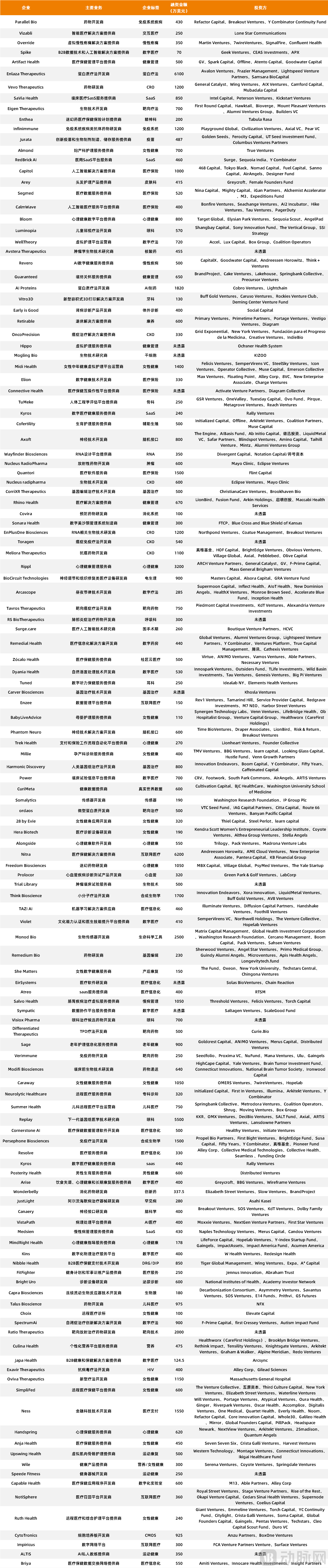
However, everything has two sides.During the market downturn, risk-taking and highly exploratory U.S. healthcare VCs have spotted new opportunities, beginning to focus their attention on the early-stage market.According to statistics from the VCBeat database, there were 532 financing rounds in the U.S. healthcare market prior to Series A in 2022, accounting for 35.7% of the total.Among these, there were 213 seed-round financing deals, with the total amount approaching $30 billion, reaching a historic high in both the number of financing events and the total capital raised.
So, what kinds of seed-stage projects are U.S. healthcare venture capitalists actually investing in? Or, within the healthcare industry, what types of innovative narratives are they anticipating? With these questions in mind, VCBeat analyzed 213 U.S. healthcare startups that completed seed financing in 2022, summarized several trends shaping the future development of the healthcare industry, and identified healthcare innovation pathways replicable in the Chinese market.
Screening for “True Innovation” Technologies in Cutting-Edge, High-Demand Sectors
At the heart of the healthcare industry lies the treatment of disease; therefore, the primary aim of innovation is to focus on unmet clinical needs. For the United States, cancer remains an ever-present and unavoidable challenge.
According to a report by the U.S. Centers for Disease Control and Prevention (CDC), cancer mortality in the United States has declined by nearly 27% over the past two decades. However, the American Cancer Society believes that this downward trend will gradually weaken in the future, primarily due to a significant rise in the incidence of breast, prostate, and uterine corpus cancers in recent years. It is estimated that in 2023, there will be 1.96 million new diagnoses of invasive cancer in the United States, a slight increase from 1.92 million in the previous year, equivalent to approximately 5,370 cases per day. Behind these figures lie substantial demand and innovative opportunities within the oncology market.
Entrepreneurs entering the healthcare industry have clearly recognized this trend. Among the 213 U.S. healthcare startups that completed seed financing in 2022, 71 were oncology-related, primarily focusing on screening and treatment. In the area of screening, startups are increasingly leveraging innovative technologies to further improve screening accuracy and implementing targeted strategies for specific oncology segments.
In terms of treatment, startups are primarily focusing on drug development, leveraging gene editing and optimized targeted technologies to address the typical challenges faced by oncology therapeutics: delivery efficiency, safety, and efficacy. Take Ratio Therapeutics as an example; its Trillium™ Targeted Scaffold combines pharmacokinetic modulation with best-in-class chelation technology to create proprietary small-molecule targeted agents designed to attack a broad range of cancer targets. Recently, the company announced the completion of a $20 million Series A+ financing round.
Beyond focusing on the drugs themselves, startups are also addressing the precision and convenience of cancer care. Take Valar Labs as an example: leveraging AI-driven computer vision and digital pathology, it analyzes individual patient characteristics and provides oncologists with clear, actionable insights to support decision-making, thereby improving cancer care management and related clinical decisions.
Beyond oncology, we have also observed numerous cutting-edge innovative technologies among 213 startups, such as cell and gene therapy, brain science, synthetic biology, and radiopharmaceuticals. In particular, U.S. healthcare entrepreneurs appear to have more ideas in the fields of brain science and synthetic biology.
Let’s start with brain science. Its core logic relies on brain-computer interface (BCI) technology to treat neurological disorders or to achieve precise control for orthopedic applications. Taking Axoft as an example, its implants mimic surrounding soft tissues by using soft, flexible polymer materials. This approach minimizes patient tissue damage while maintaining the proper function of high-density electrodes that can be chronically implanted in the central nervous system, thereby enabling precise communication with a larger number of neurons.
As another type of enterprise in the neurotechnology field, Phantom Neuro has created a brain-computer interface system capable of providing realistic control over robotic orthopedic technologies, such as prosthetics and exoskeletons. Its solution includes low-risk implantable sensors, artificial intelligence, and supporting software. Reportedly, this solution not only offers superior control over existing and next-generation orthopedic technologies but also has the potential to evolve into a platform that enables realistic control of nearly any wireless-compatible device.
Having discussed brain science, we now turn our attention to synthetic biology. As a biotechnology platform, it has attracted startups that see broad application prospects in new drug development, cell engineering, and high-end biomanufacturing. Take Persephone Biosciences as an example: the company leverages synthetic biology and companion diagnostics to develop precision immunotherapies, thereby exploring the complex interactions between the microbiome and the immune system.
Overall, U.S. healthcare entrepreneurs have consistently pursued hot sectors, which presents both opportunities and challenges. On one hand, being at the forefront of industry trends makes it easier to attract attention and even secure financing. On the other hand, as the industry bubble gradually subsides, companies that fail to build resilience in their early stages—specifically, those whose core technologies lack sufficient innovation and rapid commercialization—are likely to be eliminated.
Continuously Exploring the Field of Internet Healthcare
Although the U.S. healthcare industry has consistently pursued innovation and breakthroughs, investment in the medical sector declined for an extended period due to factors such as the global financial crisis and strategic adjustments. It was only after the pandemic that Americans regained awareness of the importance of personal health and began to consider how to access better healthcare services in a post-pandemic environment.
Thus, this time, entrepreneurs aim to address Americans’ evolving health needs by redefining internet-based healthcare. Statistics show that among the 213 U.S. healthcare startups that completed seed financing in 2022, 85 were focused on internet-based healthcare. These companies primarily offer personalized solutions tailored to the needs of patients, physicians, and healthcare institutions, with the core objective always being “cost reduction and efficiency improvement.”
From the patient’s perspective, the focus is primarily on leveraging internet technology to deliver comprehensive services spanning consultation, treatment, and rehabilitation. Among 85 startups, 37 are engaged in this sector. A typical representative is HealthMed, which equips the homes of patients with special needs with virtual clinics, providing medication adherence and pharmacotherapy services for those enrolled in Special Needs Basic Care (SNBC) under Medicaid.
Secondly, from the physician’s perspective, the core lies in leveraging internet technology to monitor patient conditions in real time and provide remote guidance. Furthermore, by organizing and analyzing patient data, it offers decision support to physicians. Taking RedBrick AI as an example, it provides web-based annotation tools for CT, MRI, X-ray, and other modalities, along with comprehensive project management and quality control tools, thereby enabling physicians to annotate complex 3D medical images.
Similarly, Connective Health leverages the latest advances in data interoperability to provide patients’ care teams with a comprehensive clinical picture, predictive insights, and care collaboration tools, thereby enabling more holistic care.
Finally, from the perspective of healthcare institutions, the core objective is to leverage internet technologies to strengthen internal hospital management and facilitate the orderly operation of overall business activities. A notable example with significant innovative value is CalmWave, which utilizes data from healthcare organizations to transparently empower leadership in managing staff more effectively, reducing turnover rates, and improving patient outcomes. Furthermore, it receives data from all devices connected to patients and provides customizable views for each clinician: individual patient views, summary views of all patients in a ward, and clustered patient alert (event) views. CalmWave’s “Surgical Health Score” describes each nurse’s workload and well-being based on factors such as alarm volume, response time, patient length of stay, and nurse-to-patient ratios.
In terms of medical services, a typical case is Vizabli, which provides healthcare institutions with interactive touchscreen smart boards and mobile applications. Its core function is to deliver timely and accurate information through interactive demonstrations, significantly enhancing the healthcare experience for caregivers, patients, and their friends and families throughout the entire patient journey.
Since the inception of internet technology’s infiltration into the healthcare sector, the entire industry has undergone continuous disruption. As the cradle of global digital health, the U.S. internet healthcare industry has matured after two decades of consolidation. However, this does not imply that innovation lacks opportunities in this nearly saturated field. Any solution that can demonstrate the core value of “cost reduction and efficiency improvement” at the level of medical service delivery will undoubtedly hold significant value.
Identifying the “Intersection” Between Innovative Technologies and Unmet Clinical Needs
Just as the internet technologies mentioned in the previous paragraph, their influx has injected new vitality into the entire healthcare sector, revealing greater possibilities across multiple application scenarios. However, internet-based healthcare has now entered a phase of stable development. Consequently, new entrepreneurs entering the medical field are pinning their hopes on leveraging cutting-edge technologies to intersect with clinical practice and address real-world clinical challenges.
A typical example is AI. According to statistics, among the 213 U.S. healthcare startups that completed seed financing in 2022, 44 were AI-related, primarily focusing on pharmaceuticals, healthcare services, and payment solutions.
In the pharmaceutical sector, AI technology is primarily applied in the screening of drug targets. Taking Vevo Therapeutics as an example, the company is building the world’s largest in vivo map of how drugs interact with patient cells and training AI models on this data to identify new targets and drugs that other technologies cannot detect. Similarly, AI Proteins has created protein-based therapeutics optimized for specific therapeutic applications, leveraging its AI-driven design and high-throughput drug discovery platform.
At the level of medical services, a typical case is Birch AI, which addresses fundamental issues in healthcare systems through artificial intelligence and natural language processing.
But beyond AI, we are also seeing other innovative technologies being piloted among 213 U.S. healthcare startups.
For example, in the field of nanotechnology, NovaXS Biotech is a therapeutic startup dedicated to enhancing treatment efficacy through advanced drug delivery platforms and innovative nanoparticle-based delivery of CRISPR gene therapies; meanwhile, BCDx leverages nanotechnology to quantify a panel of biomarkers found in patient urine for the diagnosis of bladder cancer and disease staging.
For example, leveraging high-throughput screening technology as its core, OncoPrecision accurately predicts cancer patients’ responses to multiple therapies and modalities within clinically relevant turnaround times, thereby significantly improving patient prognosis.
In addition, there is electrophysiology technology. BioCircuit Technologies has developed non-invasive electrophysiological devices centered on this technology, which can be used to monitor, control, and repair peripheral nerves, thereby enhancing treatment targeting, diagnostic accuracy, and surgical consistency, ultimately improving patient outcomes. Another company, CytoTronics, is designing and developing cell culture plates with embedded high-density electronic systems.
Finally, in the field of optics, Sunflower Rx, developed by JustLight, is an innovative medical device that provides intelligent photobiomodulation (PBM) therapy for Alzheimer’s disease. Its mechanism of action involves delivering near-infrared light at specific wavelengths through the patient’s skull for direct absorption by the brain. Reportedly, this product can automatically adjust the intensity and wavelength of the light based on patients’ clinical data, thereby providing precise and effective treatment. It is poised to become the first FDA-approved safe and effective medical device for Alzheimer’s disease.
Currently, as more cutting-edge innovative technologies gradually mature and clinical needs undergo a profound transformation, healthcare entrepreneurs are eager to replicate the miracles achieved by internet technologies in the medical field. They also seek to identify the intersection between emerging technologies and unresolved clinical scenarios—a space that undoubtedly holds vast market potential. However, much like the early days of the internet, this stage requires individuals who are willing to think critically, experiment, accumulate experience, and persevere.
Focus on "Humanized Healthcare"
Since the pandemic, as people have increasingly prioritized their personal health, “humanized healthcare” has gradually become a focal topic in the U.S. healthcare market. This trend is primarily reflected in the heightened emphasis on mental health and the fulfillment of personalized needs for minority groups, such as women, the elderly, and young children.
According to statistics, among the 213 U.S. healthcare startups that completed seed financing in 2022, 16 were related to mental health, with their core focus on leveraging digital therapeutics to provide personalized psychological treatment services for different populations. Based on differences in target populations, treatment modalities, and service types, VCBeat has categorized these 16 companies into three major types: emotional management platforms, psychosocial platforms, and psychiatric/psychological platforms.
Among all categories, emotion management platforms have the broadest target audience, primarily offering self-service solutions to help users self-regulate and manage their emotions. Taking Sound Mind as an example, it mainly uses music to soothe users’ moods, thereby achieving therapeutic effects for psychological disorders. Reportedly, the therapeutic music primarily consists of piano melodies, bird songs, flowing water, and other white noise elements, which stimulate electrical signals to promote neural relaxation.
The psychosocial platform primarily focuses on psychological counseling services, typically delivered via a SaaS model. Taking Wellin5 as an example, it connects users with psychologists through real-time chat, helping them address negative emotions anytime and anywhere. Lastly, the psychiatric and psychological platform is usually operated by specialized psychiatric hospitals through online consultation models. A typical representative enterprise in this sector is Arise, which core service involves providing patients with private physician services. Physicians identify the traumatic triggers underlying patients’ eating disorders through communication, and then help resolve their psychological distress by building trust and offering counseling.
According to statistics, among the 213 U.S. healthcare startups that completed seed financing in 2022, 15 were focused on women’s health. These startups are either leveraging innovative technologies to propose new solutions for female-specific diseases or making in-depth strategic investments in female fertility services.
Taking Loki Therapeutics as an example, the company’s primary development project is AWAKE-LM-TT, which leverages the childhood tetanus toxoid (TT) vaccine to elicit immune responses against solid tumors and metastases that present tetanus antigens. Reportedly, the company is currently advancing AWAKE-LM-TT as a potential treatment for metastatic pancreatic cancer and metastatic ovarian cancer.
In the realm of fertility services, entrepreneurs are engaging in more profound strategic thinking. BabyLiveAdvice is a virtual maternal remote care provider that primarily offers women virtual, real-time maternity education courses. SimpliFed’s core business is providing virtual breastfeeding support, while also addressing the issue of maternal sleep deprivation. Cofertility mainly offers two programs for women: Keep and Split. Through the Keep program, women can pay to freeze their eggs and store them entirely for their own future use, whereas the Split program allows women to freeze their eggs for free by donating half of them to families struggling with infertility.
Certainly, male fertility issues are also gaining attention. Posterity Health is the only digital male fertility clinic, offering a comprehensive suite of technology-enabled services for male fertility, including at-home diagnostics, virtual visits, and in-person consultations focused on improving male reproductive health. The company aims to educate, engage, and treat men, shifting the burden of conception away from women and creating a unified experience for couples.
In fact, in China, many investment institutions have already set their sights on the field of elderly health, but the United States has clearly taken a step ahead. According to statistics, among the 213 U.S. healthcare startups that completed seed financing in 2022, eight were related to this sector, with their core focus primarily on enabling older adults to access high-quality medical services more conveniently.
Sage is an operating system that replaces traditional nurse call systems, connecting seniors and caregivers through integrated hardware and software solutions; Guaranteed enhances end-of-life care for the elderly by combining home-based treatment with cutting-edge technology; Retirable is a holistic retirement solutions provider, offering products and services spanning retirement investing, planning, and spending to address the health needs of older adults.
In fact, although these patient-centered medical services are not currently in the mainstream spotlight, they undoubtedly meet significant market demand. It simply requires entrepreneurs to adopt a more patient-centric perspective and continuously expand personalized healthcare offerings that better align with practical needs.
In Closing
In January 2020, at the J.P. Morgan Healthcare Conference in San Francisco, Bob Nelson, a prominent figure from the renowned venture capital firm ARCH Venture Partners, made his famous declaration: “All technology companies will become healthcare companies in the future.”
Soon, market feedback concretely validated this point. In the post-pandemic era, life sciences startups in the United States have surged like a tidal wave. Companies focused on innovative drugs, liquid biopsy, gene therapy, gene editing, stem cells, synthetic biology, and AI-driven drug discovery have emerged in a Cambrian explosion-like proliferation. Many of these startups secured substantial funding shortly after their establishment and saw their valuations rise rapidly, creating an appearance of widespread prosperity.
However, starting in 2022, the U.S. biotech bubble began to burst on a large scale. The secondary market cooled down, and the primary market subsequently slumped. Yet, from the perspective of venture capital (VC) firms, this downturn presented an opportunity. They began to focus more heavily on early-stage medical projects—sometimes even those with only an idea or a patent—and many VCs were willing to place bets on such ventures. Nevertheless, the core investment logic remains unchanged: the technology must be sufficiently innovative, underpinned by substantial application scenarios, and the founding team must be exceptionally strong.
Appendix: Seed-Stage Financing in the U.S. Healthcare Market in 2022