

Axonics Disrupts Medtronic’s Dominance with Breakthrough SNM Technology for Urinary Incontinence

Axonics
Developer of Novel Implantable Neuromodulation Technologies
Recently, Axonics, Inc., a U.S. medical technology company, received FDA approval for its fourth-generation rechargeable sacral neuromodulation (SNM) system, the Axonics R20™ Neurostimulator. The R20™ is expected to enter the commercialization phase in the United States in the first quarter of 2023 and is already being sold in Canada.
Since its inception in 2012, Axonics has been deeply committed to addressing the needs of patients with incontinence. The company’s Sacral Neuromodulation (SNM) system provides a long-lasting and safe clinical treatment option for patients suffering from overactive bladder or fecal incontinence. Additionally, Axonics’ urethral bulking hydrogel, Bulkamid, helps alleviate symptoms in women with stress urinary incontinence (SUI).
Thanks to the aforementioned technologies and products,Axonics ranked first in the Financial Times’ “500 Fastest-Growing Companies in the Americas 2022” and fourth on Deloitte’s 2022 Technology Fast 500 list.
Previously, Karen Noblett, Chief Medical Officer at Axonics, stated, “Many adults in North America suffer from urinary incontinence and struggle to find long-term symptom relief. A few years ago, Axonics launched the world’s first long-lasting, miniaturized, full-body MRI-compatible rechargeable SNM system, marking a new milestone for the entire SNM field. Now, this fully maintenance-free SNM system will further expand the application of SNM therapy and significantly improve the quality of life for adults suffering from bladder and bowel dysfunction.”
Raymond Cohen, Co-Founder of Axonics, has over 40 years of experience in the medical device industry and serves on the boards of directors of several private and public companies in the sector.
From 2010 to 2012, he served as Chief Executive Officer of Vessix Vascular, a U.S. medical device company that was acquired by Boston Scientific in November 2012. Previously, Mr. Cohen also served as Chairman and Chief Executive Officer of Cardiac Science, a publicly traded company, for nearly a decade. The company was ranked as the fourth fastest-growing company in the United States in 2004.
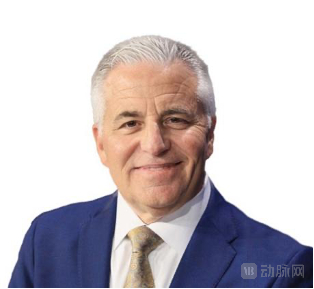
Raymond Cohen. Image source: Axonics official website
After obtaining the patent license for the miniature “neurostimulator” in 2013, Axonics began to explore breakthroughs in its applications. Cohen stated:“We examined all clinical applications of neuromodulation and ultimately found that focusing on overactive bladder is the true path forward.”
This treatment involves implanting a small device subcutaneously in the upper buttock, which delivers mild electrical pulses to the sacral nerves to restore normal communication between the brain and the bladder, thereby sparing patients the embarrassment of urinary leakage.
Outstanding performance demonstrates that Axonics has chosen the right track.
In 2018, Axonics conducted its initial public offering (IPO), raising $120 million. As of January 16, 2023, the company’s market capitalization reached $3.214 billion.
In 2022, Axonics’ total net revenue was approximately $273.6 million, representing a year-over-year increase of 52%. Of this,The SNM system, serving as the company’s primary growth driver, generated approximately $222 million in revenue, representing a 41% year-over-year increase. Currently, Axonics ranks among the top companies on multiple corporate lists and holds a 25% share of this market.
It is estimated that 33 million adults in the United States alone suffer from overactive bladder, with another 40 million adults severely affected by fecal incontinence. However, according to Cohen, this vast and largely untapped market was monopolized solely by Medtronic prior to the emergence of Axonics.
“No medical device market in the world has ever generated more than $5 billion in revenue relying on a single company. This is truly a unicorn scenario,” said Cohen. Travis Steed, an analyst at Bank of America, believes that it was the highly competitive products and excellent customer service that enabled the company to rapidly capture over 20% of the market share within three quarters of its product launch.
Medtronic has also launched better, more user-friendly products, butSteed believes that Axonics is still poised to expand its market share to 50% within three to five years.
Steed stated that Axonics’ success could attract other companies to enter the field, and he believes that although the market is large enough, new entrants are unlikely to hinder Axonics’ growth.
Cohen stated, “Tens of millions of people in the United States suffer from various forms of urinary incontinence; this market is enormous. Even with increased competition, it poses no concern, as the field offers boundless opportunities.” In 2021, 92% of Axonics’ total revenue was derived from the United States, with the remainder coming from international markets.
Meanwhile, health plans in the United States and Europe already cover implantable devices for treating urinary and fecal incontinence, making Axonics’ therapy reimbursable under most insurance plans, including Medicare, the U.S. federal health insurance program for individuals aged 65 and older and those with disabilities.
Axonics reported gross margins of 60.2% in 2020 and 64.2% in 2021. Furthermore, Axonics has further enhanced its R&D and manufacturing capabilities through acquisitions over the past two years and increased its direct-to-consumer advertising efforts, all of which have contributed to higher gross margins.
In February 2021, Axonics announced the acquisition of the UK medical device company Contura and its flagship product, Bulkamid, for $235 million.
Bulkamid is a urethral bulking agent used to treat stress urinary incontinence (SUI) in women, clinically proven to maintain its volumizing properties and efficacy for many years. In 2019, the product’s international market sales were approximately USD 12 million.
Recently, Axonics launched a television advertising campaign aimed at reducing the stigma surrounding female urinary incontinence while raising public awareness of new technologies for its treatment. Cohen stated that tens of millions of women “do not realize that urinary leakage is abnormal for any reason,” believing it to be merely a consequence of natural aging.
Cohen argues that Axonics has not done enough to help this patient population, as fewer than 3% of women worldwide suffering from stress urinary incontinence (SUI) have been treated with its devices or technology. Of course, the current limited market penetration also means that Axonics has substantial room for future growth.
Sacral Neuromodulation (SNM) systems can treat urgency urinary incontinence (UUI) and urinary frequency. These conditions, collectively referred to as overactive bladder (OAB), along with fecal incontinence (FI) and non-obstructive urinary retention (UR), are indications for SNM. Compared with other third-line therapies such as BOTOX injections and percutaneous tibial nerve stimulation (PTNS), SNM offers therapeutic advantages in terms of efficacy and patient compliance.
However, through market research conducted at its inception, the Axonics team identified that the primary technical challenge of Sacral Neuromodulation (SNM) lay in battery longevity. At that time, the average battery life of neurostimulators was only four years, necessitating frequent surgical replacements for patients. Furthermore, if a patient required an MRI scan, the device had to be surgically removed.
In response, Axonics has separately developed non-rechargeable and rechargeable SNM systems.
Recharge-Free SNM Axonics F15TMThe system utilizes NexCore technology to deliver the longest battery life. The rechargeable SNM product portfolio includes: a pulse generator implanted subcutaneously in the upper buttock, a rechargeable battery, a handheld remote control for activating and adjusting the stimulator and checking battery status, and a wireless charger that attaches to the skin.
First, the battery of this rechargeable SNM system has an ultra-long expected lifespan. The first two generations of devices both reduced charging requirements. The third-generation rechargeable device, Axonics R15, was launched in 2021.TMRecharging is required only once a month, with each charge taking approximately one hour, and the battery needs to be replaced roughly every 15 years—basically consistent with the battery life of Medtronic’s InterStim X™, launched in 2022, under low-energy settings.
Clinical studies have shown that 91% of patients considered the device’s charging method to be relatively simple, and 94% of patients found the charging frequency and battery life acceptable.
Axonics’ latest fourth-generation rechargeable product, the Axonics R20™ Neurostimulator, boasts a battery life exceeding 20 years, reducing the frequency with which patients need to recharge their implanted device to once every 6 to 10 months.
Secondly, Axonics has optimized the overall user experience of its Sacral Neuromodulation (SNM) system. The device is MRI-compatible, allowing patients to undergo full-body imaging without device removal. Additionally, Axonics has simplified the recharge-free external remote controller typical of SNM devices, enabling one-handed operation and eliminating the need for pairing.
Compared with existing similar products, the Axonics device also features a smaller form factor. Medtronic InterStim XTMmeasuring 44 mm × 51 mm, while the Axonics third-generation device measures 23 mm × 45 mm. This makes the device more suitable for individuals with a low body mass index.
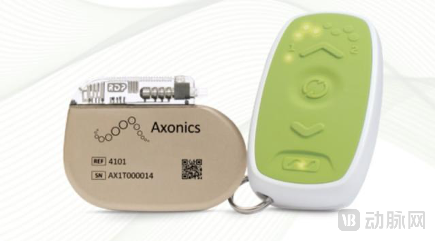
Axonics R15™ Image source: Axonics
Axonics’ SNM System Ensures Safety and Efficacy While Overcoming Technical Challenges
In 2020, Andrea Pezzella et al. published the two-year results of the ARTISAN-SNM study on the use of the Axonics rechargeable sacral neuromodulation system for treating urgency urinary incontinence in *Neurourology and Urodynamics*.
Over the two-year treatment period, all 129 participants experienced an overall 82% reduction in UUI symptoms, with daily UUI episodes decreasing from a baseline of 5.6±0.3 to 1.0±0.2 (p<0.0001). Daily UUI episode frequency was reduced by more than 75% in 82% of participants, by more than 90% in 54% of participants, and 37% achieved complete urinary continence.
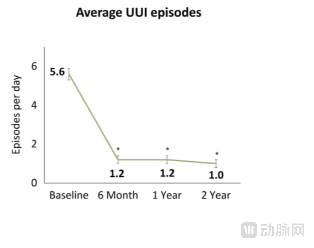
Change in Daily Frequency of UUI During 2 Years of Treatment. Source: ARTISAN-SNM Two-Year Study
The study also reported reductions in overall urgency events (urinary leakage), as well as UF and FI symptoms. The mean number of daily urgency episodes decreased from 10.6 ± 0.3 to 6.9 ± 0.3 after two years (p < 0.0001); UF significantly decreased from 11.6 ± 0.3 to 8.5 ± 0.2 per day (p < 0.0001); and FI decreased from 9.3 ± 0.5 to 3.7 ± 0.5 (p < 0.001).
Over a two-year period, no unexpected or serious device- or procedure-related adverse events occurred. Only 9% of participants initially experienced difficulty tolerating the device’s stimulation; however, these issues were subsequently resolved by adjusting the stimulation amplitude via the remote control or by repositioning the device.
Through the SNM system, the health-related quality of life (HRQL) of trial participants improved by an average of 36.1 points (an improvement of 10 points is considered clinically significant). Furthermore, 94% of participants reported being “satisfied” with the therapy, and 93% expressed willingness to undergo the treatment again.
Sacral Neuromodulation Primarily Targets Overactive Bladder, an Embarrassing and Prevalent Condition.
Overactive Bladder (OAB) is a combination of multiple symptoms that may lead to more frequent urination, uncontrollable urination, incontinence, and frequent nighttime urination.
The risk of developing overactive bladder (OAB) increases with age. Conditions such as benign prostatic hyperplasia, diabetes, and Parkinson’s disease can elevate the risk of OAB. Additionally, many individuals with cognitive decline, such as those with Alzheimer’s disease, may experience overactive bladder.
The most common current therapies for overactive bladder (OAB) include behavioral therapy, pharmacotherapy, neuromodulation, and botulinum toxin injections. Although pharmacotherapy is one of the most mainstream treatment modalities, existing medications on the market may not alleviate all symptoms in some patients and can potentially cause adverse reactions.
Neuromodulation, including sacral neuromodulation (SNM) and percutaneous tibial nerve stimulation (PTNS), is a treatment option for patients with refractory overactive bladder (OAB), offering advantages such as adjustability and durability. A study by Medtronic demonstrated that SNM significantly outperforms pharmacological therapy in both efficacy and improvement of patients’ quality of life.
According to the Bladder and Bowel Community, SNM is now used to treat 200,000 patients worldwide. Axonics’ prospectus indicates that in Europe and the United States, 43% of patients opting for OAB treatment are suitable for the SNM system, with a potential patient population of 3 million.
According to Strategic Market Research, the global sacral nerve stimulation market is projected to reach a value of $10.7 billion by 2030.
Therefore, in addition to Axonics and Medtronic, companies such as Nuvectra, Laborie, and Valencia Technologies have also entered the field, seeking to capture a share of the highly promising market for neuromodulation therapy in the treatment of overactive bladder (OAB).

Neuromodulation Therapy Products | Graphic by VCBeat
There is still significant room for development in the field of neuromodulation therapy for overactive bladder (OAB) in China.
The first large-scale epidemiological survey on overactive bladder (OAB) in China revealed that the overall prevalence among individuals aged 18 and above is currently 5.9%, while the prevalence among those aged 40 and above is approximately 10%. A study published in BMC Geriatrics indicated that elderly Asian women have the highest prevalence of urinary incontinence (45.1%).
In 2016, the urocontinence team led by Professor Wang Jianye, Chief Expert of the Department of Urology at Beijing Hospital, and Professor Zhang Yaoguang, Leader of the Urocontinence Specialty, implemented the National Key R&D Program titled “Research and Development of Implantable Spinal Cord Stimulators,” aiming to promote the domestic production of sacral nerve stimulators and reduce treatment costs for relevant patients.
In March 2022, the wearable percutaneous tibial nerve stimulator developed by Hangzhou Chengnuo Medical Technology Co., Ltd. entered the special approval process for Class II innovative medical devices.
In July 2022, PINS Medical, China’s leading company in neuromodulation, launched the country’s first rechargeable implantable sacral nerve stimulator.
Zhejiang Medapace Medical Technology Co., Ltd., founded in 2018, has also filed patents related to sacral nerve stimulation. In July 2022, Medapace secured an A+ round of financing amounting to tens of millions of RMB, with Wutongshu Capital as the investor. Among the investors in the company’s Series A round, we also noted the name of PINS Medical.
In September 2022, Professor Zhang Yaoguang’s team at Beijing Hospital performed China’s first implantation of a rechargeable sacral nerve stimulation system, with the procedure demonstrated via live broadcast during the “CUA 20th National Urology Conference on Urinary Control.”
It is evident that, given such a high prevalence, there are currently not many mature, domestically produced alternatives available, and the relevant implantation procedures have not yet been widely adopted.
Insufficient patient awareness of overactive bladder (OAB) is one of the reasons for the near absence of this market.
A joint survey conducted by the Urological Branch of the Chinese Medical Association and Astellas Pharma (China) Co., Ltd. indicates that only 53% of patients in China have ever sought hospital treatment for overactive bladder (OAB), and among those untreated, only 26% expressed willingness to consult a physician.
As previously mentioned, many women experiencing urinary incontinence believe it is merely a sign of natural aging. Therefore, Axonics launched television advertising campaigns to educate the public about new treatment options. Meanwhile, Medtronic leveraged social media to raise awareness of alternatives to pharmacological therapies.
We believe that, on the basis of expanded insurance coverage and heightened awareness among overactive bladder (OAB) patients regarding neuromodulation therapy, domestically produced neurostimulators for this condition will also accelerate their development. After all, as Cohen stated, “this field offers limitless opportunities.”