

Oula Health Files IPO Prospectus: Modern Maternity Care Provider Scales Amid Pandemic Challenges

Oula Health
Integrated Prenatal Care Service Provider

Collaborative Fund
Venture Capital Fund

Female Founders Fund
Venture Capital Firm

Metrodora Ventures
Early-Stage Venture Capital Firms

8VC
Venture Capital Firm

Alumni Ventures
Venture Capital Firms
In the spring of 2020, the COVID-19 pandemic led to widespread economic stagnation and stay-at-home lockdowns, prompting many media outlets and experts to speculate that this might result in a baby boom.
A new study shows that the opposite appears to be true: birth rates in many high-income countries declined during the crisis.
Arnstein Aassve, a Professor of Social and Political Sciences at Bocconi University in Italy, and his colleagues examined birth rates in 22 high-income countries, including the United States, from 2016 to early 2021. They found that seven of these countries experienced a statistically significant decline in birth rates during the final months of 2020 and the first few months of 2021, compared with the same periods in previous years.
Due to economic uncertainty, a brief “baby bust” emerged during this period.
At this time, an obstetrics center in Brooklyn, New York, was hesitating. Founded in early 2019, Oula Health found itself in the eye of the COVID-19 storm, with little room for growth.
Yet the seed took root. In late 2020, Oula Health secured $3.2 million in seed funding, propelling the launch of its care platform and in-person services. In early 2021, Oula Health opened its first brick-and-mortar obstetrics center in Brooklyn.
In January 2023, two years after its seed round, Oula Health raised $19.1 million in a Series A financing round. The round was led by 8VC, with participation from Metrodora Ventures, Female Founders Fund, Collaborative Fund, and Alumni Ventures.
Oula Health was not nipped in the bud by the COVID-19 pandemic, and this was not merely a matter of luck.

Oula Health’s Offline Obstetrics Center (Source: Oula Health Official Website)
During the peak of the COVID-19 pandemic, when Oula Health’s first clinic reached full operational capacity within three months, the two founders could hardly have anticipated that their personal family-planning journey would drive the creation and growth of the company.
The first two patients received by the Oula Health Obstetrics Center were none other than its founders, Adrianne Nickerson and Elaine Purcell.
Nixon and Purcell met while working at Deloitte in the United States. Both have extensive professional experience in the healthcare sector. Previously, Nixon worked in the corporate venture capital arm of a large health system, where he collaborated with numerous early-stage digital health companies, and later co-founded Robin Care, a cancer care management company. Purcell previously held positions at Privia Health and CareMore, the latter of which specializes in end-of-life care services.
In 2019, the two women began planning for pregnancy. Filled with anticipation and hope, they turned to their pregnant friends for advice, seeking to learn from their childbirth experiences and find ways to balance work and life. However, they repeatedly heard women describe how isolating pregnancy felt and how unprepared they were for labor and the postpartum period.
After encountering setbacks while trying to conceive, the couple leveraged their experience in the healthcare industry to launch a maternal health service, aiming to create a better experience for themselves and to improve care for all women.
After hundreds of conversations with pregnant women and new mothers, the two founders discovered that expectant mothers often face a binary choice: a highly medicalized approach with obstetricians in hospitals, or “natural childbirth” with midwives at home. Neither option provides the multifaceted, convenient care that women desire. Furthermore, during the nine months of pregnancy, patients typically attend 12 to 14 clinic visits, yet their interactions with the clinical team are limited during the postpartum period, resulting in minimal support.
After months of research and dialogue, the two realized that the answer lay in rebuilding the maternal care process from the ground up. Women need a care team that truly listens to their concerns and prioritizes their health.

Founders Nickerson and Purcell (Source: Oula Health official website)
The startup plan had taken shape, but Nickerson and Purcell ran headlong into the COVID-19 pandemic.
Fortunately, in the months leading up to their fundraising efforts, Nickerson and Purcell met with Lily from the partnership fund and established a collaboration just before New York announced its lockdown.
The 2019 COVID-19 pandemic undoubtedly accelerated the need to establish and operate virtual care services. Although virtual care was part of their strategic roadmap, in light of the pandemic and the evolving trajectory of the healthcare industry, Nickson and Purcell decided to temporarily shelve their previously planned group care programs and in-person events, shifting focus instead to expanding their virtual platform.
The team spent months consulting with expectant mothers, clinicians, and healthcare executives before developing its own application. Through the Oula Health app, expectant mothers can schedule both in-person and virtual appointments throughout their prenatal care and postpartum periods. The Oula Health application helps expectant mothers create prenatal care plans and make critical decisions.
Purcell said, “One thing we realized is that my preferences differ from Nixon’s, and my circumstances differ from Nixon’s. We are considering the mother’s experience.”
Despite the global “baby bust” between 2020 and 2021, the U.S. National Bureau of Economic Research reported that although the U.S. birth rate declined slightly when cities began locking down in early 2020, it rebounded in 2021, resulting in a net increase of 46,000 newborns.
Meanwhile, the maternal care market in New York holds immense potential. More than 120,000 babies are born each year across the city’s five boroughs. Yet over the past 50 years, maternal healthcare has seen little real advancement. Expectant mothers typically face only two options: a highly medicalized approach led by obstetricians in hospitals, or “natural childbirth” at home attended by midwives.
Oula Health integrates obstetric and midwifery care, viewing childbirth as a natural life event and resorting to medical interventions only when necessary. Furthermore, Oula Health provides personalized maternity care plans tailored to each patient’s preferences, delivered through an experienced clinical team, modern clinics, and a telehealth platform.
Personalized Fertility Plan
Oula Health collaborates with expectant mothers to develop personalized birth plans based on their individual circumstances and preferences, either by integrating their chosen private midwife into the care team or by recommending a midwife who aligns with their budget.
Expectant mothers can communicate with their care team through the Oula Health app, make critical decisions in real time, adjust prenatal care plans, and send messages to the team as needed.
Furthermore, dedicated care coordinators on the team will strive to help expectant mothers access any complementary services, such as locating midwives, lactation consultants, nutritional counseling, mental health services, or pelvic floor therapy.
Prenatal Checkups with Full-Process Accompaniment
During pregnancy, Oula Health schedules prenatal checkups for expectant mothers in phases: once a month before 28 weeks of gestation; every two weeks from 28 to 36 weeks; and weekly from 36 weeks until delivery. Prenatal checkups include clinical assessments of both the mother and the baby, necessary blood tests, required ultrasound examinations, and more.
Oula Health also provides virtual nursing classes for expectant mothers, teaching them corresponding knowledge and skills at different stages of childbirth. Expectant mothers can choose to communicate remotely with their care team from home and participate in virtual classes. The virtual nursing courses include birth plan workshops and office hour sessions during the final weeks of pregnancy.
Schneider DeMeireles, Chief Experience Officer at Oula Health, believes it is crucial to empower expectant mothers with the knowledge they need and help them forge their own unique pregnancy journeys.
Natural, Relaxed Childbirth
Prior to delivery, obstetricians or midwives will inform expectant mothers of essential information via telephone. Oula Health provides delivery services at Mt Sinai West and does not offer home birth services.
During the midwifery process, the nursing team will adopt a non-interventionist and non-coercive approach to labor, prioritizing the health and well-being of both the mother and the baby. Mothers are free to choose their preferred relaxation methods, such as listening to music, dancing, or singing.
During labor, obstetricians and midwives also employ methods preferred by the parturient to alleviate the pain associated with childbirth; the choice between epidural anesthesia, nitrous oxide, acupressure, or breathing techniques depends on the parturient’s preferences.
Oula Health strives to ensure direct contact between the mother and her baby, with all routine medical care provided in a manner that does not interfere with their interaction. In the event of a cesarean section, the care team will also minimize the separation between the mother and newborn.
To successfully implement the maternity care plans established by expectant mothers, Oula Health must first address the common practical challenges encountered in clinical care.
The United States has higher maternal mortality rates and neonatal intensive care unit (NICU) admission rates than other developed countries, with a cesarean section rate as high as 30%, far exceeding the World Health Organization’s benchmark of 10%. Compared with women in other high-income countries, women in the United States report the fewest positive experiences in healthcare and are more prone to emotional distress.
Addressing local maternal health challenges, Oula Health seeks to enhance prenatal and delivery care services while reducing costs for expectant mothers.
Medical Insurance Safeguards Childbirth
Researchers at the Urban Institute found that 26.8% of new mothers who obtained prenatal care coverage through Medicaid were uninsured before pregnancy. Furthermore, the study revealed that 21.9% of these individuals lacked health insurance within two to six months after giving birth.
The researchers wrote: “Women who were uninsured both before pregnancy and postpartum indicate that, apart from pregnancy-related coverage, they lack access to public and private insurance.”
To safeguard maternal health and reduce childbirth costs, Oula Health’s obstetrics center accepts all major insurance plans, including Medicaid, which covers more than 40% of newborns in the United States; one-fifth of Oula Health’s patients rely on Medicaid.
Virtual Care and Emotional Support: A Dual Approach
During the COVID-19 pandemic, some expectant mothers were reluctant to engage in additional in-person visits due to fears of contracting the coronavirus. Oula Health addressed this by offering remote health appointments through its online platform. This approach aligns with Oula Health’s consistent strategic direction in healthcare, namely its shift toward virtual care and digital integration.
Oula Health also provides remote patient monitoring and consultations to support maternal mental health. This is particularly important during the late stages of pregnancy and the postpartum period, as Oula Health’s care team uses its app to provide ongoing support to mothers after childbirth.
Increase in Midwives and Postpartum Care
According to the World Health Organization, increasing the number of midwives is one of the most effective ways to reduce maternal mortality, lower rates of preterm birth and cesarean sections, and decrease childcare costs. A study published in The Lancet found that integrating more midwives into healthcare systems could prevent over 80% of maternal and infant deaths.
To provide expectant mothers with a rich experience and effective treatment outcomes, Oula Health’s care team must not only increase the number of necessary midwives but also actively listen to and take seriously patients’ concerns, prioritizing their mental and physical well-being. Additionally, the team provides trauma-informed care, emphasizes the importance of postpartum care, and empowers patients to advocate for themselves.
Oula Health’s care team spends twice as much time with patients as typical obstetricians do. This additional time enables Oula Health to build deeper connections with expectant mothers, which in turn allows for a more comprehensive understanding of their needs and the timely identification of potential issues.
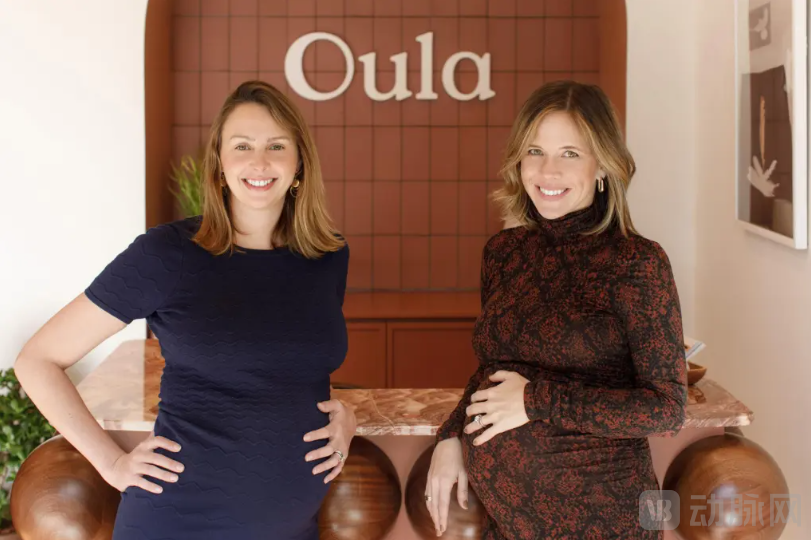
Nixson and Purcell Are Both Pregnant (Source: whcbc.org)
After successfully delivering more than 500 babies, Oula Health’s obstetrics center opened its second branch in Manhattan, serving families from all five boroughs and New Jersey. Within just one year, the number of employees at Oula Health doubled.
In terms of expansion, Oula Health plans to enter six new markets over the next three years. Additionally, Oula Health will expand its virtual services and continue developing digital tools and resources, such as fertility planning checklists, to make it easier for patients to access the information they need.
In May 2021, Oula Health’s obstetrics center partnered with Mount Sinai Hospital to enable expectant mothers to access more hospital resources and specialists while receiving care from the Oula medical team during non-surgical deliveries.
After laying the groundwork, the two founders successfully conceived and gave birth. Oula Health was also smoothly launched, much like their child.