

AITREAT Advances EMMA AI-Powered Massage Robot with Clinical Evaluations at Mayo Clinic and Singapore RCT
Singapore-based robotics company AITREAT to Conduct New Product Evaluation of Its AI-Powered Massage Robot at Mayo Clinic in the United States.
Meanwhile, a randomized controlled trial (RCT) is also planned in Singapore to compare the efficacy of the EMMA massage robot with existing therapies, such as Tuina manipulation techniques used in traditional Chinese medicine, in the treatment of chronic lower back pain.
This randomized controlled trial will be jointly led by the Biomedical and Chinese Medicine Programme at Nanyang Technological University, Singapore (NTU Singapore), and Singapore General Hospital (SGH).
The aforementioned two research projects will utilize AiTreat’s flagship product—the EMMA massage robot. AiTreat is a startup incubated by NTUitive, the innovation and enterprise incubation arm of Nanyang Technological University, Singapore (NTU Singapore).
EMMA aims to alleviate the international shortage of professional massage therapists by assisting them with time-consuming and labor-intensive tasks, thereby enhancing work efficiency and productivity, reducing treatment costs, and delivering consistent, high-quality care to every patient.
Since 2019, the startup has deployed more than 19 EMMA robots across 14 locations in Singapore, China, and the United States—including traditional Chinese medicine clinics, physiotherapy centers, and hospitals—accumulating over 41,500 hours of treatment time.
The new randomized controlled trial proposed by NTU and SGH is related to another earlier multicenter study. This study compared the efficacy of tuina and physical therapy in helping to alleviate chronic lower back pain, conducted at Mayo Clinic in Minnesota, USA, Singapore General Hospital, and Jinan University in Guangzhou, China.
Early multicenter studies employed human manual therapy practitioners rather than robots. These studies were sponsored by THE HEAD Foundation, an international charitable organization that supports quality education and effective healthcare to improve lives in Asia.
How the Proposed Randomized Controlled Trial Will Be Conducted
AITREAT aims to recruit approximately 180 patients for its proposed randomized controlled trial by the end of 2023. If the trial yields positive results, it will pave the way for robotic solutions that integrate traditional Chinese and Western medicine in the treatment of lower back pain, establishing them as part of mainstream soft-tissue pain interventions in healthcare.
Earlier last week, a four-day symposium held at Mayo Clinic featured demonstrations of the EMMA robot, laying the groundwork for proposed research collaborations. Associate Professor Zhong Lidan, Head of the Biomedical and Traditional Chinese Medicine Department at the School of Biological Sciences, Nanyang Technological University, Singapore, also presented a clinical study protocol on the efficacy and safety of robotic tuina massage, followed by discussions among symposium participants.
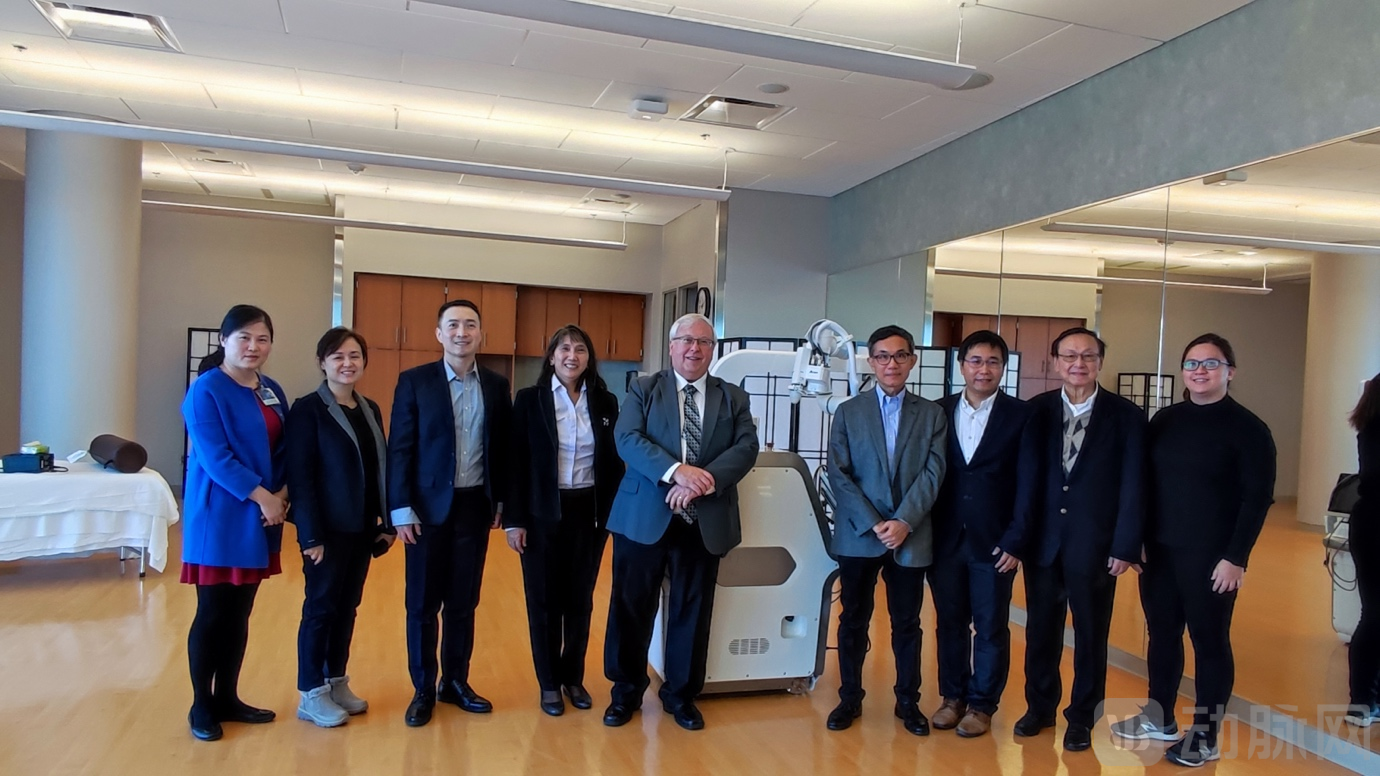 Group Photo of Mayo Clinic Symposium Attendees with the EMMA Robot
Professor Zhong, Co-Investigator of the Proposed Randomized Controlled Trial“The proposed multicenter clinical study will integrate diagnostic concepts for chronic low back pain with TCM syndrome differentiation criteria, namely the analysis and synthesis of clinical symptoms obtained through the four diagnostic methods: inspection, auscultation and olfaction, inquiry, and palpation. It aims to more precisely and individually assess the efficacy and safety of robotic tuina across diverse populations. The study will also explore the feasibility of incorporating robotic tuina into routine clinical practice in Singapore.”
Dr. Bauer, Director of the Program in Integrative Medicine and Health at Mayo ClinicHe stated, “Our multicenter clinical trial on Tuina has generated significant interest among both patients and physicians. However, in the United States, we are facing a shortage of skilled practitioners, and young people are increasingly reluctant to pursue careers in caregiving. Although we have clinically proven massage therapies and substantial market demand, there are insufficient practitioners to meet this demand. The robotic delivery of Tuina and other massage therapies appears inevitable. I am pleased that we can help lead this trend by conducting clinical evaluations of this new technology.”
Professor James T. Tao-Cun, Chairman of the Advisory Committee of The HEAD FoundationIt stated: “As a foundation dedicated to the mission of improving lives, The HEAD Foundation supports the development of healthcare solutions that integrate Eastern and Western medical practices.”
“We are delighted to have the opportunity to support a startup incubated at Nanjing University, whose innovative healthcare products are helping our community alleviate pain and improve health. This is also a natural extension of the multicenter clinical study on tuina therapy that we are sponsoring.”Professor Chan Heng Chee is also the President Emeritus and Founding President of Nanyang Technological University, Singapore.。
Professor Chen Jiaxu, Dean of the School of Traditional Chinese Medicine, Jinan University, GuangzhouIt highlights the innovative application of artificial intelligence and robotics in Traditional Chinese Medicine (TCM): “Tui Na is a fundamental form of TCM therapy, while artificial intelligence represents a powerful new technology. I am delighted to see their integration, which benefits patients suffering from back pain and other musculoskeletal disorders. This will significantly reduce the workload of TCM practitioners, allowing them to focus on diagnosis and more complex aspects of treatment. It also demonstrates that TCM is keeping pace with advancements in modern technology.”
Professor Tay Boon Keng, Honorary Consultant in Plastic Surgery, Singapore General Hospital (SGH)“He stated, ‘More than 80% of adults have experienced back pain, which significantly impairs work productivity. The challenge facing Singapore and other parts of Southeast Asia is the insufficient number of qualified traditional Chinese medicine practitioners and physiotherapists to treat the large patient population. If automated solutions like EMMA are proven safe and effective, they will be highly beneficial to both the healthcare community and our patients.’”
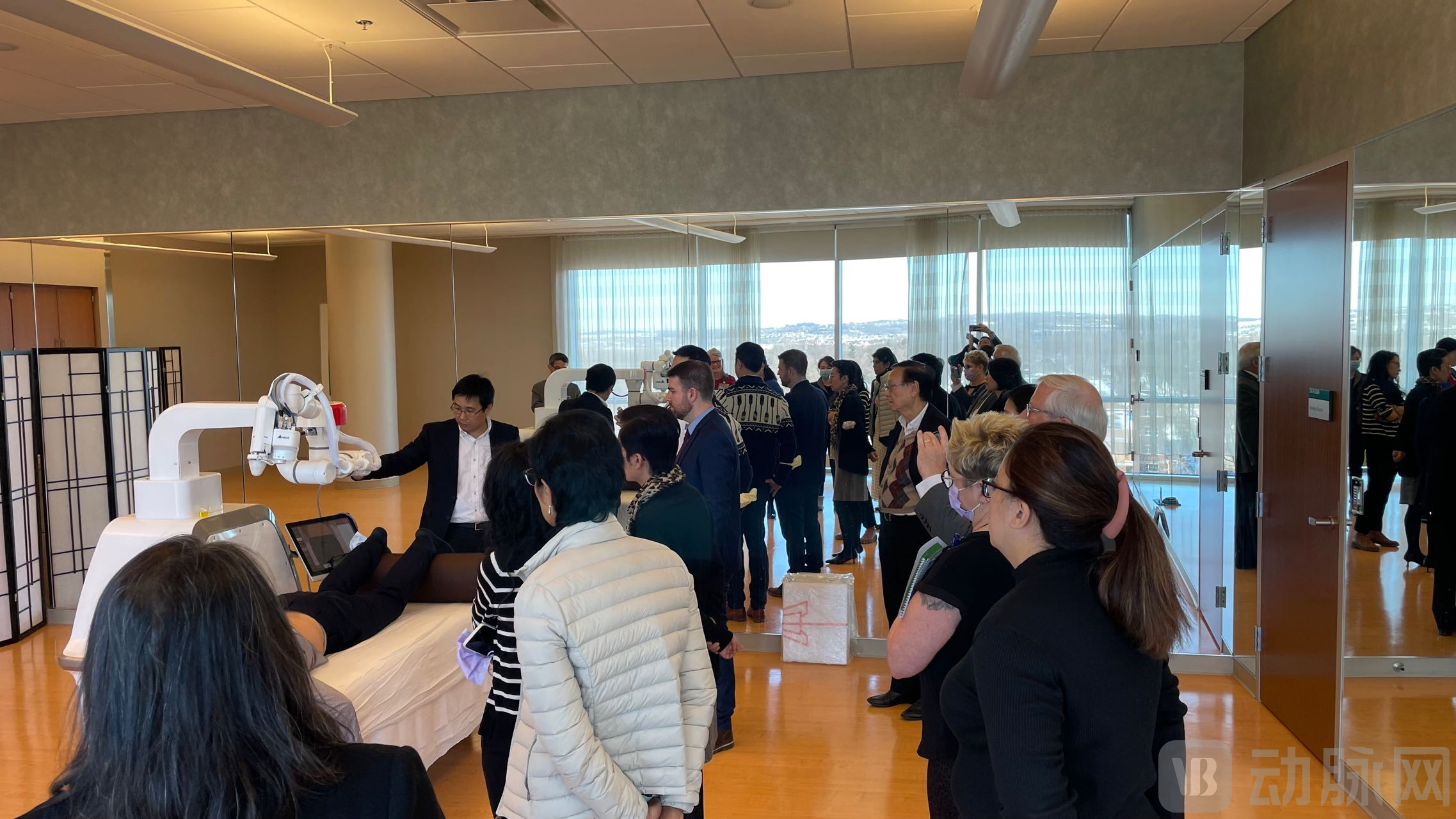 EMMA Massage Robot Demonstrates Capabilities at the Mayo Clinic in the United States
By deploying EMMA robots in different countries for new tests and trials, AITREAT will continuously improve its artificial intelligence algorithms and performance based on clinical evaluation results, aiming to launch the next-generation EMMA robot in Singapore, the United States, and China by 2024.
AITREAT was founded in October 2015 by Dr. Zhang Yizhong, the inaugural alumnus of Nanyang Technological University’s dual-degree program in Biomedical Science and Traditional Chinese Medicine. The startup completed a multi-million-dollar Series A financing round last year and is currently planning to raise Series A+ funding this year.
AITREAT’s investors include the U.S. venture capital firm Brain Robotics Capital (BRC), Flexiv, a leading general-purpose intelligent robotics company, Tasly International Capital, OGAWA, a globally renowned leader in healthcare and massage wellness technology, and MFund.
The HEAD Foundation is an international charitable organization registered with the Commissioner of Charities in Singapore in 2013. Initially established to carry out philanthropic work in the field of education, the organization has since expanded its scope to include healthcare, striving to help improve living standards in Asia, particularly in underdeveloped regions of Southeast Asia. It supports education and healthcare projects aimed at developing social and human capital. By sponsoring policy, teaching, and clinical research, and collaborating with universities, public institutions, and subject-matter experts worldwide, it identifies societal needs and formulates solutions. To raise awareness of livelihood issues, the Foundation also regularly organizes public lectures and seminars to present and discuss challenges and solutions in the fields of education, health, science, culture, and the environment.
Nanyang Technological University, Singapore (NTU Singapore) is a research-intensive public university with 33,000 undergraduate and graduate students across its colleges in engineering, business, science, humanities, arts, social sciences, and its graduate school.
NTU is also home to world-renowned autonomous institutes—the National Institute of Education, the S. Rajaratnam School of International Studies, the Singapore Earth Observatory, and the Singapore Centre for Environmental Life Sciences Engineering—as well as various leading research centres, such as the Nanyang Environment & Water Research Institute (NEWRI) and the Energy Research Institute @ NTU (ERI@N).
Under the vision of Nanjing University’s Smart Campus, NJU leverages the power of digital technologies and technological solutions to support enhanced learning and living experiences, the discovery of new knowledge, and resource sustainability.
As one of the world’s top universities, its main campus is also frequently listed among the most beautiful university campuses globally. The institution is renowned for its commitment to sustainability, with over 95% of its building projects achieving the Green Mark Platinum certification. In addition to its main campus, Nanyang Technological University (NTU) operates a medical campus in Novena, Singapore’s healthcare district.