

ShuDan Medical Files IPO Prospectus Highlighting Breakthrough 40Hz Digital Therapeutic for Brain Anti-Aging
For digital therapeutics, the key to their development lies in whether they can truly deliver benefits to all stakeholders in the healthcare process, particularly patients. In this regard, the availability of evidence-based proof is one of the core elements that establish them as effective therapies. A growing number of digital therapeutics companies in China have recognized this and are beginning to invest substantial efforts in clinical research.
On February 17, digital therapeutics once again demonstrated their value in healthcare—Shudan Medical (Hangzhou Shudan Medical Technology Co., Ltd.) released the results of its exploratory clinical trial,Globally First Confirmation: 40Hz Audiovisual Stimulation Shows Promise in Preventing Alterations in Functional Brain Connectivity Among Healthy Individuals, Enhancing Memory Function and Improving Sleep Quality, Thereby Enabling Prevention and Early Intervention for Cognitive Impairment Disorders Including Mild Cognitive Impairment and Alzheimer’s Disease. This 40Hz brain-protecting eyewear, designed for cerebral anti-aging in healthy individuals, has obtained EU certification and was officially launched in the Chinese market at the end of last year.。
Throughout history, humanity has pursued immortality and eternal youth. However, delaying brain aging has remained a significant challenge. To date, neuroscience has garnered the most Nobel Prizes among fields related to human life sciences, yet the intricate connections between the brain—an organ composed of tens of billions of nerve cells—and the rest of the body have not been fully elucidated. This has resulted in a lack of effective treatments for most neurological disorders to this day.
Taking Alzheimer’s disease as an example, although the pathogenic mechanisms of this central neurodegenerative disorder remain not fully elucidated, various studies have consistently shown that its incidence increases with age, particularly among individuals aged 80 and above, whose incidence rate is significantly higher than that of other age groups. This trend has been corroborated by studies conducted in different regions. Therefore, Alzheimer’s disease is also referred to as senile dementia, and brain aging is considered one of the important contributing factors to its pathogenesis.
Currently, the prevalence of Alzheimer’s disease among individuals aged 65 and above in China is 5.56%, with approximately 10 million patients, ranking first worldwide and accounting for nearly one-third of the global Alzheimer’s patient population. In 2015, the average annual socioeconomic cost per Alzheimer’s patient in China reached RMB 119,269.36, resulting in a total national annual cost of RMB 1.04502 trillion. By 2030, the total annual socioeconomic cost of Alzheimer’s disease in China is projected to exceed RMB 3 trillion, rising to RMB 11.77 trillion by 2050. Furthermore, the substantial psychological burden imposed on family members continues to grow day by day.
Solving Alzheimer’s disease has become a shared aspiration of all humanity.
Regrettably, since 1998, approximately 100 Alzheimer’s disease drugs have entered clinical testing worldwide, yet only a handful have gained regulatory approval. Moreover, these approved medications are indicated for highly restricted patient populations and symptoms, offering primarily symptomatic relief without reversing cognitive impairment or modifying the disease course, resulting in suboptimal real-world efficacy. Currently, no drug capable of improving cognition has successfully passed clinical trials, and it is unlikely that such products will receive regulatory approval in the near term.
Rome Was Not Built in a Day: The Onset of Alzheimer’s Disease Is Not Sudden, as Our Brains Have Already Been Aging Rapidly Prior to This. Years of Research Have Shown a Strong Correlation Between Alzheimer’s Disease and Cognitive Impairment: Patients Typically Progress Through Three Stages—Subjective Cognitive Decline (SCD), Mild Cognitive Impairment (MCI), and Alzheimer’s Disease (AD). It Usually Takes More Than a Decade to Progress from Subjective Cognitive Decline to a Confirmed Diagnosis of Alzheimer’s Disease.
Disease Progression of Alzheimer's Disease
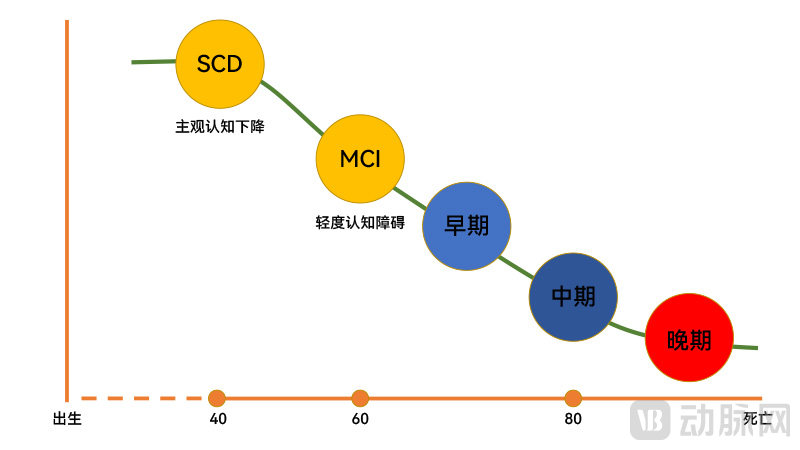
In fact, recent studies have found that the brain ages faster than we imagine. The period between 30 and 50 years of age is an accelerated phase of brain aging, with the incidence of dementia in the 40-50 age group being five times higher than that in the 30-40 age group, making it the period of most rapid accelerated brain aging.
Shudan Medical, in collaboration with domestic neuroscience experts, conducted a real-world study and developed a model based on de-identified data from a large cohort of hundreds of thousands of elderly individuals aged 55 and above (mean age: 70 years) in China. The study revealed that the prevalence of mild cognitive impairment (MCI) in general population screening was as high as 20%. Furthermore, the de-identified 7-year follow-up training dataset indicated that, without intervention, approximately 40% of individuals with normal baseline cognition may progress to MCI within seven years.
“Over 90% of elderly individuals with mild cognitive impairment progress to Alzheimer’s disease within six years, a probability significantly higher than that of lung nodules progressing to lung cancer. This current situation is deeply concerning,” said Liu Ziyu, co-founder of Shudan Medical, in an interview with VCBeat.
Is there a way to deliver non-invasive cognitive stimulation and training to the brain through digital therapeutics that integrate hardware and software for neuromodulation, enabling early intervention at the onset of brain aging, controlling the progression of mild cognitive impairment or early-stage Alzheimer’s disease, delaying aging, and even reversing the disease course? This question became the founding mission of Shudan Medical.
This is no easy feat, even for Shudan Medical’s exceptionally strong founding team. Before establishing Shudan Medical, its founder and CEO, Dr. Fang Cong, was a core co-founder of Yitu Healthcare, where he founded and oversaw its global operations. The core team members also possess relevant backgrounds, making it one of the few teams in the market that integrates multidisciplinary expertise across brain science, medicine, engineering, information technology, and intelligent hardware and software.
After two years of effort, the exploratory research findings from the Joint Clinical Imaging Research Laboratory of the Second Affiliated Hospital of Zhejiang University School of Medicine were recently presented at a symposium hosted by the Radiology Branch of the Zhejiang Neuroscience Society. This study provides the first global evidence demonstrating the safety and stability of long-term 40 Hz audio-visual intervention combined with blue light in healthy subjects, as well as its efficacy in improving sleep quality and brain function.
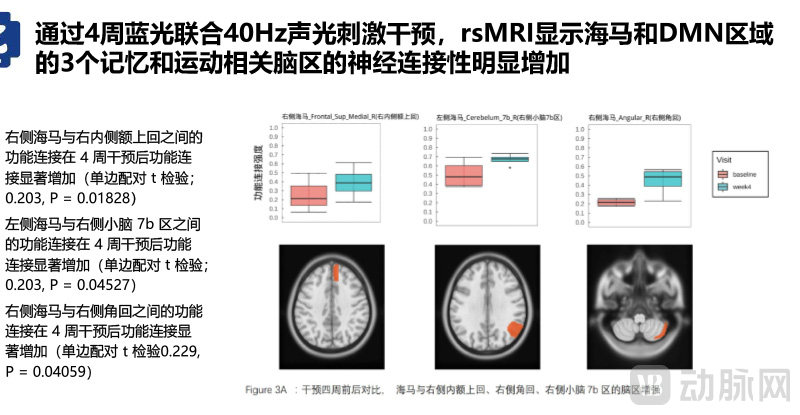
According to the study, participants underwent a 4-week intervention using blue light combined with 40Hz audiovisual stimulation. Comparison of brain imaging before and after the intervention revealed that 40Hz audiovisual stimulation significantly enhanced neural connectivity in three memory- and motor-related brain regions within the hippocampus and the default mode network (DMN) of healthy subjects. The study also found that the increase in connectivity was more pronounced in the left hippocampus and DMN than in the right, which is consistent with the fact that all participants were right-handed, and the left hemisphere is more closely associated with higher-order cognitive functions.
Furthermore, comparison of brain imaging before and after the intervention revealed extensive activation in the frontoparietal executive function regions one hour post-intervention.
Effective connectivity between the hippocampus and the default mode network (DMN) is essential for memory retrieval. Neuroimaging studies of individuals with cognitive impairment have revealed reduced functional connectivity strength between the hippocampus and DMN regions, a finding that has been further corroborated in patients with Alzheimer’s disease.
Meanwhile, research has found that functional connectivity within the default mode network (DMN) in the brains of healthy subjects shows an increasing trend, consistent with Phase II clinical trial data from Cognito Therapeutics, a global leader in this field, among individuals with mild cognitive impairment/Alzheimer’s disease. Therefore, the enhanced neural connectivity in these brain regions suggests that this intervention may effectively address cognitive impairment.
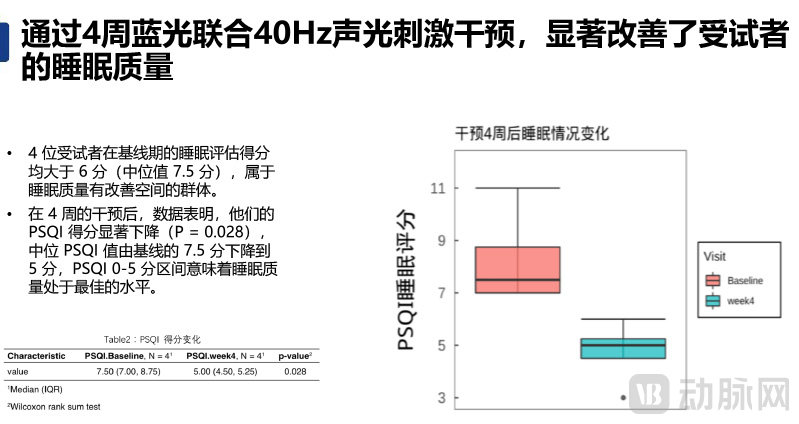
In the behavioral outcome analysis, the combination of blue light and 40 Hz audiovisual stimulation demonstrated a significant effect in improving sleep. Healthy participants enrolled in the study had baseline sleep assessment scores all above 6 (median: 7.5), indicating a population with room for sleep quality improvement. After 4 weeks of intervention, their sleep assessment scores decreased significantly (P = 0.028), with the median dropping from 7.5 at baseline to 5, suggesting that sleep quality reached an optimal level.
Professor Zhang Minming, a doctoral supervisor, chief physician, and Director of the Joint Laboratory for Clinical Imaging at the Second Affiliated Hospital of Zhejiang University School of Medicine, served as the principal investigator (PI) for this exploratory study. This leading expert in neuroimaging in China stated, “Alzheimer’s disease (AD) is a slowly progressing condition. By the time patients seek clinical care, the disease has often reached an advanced stage that is irreversible. Therefore, early screening and intervention are issues of significant concern to us. Our laboratory has been focusing on preclinical brain lesions, using objective magnetic resonance imaging (MRI) techniques to identify potential patterns in patients. Upon identifying these patterns, we have been exploring non-pharmacological, home-based physical intervention methods. The results of this exploratory study demonstrate the feasibility of combining blue light with 40 Hz audiovisual stimulation as a home-based, non-invasive, and non-pharmacological approach to improving brain function and sleep quality in healthy individuals. Next, we will conduct a nationwide, multicenter clinical trial targeting patients with mild cognitive impairment to further validate the clinical feasibility of this physical method as a reliable and effective intervention for cognitive impairment and even early-stage Alzheimer’s disease.”
The research team stated that they will conduct follow-up studies in the future to establish neuroimaging evaluation criteria for new non-invasive physical intervention methods, carry out multicenter clinical trials on combined blue light and 40 Hz audiovisual stimulation, and investigate the application of this technology in various neurodegenerative diseases.
As previously mentioned, neurodegenerative diseases such as Alzheimer’s disease require “early detection, early diagnosis, and early treatment.” Some regions in China have also begun to conduct regular screening for cognitive impairment among the elderly.
Innovative Approach: How Shudan Medical’s Product Strategy Addresses Pain Points in Brain Disease Intervention
Undoubtedly, digital technology holds inherent advantages in “early detection” and “early diagnosis.” In Shudan Medical’s NovoBrain neuroregeneration product, digital therapeutics also play a key role in facilitating “early detection” and “early diagnosis.”
“The biggest problem now is that high-risk individuals identified through screening are not receiving interventions. In the absence of universally accessible and convenient intervention methods, the only option is intensive follow-up. Therefore, screening itself is not the critical pain point; the real unmet need lies in post-screening interventions,” Dr. Fang Cong explained to VCBeat.
Dr. Fang Cong believes that the current lack of effective medications for Alzheimer’s disease indicates that existing drug development strategies may need to be adjusted: “This is not due to a lack of excellence or insufficient commitment from pharmaceutical companies. We believe that, fundamentally, the traditional approach of using targeted drugs to address neurodegenerative diseases may be inappropriate. First, whether administered orally or by injection, drugs must traverse the blood-brain barrier via the circulatory system to reach the affected brain regions, resulting in a significant reduction in efficacy. Second, for a systemic neurodegenerative disease, the target areas experience only brief, transient peak concentrations during medication administration.”
“Neurodegenerative diseases are, in essence, disorders characterized by atrophy and apoptosis within the electrophysiological system. Two years ago, I visited the Brain-Computer Interface Laboratory at Stanford University in the United States. Researchers there posited that the brain is fundamentally an electrophysiological system, and that solutions for neurodegenerative diseases should perhaps be pursued from the perspective of the brain’s energy systems,” she further added.
In fact, non-invasive cognitive stimulation of the brain has been continuously introduced since the 1960s—transcranial electrical stimulation emerged during this period, and transcranial magnetic stimulation was subsequently applied in clinical settings. However, because such interventions are typically administered in hospital settings, they are not suitable for large-scale application requiring long-term, high-frequency intervention.
With advances in various detection technologies, scientists have gradually discovered that gamma-band activity in the electroencephalograms (EEG) of patients with cognitive impairment is disordered and deficient, prompting them to explore potential solutions along this line of inquiry.
In 2016, Professor Li-Huei Tsai’s team from the Department of Brain and Cognitive Sciences at the Massachusetts Institute of Technology published their research findings in Nature, demonstrating that 40 Hz light exposure can reduce the formation of beta-amyloid plaques in the brains of Alzheimer’s disease model mice—beta-amyloid plaques are currently recognized as the primary cause of Alzheimer’s disease. Subsequent studies have further confirmed that this intervention technique can improve brain function.
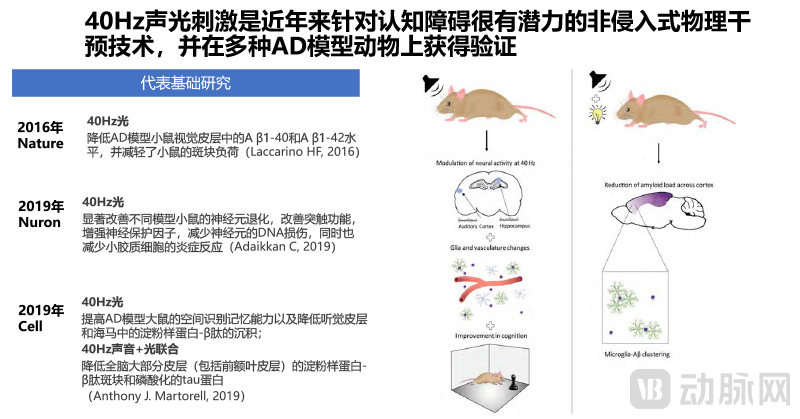
Liu Ziyu explained the technical principles of 40Hz light therapy to VCBeat: “At a macroscopic level, animal and human studies have demonstrated that 40Hz light exposure can generate stable gamma waveforms, thereby enhancing synaptic function, connectivity, and neuronal activity in the brain, as well as improving connectivity between various brain regions. At a microscopic level, research has also found that gamma oscillations effectively activate the brain’s entire immune system. This includes the activation of microglia and the activation of the glymphatic system. The latter is considered the clearance pathway for harmful proteins and substances in the brain. Consequently, reductions in the levels of harmful proteins and their intermediate products can be observed at the molecular pathological level. Ultimately, clinical observations have shown that patients experience improvements in circadian rhythms, cognitive function, and brain atrophy. This indicates that 40Hz light intervention is effective.”
“Brain disorders are chronic conditions that span 10 to 20 years. It is impossible to expect patients to visit a hospital every day for electromagnetic stimulation over a decade. This is a key reason why electromagnetic stimulation proves effective in short-term, controlled settings but sees limited adoption in real-world neurology departments. Therefore, we believe that home-based convenience is the primary prerequisite for effective intervention, and product evolution should follow this principle,” stated Dr. Fang Cong.
Continuous Improvement: Shudan Medical, Standing on the Shoulders of Giants, May Unlock a Trillion-Yuan Market in Brain Anti-Aging
Prior to Shudan Medical, Cognito Therapeutics, a well-known digital therapeutics unicorn, had already conducted extensive research into 40 Hz light intervention. Its founder is Professor Li-Huei Tsai, who pioneered the use of 40 Hz light stimulation for brain modulation, and its R&D team comprises many top-tier industry experts, making it truly exceptional. Currently, its 40 Hz light therapy for Alzheimer’s disease has completed Phase II clinical trials, and its product has been granted the FDA’s Breakthrough Device designation.
Cognito’s technical prowess is beyond doubt; however, its steep price tag places it out of reach for most. Meanwhile, as a novel therapy, Cognito’s product still has certain limitations, leaving room for latecomers to seize opportunities.
“We found that the clinical trial for Cognito had a dropout rate as high as 30%, despite the absence of serious side effects. Further investigation revealed that the primary reason for participant withdrawal was the excessive intensity of the 40Hz light flicker, which made long-term adherence difficult.” In addition to the high price, Dr. Fang Cong believes that user experience is another area where Cognito’s product needs improvement.
“Cognito’s product uses a single light-emitting diode (LED), which continuously flickers 1–2 cm in front of the patient’s eyes, much like an incandescent office lamp. This makes it indeed difficult for patients to adhere to the treatment. Therefore, we have made significant efforts to develop the world’s first 40Hz fused flicker technology, for which we have obtained a national patent.”
“Fused flicker” refers to a solution that employs multiple monochromatic light-emitting diodes (LEDs), utilizing a color-mixing strategy to alternately control the duty cycle and ensure a 40 Hz flicker. “This approach not only guarantees therapeutic efficacy but also significantly improves the user experience. Based on feedback from actual users, most report no issues with adhering to one hour of daily usage,” said Fang Cong.
In the supply chain, Shudan Medical also enjoys a comparative advantage, backed by China’s robust manufacturing capabilities. While competitors’ products are priced at over RMB 10,000, Shudan Medical’s NovoBrain costs only a few thousand yuan, with further cost reductions expected in the future. This lays a solid foundation for the product’s widespread accessibility.
In the real world, there is significant variability among individual patients. For instance, some patients with concurrent ocular conditions cannot receive therapeutic stimulation via light-based interventions. Therefore, the product also incorporates a combined audio-visual approach, delivering intervention through bone-conduction audio and transcranial infrared therapy.
Furthermore, the required stimulation intensity varies depending on the severity of the patient’s condition; for instance, patients with existing cognitive decline clearly require different stimulation intensities. Therefore, Shudan Medical has incorporated features for automated analysis and adjustable parameters into its software.
Powered by the robust DataCore Intelligent Data Chip. As described, the DataCore Intelligent Data Chip encompasses data processing capabilities such as personalized parameter tuning and intervention recommendations for physicians, doctor-patient management, knowledge graph management, and data processing and analysis. It facilitates interaction between intelligent hardware and multi-source brain signals, enabling personalized parameter tuning of treatment plans based on digital biomarkers—including patient disease progression data and brain imaging—thereby establishing a non-invasive neuromodulation digital therapeutic platform that delivers personalized diagnosis and treatment solutions.
“We leverage artificial intelligence and big data analytics to determine the significant response threshold for consumer-grade products and the highly significant response threshold for medical-grade products. Furthermore, we personalize parameter tuning for clinically diagnosed patients to ensure an optimal balance between efficacy and tolerability,” Liu Ziyu stated in an interview with VCBeat.
The ability to meet diverse user needs and provide customized solutions requires robust data capabilities, including the collection, processing, analysis, and feedback of large volumes of heterogeneous data from various sources. This constitutes the core competitiveness of Shudan Medical—whose team members previously processed decades of cancer data from West China Hospital and were awarded the Second Prize of the National Science and Technology Progress Award.
“In fact, even the slightest factors can influence baseline measurements. For instance, we have found that elderly individuals in China score, on average, 3–4 points lower on cognitive impairment tests than their counterparts abroad. This discrepancy is attributable to the generally limited educational attainment among China’s elderly population, which affects their comprehension of test items and, consequently, their scores. This serves as one such example. We need to take all these factors into account when designing the most suitable training categories and methods for users, along with corresponding interaction formats and visualization solutions. This places substantial demands on data processing capabilities,” he added.
Leveraging its advanced artificial intelligence and big data capabilities, Shudan Medical has conducted an in-depth analysis of experimental results from global non-pharmacological neuromodulation interventions over the past five years, establishing a baseline standard database. By integrating this with real-world cognitive status data specific to the Chinese population, the company has created a comprehensive dataset for model training, thereby developing algorithmic models tailored to the physiological and cognitive characteristics of Chinese individuals. Currently, this core algorithm is under application for a national patent.
Shudan Medical’s strong emphasis on user experience is closely tied to its strategic direction. Leveraging its robust technological capabilities and under pressure from its high valuation, Cognito has adopted a top-down approach, directly targeting the challenges of Alzheimer’s disease. While success in this area could establish significant barriers to entry, the beneficiary population would be relatively smaller, and the development process is inevitably long and arduous.
In contrast, as a startup, Shudan Medical has adopted a bottom-up, multi-pronged strategy, leveraging the tiered classification of medical-grade and consumer-grade products to separately serve individuals with cognitive impairments and the healthy population. Among these, the Class II certification for cognitive training within its medical-grade product line is expected to be approved in the first half of 2023, while the cognitive stimulation component, which involves Class III certification, will complete type testing reports and initiate clinical trials within the year.
It is evident that Shudan Medical places greater emphasis on the widespread adoption of its technology, aiming to provide intervention strategies for the vast number of individuals with mild cognitive impairment (MCI) as well as the healthy population. Notably, the population with cognitive impairments alone reaches 50 million. When considering the demand for anti-aging brain care among individuals aged 30 and above, the potential addressable market could extend to as many as 500 million people.
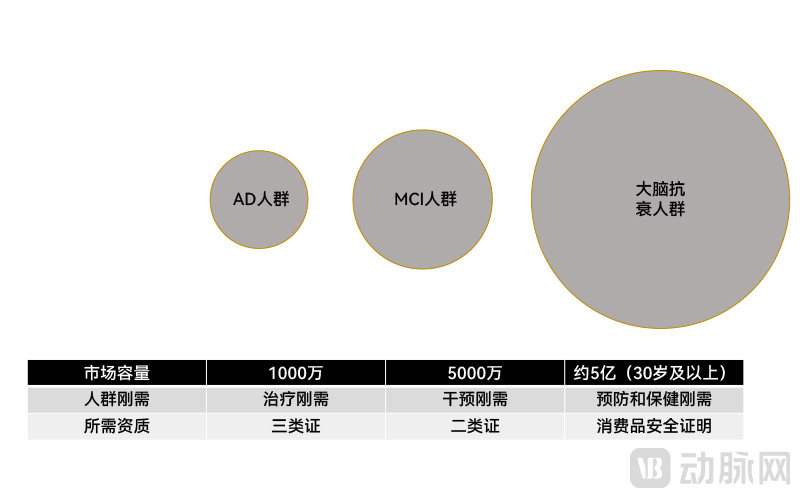
This is undoubtedly a vast market, but more importantly, it holds the potential to benefit all of us. Let us look forward to the future with hope and confidence that brain diseases will one day be conquered.