

Yitu Life Sciences Launches AceGPT: A ChatGPT for Innovative Drug Discovery—Can It Replicate OpenAI's Breakthrough?
The recently viral software ChatGPT, developed by OpenAI, leverages an AI technology known as natural language processing to respond to questions in a human-like manner. ChatGPT represents a remarkable advancement in the field of Natural Language Processing (NLP), having ingested nearly all data available on the internet and undergoing deep learning within an exceptionally complex model architecture.
Under the influence of ChatGPT, transformations in scientific research paradigms and the emergence of new industrial business models will continue to occur. Natural language algorithms can rapidly analyze language and predict subsequent dialogue steps, and they can also be applied to biological data. There has been extensive exploration at the intersection of artificial intelligence and biomedicine; for instance, DeepMind launched AlphaFold2 in 2020, enabling AI to accurately predict protein folding structures. This achievement resolved the protein folding problem that had perplexed scientists for 50 years, marking a major breakthrough in the field of biology. If ChatGPT’s efficient natural language processing capabilities are integrated into new drug development, it will undoubtedly unlock immense potential and yield surprising advancements.
Just recently, MedGraph Life Sciences announced that it is building AceGPT, an innovative “ChatGPT”-style model. AceGPT is an AIGC (Artificial Intelligence Generated Content) model designed to enhance the efficiency of drug development, lower barriers to entry, and establish AI-driven infrastructure for pharmaceutical R&D.
With the launch of AceGPT, transformative changes across the entire AI-driven drug discovery and development industry are imminent.
Founded in 2021, Yitu Life Sciences, a company specializing in AI-driven new drug R&D, continues to attract significant industry attention. As a globally leading AI-driven drug development enterprise, Yitu Life Sciences has not only achieved technological leadership but also established a unique and promising business model. Leveraging its proprietary AI platform for new drug discovery, the company identifies novel targets with substantial clinical value or collaborates with top-tier research and clinical institutions to advance the development of innovative international drugs. Commercialization is achieved through licensing agreements with leading global pharmaceutical companies during later stages. By integrating cutting-edge AI technology with new drug R&D, Yitu Life Sciences brings together scientific talent from top domestic and international universities and research institutions, as well as professionals with extensive experience in renowned pharmaceutical companies worldwide. Combining rigorous scientific methodology with a vision of leveraging AI for the benefit of humanity, the company represents a concrete practice in applying AI to address major challenges in the biopharmaceutical sector.
Since its inception, Yitu Life Sciences has leveraged AI for new drug development and the discovery of novel drug targets, identifying effective chemical molecules and protein structures for cutting-edge targets. Currently, the company has achieved technological breakthroughs in AI-driven drug R&D through its “Yitu AceMap Intelligent Drug R&D Platform.” By deploying three core AI platforms—the Yitu AceMap Intelligent Drug (Target and Gene) R&D Platform, the AceMap Intelligent Drug (Molecular Design) R&D Platform, and the Yitu AceMap Intelligent Drug (Synthetic Biology and Anti-Aging Substances) R&D Platform—the company has established a leading technological position in the field of AI-based new drug development. Under the framework of novel targets, the company’s AI-driven platform can complete the design of active pharmaceutical ingredients and their subsequent chemical synthesis or biological expression within 2–3 months, reducing the timeline by approximately 70% compared to traditional pharmaceutical companies, while lowering R&D costs to 10–20% of those incurred by conventional pharma enterprises.
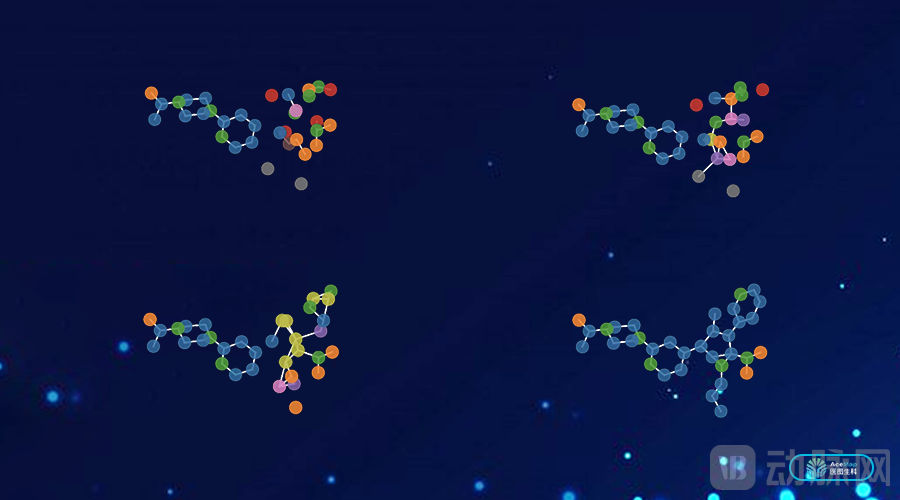 AI-Generated Chemical Molecule Process
The explosive popularity of ChatGPT has prompted Yitu Life Sciences to further focus on the field of generative models. The company is currently developing AceGPT, a ChatGPT-like model tailored for the innovative drug sector. As an AIGC (Artificial Intelligence Generated Content) model, AceGPT aims to enhance drug R&D efficiency, lower entry barriers, and establish AI-driven infrastructure for pharmaceutical research and development. Integrated with Yitu’s AceMap intelligent drug R&D platform, this model is poised to create even more breakthroughs in the new drug development industry.
AceGPT Integrates with AceMap, the Intelligent Drug R&D Platform, to Further Accelerate Innovative Drug Development
Yitu Shengke’s small-molecule platform enables de novo generation of small molecules against novel targets, druggability/targetability assessment, high-throughput virtual screening, ADME/T prediction, and compound synthesis, ultimately advancing candidates to IND-enabling studies.
The development of AceGPT can further accelerate the design and synthesis of innovative small-molecule drugs. Incorporating an SE3 (rotation and translation symmetry group) graph representation module and a conditional generation module, AceGPT can generate three-dimensional structures of novel lead compounds that meet specified criteria, given the known three-dimensional structure of a specific protein target, even in the absence of any known active compounds or candidate screening libraries. This capability enables researchers to rapidly design drug candidates with higher probabilities of success in preclinical and clinical studies.
From another technical perspective of innovative drugs, macromolecular drug design has always been one of the major challenges in the pharmaceutical industry. The core of Yitu Bio’s AI platform for macromolecules and synthetic biology lies in the deep integration of genetic engineering technology and artificial intelligence.
MediMap Biotech’s integration with the AceGPT large-molecule model enables more convenient de novo protein design. AceGPT incorporates a large language model (LLM) for characterizing amino acid sequences from protein databases, as well as models for representing protein structural data. When designing new proteins, inputs can include textual descriptions of specific structural regions, functional requirements, or protein shapes. AceGPT encodes these descriptive text sequences to serve as conditioning constraints for generating novel proteins. Leveraging diffusion models, it produces protein sequences and structures that meet the specified criteria, ensuring both the accuracy and synthesizability of the resulting proteins with desired properties. This revolutionary advancement is poised to usher in a new era of protein design.
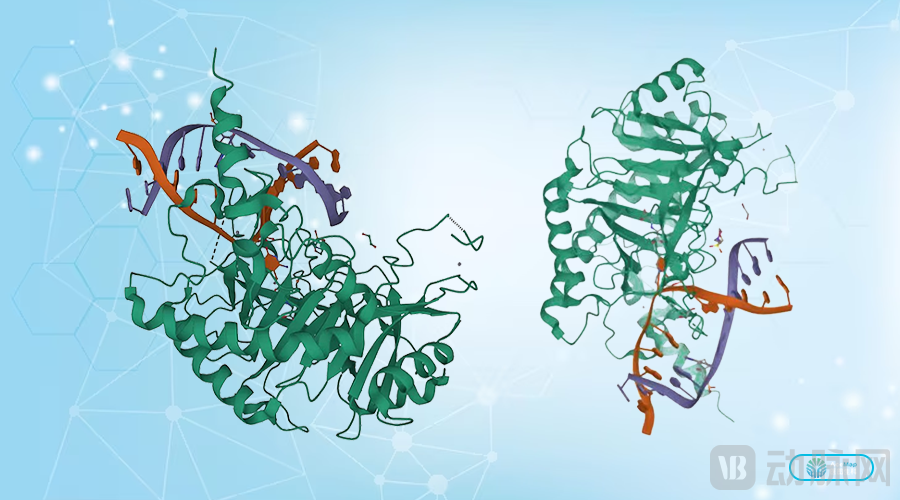 Protein-DNA Interactions
AceGPT Integrates Yitu Biopharmaceutical’s Academic Applications to Address Real-World Industry Challenges
In addition to its integration with existing new drug R&D platforms, AceGPT, the upcoming product from MedGraph AI, will also be integrated into academic applications in biopharmaceuticals.
Biopharmaceutical development is a complex engineering endeavor that requires identifying new guiding principles across different scales and phenomena to bridge the structural and regulatory gaps at intermediate scales. This necessitates the collaborative involvement of experts with diverse disciplinary backgrounds in biology, chemistry, physics, and mathematics to achieve further breakthroughs. The key lies in identifying such talent, organizing them effectively, and providing ample resources.
AceGPT leverages robust academic capabilities, having been trained on extensive corpora of scholarly papers and conference proceedings. By distilling and integrating vast amounts of information, AceGPT can rapidly generate answers and cite sources for queries related to diseases, gene mutations, proteins, drugs, targets, compounds, and clinical trials during the early stages of drug development. This provides R&D professionals with a swift pathway to understand knowledge outside their specific expertise, thereby reducing communication costs among experts from different fields. As the “ChatGPT” of new drug development, AceGPT significantly enhances efficiency in early-stage research and mid-to-late stage evaluation of new technologies, addressing a wide range of challenges across the pharmaceutical industry value chain—from academic research to practical application.
AceGPT Has Become the Core Engine of Yitus Shengke’s R&D Pipeline
Yitu Life Sciences’ R&D team possesses comprehensive, end-to-end experience in the development and commercialization of First-in-Class drugs. Its independently developed R&D platform encompasses all technical capabilities required for Investigational New Drug (IND) applications, integrating modern artificial intelligence (AI) technologies into every stage of drug discovery and development. These stages include target screening, lead compound (both small and large molecules) discovery, structural exploration and analysis of drug targets, molecular dynamics simulations of drugs and targets, adverse reaction analysis, and immunogenicity assessment.
Currently, Yitu Shengke has eight pipelines under development, primarily focused on three areas: oncology, anti-aging, and rare diseases. Two of these pipelines have achieved milestone-based License-Out agreements. The eight pipelines mainly include recombinant asparaginase, squamous cell carcinoma therapy, cerebral arteriovenous malformation treatment, androgenetic alopecia (AGA) therapy, recombinant collagen, natural anti-aging drug combinations, early breast cancer screening, cell chips and immunotherapy, and space microbiome-based drugs. Among these, the recombinant asparaginase, featuring a novel amino acid structure and recombinant expression technology, qualifies as a Class 1 innovative drug under China’s regulatory framework. This project reached the Pre-IND stage in just eight months, significantly demonstrating the efficiency of AI-driven new drug development.
Once AceGPT by Yitu Biotech is fully developed and deeply integrated into multiple proprietary pipeline projects, undergoing continuous iterative optimization in practice, it is foreseeable that the advancement of Yitu Biotech’s pipeline will accelerate at an even more remarkable pace.
Research in artificial intelligence and biotechnology is currently in a golden age. The large language model ChatGPT has achieved significant breakthroughs in the field of conversational systems. ChatGPT is not merely a product; it represents a direction of technological advancement, signifying that artificial intelligence in natural language processing has shifted from the entertainment-oriented dialogues of smart speakers to higher-level intelligence capable of solving practical problems.
In the quest for novel anti-infective drugs, pharmaceutical companies have long relied on a laborious process of trial and error to identify suitable chemical entities. How might the landscape change if a “ChatGPT” for biopharmaceuticals could play a more extensive role in new drug development?
AceGPT, the ChatGPT for AI-driven drug discovery, is poised to deliver answers; Yitu Healthcare could well become the OpenAI of the innovative drug industry...