

PneumoWave Files IPO Prospectus Following $12.3M Series A and FDA Breakthrough Designation for OIRD Monitoring Platform

Equity Gap
A Private Investment Firm

Scottish National Investment Bank
Financial Investment Institutions

PneumoWave
Real-time Monitoring Solutions Developer

Scottish Enterprise
Scottish Government's Non-Departmental Public Investment Institution

Alba Equity
Group Investment Institutions
In June 2011, clinicians and researchers from the fields of nursing, anesthesiology, and surgery convened in Phoenix, Arizona, for a conference themed “Essential Monitoring Strategies for Detecting Clinically Significant Opioid-Induced Respiratory Depression in the Postoperative Period.”
At this time, opioid-induced respiratory depression (OIRD) is plaguing the U.S. medical community, and no OIRD monitoring systems are currently available on the market.
Robert K. Stoelting, President of the Asia-Pacific Social Science Foundation, remarked at the opening ceremony of the conference: “We cannot wait until we have perfect technology to intervene in problems; maintaining the status quo and hoping for a different outcome is unrealistic.”
The issue of developing an OIRD monitoring system remains unresolved, leaving participants to discuss alternative approaches for OIRD surveillance.
In 2018, PneumoWave was established. Headquartered in Scotland and the United States, the company is dedicated to developing remote monitoring technologies for patients with acute and chronic respiratory diseases. The PneumoWave platform, which shares the company’s name, is a wearable biosensor primarily designed to monitor OIRD.
PneumoWave is well-prepared. As part of an international research initiative, the company is collaborating with the University of Dundee, the University of Glasgow, King’s College London, NHS Greater Glasgow and Clyde (NHS GGC), and the Department of Health in Victoria, Australia, to develop OIRD monitoring technology. NHS GGC is the largest NHS organization in Scotland and one of the largest in the United Kingdom.
It is commonplace for startups to devote significant human and financial resources to platform development. So what enables PneumoWave to attract numerous prestigious academic institutions and government agencies?

Some of PneumoWave’s Partners (Source: PneumoWave Official Website)
In 2006, the Asia Pacific Medical Foundation presented a perspective to the medical community: clinically significant, drug-induced respiratory depression remains a serious patient safety risk during the postoperative period.
Among these, opioid-induced respiratory depression (OIRD) is considered a potential life-threatening condition for patients and a major cause of morbidity and mortality.
Opioids are a class of analgesics that alleviate pain by interacting with opioid receptors within cells and are widely used in clinical practice for the management of cancer-related pain. Opioids can be derived from the opium poppy plant, such as morphine, or synthesized in the laboratory.
This medication can effectively alleviate pain but may also affect the brain regions responsible for controlling respiration, thereby causing respiratory depression. Respiratory depression is common in patients recovering from anesthesia after surgery; failure to detect and intervene in a timely manner may lead to severe consequences such as cardiac arrest, hypoxic brain injury, and death.
According to statistics from the U.S. National Center for Health Statistics, prescription drug and recreational opioid abuse claimed nearly 4.5 million lives in the United States alone between 1999 and 2018. The direct cause of death from opioid overdose is Opioid-Induced Respiratory Depression (OIRD).
OIRD usually occurs incidentally; if it can be identified in the early stages, deaths can be prevented.
Bruce Henderson, one of the founders of PneumoWave, worked within the UK’s National Health Service (NHS) for 17 years. As a forensic pathologist, he witnessed numerous patients with respiratory diseases die from respiratory depression—deaths that could have been avoided. This inspired him to develop respiratory monitoring technology, and in 2018, he co-founded Altair Medical with Jonathan Guthrie, which was later renamed PneumoWave.

PneumoWave Team (Source: PneumoWave Official Website)
In 2020, PneumoWave’s platform was granted “Breakthrough Device” designation by the U.S. Food and Drug Administration (FDA). The FDA will expedite the evaluation and review of this device.
At this time, Jonathan Guthrie, Chairman of PneumoWave, mentioned in an interview that they are seeking investment to support the development of this technology.Receiving FDA Breakthrough Device Designation has become a significant milestone in PneumoWave’s development, attracting numerous investors.
One year later, PneumoWave secured €2.25 million in Series A financing to further develop its respiratory sensors and real-time monitoring platform.
In January 2023, PneumoWave announced the closing of its £7.5 million Series A+ financing round. The round received support from the Scottish National Investment Bank, Scottish Enterprise, IIG, London & Scottish Investment Partners, Equity Gap, Alba Equity, and Mark Bamforth, founder of Thairm Bio. The funds will be used for the clinical validation of its biosensor technology platform and to pursue regulatory submissions. The total amount raised in the Series A round was $12.3 million (approximately RMB 80 million).
At the 2011 conference, attendees reached a consensus that continuous electronic monitoring should be used for hospitalized patients receiving opioids postoperatively.
Currently, oxygenation monitors and respiratory monitors are commonly used in clinical practice to monitor OIRD.
Oxygenation monitoring devices detect oxygen levels in the blood, including arterial blood gas analysis and pulse oximetry. Among these, pulse oximeters are well-known and widely used; however, measuring oxygen saturation within a specified time frame may fail to capture the development of Opioid-Induced Respiratory Depression (OIRD). Furthermore, pulse oximetry measurements may be inaccurate in clinical scenarios such as hypotension and hypothermia. In many cases, pulse oximetry serves as a late indicator of respiratory depression.
Respiratory monitors quantify the adequacy of ongoing respiratory gas exchange by assessing respiratory rate, tidal volume, and exhaled carbon dioxide levels. In the United States, capnography is frequently used for monitoring opioid-induced respiratory depression (OIRD). During postoperative opioid administration, capnography increases the detection rate of respiratory events and reduces complications.
Despite these successes, the use of capnography for postoperative opioid monitoring still faces challenges, including patient compliance, clinician training requirements, cost, patient mobility, device displacement, and nuisance alarms.
The PneumoWave platform is a wireless sensor worn on the chest. It uses algorithms to monitor and analyze breathing patterns, and when opioid-induced respiratory depression (OIRD) is detected, it sends alerts to designated first responders or emergency services personnel, who can then administer naloxone to reverse the respiratory depression caused by OIRD.
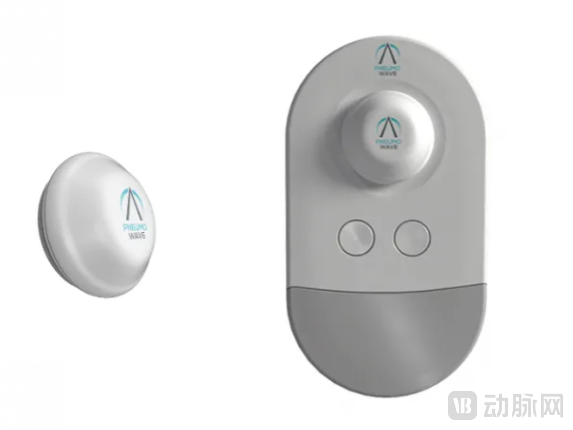
PneumoWave Biosensor (Source: PneumoWave Official Website)
This solution facilitates a paradigm shift in respiratory care: moving from an emphasis on treatment to focused interventions before diseases or injuries progress to more significant clinical signs and symptoms. Meanwhile, leveraging AI-driven monitoring protocols, the platform is designed to simultaneously monitor large cohorts of patients across any location.
In addition to its intended use for OIRD monitoring, the PneumoWave platform is currently developing respiratory monitoring capabilities for pediatric patients and for chronic obstructive pulmonary disease (COPD).
Respiratory symptoms, whether caused by chronic conditions such as lung disease, heart disease, or neurological disorders, or by acute, self-limiting illnesses like infections, have a profound impact on children.
Acquisition of pediatric respiratory data typically relies on two methods. One involves measuring thoracic expansion using tight bands wrapped around the child’s chest and abdomen, while the other measures airflow using a mask. These monitoring methods usually only capture short-term data.
PneumoWave is collaborating with pediatric respiratory specialists to develop technologies for pediatric respiratory monitoring.The goal of this technology is to achieve continuous, long-term, real-time acquisition and analysis of pediatric respiratory data. Currently, the technology is still in the development and clinical trial evaluation phase, and its specific performance characteristics have not yet been determined.
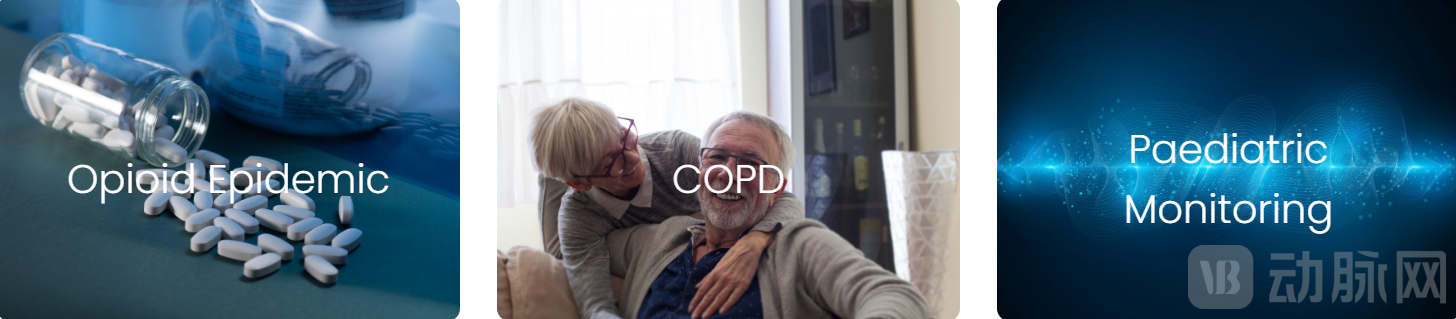
Development Goals of the PneumoWave Platform (Source: PneumoWave Official Website)
According to a report by the Organisation for Economic Co-operation and Development (OECD), respiratory diseases are the third leading cause of death in European Union countries, following circulatory system diseases and cancer. In 2017, they caused approximately 366,000 deaths, accounting for 8% of all deaths. Chronic obstructive pulmonary disease (COPD) is the most common cause of death from respiratory diseases, followed by pneumonia.
COPD irreversibly damages lung tissue, leading to progressive dyspnea and increased susceptibility to infections. Currently, due to a global shortage of pulmonologists, many patients are unable to receive specialized care. Furthermore, as treatments become increasingly complex, there is a significant unmet need for therapy tailored to real-time symptoms.
Therefore, to address the progressive dyspnea caused by COPD, PneumoWave plans to leverage its biosensors to capture respiratory data and perform real-time analysis, enabling the early detection of signs of COPD exacerbation and timely notification of both patients and physicians.
While the COVID-19 pandemic that began in late 2019 posed risks to businesses worldwide, it also presented certain opportunities. As one of the fortunate beneficiaries, PneumoWave embarked on a new chapter of collaboration with UK government agencies and research institutions during this period.
Respiratory rate and respiratory events are key predictors of clinical deterioration in COVID-19. During the COVID-19 pandemic, a critical challenge faced by hospitals was the need to monitor an unprecedented number of patients. Previously, hospitals were unable to remotely or at scale monitor patients’ respiratory health.
Funded by the University of Glasgow, Storm ID, a Scottish digital transformation consultancy, NHS Greater Glasgow and Clyde (NHS GGC), and PneumoWave are collaborating to develop a new digital solution, the CARP platform (clinicaltrials.gov, NCT04668313), to help hospitals monitor COVID-19 patients with respiratory failure.
The CARP platform will utilize PneumoWave’s wearable sensors and respiratory algorithms, along with Storm ID’s clinical dashboard, to collect patients’ respiratory data. This project is also part of the Scottish Chief Scientist Office’s Rapid Research Programme on Coronavirus Disease (COVID-19).
In January 2022, PneumoWave announced that Professor John Strang of King’s College London would use the PneumoWave monitoring platform in a clinical trial under his leadership. Professor Strang is the Head of the Addictions Department at the Institute of Psychiatry, Psychology & Neuroscience (IoPPN), King’s College London.
The trial will utilize the PneumoWave respiratory monitoring platform to collect patients’ respiratory data. Researchers hope that the trial results will help inform life-saving interventions and prevent drug-related deaths. This trial is also part of the National Clinical Research Program.
John Strang stated in an interview, “I am very excited about this new collaboration and the potential of its applied science to make the world a safer place for our most vulnerable populations. With drug-related deaths in the UK and globally reaching record highs, we need to develop better approaches to reduce loss of life. We must advance new scientific research and develop novel technologies with genuine potential to save lives.”
In February 2022, PneumoWave partnered with the University of Dundee to launch the RESCU clinical trial for its wearable device, aiming to reduce deaths caused by opioid overdose. This phase of the trial was led by Professor John Dillon, Professor of Hepatology and Gastroenterology at NHS Tayside.
PneumoWave will collaborate with John Dillon and his colleagues to study the physiological effects of opioid use and collect relevant data, enabling PneumoWave to further develop its sensor technology for accurate detection of respiratory depression and alerting first responders.
Founder Bruce Henderson stated, “RESCU’s research is critical to the development of this potentially life-saving technology. John Dillon and other members of the R&D team have a strong track record in improving treatment outcomes for patients who are difficult to reach. We are delighted to collaborate with them, as our goal is to strive to reduce the number of deaths caused by drug overdoses.”