

SoniVie Secures $60M Series C Funding to Advance TIVUS Ultrasound-Based Renal Denervation Platform Amid Resurgence in RDN Field

SoniVie
Medical Device Developer
Hypertension is the most common chronic disease in daily life and the primary risk factor for cardiovascular and cerebrovascular diseases. It represents a major public health challenge worldwide, with an increasing prevalence among younger populations.
Hypertension can be classified into controlled hypertension, uncontrolled hypertension, and resistant hypertension. Patients with controlled hypertension can relatively easily maintain their blood pressure within the normal range through lifestyle modifications or medication. In patients with resistant hypertension, blood pressure remains difficult to control at normal levels despite the use of at least three different classes of antihypertensive drugs at maximally tolerated doses. The severity of uncontrolled hypertension falls between that of controlled and resistant hypertension.
Resistant hypertension is a challenging issue in the field of hypertension treatment. Patients with this condition struggle to maintain normal blood pressure even after taking medication, posing significant health risks.
In the face of resistant hypertension, renal denervation (RDN), a treatment option beyond pharmacotherapy, has become a focal point of attention.
In 2014, Medtronic’s renal denervation (RDN) clinical trial failed to meet its primary efficacy endpoint, dampening confidence across the industry and prompting many major players to withdraw.
However, SoniVie from Israel persisted in its R&D efforts and was subsequently rewarded. On January 9, SoniVie completed its Series C financing round, raising a total of $60 million.This financing round was led by Andera Partners, with participation from Supernova Invest, Omega Funds, and TechWald Holding. The funds will be used for clinical trials.
PastOver the past decade,RDNIndustry Gains,Also experienced its darkest hour。
In 2009, Ardian led the Symplicity HTN-1 study (a single-blind, multicenter, randomized clinical trial with sham-control), which was a self-controlled study involving 45 patients who underwent RDN treatment. The results showed that at 1, 3, 6, 9, and 12 months post-procedure, blood pressure in the treatment group decreased significantly compared to baseline.
In 2010, Medtronic acquired Ardian for $800 million and initiated the Symplicity study on renal denervation (RDN). In the same year, the positive results of the HTN-2 trial were published, further evaluating the long-term efficacy and safety of RDN.
However, in 2014, Medtronic announced that the SYMPLICITY HTN-3 trial failed to meet its primary endpoints. Although the treatment group exhibited a significant reduction in blood pressure, there was no statistically significant difference between the treatment and control groups. Consequently, global confidence in renal denervation (RDN) research waned, entering a period of stagnation. Many companies withdrew from this technological arena, leaving only a few firms to persist in their efforts.
In 2015, Medtronic improved its product and trial design on the Spyral platform, including the SPYRAL HTN-ON MED (a global, multicenter, randomized, controlled trial) and SPYRAL HTN-OFF MED trials.
In 2020, Medtronic announced the results of the HTN-OFF MED Pivotal trial. Three months post-procedure, the renal denervation (RDN) group demonstrated a reduction in 24-hour mean ambulatory systolic blood pressure and office systolic blood pressure of 4 mmHg and 3.1 mmHg, respectively, compared with the sham procedure group. The trial results also indicated that blood pressure was reduced not only during daytime but also throughout the night and early morning hours—the period associated with the highest risk of adverse events—and that the impact of certain medications on blood pressure was diminished.
This means that the shadow of the failed 2014 clinical trials has dissipated, ushering in a new dawn for the RDN industry.
In 2020, Medtronic’s Symplicity Spyral™ renal denervation system received the “Breakthrough Device” designation from the FDA.
Paradise™ Ultrasound Renal Denervation System, a product of another major player, ReCor Medical, has also received the “Breakthrough Device” designation from the FDA.
SoniVie’s renal artery ultrasound ablation device has also received the FDA’s “Breakthrough Device” designation.
SoniVie, founded in 2014, has developed an ultrasound denervation technology called TIVUS (Transcatheter Intravascular Ultrasound System), which is applicable to multiple therapeutic areas.
In December 2020, TIVUS received the Breakthrough Device Designation from the U.S. Food and Drug Administration (FDA), and initiated an FDA-approved Investigational Device Exemption (IDE) study in 2022.
TIVUS is a catheter-based intravascular ultrasound therapy that reduces nerve activity by ablating nerves surrounding blood vessels and other structures such as bronchi.
Unlike Medtronic’s renal artery ablation technology, which employs radiofrequency ablation, SoniVie utilizes ultrasound ablation.
The device operates by emitting non-focused ultrasound waves through the catheter, which penetrate flowing blood and the arterial wall. The acoustic energy is absorbed by tissues outside the vessel, particularly nerve bundles. This causes thermal heating of the nerves to the point of necrosis, effectively ablating them and impairing their ability to transmit signals. As a result, the release of sympathetic neurotransmitters from these nerves is reduced. This reduction leads to vasodilation, decreased vascular resistance, and lowered blood pressure, thereby achieving the goal of hypertension control.
In short,TIVUSHigh-frequency unfocused ultrasound energy is used to ablate nerves in the renal arteries. This reduces neural activity and lowers blood pressure.
TIVUS can be used to treat refractory hypertension, pulmonary arterial hypertension (PAH), chronic obstructive pulmonary disease, and chronic bronchitis.
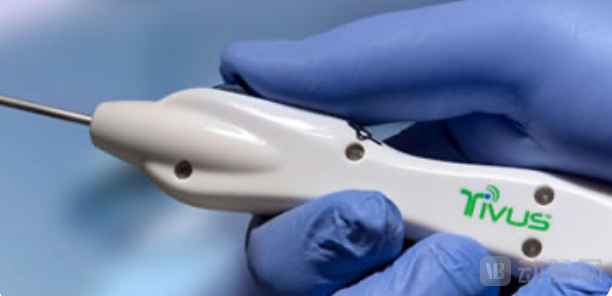 Figure 1: Morphology of TIVUS
On May 5, 2022, the FDA granted Investigational Device Exemption (IDE) approval for SoniVie’s “REDUCED1” pilot study, which evaluates the treatment of patients with resistant hypertension using renal denervation via its innovative TIVUS ultrasound ablation system.
In the same month, Professor Michael Jonas, principal investigator of the REDUCED1 study, successfully treated a patient with refractory hypertension using TIVUS for the first time at Kaplan Medical Center.
This surgery asThe REDUCED1 Studya part of,Laid a solid foundation for future research。
Michael Jonas stated that the success of this procedure demonstrates the efficacy and efficiency of the TIVUS catheter. The TIVUS catheter is easy to operate and use, enabling significant deep ablation of nerves within the vascular space. The procedure is characterized by its short duration, simplicity, and directness. Patient outcomes will continue to be closely monitored, and there is anticipation for greater patient participation in future clinical trials.
In fact, prior to its application in renal denervation, TIVUS focused on another refractory condition—pulmonary hypertension, a disease known as the “cancer of cardiovascular diseases.”
Pulmonary hypertension refers to a hemodynamic and pathophysiological state in which pulmonary arterial pressure exceeds a certain threshold. It can lead to right heart failure and may present as an independent disease, a complication, or a syndrome.
At the 2013 Nice World Symposium on Pulmonary Hypertension, pulmonary hypertension was classified into five major groups based on pathological manifestations, hemodynamic characteristics, and clinical management strategies: ① pulmonary arterial hypertension; ② pulmonary hypertension due to left heart disease; ③ pulmonary hypertension due to hypoxia and/or lung diseases; ④ chronic thromboembolic pulmonary hypertension; ⑤ pulmonary hypertension with unclear and/or multifactorial mechanisms.
Pulmonary hypertension is a common and frequently occurring disease with high rates of disability and mortality.
SoniVieProprietaryTIVUS(Intravascular Ultrasound Therapy System) is aIntravascular Catheter for the Treatment of PAH.It is inserted into the pulmonary artery during right heart catheterization, where it can selectively block nerves associated with disease activity, thereby reducing right ventricular afterload; this approach does not damage the vascular wall or adjacent tissues. TIVUS can enhance clinical efficacy and patients’ subsequent quality of life, improving exercise tolerance.
In 2019, SoniVie announced that it had acquired the remaining intellectual property rights and other assets related to the TIVUS system from Cardiosonic. SoniVie had previously licensed Cardiosonic to use the TIVUS technology, particularly for the treatment of PAH.
Through this acquisition, SoniVie’s TIVUS has become the only platform-based denervation technology with active development programs across multiple therapeutic areas: pulmonary artery denervation (PADN) for the treatment of pulmonary hypertension, renal denervation (RDN) for the treatment of resistant hypertension, and other potential applications.
Cardiosonic previously conducted two RDN clinical trials using an earlier version of TIVUS in patients with resistant hypertension, demonstrating promising feasibility in blood pressure reduction for up to six months. Cardiosonic also obtained the CE mark for this earlier version of the system, paving the way for subsequent advancements in TIVUS.
At the time, Chuck Carignan of SoniVie stated that the company was excited about expanding TIVUS into therapeutic areas beyond pulmonary arterial hypertension (PAH) and believed that the technology could treat a variety of serious diseases. A growing body of clinical trial results indicates that ultrasound-based denervation technology can provide clinical benefits in the treatment of conditions such as resistant hypertension and pulmonary arterial hypertension. TIVUS can work synergistically with existing therapies to improve clinical outcomes.
SoniVie secured $60 million in financing this year, signaling a growing emphasis on renal denervation (RDN) technology. More comprehensive clinical trials and broader adoption may be just around the corner.
Following this financing round, SoniVie’s board of directors has also undergone changes, with more professionals joining the company to move forward together.
“SoniVie CEO Tomaso Zambelli stated, ‘We are delighted with the tremendous success of this financing round. The new investors and board members can bring extensive experience in the field of renal denervation for the treatment of resistant hypertension to the company.’”
Raphaël Wisniewski of investor Andera Partners stated, “SoniVie’s TIVUS has the potential to provide patients and physicians with a safe, efficient, and easy-to-use device. It is exciting to support it alongside other partners.”
Chinese enterprises have secured a place in the RDN industry, with Shanghai Meili Weiye being one of them.
The cooling of enthusiasm for the renal denervation (RDN) industry in 2014 did not dampen Meili Weiye’s momentum; instead, it provided the company with an opportunity to catch up with international giants, establishing it as a leader in the field.
In July 2020, Medtronic’s self-developed renal denervation (RDN) system for the treatment of hypertension received the “Breakthrough Device” designation from the U.S. FDA. Medtronic is the only domestic company to have obtained the U.S. FDA Breakthrough Device designation.
This product shares the same energy source as Medtronic’s technology, both being based on radiofrequency energy.