

Electromedical Technologies Files for IPO Amid Surge in Chronic Pain and Demand for Non-Opioid Bioelectronic Alternatives
Now, if you casually click to register at any general hospital, you will notice a special department—the Department of Rehabilitation (Pain Management). This department, often overlooked in hospitals, has actually existed independently in China for more than ten years.
Pain is an unpleasant sensory and emotional experience associated with actual or potential tissue damage, incorporating cognitive and social components, whereas chronic pain is recognized as a disease. Data from a study indicate that the global average prevalence of chronic pain is 38%, with a higher prevalence in women than in men. The head, shoulders, and lower back are the primary sites affected by chronic pain.
Data from the “Report on the Development of Pain Medicine in China (2020)” shows that there are more than 300 million patients with chronic pain in China, and this number is growing at a rate of 10 to 20 million per year. Chronic pain has become the third major health issue after cardiovascular and cerebrovascular diseases and cancer, seriously affecting people's health and quality of life.
Opioids are an ideal approach for treating chronic pain, but their high potential for addiction makes them prone to misuse. According to data from the U.S. Centers for Disease Control and Prevention (CDC), more than 932,000 people in the United States have died from drug overdoses since 1999. In 2020 alone, there were over 90,000 overdose deaths, with opioids accounting for 74.8% of these fatalities.
The issue of drug abuse is extremely urgent, and pain is often unbearable, making the search for alternatives to opioids an immediate priority. U.S.-based Electromedical TECHNOLOGIES (hereinafter referred to as “Electromedical”) is a pioneer in this field.
Since the advent of modern medicine, intraoperative analgesia has been prioritized as a critical concern, with various anesthetics serving as the primary means of pain relief. However, pain is not confined to the surgical setting; as one of the most common reasons patients seek medical care, it also pervades daily life. Consequently, effectively managing non-surgical, everyday pain has become a pressing challenge for clinicians and researchers alike.
For many years thereafter, countless doctors and scholars poured their hearts into tackling the challenge of pain, yet no breakthrough emerged; addictive opioid medications seemed to be the only answer. The clock turns to 1965, when Canadian psychologist Ronald Melzack and British physiologist Patrick Wall proposed"Gate Control Theory of Pain"。
This hypothesis posits that a gate-like mechanism exists in certain parts of the human body, which controls the transmission of pain signals from the periphery to the cerebral cortex and is regulated by two types of nerve fibers: large-diameter fibers and small-diameter fibers.
When large-diameter fibers are activated, the gate tends to close, preventing pain stimuli from being transmitted to the brain, so the person does not feel pain. Conversely, when small-diameter fibers are activated, the gate tends to open, allowing pain signals to be rapidly transmitted to the brain and producing the sensation of pain. In layman’s terms, this means that diverting attention can help alleviate pain; for example, the instinctive act of touching one’s ear after accidentally burning a finger.
The proposal of this theory has provided new insights for pain treatment research, promoting the development of new therapies such as spinal column stimulators and transcutaneous electrical nerve stimulation technologies. These new treatments are no longer limited to temporary analgesia but aim to treat chronic pain.
In 1995, to raise awareness among healthcare professionals regarding pain assessment and management, the American Pain Society (APS) proposed designating pain as the “fifth vital sign.” In 2000, the World Health Organization declared that “chronic pain is a disease in its own right,” defining pain persisting for more than three months as a distinct disease entity. In 2004, the International Association for the Study of Pain designated the third Monday of October each year as “Global Day Against Pain.” Chronic pain has gradually gained a platform for recognition and discourse.
Transcutaneous Electrical Nerve Stimulation (TENS) is a non-invasive therapy for pain management that utilizes battery-powered portable devices. After nearly four decades of development, TENS has become a foundational approach to alleviating pain without injections or medications, and it has been developed by Electromedical as a novel therapy to replace opioids in the management of chronic pain.
In 2004, Matthew Wolfson assembled a team of scientists specializing in fields such as cell signaling, pain medicine, and electronics, with the goal of identifying methods to alleviate chronic or acute pain. The team included Dr. Alexander A. Pedenko, Founder and CEO of Premier Anesthesia Consultants, who holds an M.D. and has over 20 years of experience in general anesthesia and pain management; and Dr. Dos D. Sarbassov, who holds a Ph.D. in immunology and has more than 20 years of research experience in cell signaling pathways.
In the mid-1970s, transcutaneous electrical nerve stimulation (TENS), a neurostimulation therapy designed to stimulate sensory fibers, was widely adopted in clinical practice (particularly in the United States). This widespread adoption was driven not only by the proposal of the "pain gate" hypothesis, but also byHypothesis of Endogenous Morphine-like Substance ReleaseRapid progress achieved in the latter half of the 1970s.
In 1975, J. Hughes isolated methionine-enkephalin and leucine-enkephalin, endogenous bioactive substances composed of five amino acids, from porcine brains, propelling significant advances in the study of endogenous morphine-like substances. The hypothesis of endogenous morphine-like substance release posits that specific low-frequency pulsed electrical stimulation may activate intracerebral neurons producing endogenous opioid peptides, triggering their release and thereby producing analgesic effects.
Multiple studies have provided supplementary evidence,TENS demonstrates significant efficacy in managing chronic pain associated with various conditions, including chronic low back pain, chronic musculoskeletal pain, fibromyalgia, multiple sclerosis, knee osteoarthritis, peripheral or central neuropathic pain, and post-stroke chronic pain., can serve as an effective complementary treatment modality for chronic or acute pain.
In 2007, Matthew Wolfson founded Electromedical and launched the award-winningFDA Approvalthe smart portable bioelectronic therapeutic device WellnessPro Plus (WellnessPro+). Pain signals are transmitted from the peripheral nerves around the injured area to the brain. WellnessPro+ delivers electrical stimulation to specific excited nerves exhibiting pain symptoms, thereby interfering with the pain signals transmitted to the brain and reducing the brain’s perception of pain.
The greatest challenge for TENS lies in the fact that the electrical currents intended to stimulate sensory nerves must account for two primary analgesic mechanisms—activation of the gate control mechanism and endogenous opioid peptides—which require different parameters. To date, the industry has developed various modes based on these differing parameters, including conventional mode, acupuncture-like mode, brief intense stimulation mode, and trigger point mode.
However, due to individual variability, existing protocols alone are insufficient to meet the needs of all patients. Therefore, during each treatment session, patients and clinicians must identify the optimal current frequency and intensity tailored to the individual to achieve the most effective analgesia.WellnessPro+ features over one million current frequencies, suitable for healthcare professionals, athletes, coaches, medical research institutions, and any other individuals or entities requiring relief from chronic or acute pain; treatment sessions may last 10–60 minutes.
With the advancement of pain rehabilitation and the expanding research into the etiology of pain—including declines in physical or emotional function and reduced quality of life—a variety of novel therapies for chronic pain have emerged. Furthermore, relevant studies indicating that interferential current (IF) therapy yields effects comparable to those of transcutaneous electrical nerve stimulation (TENS) have contributed to the gradual contraction of the TENS market, which had risen to prominence in the 1970s.
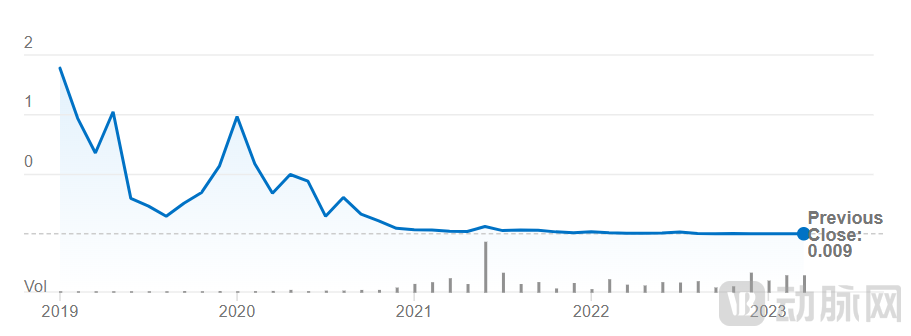
Electromedical’s Stock Price Trend Since Its Listing Source: Bing
On August 20, 2019, Electromedical was listed on the OTC Pink market of the OTC Markets Group. The OTC Pink market does not require registration with the U.S. Securities and Exchange Commission (SEC), nor does it impose mandatory requirements for filing reports or financial data, or stringent performance metrics. Two years later, in step with the company’s growth, it began disclosing more financial information and undertaking more proactive initiatives to secure additional funding.
In 2020, Electromedical released its first-quarter financial forecast, announced the appointment of Johnson & Johnson’s Ukraine head to its Marketing Advisory Board, opened a European office, and unveiled development plans for the Wellness Pro POD. In October of that year, Electromedical successfully listed on the OTCQB (Venture Market), leading to a significant rebound in its stock price.
Also in 2020, pain management products gained significant popularity due to post-recovery sequelae such as “brain fog” and bodily pain observed in individuals who had recovered from COVID-19. Public disclosures indicated that Electromedical’s revenue grew to over $900,000 in 2021, representing a 23% year-over-year increase, driven by growth in sales per unit. The gross margin rose to 78%, while the working capital deficit decreased from approximately $1.37 million in 2020 to nearly $770,000. Due to progress in development activities, its selling and administrative expenses also increased by 21% year-over-year, reaching $4.5 million.
However, due to the ongoing impact of the COVID-19 pandemic, public attention shifted toward virology and vaccinology, severely constraining Electromedica’s development. As a result, its valuation declined significantly, and its debt position gradually deteriorated. In 2022, Electromedica announced a substantial debt reduction through debt-to-equity swaps, bringing its total current liabilities down to $20,000.
According to the latest disclosed financial report for the third quarter of 2022, net sales in the third quarter were approximately $280,000, representing a 24% increase compared to the second quarter. The net loss for the first three quarters of 2022 reached $2.64 million, marking a 60% year-over-year increase in losses.
Dawn may be just around the corner. Confronted with substantial losses and high debt, Electromedica has turned its focus to the development of multiple therapies based on bioelectronic medicine, allocating its $900,000 in net financing to the development of its new product, WellnessPro Infinity.
According to the publicly available product information for WellnessPro Infinity,This product will support a variety of therapies, including TENS, Microcurrent, IF (Interferential Current Therapy), EMS (Low-Frequency Pulsed Electrical Stimulation), PEMF (Pulsed Electromagnetic Field), CES (Cranial Electrotherapy Stimulation), VNS (Vagus Nerve Stimulation), PNS (Peripheral Nerve Stimulation), and COLD Laser (Low-Level Laser Therapy), while providing all frequencies and modes. It is expected to be launched in 2023.
Bioelectronic medicine, a novel discipline emerging from the convergence of bioengineering and neuroscience, leverages the body’s electrical signals to improve the diagnosis and treatment of diseases, particularly chronic conditions. Driven by advances in electronic sensors, biomaterials, the Internet of Things (IoT), and computer technologies, the potential applications of bioelectronic technology in medicine have expanded significantly.
Time magazine reported that scientists can achieve therapeutic goals of control and alleviation by identifying specific nerve fibers or implanting certain devices to stimulate or reduce neural activity. Currently, this therapy has been applied to treat or alleviate various types of pain, neurological disorders such as depression, and chronic conditions like epilepsy. In the future, it may also be applied to some common chronic diseases, including hypertension, arthritis, diabetes, blindness, and dementia.
According to CB Insights, with the discovery of more biological circuits, the development of new devices, and the expansion of their applications, the bioelectronic medicine market is projected to reach $60 billion by 2029, approximately ten times its 2018 level.