

Purspec Technologies Accelerates Bedside Diagnostic Applications with Ultra-Portable, High-Performance POCT Mass Spectrometry Products
On February 18, the unveiling and inauguration ceremony of PURSPEC Technologies’ headquarters was held in Suzhou Industrial Park.
PURSPEC Technologies specializes in the R&D of original miniaturized mass spectrometry, providing rapid and precise point-of-care testing (POCT) mass spectrometry products for healthcare and other fields. Professor Ouyang Zheng, founder of the company, stated, “As a major leading science and technology project, PURSPEC Technologies has established its headquarters in Suzhou, which is of great significance. This marks the company’s transition from prolonged technical and product R&D to market expansion.”
From curiosity-driven exploration and the design of over ten generations of research prototypes, to iterative product development for industrialization and application trials, and finally to the establishment of headquarters and the official launch of commercial mass production, Professor Zheng Ouyang has been associated with miniaturized mass spectrometers for more than 20 years. As a leading figure in the field of mass spectrometer miniaturization, Professor Ouyang participated in and led mass spectrometry instrument research at Purdue University for over a decade. With healthcare as its core focus, the company is working to establish miniaturized mass spectrometers as an emerging growth driver in the clinical diagnostics and point-of-care testing (POCT) markets.
In the market for compact mass spectrometers, Chinese companies are assuming global dominance. How are leading Chinese enterprises driving the widespread adoption of compact mass spectrometry in healthcare? On the occasion of the inauguration of PURSPEC Technologies’ headquarters, VCBeat held a dialogue with Professor Ouyang Zheng.

Unveiling Ceremony of PURSPEC Technologies Headquarters
In addition to higher resolution and greater precision, miniaturization and broader applicability are also key development directions for mass spectrometers. Compact mass spectrometers feature rapid analytical capabilities, wide applicability, ease of operation, and exceptional cost-effectiveness, making them uniquely suited for rapid on-site detection.
“The distinction between large and small mass spectrometers can be understood as follows: large mass spectrometers are high-end laboratory instruments with comprehensive functionalities, designed for professionals such as analytical chemists; whereas small mass spectrometers are portable and user-friendly, intended for non-analytical professionals such as nurses. ‘It is akin to the difference between mainframe computers in data centers and the iPads we hold in our hands,’ explained Professor Zheng Ouyang.”
Notably, PURSPEC Technologies has not confined itself to the environmental and security sectors, where mass spectrometers are more commonly applied, but has instead prioritized the healthcare sector.
Professor Ouyang Zheng reasoned as follows: “New technologies and products must carefully consider their target customer base and should not engage in head-to-head competition with large-scale mass spectrometers in the existing market. Healthcare represents a landmark market that enables access to a distinct customer segment.”Large-scale mass spectrometers primarily operate in clinical laboratories, offering high precision but failing to meet the timeliness requirements of point-of-care testing (POCT). In contrast, compact mass spectrometers are well-suited for POCT, thereby complementing their large-scale counterparts.Release incremental volume.”
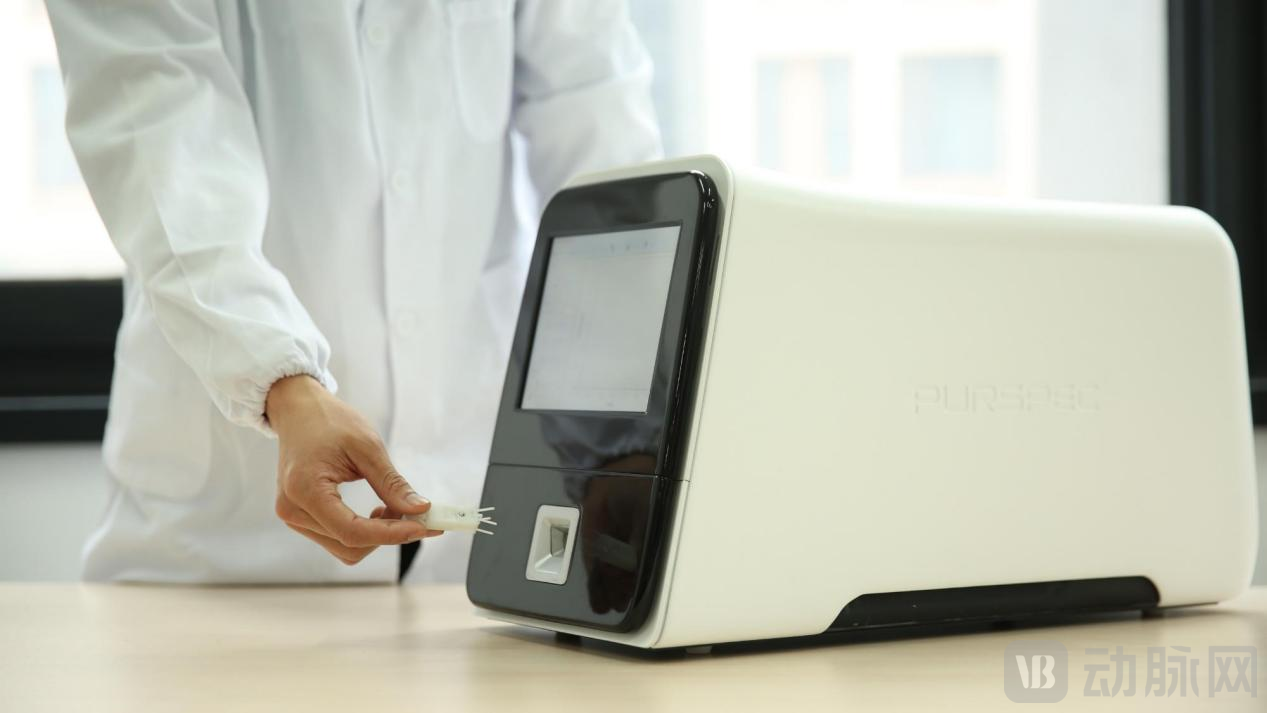
There is a significant clinical demand for point-of-care testing (POCT). As the majority of tests currently require samples to be sent to central laboratories, compact mass spectrometers offer strong versatility. With high sensitivity for low-concentration samples, accurate quantification, and ease of operation, they enable true point-of-care testing, thereby guiding immediate clinical treatment and surgical decision-making.
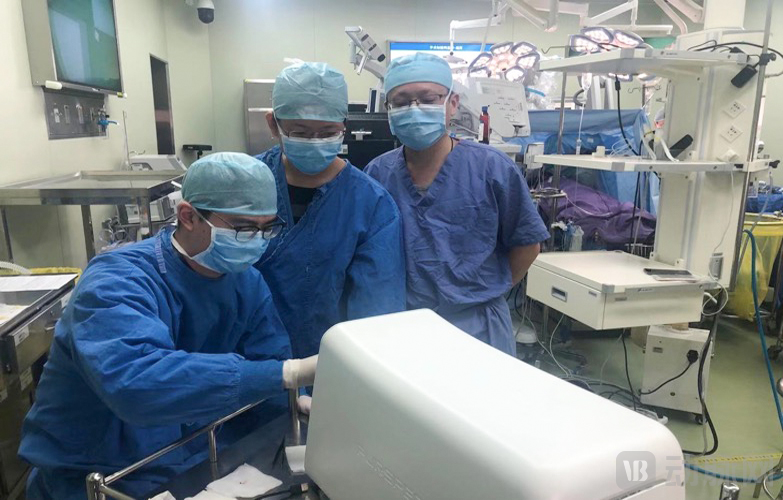
Professor Ouyang Zheng stated, “Compact mass spectrometers exhibit strong potential for expansion in the point-of-care testing (POCT) market and can be applied in multiple scenarios. For instance, they can enable rapid intraoperative diagnosis of glioma subtyping by detecting small-molecule metabolites, thereby providing real-time guidance for surgical resection strategies. Furthermore, compact mass spectrometers can be used to monitor anesthetic concentrations in the operating room, as well as to track the use of antibiotics and immunosuppressants in the intensive care unit (ICU).”
Therefore,In key areas such as intraoperative diagnosis of tumor markers and therapeutic drug monitoring, compact mass spectrometry holds significant potential to accelerate the rapid growth of the POCT market and become a mainstream POCT technology.The medical POCT market will be a key battleground for manufacturers of compact mass spectrometers in the future. “The market size for therapeutic drug monitoring alone exceeds RMB 10 billion. As compact mass spectrometers become more widespread, they will gradually replace some applications of large-scale mass spectrometers in laboratories due to their cost advantages, offering strong scalability. Furthermore, leveraging compact mass spectrometers, mass spectrometry-based testing will become integrated into daily personal health management, empowering healthcare through big data technologies.”
The product form of compact mass spectrometers is fundamentally different from that of large-scale mass spectrometers. In the research and development of compact mass spectrometers, neither domestic nor international companies have established mature, successful precedents, posing significant challenges to enterprises. These challenges include how to reduce the instrument’s footprint without compromising sensitivity, and how to effectively streamline sample analysis and sample pretreatment procedures.
PURSPEC Technologies holds core patents, achieving high accuracy in sample detection through tandem mass spectrometry. It maintains excellent sensitivity while miniaturizing the instrument and simplifies sample pretreatment processes via ambient ionization technology. Furthermore, while large-scale mass spectrometers impose stringent requirements on experimental environments, such as constant temperature and humidity, PURSPEC’s compact mass spectrometers are positioned in the market to “step out of the laboratory and reach a broader customer base.” These devices are designed to adapt to varying temperature and humidity conditions while ensuring sufficient performance.
Currently, PURSPEC Technologies has launched three instruments.
Mini β Compact Mass Spectrometry Analysis SystemLaunched in 2017, it features portability and one-touch intelligent operation. It is designed for use in organic chemistry laboratories and teaching workstations, and can partially replace traditional mass spectrometers in laboratory applications. Meanwhile, most samples in the medical field are non-volatile compounds, which isThe World's First Portable Mass Spectrometry System Capable of Analyzing Non-Volatile Compounds, highly aligned with the needs of medical testing.
Cell Miniature Mass Spectrometry Analysis SystemLaunched in 2021. This instrument, comparable in size to a home projector, achieves ultimate portability and can be used for rapid on-site testing in virtually any scenario. With a mass-to-charge ratio range of 50–1000, it is capable of detecting small biological molecules such as amino acids and lipids, as well as drug metabolites. “This isThe World's Smallest and Lightest Portable Mass Spectrometry Analysis System with Laboratory-Grade Performance, truly opening the door to the application of mass spectrometry in point-of-care testing.”
The Ω Analyzer Lipid Analysis System enables in-depth structural lipidomics analysis.
Omics research is expanding from genomics and proteomics to lipidomics. The lipidome reflects ongoing biological processes, offering significant advantages in precise disease diagnosis and serving as an indispensable component of scientific research and clinical testing. “Currently, the development of lipidomics is comparable to that of genomics 20 years ago and proteomics 10 years ago. Over the next decade, advances in basic research and biomarker studies will unlock a substantial blue-ocean market.”Ω enhances refined analytical capabilities, provides information from new dimensions, and supports in-depth structural lipidomics research for the discovery of biomarkers in disease diagnosis and treatment efficacy evaluation, as well as for clinical testing.”
Professor Ouyang Zheng noted that another challenge in the industrialization of new products, such as compact mass spectrometers, lies in establishing a commercial ecosystem within the healthcare sector. While compact mass spectrometers are experiencing rapid growth in the medical field, there is insufficient clinical recognition of their superiority in point-of-care testing (POCT). This necessitates deep collaboration between enterprises and clinical institutions to create demonstrative applications.
PURSPEC Technologies has collaborated with Huashan Hospital of Fudan University, Tsinghua University, and Purdue University in the United States to establish clinically highly recognized application cases for intraoperative detection of gliomas.and collaborate on research into rapid, precise point-of-care analytical solutions in areas such as the discovery of novel disease biomarkers and therapeutic drug monitoring.
Professor Ouyang Zheng concluded that mass spectrometry testing should not be confined to specialized laboratories; miniaturization is a long-term trend in the clinical mass spectrometry market and will unlock significant growth potential. Against this promising backdrop, PURSPEC Technologies will deepen its engagement in the point-of-care testing (POCT) market, strengthen market education, accelerate the commercialization of compact mass spectrometers, and expedite the regulatory submission for innovative medical device registrations for its application projects.