Merck Launches 'Digital Health Algorithm & Application Innovation Challenge' with Dual Tracks in AI-Driven Healthcare
An article in The Economist once pointed out that digital health will be the next trillion-dollar industry. Statistical analysis from the “Analysis of Market Operating Environment and Supply-Demand Forecast Report for China’s Digital Health Industry, 2021–2026,” published by Zhongyan Puhua Industry Research Institute, shows that the global digital health market size stands at USD 230.9 billion (approximately RMB 1.5858 trillion). North America, represented by the United States, accounts for nearly 40% of the global market, while China is regarded as one of the most promising markets. The biopharmaceutical industry is playing an increasingly important role in the national economy. For the pharmaceutical sector, the emergence of digital therapeutics has introduced new variables and opportunities.
Currently, under the broad backdrop of the digital economy development outlined in China’s 14th Five-Year Plan, digitalization has become a major trend in the healthcare industry. The rapid evolution of electronic medical records (EMRs), artificial intelligence (AI), Internet of Things (IoT) devices, and 5G technology, coupled with large-scale data resources, has provided new foundational support for digital healthcare. The deep integration of next-generation information technologies with biopharmaceuticals is continuously fostering new models and business formats in the health sector, leading to the vigorous growth of various forms of digital medicine. For pharmaceutical companies, healthcare institutions, and technology firms, how to integrate emerging technological capabilities, talent, and data resources to provide stronger momentum for innovation in digital healthcare has become a shared priority and a topic of significant concern.
Hosted by Merck"Digital Healthcare Algorithm Application Innovation Competition"Recently launched, this competition serves as a proactive exploration of the aforementioned critical topics, aiming to maximize the utilization of rapidly advancing algorithmic technologies and data resources, cultivate digital healthcare talent, and incentivize innovation in digital healthcare.
In light of the current key issues in digital healthcare, this competition focuses on the theme of “Digital Healthcare + Artificial Intelligence” and features two tracks: the Algorithm Track and the Application Track.
(1) Track 1: Algorithm Track for Predicting the Relationship Between Food and Disease
This competition will provide de-identified food and disease features. Participating teams are required to further explore and integrate features and design models based on the data provided by the organizer, in a scenario with highly sparse data, to predict the relationship between food and diseases.
*This algorithm competition will provide over 235,000 food-disease correspondence pairs along with their quantitative scores. The dataset includes more than 200 food features, while disease features are extracted using three different methods, accumulating over 4,000 feature items. The preliminary round involves binary classification (0/1) prediction, providing food and disease features as well as labels indicating the relationships between foods and diseases.*
(2) Track 2: Bio-integration and Digital Therapeutics Application Track
Participants may independently select specific scenarios within the field of digital therapeutics, define their own entry points, and conduct research using public or proprietary datasets. By leveraging AI technologies for model design and development, they should submit innovative solutions or optimization strategies that demonstrate practical application potential and can tangibly enhance the operational efficiency of digital therapeutics.
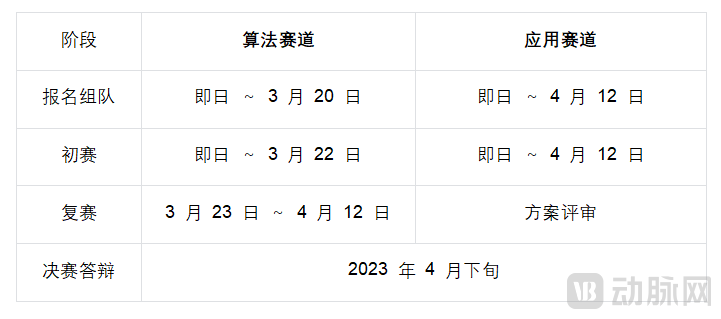
Competition Schedule
Competition Awards
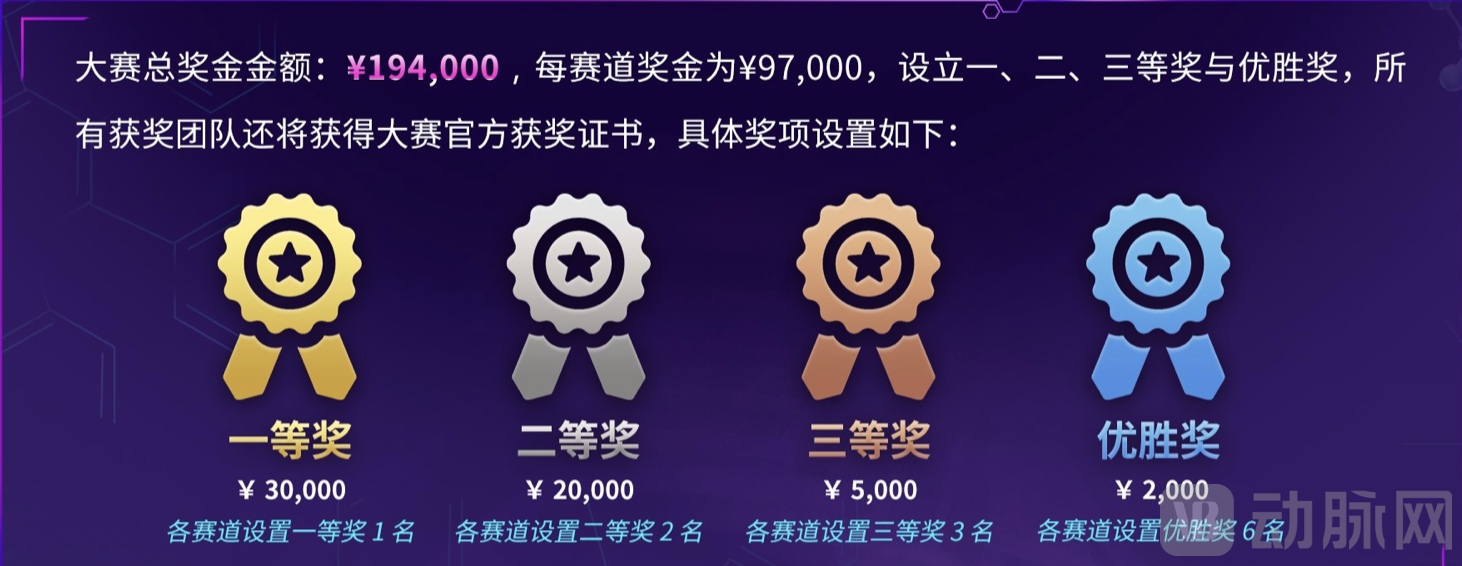
In addition, current students can access internship opportunities, while award-winning contestants and projects will have the chance to collaborate with upstream and downstream ecosystem partners to facilitate project implementation and commercialization.
Registration & Networking
This competition is open to participants worldwide, with no restrictions on age or nationality. Current students at higher education institutions (including vocational colleges, undergraduate programs, and graduate programs) as well as professionals from research institutions and enterprises are eligible to participate. Please scan the QR code below to register.