

70% of Approved Rare Disease Drugs in China Now Covered by National Health Insurance, According to the '2023 China Rare Disease Industry Trends Report'
On February 25, 2022, as Rare Disease Day 2023 approached, the Pain Challenge Foundation and Frost & Sullivan (hereinafter referred to as “Frost & Sullivan”) jointly held an online launch event for the Report on Observing Industry Trends of Rare Diseases in China 2023 (hereinafter referred to as the “Report”).
"2023 China Rare Disease Industry Trend Observation Report" is the second annual trend observation report, following last year's "2022 China Rare Disease Industry Trend Observation Report" jointly released by the Pain Challenge Foundation and Sullivan. The Report aims to review and summarize the development of rare diseases in China in terms of diagnosis, medication, security, special medical foods, and innovative services. It outlines the problems faced and progress made in this field in the past, and provides an outlook on China's comprehensive service system for rare diseases. It is hoped that it will be helpful to policymakers, advocates, practitioners in related institutions, patients with rare diseases, and the general public who are concerned about the field of rare diseases in China.
China’s modernization is inseparable from human health, which in turn encompasses the rights, medication access, and healthcare coverage of patients with rare diseases. In his opening remarks, Li Linkang, Executive Chairman of the Chinese Alliance for Rare Diseases, called on all stakeholders to respect every rare life and join hands to advance the prevention and control of rare diseases in China, thereby illuminating the lives of patients with these conditions.
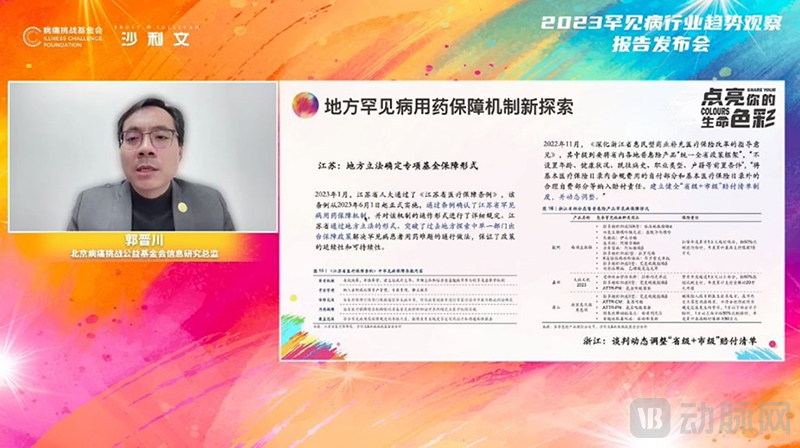
At the press conference, Guo Jinchuan, Director of Information Research at the Rare Disease Challenge Foundation, interpreted the Report from a policy perspective. To date, based on the First Batch of Rare Diseases Catalogue, 103 drugs have been marketed in China, covering 47 rare diseases; among these, 73 drugs have been included in the national medical insurance scheme, covering 31 rare diseases. However, coverage for high-cost drugs outside the catalogue remains a core bottleneck affecting patients’ access to medications. Currently, all therapeutic drugs for 16 rare diseases are not covered by medical insurance, with 13 of these drugs classified as high-cost, entailing annual treatment costs typically ranging from hundreds of thousands to over one million RMB. From the national to local levels, various stakeholders have undertaken extensive explorations to address the issue of medication accessibility for rare diseases, such as dynamic adjustments to the medical insurance catalogue, new initiatives for local rare disease drug coverage mechanisms, and the participation of public welfare and charitable organizations in establishing multi-tiered security systems for rare diseases.
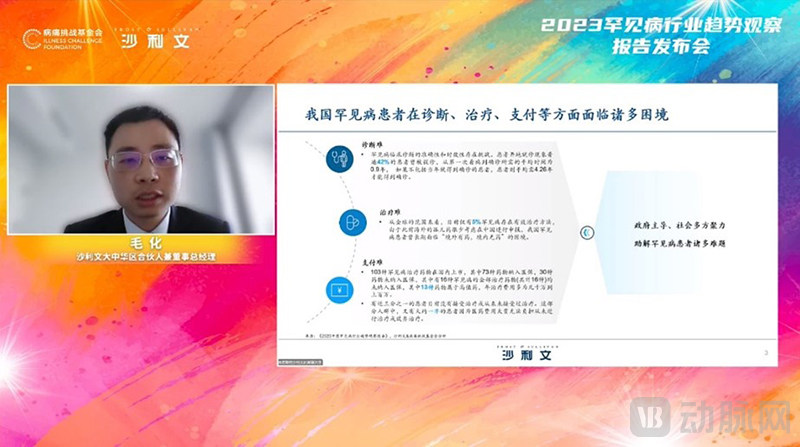
Mao Hua, Partner and Managing Director of Sullivan Greater China, introduced six policy measures designed to encourage the research and development (R&D) as well as the review and approval of drugs for rare diseases: incentives for R&D of rare disease drugs, priority review and approval, exemptions from clinical trials, tax reductions and exemptions, inclusion in temporary import programs, and market exclusivity periods. Benefiting from these favorable policies, China has made certain progress in the coverage of rare disease drug varieties, with domestic pharmaceutical companies increasingly participating in the introduction, R&D, and generic production of such drugs. Based on the First Batch of Rare Diseases Catalog, there are 81 rare disease drugs in China currently in clinical trials or under marketing application review, 46 of which are independently developed by local enterprises.
Representatives from policy assurance bodies, the industry, and patient advocacy groups convened to discuss the future direction of rare disease policies and industry trends in 2023, based on the Report. Attendees emphasized the importance of top-level policy design and explored pathways for establishing a multi-tiered assurance system, citing Jiangsu Province’s legislation that established a special fund as an example. The goal is to bridge the “last mile” in addressing payment challenges for rare diseases through multi-stakeholder participation, ensuring that patients do not miss out on the benefits brought by these policies. Industry stakeholders also highlighted the high investment, long development cycles, and low short-term returns characteristic of rare disease drug R&D, expressing hope for the introduction of more incentive policies.
Finally, participants expressed their expectations for the Report, hoping to see new developments each year that would continuously and intuitively demonstrate the nation’s commitment to rare diseases, thereby benefiting patients and playing a positive guiding role in the industry.


During International Rare Disease Day 2023, the Pain and Illness Challenge Foundation will also host the launch of the “2023 Report on the Accessibility of Disease-Specific Formulas for Rare Diseases,” the “Sing For Rare” charity concert themed around rare diseases, and multiple doctor-patient exchange events. With sustained attention and concerted efforts from all sectors, we are confident that the rare disease community will move toward a brighter future with greater hope.