

Sim Medical Celebrates 100th G-Arm Unit Rollout, Achieves Full Integration Across R&D, Manufacturing, and Sales with Nearly 100 Domestic Installations
Recently, the 100th unit rolled off the production line at Jiangsu Simm High-Tech Co., Ltd., marking the official transition of its G-arm systems from small-batch production to large-scale mass production.
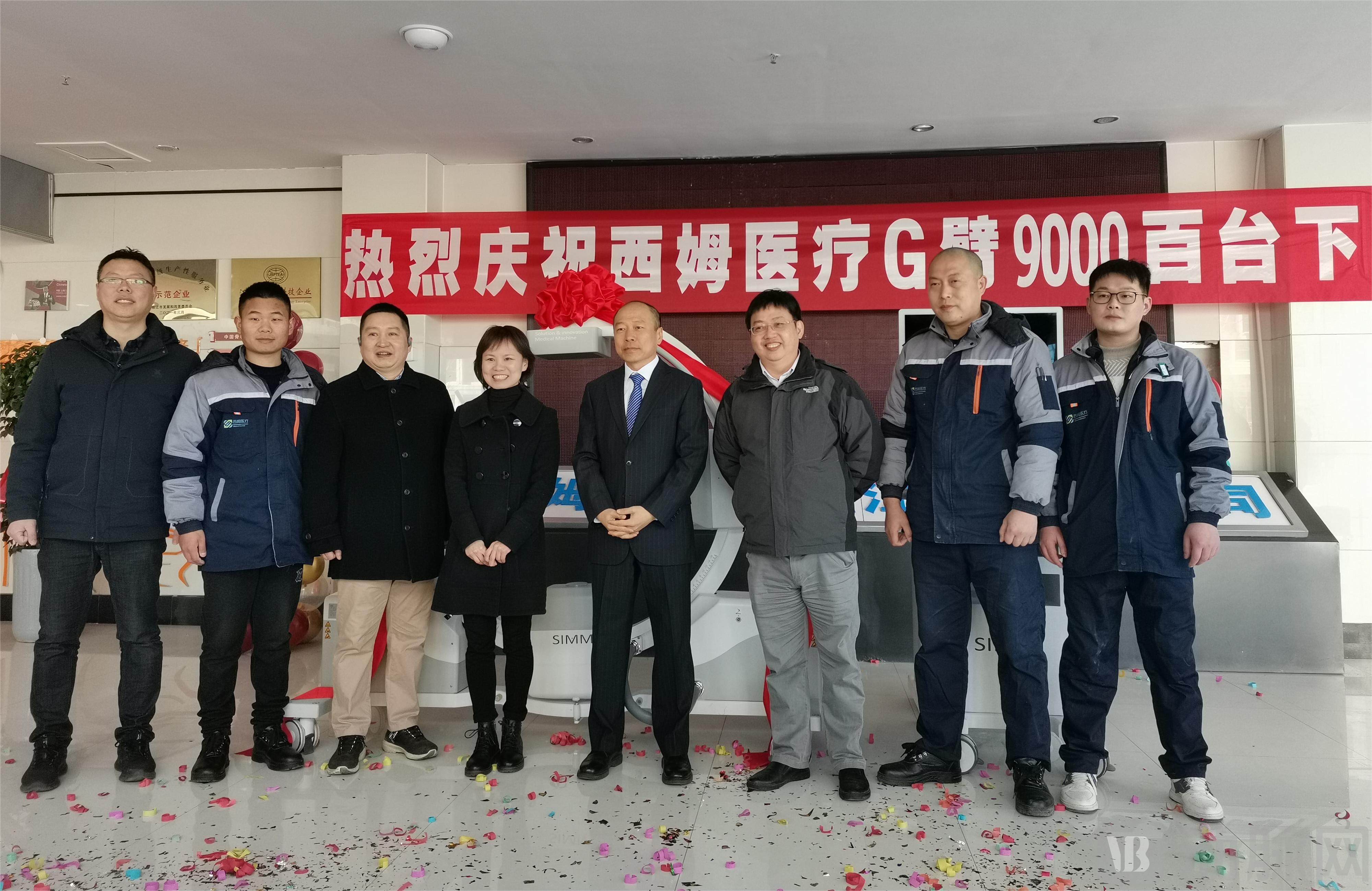
Previously, Simm Medical’s G-arm products had been installed in nearly 100 units across China, with their product quality and clinical value widely recognized. As the G-arm, a digital imaging device for orthopedic surgery, sees further application, it will drive orthopedic procedures toward minimally invasive and digital approaches, ultimately benefiting a broad patient population.
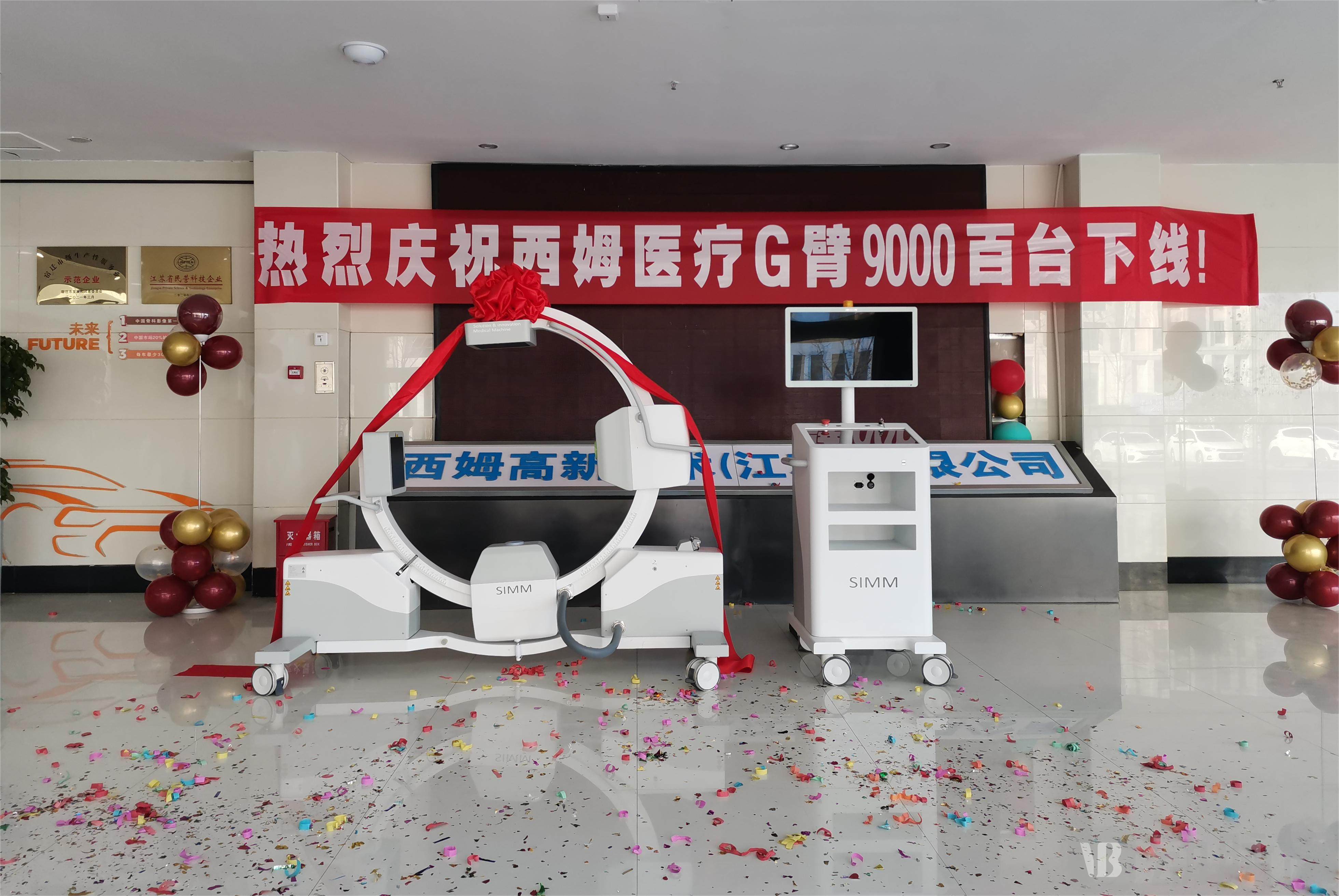
The rollout of 100 units directly tests Simm Medical’s mass production capability.
Simm Medical boasts a highly efficient production team, whose managers have previously helped large imaging equipment manufacturers establish key production lines for magnetic resonance imaging (MRI), X-ray, and C-arm systems. The Deputy General Manager of the team brings extensive experience and expertise in management, and together they lead the company’s production team to ensure on-time and full-volume delivery. Currently, the company has obtained certifications for ISO 9001, ISO 13485, ISO 14001, and ISO 45001 management systems.
During the production of the G-arm, the company is also progressively achieving domestic substitution of core components by establishing collaborations with domestic suppliers. Currently,80% of the core components for Simm Medical’s G-arm products are sourced from domestic suppliers, significantly reducing risks such as geopolitical impacts and unexpected price hikes by suppliers.
Yang Hua, CEO of Jiangsu Simm High-Tech Co., Ltd., stated, “Specialization is key. It is unrealistic for a company to attempt to master all core components across the upstream and downstream sectors, or even to build out an entire industry chain. This is particularly true for innovative enterprises, whose R&D capabilities, financial strength, and other resources are not yet sufficient to support a complete industry chain. Based on my experience working at multinational corporations, large enterprises excel at building architectures and platforms that integrate manufacturers of core components.”
Enterprises should leverage their core competencies and focus on overall product design and application. For instance, the tube insert of Simm Medical’s G-arm X-ray tube is sourced from a third-party supplier. The company redesigned the entire X-ray tube based on clinical needs to better adapt it to G-arm products.
Following the completion of 100 units, Simm Medical is preparing to further expand its production line by constructing an additional 3,000-square-meter manufacturing facility to ensure sufficient production capacity over the next five years.
In its marketing strategy, Jiangsu Simm High-Tech Co., Ltd. also emphasizes the synergy between internal and external efforts. The company’s marketing team engages directly with end-users, communicating and coordinating with clinicians to foster their recognition of the company’s technologies and products. Meanwhile, business promotion targeting hospital decision-makers is primarily conducted through distributors. Thanks to the preliminary market outreach by the internal team, customers gain a thorough understanding of the product’s value, thereby facilitating smoother operations for the distributors.
The company’s market strategy follows a “top-down” approach, expanding gradually from tertiary hospitals to grassroots medical institutions. Currently, the majority of the company’s products have been adopted by leading domestic tertiary hospitals, such as the PLA General Hospital (301 Hospital), Peking University Third Hospital, and Xinqiao Hospital. These hospitals impose stringent requirements on the quality of intraoperative imaging products and corporate services. Serving these prestigious institutions enhances the company’s overall competitiveness, thereby laying a solid foundation for subsequent large-scale market expansion.
After the company's products are implemented, Simm Medical can provide after-sales services with rapid response.
Simm Medical's New-Generation Devices Equipped with 5G Remote Intelligent Diagnosis Module, once an equipment issue arises, the intelligent module will transmit the device status to after-sales service personnel. Based on the company’s development experience, many equipment issues are caused by improper user operation rather than hardware or software failures. If field visits were dispatched for troubleshooting and resolution every time due to customer-induced operational errors, it would not only consume substantial human and material resources but also prolong the problem-resolution cycle.
Through the remote diagnostics module, Simm Medical’s after-sales personnel can promptly identify the root causes of equipment issues. Eighty percent of problems caused by human error can be resolved within minutes. Additionally, technicians can quickly address software-related issues remotely via the backend system. As a result, Simm Medical’s after-sales service achieves 24-hour response capability, which not only reduces the company’s operational costs but also enhances customer satisfaction.
In summary,Simm Healthcare has established a complete service chain, with its annual performance growth consistently exceeding 30%.。
Returning to the fundamentals, the large-scale application of the company’s products is inseparable from its leadership in technology and application.
The device being phased out is Simm Medical’s first G-arm product, the D-vision9000, which is also the world’s first dynamic digital flat-panel G-arm. It received regulatory approval in 2019 and was subsequently launched on the market.
Precise positioning is key to the success of orthopedic surgery. Traditional C-arms cannot simultaneously achieve anteroposterior and lateral imaging, requiring physicians to reposition, expose, and sterilize. In many cases, doctors must rely on experience to locate the target point, and frequent adjustments of the anteroposterior and lateral projection angles prolong radiation exposure time for medical staff while increasing the risks of anesthesia and infection for patients. The digital flat-panel G-arm, equipped with orthogonal dual imaging systems, enables real-time, high-quality anteroposterior and lateral imaging. Compared to image-intensifier G-arms, it offers a higher level of intelligence and greater operational convenience.
The D-vision9000 digital flat-panel G-arm adopts a dual flat-panel, dual X-ray tube G-shaped design. With a resolution of up to 1024×1024, it delivers clearer images, an expanded intraoperative field of view, and greater detail. The system effectively eliminates metal artifacts through intelligent algorithms, while its smart interactive pulse design significantly reduces interference in anteroposterior and lateral images. Furthermore, the low-dose mode reduces radiation exposure by more than 50%, enhancing patient treatment outcomes while safeguarding medical staff.
Meanwhile, at the design level, taking into account the operational environment and habits of Chinese physicians,The D-vision9000 device is lightweight and compact, facilitating easy operation and mobility for physicians. It features one-touch operation, enabling instant use upon power-on. Additionally, its full touchscreen design enhances usability for clinicians and shortens the product learning curve.。
As early as 2017, while many companies were still focused on image intensifier technology, Simm Medical was already developing digital flat-panel detector technology. The company enjoys a significant first-mover advantage, continuously identifying clinical needs and achieving product iterations based on orthogonal imaging technology.
In 2022, the company launched its next-generation product, D-Vision9000plus, building on the D-Vision9000 platform. In the same year, the company introducedDual-Modality Integrated G-Arm: G&C Hybrid9100. It enables seamless switching between G-arm and C-arm configurations, overcoming the limitations of traditional G-arms, such as limited gantry motion degrees of freedom and cumbersome positioning operations, thereby expanding the application scope and enhancing operational convenience. Additionally, the device features an integrated design that incorporates the imaging workstation into the gantry host unit, eliminating the need for hospital operating room structural modifications and facilitating efficient utilization across multiple operating rooms.
The digital and intelligent design gives Simm Medical’s G-arm products significant advantages in clinical applications.In 2021, Simm Medical achieved the largest market share for G-arm systems in China, with a market share exceeding 60%.
Professor Zhou Yue of Xinqiao Hospital once remarked, “Our generation of surgeons has entered an epoch-making era of minimally invasive surgery. With equipment such as the G-arm intraoperative imaging system, we have transitioned from an era reliant on surgeons’ experience and tactile feedback for precision to one driven by advanced technology, enabling surgeries that are more refined, more precise, and more elegant.”
Currently, Simm Medical has successfully established an integrated chain encompassing R&D, production, and sales. Yang Hua stated: “R&D transforms collective ideas into prototypes, production converts prototypes into products, and sales turn products into commodities. These three stages are interdependent; any imbalance in one stage will affect the operation of the entire chain.”
R&D personnel account for approximately 35% of Simm Medical’s total workforce. The company has secured nearly 40 patents and actively collaborates with experts from major tertiary hospitals in China. Regarding R&D, Yang Hua believes that the medical industry focuses on the translation of mature technologies. Companies must diligently engage with their customer base to gain a deep understanding of clients’ real needs and observe the direction of future technological development.
From the perspective of clinical demand, orthogonal imaging technology can be utilized in procedures ranging from orthopedics to interventional therapies, and indeed in all surgeries requiring precise localization. Leveraging its technological platform, the company can develop additional imaging devices and expand horizontally across multiple departments. In terms of technological advancement, under the trend of medical digitalization, surgical navigation systems and surgical robots can further assist physicians in performing minimally invasive procedures. Comprehensive solutions represent the future direction of clinical development.
Intraoperative imaging equipment, surgical navigation systems, and surgical robots constitute Simm Medical’s comprehensive solution for minimally invasive orthopedic surgery. These products can be flexibly unbundled and combined to align with commercialization strategies. The largest market for surgical robots lies in county-level hospitals; however, the need for market penetration into these lower-tier institutions is hindered by persistently high costs, which limit large-scale adoption and adversely affect the growth of companies that have made substantial upfront investments. By promoting the clinical application of intraoperative imaging equipment, Simm Medical achieves technological innovation while maintaining sustainable business development.
Having cultivated deep expertise in the medical industry for many years, Yang Hua has led Jiangsu Simm High-Tech Co., Ltd. (Simm Medical) from a startup to a leader in the niche G-arm market, establishing a complete industrial chain. He also holds his own perspectives on the operation and development of medical enterprises.
“The Chinese healthcare market is highly prosperous, yet beneath the surface, some participants lack sustained investment and fail to adopt a long-term perspective in evaluating overall corporate development. Naturally, while enterprises require long-term growth, capital seeks short-term returns on investment, creating an inherent contradiction. To achieve balance, companies must prioritize launching products in the short term, while simultaneously building technological reserves to support sustainable long-term development. Establishing leadership within a specialized niche is also crucial; generating revenue ensures healthy corporate growth, and success in these narrow segments enables further expansion, allowing companies to identify second and third growth curves.”