

Why Did FDA Approve Pegcetacoplan, a Complement Drug with Modest Efficacy? Insights from Apellis' Recent S-1 Filing

Apellis Pharmaceuticals
Developer of Therapeutics for Immune Diseases
On February 17, Apellis announced that pegcetacoplan, a complement C3 cyclic peptide inhibitor marketed under the brand name Syfovre for the treatment of dry age-related macular degeneration (AMD), became the first drug approved by the FDA for geographic atrophy (GA).
Geographic atrophy (GA) is the ultimate outcome of dry age-related macular degeneration (AMD) progression. Prior to this stage, dry AMD remained an untreatable condition, affecting a large patient population and imposing a substantial disease burden. Interest in this therapeutic area has been steadily growing in international markets. Earlier this year, Apellis’ new drug was named by Fierce Pharma as one of the top ten most watched new drugs of the year.
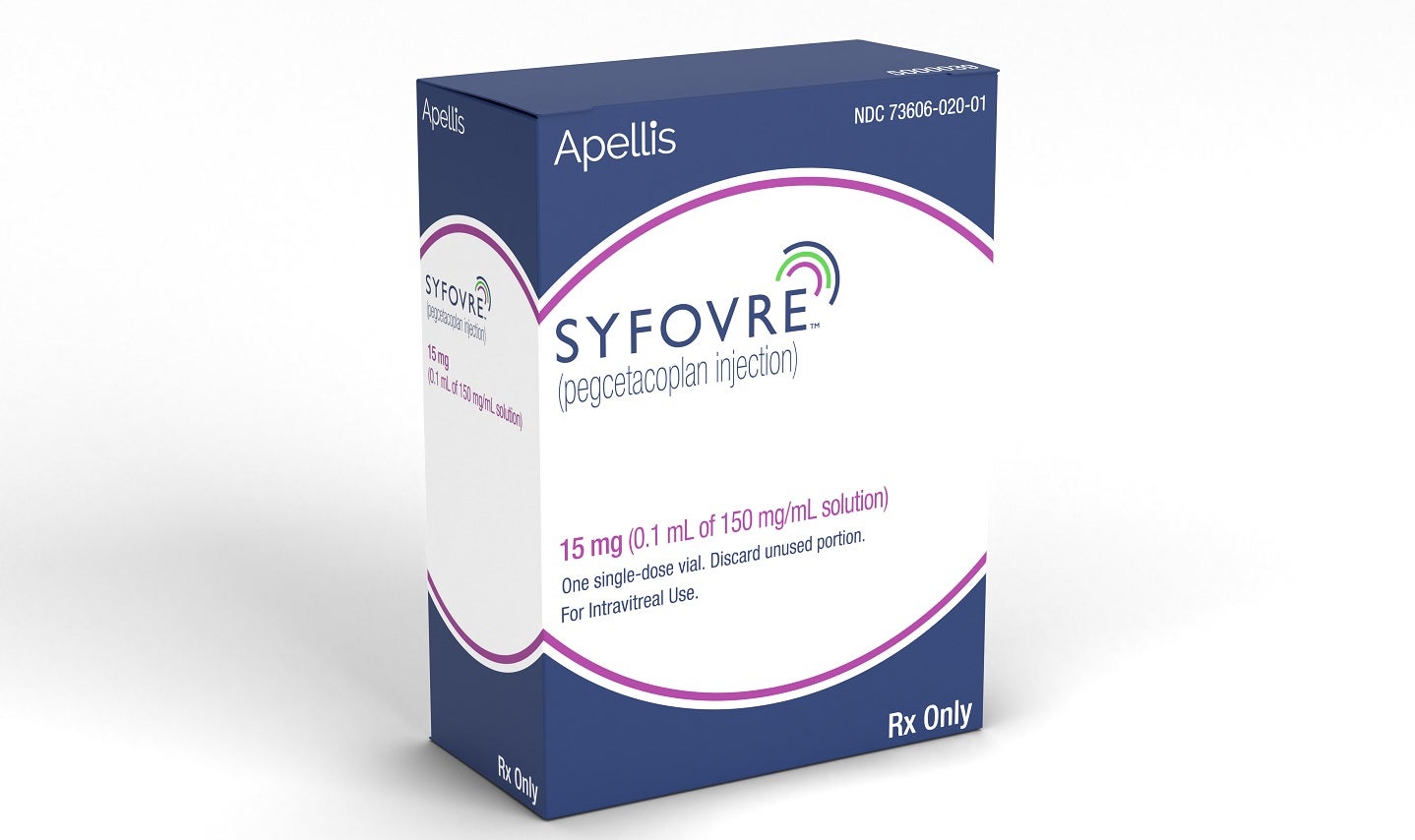
Syfovre is priced at $2,190 per vial. Image source: Internet
Given that the Phase III clinical trial results for pegcetacoplan were underwhelming, its approval did not generate significant attention in China. However, following interviews with industry experts, VCBeat believes this event holds three noteworthy implications:
First, complement therapeutics have expanded from the field of rare diseases to that of common diseases.The application of pegcetacoplan in the treatment of dry age-related macular degeneration (AMD) will significantly expand the market potential for complement therapeutics. The global AMD patient population is projected to reach 288 million by 2040, with over 80% of these cases being dry AMD. The development of complement drugs has consistently posed significant challenges. In China, only a few pharmaceutical companies, such as Innovent Biologics and I-Mab Biopharma, have established pipelines related to complement therapies, alongside a small number of innovative biotech firms with in-house R&D capabilities, such as Kangjing Biologics. The approval of pegcetacoplan demonstrates that this represents a high-barrier blue-ocean market.
Furthermore, it underscores the FDA’s focus on preserving light perception in the fundus, rather than solely on therapeutic benefits.The FDA’s recent adjustments in the approval process offer insights into the therapeutic processes and treatment goals of innovative drugs.
Finally, the numerous unmet needs in the ophthalmology field have once again come to light, presenting opportunities for both pharmaceutical companies and biotech firms in China.
Yu Jianlin, Executive Partner at GTJA Capital, believes that innovative ophthalmic drugs have entered a new phase, with Chinese companies poised to take the global lead in this field. GTJA Capital has long focused on the lucrative ophthalmology sector and has invested in companies such as Weimou Biopharma and Boyun Pharmaceuticals. “To achieve leapfrog development, Chinese companies must strategically position themselves around emerging targets, novel technologies, and new therapeutic modalities. They may also opt for indication-specific development, focusing on conditions such as dry eye disease, myopia in children and adolescents, age-related macular degeneration (AMD), and glaucoma. We anticipate that blockbuster products will emerge in these areas in the future.”
“Both Surprising and Not Surprising” Approval
Apellis, founded in 2007, is a leader in targeted C3 therapy. Its lead drug, pegcetacoplan, is a cyclic peptide synthesized by conjugation with polyethylene glycol (PEG) polymers. It inhibits the complement activation pathway by specifically binding to C3 and C3b, thereby modulating excessive complement activation.
In 2021, Apellis’ C3 cyclic peptide complement inhibitor Empaveli™ was launched for the treatment of paroxysmal nocturnal hemoglobinuria (PNH) in adults, breaking nearly 15 years of stagnation in the complement drug market and becoming the first novel complement therapeutic to reach the market.
Pegcetacoplan’s expansion into dry age-related macular degeneration (AMD) has once again propelled this complement-targeting pharmaceutical company into the spotlight, making it one of the most watched new drugs of the year. The approval of pegcetacoplan is expected to have a galvanizing effect. On one hand, the company submitted additional data to the FDA at the eleventh hour, resulting in a three-month extension of the review period—a nerve-wracking development. On the other hand, industry giants such as Roche have stumbled in the dry AMD field: Roche’s Phase III clinical trial of lampalizumab, a complement factor D inhibitor for the treatment of geographic atrophy (GA), was announced as a failure in 2018. This makes the success of this biotech company all the more significant.
The FDA’s approval was “both expected and unexpected.” It was expected because, driven by the continuous efforts of companies like Apellis Pharmaceuticals, the expansion of complement therapies into common diseases is an inevitable trend. What was unexpected was that the FDA still gave the green light to a drug that is not particularly impressive. Two Phase III studies conducted by Apellis on pegcetacoplan (DERBY and OAKS) showed that at 18 months of treatment, the progression of geographic atrophy (GA) lesions was reduced by 22% and 16% in the monthly and every-other-month dosing groups, respectively, in the OAKS study; in the DERBY study, the reduction was 13% and 12%, respectively. At 24 months of treatment, pegcetacoplan provided no benefit in improving patients’ visual function, failing to meet its key secondary endpoint, although its efficacy increased over time.
In other words, pegcetacoplan only slows disease progression, and its efficacy is far from ideal. However, in therapeutic areas with no available treatments, the ability to delay progression is itself a “success.”
Industry insiders speculate that this is also the reason why the FDA approved it for GA: “There is a significant unmet need in this field. This drug may be somewhat similar to drugs for AD, with less pronounced clinical benefits, but regulatory authorities still consider the potential benefits for patients and provide them with a solution.”
In the promising yet frequently setback-plagued field of dry AMD treatment, the market launch of a drug is needed to encourage more innovators.
Complement Theory Gains Traction, but Solutions for Dry AMD Remain Unclear
The pathogenesis of dry AMD remains unclear, with complex and interacting risk factors. Among dry AMD drugs in clinical development worldwide, those targeting the complement pathway are predominant.
“In a sense, AMD is an autoimmune disease, and overactivation of the complement system plays a crucial role in the pathogenesis of AMD,” stated Professor Hu Weiguo, founder of Kangjing Biosciences, a leading domestic innovative company specializing in complement therapeutics.
The initially recognized function of the complement system is to mediate the clearance of apoptotic cells and pathogens. Three independent pathways—the classical pathway, the alternative pathway, and the lectin pathway—converge at the level of C3. The distinct C3 convertases generated through activation cleave inactive C3 into C3a and C3b; the latter further participates in the formation of C5 convertase, which cleaves inactive C5 to produce C5a and C5b. Among these activation products, C3a, and particularly C5a, exert potent pro-inflammatory effects by promoting the synthesis and release of pro-inflammatory cytokines and chemokines, mediating the recruitment of inflammatory cells, and enhancing capillary permeability.
C3b and its degradation products mediate opsonophagocytosis and play a crucial role in bridging adaptive immune responses. Meanwhile, C5b promotes the assembly of the membrane attack complex (MAC) on the membranes of complement-targeted cells, leading to cell lysis. Mutations in complement genes, particularly in factor H (FH), a key regulatory protein of the alternative pathway, have been identified in most patients with age-related macular degeneration (AMD), resulting in excessive complement activation. Consequently, levels of complement activation products are elevated in the blood and drusen of AMD patients, accompanied by increased levels of other inflammatory mediators, including cytokines such as IL-1β, IL-18, and IL-33.
However, many clinical trials based on complement theory have ended in failure. In addition to the previously mentioned setback of Roche’s lampalizumab, a monoclonal antibody targeting factor D in the alternative pathway, eculizumab, an anti-C5 monoclonal antibody from Alexion, was declared a failure in its Phase II trial in 2017. Furthermore, ACU-4429, a dry AMD drug developed by Otsuka Pharmaceutical in collaboration with Acucela based on an anti-inflammatory mechanism, was announced as a failure in 2016 after eight years of clinical trials.
Pegcetacoplan has successfully passed Phase III clinical trials, marking only the beginning of delaying the progression of dry age-related macular degeneration (AMD); its long-term efficacy remains to be further validated through subsequent clinical applications.
Professor Hu Weiguo analyzed, “To fully achieve the most optimal inhibitory effect, it is first necessary to block all three pathways of complement activation; blocking only the alternative complement pathway yields limited efficacy and may lead to clinical trial failure. Secondly, the production or function of all active products, including C3a, C3b, C5a, and C5b, must be inhibited. This represents a relatively ideal complement therapeutic agent.”
The complement system is the core of innate immunity and serves as a crucial bridge between innate and adaptive immunity, maintaining a delicate balance between activation and regulation. Although the development of complement-targeted therapeutics is challenging, it remains highly worthy of continued exploration.
“Taking C3 as an example, it is central to complement activation and thus represents an attractive therapeutic target. However, C3 has a high molecular weight, a complex structure, and a relatively high serum concentration (averaging approximately 1.25 mg/mL), along with a rapid synthesis rate. These characteristics necessitate high dosing levels and frequent administration for C3-targeted therapies, while subtherapeutic drug concentrations make effective complement inhibition challenging. Previously developed anti-C3 monoclonal antibodies have also demonstrated unsatisfactory inhibitory efficacy. In fact, pegcetacoplan can bind both C3 and C3b, thereby blocking the interaction between C3 and the alternative pathway C3 convertase (C3bBb). It selectively inhibits C3 activation via the alternative pathway, with minimal impact on the classical and lectin pathways.”
The Fierce Competition in the Dry AMD Market Is Worth Engaging In
The Uncertain Path Forward Means Challenges, But Even More So, Opportunities.
Competition in the geographic atrophy (GA) market abroad is already intense. Although Apellis has just received approval, it may not enjoy a monopoly for long, as one of its major competitors, Iveric Bio, announced on February 16 that the FDA had accepted its New Drug Application (NDA) and granted Priority Review for avacincaptad pegol (ACP), a C5 inhibitor for the treatment of GA. ACP met its prespecified endpoints in two pivotal Phase III trials, demonstrating an efficacy rate of up to 35% observed over 12 months.
Roche, too, has not withdrawn from the race to develop novel therapies for geographic atrophy (GA); its pipeline includes RG6147, a GA drug candidate that effectively inhibits HtrA1 activity and is currently in Phase II clinical trials.
At the end of 2021, Novartis acquired UK-based Gyroscope Therapeutics and its GA gene therapy pipeline, GT005, for $1.5 billion.
GT005 is a one-time AAV-based gene therapy designed to treat patients with geographic atrophy (GA) who harbor specific mutations in the complement factor I (CFI) gene and exhibit low levels of CFI protein in their blood. GT005 still has a long road ahead, as this pipeline remains in Phase II clinical trials, with the initial regulatory submission expected in 2026 or later.
Gene therapies for dry AMD currently focus primarily on the sustained expression of anti-complement proteins, remaining grounded in complement theory. Ocular gene therapy offers distinct advantages because the eye is an isolated organ; this allows for disease treatment with lower doses and single-administration regimens, which may reduce the risk associated with repeated exposure and improve patient adherence compared to existing complement inhibitors.“At the current stage, gene therapy for chronic diseases primarily aims to achieve more durable therapeutic effects, with targets similar to those of existing drugs. These two technological approaches are both competitive and convergent.”Dr. Wang Fenghua, Founder of Langxin Bio, stated that Langxin Bio is a leading innovative company in gene therapy for hereditary and chronic eye diseases.
In recent years, major multinational pharmaceutical companies have entered into several deals related to GA therapy, beyond just this one. For example, in October 2018, Roche partnered with Ionis to jointly develop IONIS-FB-LRx for the treatment of complement-mediated diseases, including GA. In December 2020, Johnson & Johnson acquired the patent rights to Hemera Biosciences’ gene therapy HMR59. In December 2021, Roche entered into a global exclusive collaboration and licensing agreement with Lineage Cell Therapeutics to jointly develop and commercialize OpRegen, a retinal pigment epithelium (RPE) cell therapy for ocular diseases, including AMD-associated GA.
There is currently no domestically developed injectable drug specifically for dry AMD. However, Yinming Bio’s oral small-molecule drug QA102 has entered Phase II clinical trials in the United States. In contrast, significant new explorations and advances have been made in the treatment of wet AMD, such as gene therapy and VEGF-complement bispecific antibody therapy. Through technological innovation or differentiation, best-in-class or even first-in-class drugs are likely to emerge.
Pegcetacoplan still has a long way to go before becoming the ideal drug for dry AMD, but its approval is nonetheless highly significant. The launch of anti-VEGF drugs once brought about a revolutionary leap in the treatment of wet AMD, and this may help chart a new course in the dry AMD market.