Academic Forum 'Integrating Eastern and Western Medicine: Micro-Guarding the Heartbeat' Successfully Concludes in Zhuhai

RaysightMed
Medical Imaging Product Developer

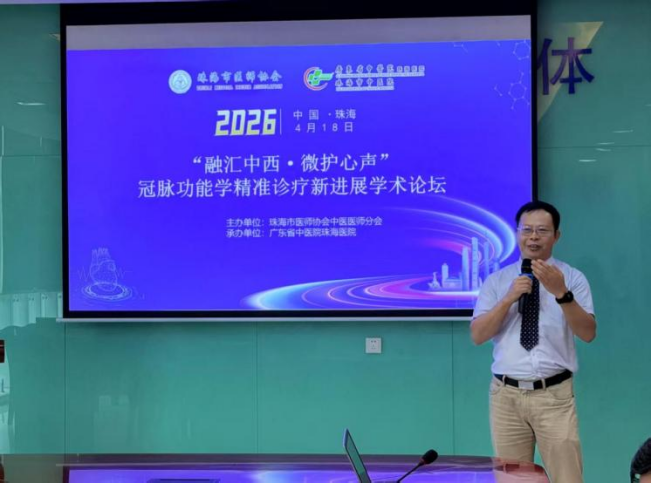
On April 18, 2026, the academic forum titled "Integrating East and West·Protecting Heart Health" – New Advances in Precision Diagnosis and Treatment of Coronary Functional Pathology, hosted by the Zhuhai City Medical Doctor Association's TCM Practitioner Branch and organized by Guangdong Provincial Hospital of Chinese Medicine Zhuhai Hospital, was successfully held in Zhuhai. Numerous experts and scholars from the fields of cardiovascular medicine and integrated traditional Chinese and Western medicine within Guangdong Province engaged in in-depth discussions on key topics such as comprehensive evaluation of coronary function from epicardium to microcirculation, diagnosis and treatment of coronary microvascular dysfunction (CMD) through an integrated approach, and the application of angiography-based functional technologies in intermediate lesions. RaysightMed, as a key participant, actively contributed to advancing the clinical value of innovative functional assessment technologies in the precision diagnosis and treatment of coronary artery disease.
Conference Opening: Integration of Chinese and Western Medicine, Together Starting AnewChapter
Professor Liu Peizhong from Zhuhai Hospital of Traditional Chinese Medicine, Guangdong Province, pointed out in his opening speech that traditional Chinese medicine hospitals have unique advantages in precise cardiovascular diagnosis and treatment. Coronary functional assessment is gradually becoming the new standard, and the integration of traditional Chinese and Western medicine will strongly support the deep integration of "syndrome differentiation and treatment" and "precision medicine."
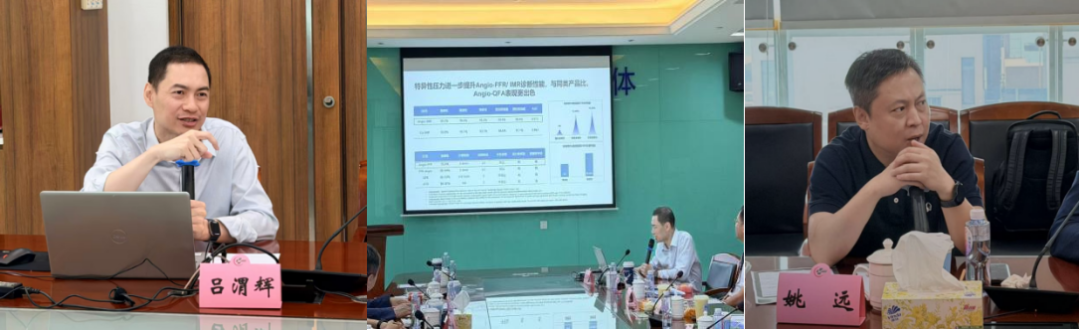
From Epicardium to Microcirculation: A New Era for Functional Assessment
Professor Lü Wei-hui from Guangdong Provincial Hospital of Traditional Chinese Medicine delivered the opening report titled "A New Journey in Comprehensive Coronary Functional Assessment," elaborating on the complementary value of FFR and IMR in myocardial ischemia evaluation. He emphasized that relying solely on coronary angiography no longer meets the needs of precision diagnosis and treatment, and a complete functional assessment from large vessels to microcirculation is becoming the new clinical standard. Professor Yao Yuan commented that functional technologies based on coronary angiography (such as AngioFFR and AngioIMR) are highly accurate, do not require pressure wires, and are convenient and safe, bringing significant benefits to clinical decision-making. The attending experts unanimously agreed that such technologies have broad prospects in borderline lesion screening, non-obstructive ischemia diagnosis, rapid intraoperative decision-making, and grassroots promotion, especially aligning with the "simple, convenient, effective, and affordable" characteristics of traditional Chinese medicine hospitals.
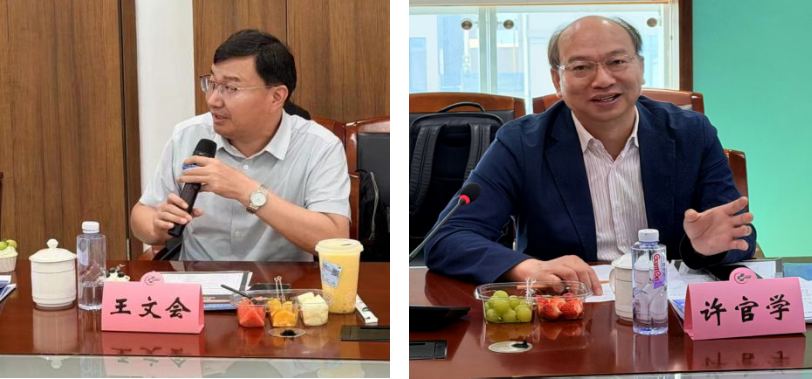
The Core Value of TCM Hospital System: New Progress in CMD Integrated Chinese and Western Medicine Diagnosis and Treatment
Professor Liu Peizhong pointed out in the report that therapeutic methods such as "promoting blood circulation and removing blood stasis" and "reinforcing qi and dredging collaterals" can improve microcirculation through multiple targets, complementing modern functional assessments. CMD is highly prevalent yet often overlooked in patients with myocardial ischemia. The profound theoretical foundation of Traditional Chinese Medicine (TCM) hospitals, along with a rich array of interventions including Chinese herbal medicines, formulas, and acupuncture, offers an effective, distinctly Chinese diagnostic and treatment pathway.
Professor Wang Wenhui from Foshan Hospital of Traditional Chinese Medicine proposed that AngioIMR makes microcirculation assessment easier and more convenient, suitable for precise screening and efficacy evaluation in traditional Chinese medicine hospitals. Professor Li Jiangong from Zhongshan Hospital of Traditional Chinese Medicine emphasized the need to focus on quality control aspects such as vascular segmentation and image selection to ensure technical accuracy.
Practical Insights: Typical Cases Drive Clinical Thinking Upgrade
Professor Feilong Rao from Jinwan Hospital, Guangdong Provincial People's Hospital, shared a precise navigation strategy for functional assessment in complex lesions; Professor Junjie Zhang from Zhuhai Hospital of Integrated Traditional Chinese and Western Medicine validated the high consistency between AngioFFR and pressure wire FFR through a case of FFR-guided PCI; Professor Hezhen Zhang from Zhuhai Hospital of Traditional Chinese Medicine, Guangdong Province, demonstrated the clinical application of AngioQFA in borderline lesion assessment. These three typical cases highlight the precise value of functional assessment in complex and borderline lesions, as well as the capability of the TCM hospital platform to promote the deep integration of Western medical technology with TCM diagnosis and treatment.
Professors Yu Tao from Wuyi Traditional Chinese Medicine Hospital in Jiangmen, Jiang Xiao from Zhuhai Hospital of Guangdong Provincial Traditional Chinese Medicine Hospital, and Liu Peijian from Shunde Traditional Chinese Medicine Hospital in Foshan, among other experts, participated in the review, demonstrating the academic leadership role of the Traditional Chinese Medicine Hospital system in the promotion of functional technology.
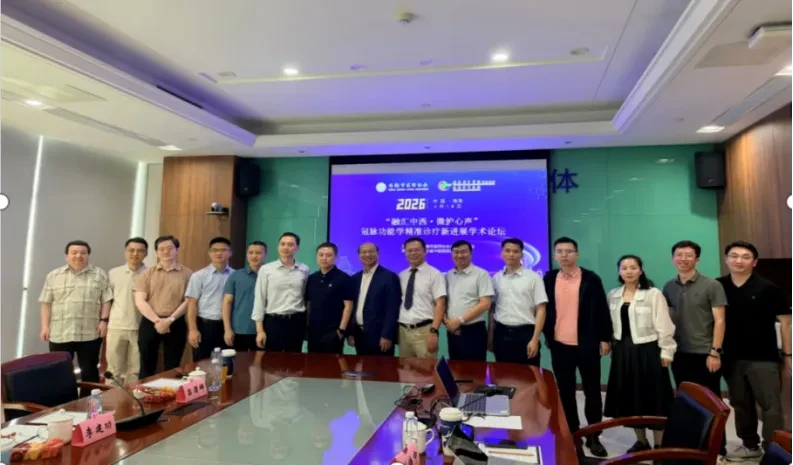
Closing Summary: Integration of Chinese and Western Medicine, a Promising Future
Professor Liu Peizhong summarized that this forum is not only an academic promotion of functional technology but also a deep practice in the integration of traditional Chinese and Western medicine within the TCM hospital system. The combination of TCM's holistic regulation and functional precision assessment will undoubtedly bring greater benefits to patients.