

Inpeco Files IPO Prospectus: The Hidden Power Behind Siemens and Abbott Revolutionizing Global Lab Automation

Inpeco
Laboratory Automation Solution Provider
The emergence of laboratory automation lines represents a major technological revolution. By connecting diverse analytical instruments with pre-analytical and post-analytical laboratory systems via automated transport tracks, and under the centralized control of an information network, these components form an integrated assembly-line workflow, thereby achieving process optimization and maximal efficiency.
Since the establishment of the world’s first fully automated laboratory assembly line in Japan in the 1980s, major medical device manufacturers such as Thermo Fisher Scientific, Roche, Abbott, and Siemens have successively initiated smart laboratory transformations and launched various IVD (In Vitro Diagnostics) automated assembly lines.
Behind this, a group of upstream manufacturers has accumulated technical strength over decades of development, becoming the behind-the-scenes force for major assembly line players. The TLA products of companies such as Royce Biotech, Mindray, Snibe, YHLO, and Autobio all stem from collaborations with them.
For example, automated quality control systems for assembly lines can be traced back as early as 2013, when Inpeco pioneered intermediate software-driven automated quality control.
Inpeco is a multinational corporation with over 30 years of history, specializing in clinical laboratory and hospital automation. Its mission is to provide customers and partners with complete control over the diagnostic process, minimize errors in clinical testing, and ensure full sample traceability, thereby achieving end-to-end process control and enhancing result quality.
Siemens’ Aptio and Abbott’s a3600 both originate from this company. In addition, Inpeco has developed its own brand, Flexlab, which focuses on fully open and compatible total laboratory automation solutions covering all laboratory equipment.
From Family Workshops to International Corporations: Research and Innovation as the Endless Driving Force
In 1990, Inpeco was founded by Gian Andrea Pedrazzini and his wife in an apartment in Segrate. Due to its proximity to San Raffaele Hospital, the company collaborated with the hospital on patient traceability projects for the first four years after its establishment, while simultaneously exploring its own business development model.
Until 1995, Inpeco participated in the first AACC (American Association for Clinical Chemistry) annual meeting held in California and collaborated with Beckman to showcase the first prototype of an automated system (AccelNet). The system was commercialized in 1997, which also helped the company open its first office in Segrate.
Since then, Inpeco has experienced rapid growth, with continuous innovation and R&D enabling the company to secure numerous major partnerships. These strategic collaborations have fueled Inpeco’s rapid expansion, sustained its ongoing R&D efforts, and led to the development of many world-first automated products.
In 1998, Inpeco partnered with Johnson & Johnson to develop Vitros, the first automated system featuring a practical track. In 1999, the company collaborated with Dade Behring, and the first total laboratory automation workstation was installed at San Raffaele Hospital in Turro, Milan. In 2000, Inpeco established an exclusive partnership with Dade Behring to bring the StreamLab laboratory automation system to market. That same year, the first open automation system was installed at Dr. Torres Laboratory in Porto, Portugal.
The partnership with Siemens began in 2007, when Inpeco entered into a commercial agreement with the company. Three years later, the renowned Aptio Automation System was launched. Seven years after that, Inpeco and Siemens secured Quest Diagnostics, the world’s largest third-party laboratory, helping it achieve automation.
In 2012, Inpeco partnered with Abbott to develop the a3600 automation system. Over the past fifteen years, Inpeco’s collaborations with Siemens and Abbott have enabled its clinical laboratory automation solutions to be distributed worldwide.
To date, Inpeco has manufactured and delivered more than 2,300 laboratory automation systems worldwide, covering over 70 countries and regions. The group is headquartered in Novazzano, Switzerland, with manufacturing facilities located in the Piedmont region of Italy. With over 30 years of innovative engineering and commercial expertise, Inpeco has become an undisputed global leader in comprehensive laboratory automation.
Fully Open Automated System with Full-Process Sample Traceability
Inpeco’s automation solutions innovatively combine open systems with complete sample traceability, ensuring end-to-end traceability throughout the testing process, delivering safe test results, and enhancing productivity for clinical laboratories worldwide.
Implementation of automation solutions involves four key components. The first is optimizing laboratory processes through an automated software suite. Inpeco manages the entire workflow via its automation software, converting data into actionable information, monitoring automated systems in real time, and ensuring complete sample traceability.
Inpeco’s automation software manages data and ensures sample traceability throughout the entire testing process, covering all stages from “pre-laboratory” to “intra-laboratory.”
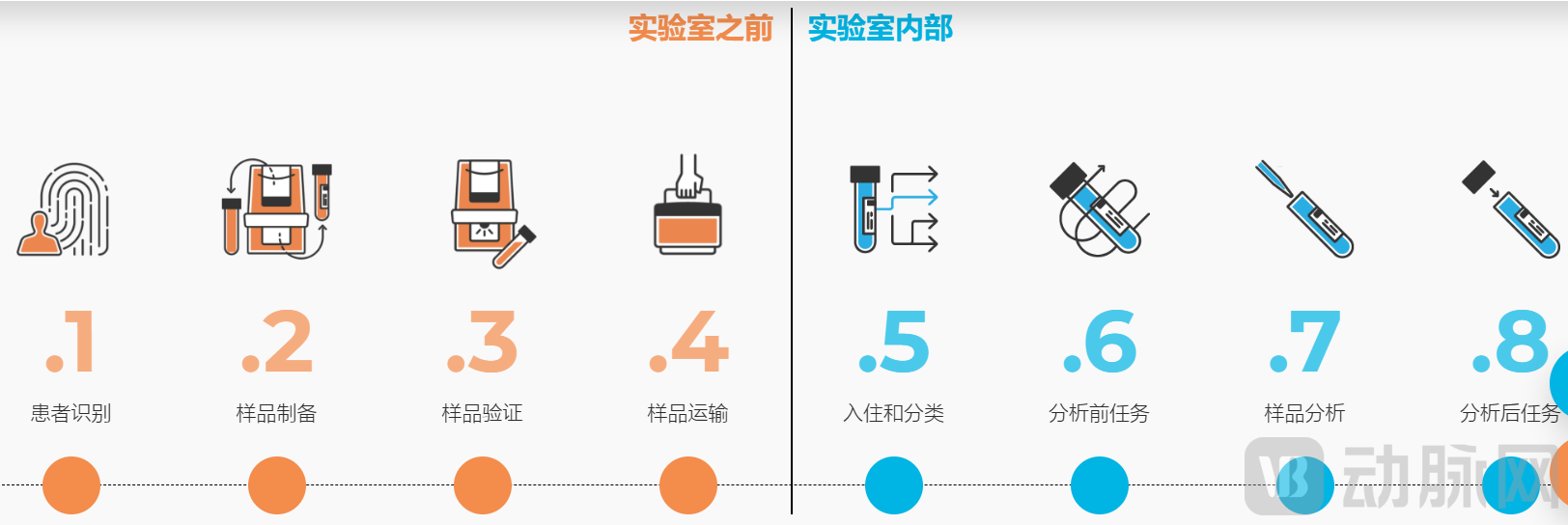
Second, the ProTube sample collection solution combines automation with traceability security, aiming to improve the pre-analytical phase by providing 100% process traceability to enhance sample quality and support high-quality test results in the laboratory.
Laboratory results have a critical impact on patient diagnosis, treatment, and health management. To obtain high-quality results, it is essential to have high-quality samples; the entire pre-analytical process must be closely monitored, from correct identification and patient matching to proper labeling and safe transportation.
ProTube, as an automated solution for specimen collection, covers all pre-analytical stages—from sample preparation in diverse environments to sample transport and delivery to the clinical laboratory. Its user-friendly interface helps minimize human errors, standardize the pre-analytical phase, and ensure full sample traceability, thereby guaranteeing compliance with international guidelines.
Third, the FlexLab open system covers all “in-laboratory” stages, enhancing productivity, shortening/standardizing turnaround time, optimizing laboratory resource utilization, and increasing unattended operation time.
FlexLab features a suite of robotic modules that automate all routine laboratory tasks, delivering safe, rapid, and “contactless” workflows. As a truly open automation system, FlexLab is adaptable to laboratories of any scale, including those with highly complex configurations. It enables hospitals and laboratories to seamlessly integrate analyzers from diverse vendors (with over 50 models available) and extend open-method capabilities to the broadest possible range of samples across 10 analytical specialties.
Key features of FlexLab technology include: single-tube operation, allowing a single blood sample to undergo biochemical testing followed by chemiluminescent immunoassay without aliquoting, thereby completing all tests in one tube; instruments arranged in a space-saving fishbone layout with face-to-face orientation; adoption of RFID (Radio-Frequency Identification) technology to enable base units to store barcode information, minimizing barcode scanning frequency and maximizing trackline operational efficiency; modular design that allows for the addition of modules or new analyzers, offering various system configurations to meet the needs of diverse clinical laboratories, including those with throughput capacities of up to 10,000 tubes per hour.
Notably, the combined use of FlexLab and ProTube enables full traceability and higher productivity from the start of the tube journey (at the collection point) to its end, covering any step in the pre-analytical, analytical, and post-analytical phases. This ensures that the entire testing process is safe and certified.
4. FlexPath: An Automated Solution for Anatomical Pathology. Currently, the diagnostic workflow for histopathological specimens is constrained by lengthy and complex procedures, lacking support for full-process automation and comprehensive sample traceability. In response, Inpeco has developed a fully automated solution for the histological diagnostic process, ensuring complete sample traceability in anatomical pathology laboratories.
First, FlexPath achieves full traceability for individual histology specimens by managing each specimen individually and tracking all activities across every processing stage, from collection to final diagnosis. Second, it integrates laboratory instruments through an open-connection design that allows laboratories to connect tools of their choice, thereby enabling customer-centric innovation. Meanwhile, FlexPath provides a unique automation solution that completely eliminates non-technical tasks, reallocating only specialized work to staff, thus improving laboratory workflows, efficiency, and turnaround time (TAT). Finally, the automated movement of specimens between workstations and final archiving eliminates issues related to traceability and retrievability, enabling lean workflow management.
The advent of assembly lines transformed slow, error-prone manual operations; Inpeco’s fully automated solutions have automated, accelerated, and enhanced the accuracy of existing laboratory workflows.
As Margherita Walkowski, Director of Core Laboratory Automation at Quest, stated, Inpeco’s automation systems have resolved many time-consuming tasks for medical technologists, enabling them to focus their expertise on higher-level responsibilities. This represents a historic leap forward for laboratory testing assembly lines.