

Salus Biomed IPO Prospectus: Innovating Affordable Sequencing and Spatial Omics for Widespread Accessibility
In recent years, single-cell and spatial omics technologies have advanced rapidly, offering broad application prospects. However, due to high costs, operational complexity, and the monopoly of core technologies by foreign enterprises, there is still a long way to go before these technologies achieve widespread adoption in China. Shenzhen Salus Medical Technology Co., Ltd. (hereinafter referred to as “Salus Medical”) has been committed to the localization of life science instruments. Its independently developed Salus Pro high-throughput sequencer and SAILOR (Salus Automated Intelligent Lab for Omics Research) platform not only match the performance of international counterparts but also feature multiple technological breakthroughs that surpass current standards. These achievements have broken the monopoly held by foreign companies over gene sequencing and spatial omics products in China, marking a crucial step forward in the commercialization of domestically produced sequencers. Recently, the program “Space-Time Dialogue” had the honor of interviewing Professor Wang Gufeng, Co-founder and Chief Scientist of Salus Medical, to share insights on how Salus Medical has broken the foreign monopoly through its independent research and development of sequencing and spatial omics technologies.
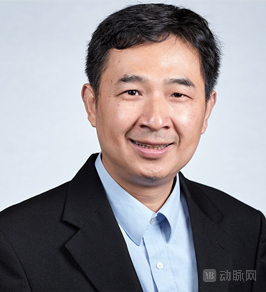
Professor Wang Gufeng
Professor Gu Feng Wang is the Co-founder and Chief Scientist at Salus Biomed (Shenzhen Sailu Medical Technology Co., Ltd.). He holds a Ph.D. in Analytical Chemistry from the University of Iowa, USA, and previously served as a Professor in the Department of Chemistry at North Carolina State University. Professor Wang is dedicated to the development and innovation of super-resolution optical imaging technologies, applying them to structural observation of subcellular organelles and dynamic tracking of biomolecular transport. Furthermore, he has developed ultra-fast, high-sensitivity analytical techniques for cancer diagnosis and prognostic biomarkers. He has published more than 80 papers in international journals such as Nature, Nature Cell Biology, and the Journal of the American Chemical Society.
Please introduce Sailu Medical’s positioning and vision.
Professor Wang Gufeng:Current sequencing and spatial omics technologies are prohibitively expensive, with most core technologies still controlled by upstream foreign companies. Domestic research relies heavily on these foreign enterprises for instruments and equipment. To break the monopoly held by foreign companies and strengthen the protection of human genetic resources, while also alleviating the heavy burden of gene-related R&D and accelerating domestic scientific research, Sailu Medical is committed to developing high-throughput sequencers with independent local intellectual property rights. Building on these sequencers as a foundation, we aim to create a globally leading spatial biology platform. Our aspiration is to become an innovator and leader in the life sciences industry. We currently focus on the independent development of gene sequencing and spatial biology products, as well as their translation into scientific research and clinical applications, to achieve innovation, domestic substitution, and surpassing of upstream products, thereby contributing to the advancement of life sciences and the security of genetic information.
Before joining CellVerse Medical, you served as a professor in the Department of Chemistry at North Carolina State University. What motivated your decision to return to China and co-found CellVerse Medical with Dr. Zhao Luyang? Why did you choose to focus on the field of spatial biology?
Professor Wang Gufeng:Specifically, this decision is primarily based on two considerations: first, a positive outlook on China’s overall economic development; and second, confidence in the growth of the entire sequencing industry and its derived research applications. We chose spatial biology because we have observed that biological technology has reached a convergence point in terms of both breadth and depth. Various foundational technologies, including multi-omics, chips, imaging, and microfluidics, are maturing, paving the way for a new generation of biological tools. Technological breakthroughs will open up an entirely new world. As is well known, previous studies have either focused on depth. In terms of resolution, this means directly observing cells and molecules to study biological processes at the most fundamental biological units. However, we could only observe one or a few molecules at a time, which often proved inadequate for understanding highly complex life processes due to insufficient information or throughput. Alternatively, research has focused on the other dimension—breadth—studying nearly all DNA, proteins, metabolites, and other molecules at the tissue level, giving rise to various omics disciplines. While this approach provides high throughput, it sacrifices spatial resolution, leaving us unable to determine how these molecules interact with one another.Spatial biology tools have achieved simultaneous breakthroughs in both depth and breadth; in layman’s terms, they are a super microscope capable of “visualizing” various molecules and their interactions.Spatial biology research enables the visualization of functional and interaction networks across the genome, transcriptome, epigenome, metabolome, and proteome at the cellular and even subcellular (organelle) levels. Its core lies in simultaneously achieving high throughput and spatial resolution. This advancement is crucial for driving progress in biological sciences.I believe that spatial biology is an inevitable path for future biological research.
How do you view the relationship between spatial omics technologies and single-cell sequencing technologies? What is your assessment of the current global landscape of the spatial omics market?
Professor Wang Gufeng:Spatial omics and single-cell technologies encompass a broad spectrum. Spatial biology, also known as spatial multi-omics, can include the study of a series of molecules such as the genome, transcriptome, epigenome, and proteome. Currently, when people commonly refer to spatial omics and single-cell sequencing, they are usually referring to transcriptomic studies. In this regard, single-cell sequencing is a highly useful technique that can identify cell types and further subdivide them into subtypes, playing a key role in elucidating cell differentiation trajectories and cell fate. However, single-cell sequencing cannot provide spatial information about cells, and their interactions can only be indirectly inferred or even guessed. Compared with single-cell sequencing technology, spatial omics has strong spatial localization capabilities. When the resolution is sufficiently high, it can map the spatial distribution of each cell subtype and accurately predict and describe the relationships and modes of intercellular interactions.The two technologies are highly complementary, and integrating them will remain the optimal strategy for the foreseeable future. However, whether spatial omics will eventually supplant single-cell sequencing remains to be seen.From an economic perspective, I believe the spatial omics market is still in its early stages of development,Commercialization is still in its nascent stages. As technology matures and the industry chain expands, more companies are expected to enter this field, leading to the emergence of a greater number of high-quality products. Sailu Medical is launching a new product that offers significant improvements in both spatial resolution and cell capture rate compared to the widely used 10x Genomics Visium platform. Most notably, the spatial resolution is enhanced by more than 50-fold, reaching the subcellular level.
Sailu Medical possesses an internationally leading sequencing and omics platform. The company’s independently developed Salus Pro high-throughput sequencer was prominently launched last November. Compared with other sequencing instruments, what are the unique advantages of the Salus Pro high-throughput sequencer? What is the current status of the platform’s data?
Professor Wang Gufeng: The high-throughput sequencer in Salus Pro is our first product designed to break market monopolies and achieve technological accumulation, with its overall design and positioning more closely aligned with the needs of various users, including those in clinical settings. This product integrates multiple innovative technologies such as large-field-of-view imaging, high-efficiency sequencing enzymes, and rapid chemistry, achieving a raw Q30 score as high as 0.9. We conducted comprehensive testing on various types of samples across approximately 40 enterprises, hospitals, and research institutions in China. The results indicate that our product’s performance parameters and data quality are comparable to those of leading international competitors, with significant advantages in certain niche areas, such as completing SE100 sequencing in 6.5 hours and supporting PE250 sequencing modes.
On February 8 this year, Salus Medical’s other core product, the Salus Evo high-throughput sequencer, made a remarkable debut during the Outstanding Products Exhibition at the 24th China Hi-Tech Fair (CHTF). Please provide a brief introduction to this product.
Professor Wang Gufeng:Salus Evo is a sequencer positioned for high to ultra-high throughput, serving as our contender in this throughput segment. It features upgrades to core modules such as fluidics and chip chemistry from the Salus Pro, and innovatively employs faster imaging technology to further enhance sequencing speed. The Salus Evo high-throughput sequencer is a complex system that integrates numerous interdisciplinary and cutting-edge industrial technologies, including small-molecule synthesis, enzyme engineering, chip chemistry, precision optics, mechanics, microfluidics, and image analysis algorithms. This system demands not only excellence in individual technologies but also rigorous standards in architectural design and system integration. We aspire for it to become the “crown jewel” of the sequencing industry.
In addition to Salus Evo, ultra-high-resolution spatial omics chips based on high-throughput sequencing and the automated, intelligent multi-omics platform SAILOR (Salus Automated Intelligent Lab for Omics Research) are also among Salus Medical’s core business focuses. Please provide a brief introduction to this platform and Salus Medical’s current product pipeline layout.
Professor Wang Gufeng:The SAILOR platform integrates our high-throughput sequencers and spatial omics instruments. It is compatible with application scenarios for both sequencers and super-resolution spatial omics platforms, while also seamlessly interfacing with upstream sample preparation workflows and other omics research equipment. Leveraging fully automated and intelligent control technologies, it provides comprehensive solutions for clinical and research applications. Sailu Medical was established in October 2020, meaning its operational history is relatively short.Currently, our clearly defined strategic focus lies in two product pipelines: sequencers and spatial biology.In the field of sequencers, one important direction is expanding breadth, such as high-throughput and large-cohort population genomics; whereas spatial omics develops depth on the basis of breadth, pursuing high spatial resolution. Super-resolution imaging technology is a unique strength of our company. Applied to sequencers, it can resolve the issue of indistinct dense "spots" in image data, increase data yield per unit area, and thereby reduce the acquisition cost per unit of data. When applied to spatial omics, it enables the capture of more detailed spatial molecular distribution and structural information, revealing insights that were previously unobservable or even unimaginable.Specifically, our product pipeline is developed based on our “FFAA” philosophy.The first “F” stands for Fast, requiring rapid sequencing and imaging; the second “F” stands for Flexible, offering diverse throughput capabilities adaptable to various scenarios; the first “A” stands for Accurate, which is the fundamental requirement; the second “A” stands for Affordable, ensuring the product is accessible to the general public and enabling unrestricted usage.
What is the significance of Sailu Medical’s globally leading super-resolution spatial omics technology, which has achieved sub-micron resolution, for advancing the field of spatial omics?
Professor Wang Gufeng:As mentioned above, a key aspect of spatial omics is spatial resolution.Achieving subcellular resolution is essential for the practical analysis of intercellular interactions based on experimental data. Attaining molecular resolution is necessary to meaningfully investigate molecule-molecule interactions.Currently, commercially successful spatial omics products based on NGS technology on the market still have resolutions far larger than that of a single cell and offer narrow fields of view, falling well short of biologists’ requirements. Although broader insights can be achieved by integrating with single-cell sequencing, results obtained through deconvolution or mapping inevitably suffer from computational errors. In contrast, SailMed’s SAILOR platform boasts submicron-level resolution, enabling the elucidation of cell–cell interactions induced by direct contact or proximity, thereby providing robust support for investigating molecular pathogenesis and identifying disease-specific biomarkers. Furthermore, SailMed is advancing the application of super-resolution optics in spatial biology, elevating spatial resolution to the sub-organelle level to reveal molecule–molecule interactions and explore life phenomena at the molecular scale.
What challenges do you believe spatial omics technologies must overcome to achieve true clinical translation? How far is Sailu Medical’s spatial omics product from realizing clinical translation?
Professor Wang Gufeng:Spatial omics has a relatively short history of development and currently remains largely in the research phase, with clinical translation not yet fully realized. A series of challenges continue to hinder its clinical adoption. On one hand, the types of samples amenable to detection are very limited, imposing stringent requirements on the initial state of the samples; on the other hand, the technical workflow for spatial omics is relatively complex. Meanwhile, the costs of instruments and consumables remain prohibitively high. Nevertheless, it is clear thatSpatial technologies hold revolutionary significance for pathological research and clinical diagnosis, with immense potential for development across diverse clinical application scenarios.As of now, there is still some way to go before Sailu Medical's products can achieve clinical translation, but many of the company's technologies are at a leading level internationally.
Saillu Medical holds multiple sequencing-related patents; please provide an overview of these patents.
Professor Wang Gufeng:Patent application is a core yet time-consuming process. Although Sailu has not been established for very long, we have never relaxed our efforts in this area. Currently, we have more than 60 patents either under examination or already granted. This achievement is closely tied to our early strategic planning. These patents fall into four main categories, covering part of our core technologies. Specifically, there are approximately 20 patents each in the areas of mechanics and biochemical reagents, over 10 in optical pathways and spatial transcriptomics respectively, and around 10 in bioinformatics algorithms.
In October 2022, Sailu Medical successfully completed a pre-A financing round of over RMB 100 million, securing a relatively high amount for an early-stage funding round. What do you believe are the reasons behind the significant investor interest in Sailu Medical?
Professor Wang Gufeng:Currently, investors in China demonstrate a high level of professionalism. During our engagements, we have had in-depth discussions with them on several core aspects of corporate development: first, whether the company possesses unique insights and strategic planning for future market and technological trends; second, whether the enterprise has leading-edge technical capabilities to support these insights and plans; and third, whether the team has the capacity to translate these plans into reality. For Sailu Medical, we have made relatively comprehensive preparations in both thought and action regarding these three points. Specifically, first, Sailu Medical has demonstrated remarkable efficiency by launching its first sequencer, achieving mass production, and completing commercialization within just one to two years, while its first-generation spatial omics products are maturing and being rolled out. Second, building upon our sequencing platforms, we have strategically entered the novel and promising field of spatial biology and have already begun implementation. Meanwhile, we possess proprietary super-resolution optical imaging and spatial omics technologies in this sector. These factors, I believe, constitute important reasons for the collaborative development between Sailu and our capital partners.
What are Sailu Medical’s development plans for the next five years?
Professor Wang Gufeng:Our Salus Pro sequencer is already being commercially promoted, while overseas markets are also being expanded. In Q2 2023, we will commercialize our first spatial omics chip with a resolution of approximately 1 micron, and launch our second sequencer, the Salus Evo, in the second half of the year. Going forward, we will introduce multiple new sequencing and spatial omics products to meet more diverse sequencing and omics needs, and work with upstream and downstream partners to build an ecosystem characterized by higher localization rates and breakthroughs in cutting-edge technologies.