

Photonic Aesthetic Medicine Surges: Four Key Demands Unlock Massive Market Potential

Fumeilei Medical
R&D Developer of Medical Aesthetic Devices
The popularity of photoelectric medical aesthetics is “skyrocketing.”
According to the “2022 Report on Consumer Trends in the Energy-Based Device Aesthetic Medicine Industry” released by SoYoung Data Research Institute on February 23, among the aesthetic medical procedures most favored or most desired to be tried by consumers in 2022,47.34% of surveyed users favor or are most eager to try photoelectric-based procedures.
Not only are photoelectric medical aesthetic devices the introductory treatment for most beauty enthusiasts, but they are also a major revenue driver in the skin whitening and rejuvenation sector. Evidently, photoelectric treatments have become a favorite among many aesthetic seekers.
A senior consumer healthcare investor told VCBeat,Currently, photoelectric medical aesthetic devices in China are predominantly imported, leaving substantial room for domestic brands to capture market share through import substitution.“From the perspective of global market evolution, photoelectric medical aesthetics companies possess strong profitability. For instance, Solta Medical Corporation, the maker of Thermage that sought an IPO in 2022, reported annual revenue exceeding $200 million.”
Furthermore, a cohort of high-quality innovative enterprises is gradually emerging in the mid-to-high-end medical device sector. Compared with the situation a few years ago, this has provided investors with a broader range of investment targets. For instance, Suzhou Fumeilei Medical Technology Co., Ltd., a Chinese manufacturer of high-end aesthetic medicine photoelectric devices, recently completed its Pre-A financing round.
More importantly, policy support continues to drive industry development. Taking Shenzhen as an example, the “Several Measures of Shenzhen Municipality to Promote High-Quality Development of the Big Health Industry Cluster,” issued by the Shenzhen Municipal Development and Reform Commission in July 2022, explicitly stated that support should be provided for electronic medical aesthetic products, and that medical devices such as medical lasers, photon-based devices, radiofrequency equipment, and ultrasound devices used for dermatological aesthetics, dental aesthetics, and traditional Chinese medicine aesthetics should be actively developed.These developments are favorable to the growth of domestically produced photoelectric medical aesthetic devices.
What Drives the “Surge” in Photoelectric Medical Aesthetics? Which Consumer Needs Do Various Procedures Address, and How Do They Differ? VCBeat Will Provide a Detailed Analysis Below.
This article is an excerpt from the “White Paper on Energy-Based Devices in Medical Aesthetics.” To learn more about the industry landscape, development logic, and potential opportunities for energy-based devices in medical aesthetics, please scan the QR code to contact our assistant and request the full report.

Since the emergence of minimally invasive aesthetic medicine in China, an increasing number of beauty seekers have embraced and grown fond of related treatments. Among these, energy-based device (EBD) procedures are particularly popular. The core reason lies inPhotoelectric-based procedures are ushering the medical aesthetics industry into an era of widespread accessibility.
First, the prices of photoelectric medical aesthetic procedures are affordable. According to the "2022 Report on Consumption Trends in the Photoelectric Medical Aesthetics Industry," the average transaction value per customer for photoelectric medical aesthetic procedures was the lowest in 2022, significantly lower than the overall average for all medical aesthetic procedures, making them a "budget-friendly option" in the medical aesthetics market.
Secondly, photoelectric medical aesthetic procedures have a low barrier to entry and carry relatively low risks, embodying an inherent potential for widespread accessibility. As non-invasive treatments, they face a lower acceptance threshold among users.
Thus, it can be seen thatOlder adults who prioritize quality of life are becoming increasingly reliant on medical aesthetic procedures.From 2019 to 2022, the proportion of users aged 31–40 undergoing medical aesthetic energy-based device treatments showed a year-on-year increase, rising from 15.40% in 2019 to 22.50% in 2022.
Among this population, there are four primary demands: skin tone improvement, skin texture enhancement, facial rejuvenation, and fat reduction with body contouring.Photoelectric medical aesthetics perfectly meet their needs.
The reason lies in the fact that the five mainstream technologies in photoelectric medical aesthetics—namely, laser, intense pulsed light (IPL), radiofrequency, focused ultrasound, and cryolipolysis—have achieved remarkable breakthroughs and have already been successfully commercialized with mature practical applications.
For instance, the principle of selective photothermolysis is commonly used to treat pigmented disorders; the extended principle of selective photothermolysis can be applied to hair removal and the treatment of cutaneous vascular diseases; the principle of fractional photothermolysis enables skin remodeling and tightening, thereby improving facial rejuvenation; and the principle of photoacoustic action can effectively treat pigmented skin diseases and enhance skin rejuvenation.
Market data can reflect the level of user acceptance of photoelectric medical aesthetics.According to the "2022 Report on Consumer Trends in the Photoelectric Medical Aesthetics Industry," photoelectric procedures have captured 53.3% of the non-surgical medical aesthetics market share and continue to experience rapid growth.
It is not difficult to see that, supported by four major demands, photoelectric medical aesthetics still has immense potential for growth.
Next, this article will conduct a comparative analysis of photoelectric energy sources based on four major needs: skin tone improvement, skin texture enhancement, facial rejuvenation, and fat reduction and body contouring.
In terms of skin tone improvement, optical whitening demonstrates significant advantages.With the rapid development of the skin whitening market, the drawbacks of traditional approaches have continuously emerged, leading to industry consolidation, while optical whitening is poised to become a new growth driver.
Overall, optical whitening offers two major advantages. On one hand, it addresses the root cause of the problem, delivering therapeutic efficacy that is more competitive than traditional methods such as pharmaceutical whitening. On the other hand, it boasts a higher safety profile with fewer side effects, making it more acceptable to consumers who are new to medical aesthetics.
Although both lasers and intense pulsed light (IPL) are optical energy sources, they differ in technical principles and each possesses distinct market advantages. Fundamentally, lasers are high-intensity, highly focused energy sources. Due to their extremely small emission angle, laser beams are nearly perfectly parallel and collimated, enabling directional, concentrated emission that generates significant thermal effects. In contrast, IPL is essentially broad-spectrum ordinary light. With a wide wavelength range of unfiltered intense light, it requires artificial control via filters and constitutes a relatively low-energy, divergent energy source.
Given the distinct characteristics of their energy sources, the future advantageous markets for development will also differ: lasers, with their high specificity and prominent therapeutic properties, are geared toward a more specialized market; whereas intense pulsed light (IPL) holds significant value in treating multiple concurrent skin conditions and vascular skin diseases.
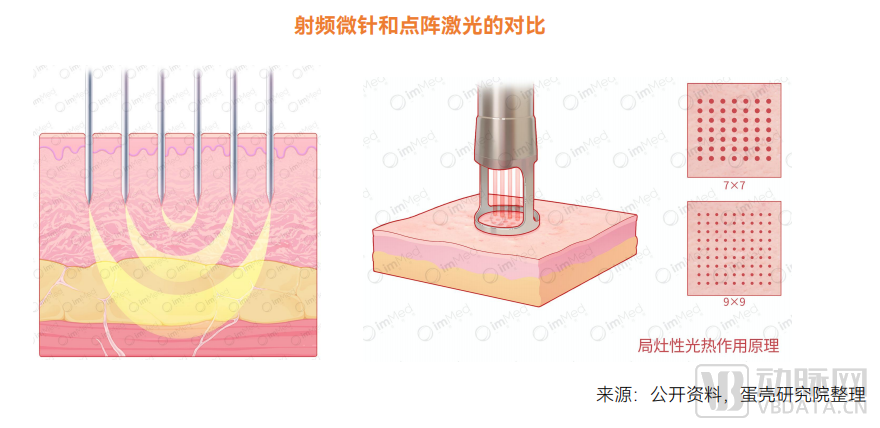
In terms of skin texture improvement, combined laser and radiofrequency therapy may represent a future trend.Non-medical aesthetic approaches offer limited improvement in skin texture, making consumer demand for medical aesthetic treatments more inelastic. Lasers, intense pulsed light (IPL), and radiofrequency (RF) can all improve skin texture to varying degrees, with lasers and RF being more suitable as primary treatment modalities. This is because, although both laser and RF systems can effectively treat skin texture concerns, significant individual variations exist in these conditions, leading to differences in clinical outcomes between the two. Therefore, lasers and RF do not represent a relationship of perfect competition.
 ▲ Graphic: Yimu Keshi
In the realm of facial rejuvenation, different energy sources target distinct customer segments. With the rapid development of the anti-aging industry in China in recent years, anti-aging concepts have become deeply ingrained among consumers. At present, a growing number of consumers recognize that anti-aging is not merely about addressing visible signs of aging that have already appeared, but more importantly, about preventing aging. According to consumer demographic data from iiMedia Research, the concept of anti-aging has penetrated younger demographics, with individuals aged 19–35 constituting the core consumer base for the industry. The trend toward younger consumers engaging in anti-aging practices is becoming increasingly prominent, and the consumer base is expected to continue expanding. Consequently, the market size of the anti-aging industry is projected to sustain its growth trajectory.
Anti-aging requires a comprehensive approach to addressing skin concerns. Early signs of skin aging originate in the epidermis, such as dull complexion, fine lines, or rough texture. Over time, the skin’s barrier function weakens, making it more sensitive to external stressors like heat and pollution. The skin may become dry, and reduced blood circulation can lead to dullness and roughness. Additionally, intracellular pigments gradually accumulate as cells age, resulting in the formation of hyperpigmentation spots.
Optical Aesthetic Treatments Offer the Best Cost-Effectiveness for Combating Early Signs of Aging. Among various energy-based devices, optical energy sources provide the most cost-effective solution for treating early aging. On one hand, optical energy sources can simultaneously improve multiple skin concerns, including skin tone and texture; furthermore, compared with technologies such as radiofrequency and ultrasound, lasers and intense pulsed light (IPL) demonstrate superior efficacy in addressing superficial skin issues. On the other hand, treatments using optical energy sources are more affordable and safer, carrying a lower risk of severe adverse effects such as facial nerve injury or permanent scarring.
For aging skin, radiofrequency and ultrasound technologies offer distinct advantages in the deep anti-aging sector due to their superior skin penetration and high therapeutic energy.
Thermage boasts a prominent brand effect and an exceptionally high reputation barrier. As is widely known, radiofrequency devices are currently the most popular anti-aging treatments on the market, with Thermage standing out as a star procedure in the energy-based medical aesthetics sector.
Focused ultrasound is widely favored within the industry and may eventually rival Thermage in market share. The evolution of the anti-aging sector reveals a prominent characteristic: rapid technological iteration, with the market requiring continuous stimulation from new innovations. Currently, the latest radiofrequency (RF) anti-aging technologies have successfully extended their treatment depth to 4.3 mm, approaching the deepest layers of the dermis. However, to achieve more significant anti-aging results and improve severely aged skin, targeting the superficial musculoaponeurotic system (SMAS) is key. Focused ultrasound is the only technology capable of reaching the SMAS layer, making it highly attractive to middle-aged and older consumers. Furthermore, focused ultrasound delivers higher energy levels, which constitutes a highly competitive marketing point from a commercial perspective.
According to research by VCBeat, there is a broad consensus within the industry that once product approval is secured, focused ultrasound devices are highly likely to become the next major trend in anti-aging.
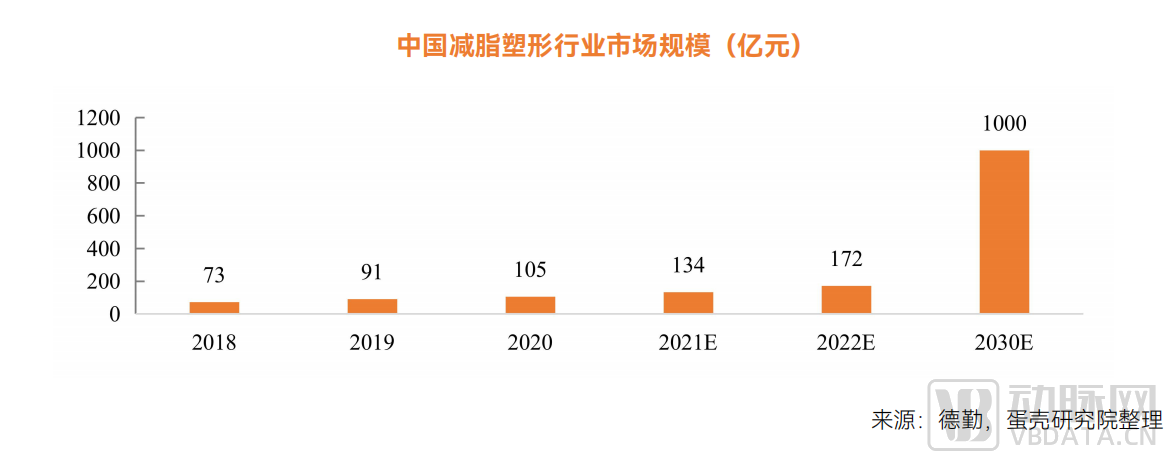
In the realm of fat loss and body contouring, market interest continues to surge, with significant potential awaiting exploitation.China’s fat-reduction technologies have evolved from an invasive era represented by liposuction to a new era of non-invasive lipolysis, characterized by cryolipolysis, ultrasound, radiofrequency, and laser treatments.
Non-invasive fat reduction currently represents a blue-ocean market, with major companies racing to develop and enter the space. However, among non-surgical body contouring technologies—namely cryolipolysis, ultrasound, radiofrequency, and laser—only a few products have obtained certification from the National Medical Products Administration (NMPA). The high-potential market urgently requires further development and product diversification.
Currently, cryolipolysis offers effective fat reduction with high market recognition; laser lipolysis features short treatment times and a gentle, comfortable experience; radiofrequency lipolysis, as a high-heat ablation technique, provides dual benefits of fat reduction and skin tightening; ultrasound lipolysis, utilizing high-intensity focused energy, integrates fat reduction with anti-aging effects; magnetic wave body contouring achieves simultaneous “fat burning and muscle building”; while lipolytic injections directly destroy adipocytes, making them the preferred choice for small-area fat reduction.
As the fat loss and body contouring industry increasingly moves toward specialization and standardization, fat loss and body shaping institutions will provide more professional, personalized, and comprehensive service solutions tailored to diverse consumer demands.
In the future, continuously iterated non-invasive body contouring technologies will provide consumers with diverse options, while helping institutions develop standout offerings, acquire customers, and accelerate expansion. The development of non-invasive technologies is redefining the body contouring market and will unlock its significant potential through ongoing advancements. Additionally, comprehensive fat reduction and body contouring solutions based on combination therapies are likely to become a trend. Aimed at addressing consumers’ full-cycle needs for fat reduction and body contouring, the combined use of different energy-based modalities, or the integration of various energy-based devices with injectable fat-reduction treatments, will not only continuously improve treatment efficiency and outcomes but also better align with consumer demands.
Driven by profit, the current medical aesthetics industry is plagued by irregularities across multiple segments, with numerous non-compliant issues prevalent in medical aesthetics institutions, product distribution, and marketing promotions. Therefore, compliant operations are imperative for the future development of the medical aesthetics industry.
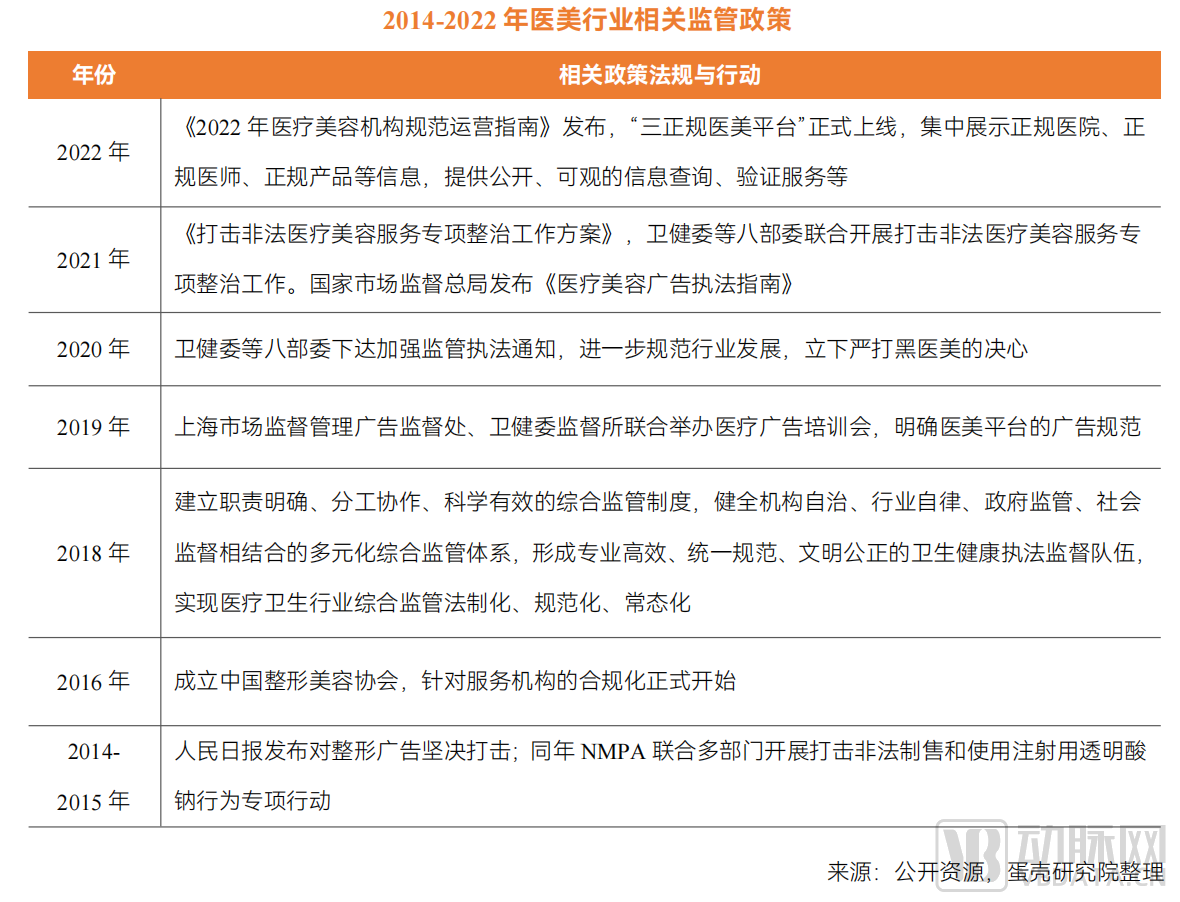
Industry regulation is gradually tightening, promoting healthy and orderly medium- to long-term development, accelerating industry consolidation, and benefiting leading upstream enterprises and compliant medical aesthetic institutions.In recent years, policy supervision has been continuously tightened and gradually shifted towards normalized daily oversight. For instance, in 2022, the National Medical Products Administration (NMPA) issued the "Catalogue for the Classification of Medical Devices" and the "Catalogue of Medical Devices Prohibited from Contract Manufacturing," explicitly bringing products such as mesotherapy injections, radiofrequency devices, and thread lifts under Class III device supervision and prohibiting their contract manufacturing. These measures have strengthened the implementation of primary responsibility for product quality and safety, improved quality control in the medical device production process, and effectively cracked down on industry irregularities such as unauthorized parallel imports and counterfeit goods.
Although the number of non-compliant medical aesthetic institutions will rapidly decline in the short term, which may lead to a decrease in overall market demand, from a long-term perspective, the rectification and cleanup of the market will create a more favorable marketing environment for certified and compliantly distributed domestic products. This will benefit medical aesthetic institutions with high compliance standards, strong operational capabilities, and robust risk resistance, ultimately providing consumers with better and more compliant services. Therefore, it is predictable that certified and compliantly distributed domestic products will gain greater market share.
Energy Source Devices: Vast Potential for Growth, Awaiting the Emergence of Domestic Leaders.China’s optoelectronic medical device manufacturers are still in a developmental stage, with the mid-to-high-end market dominated by overseas industry leaders. Domestic brands continue to lag behind in technical capabilities, and the optoelectronic equipment market has long been plagued by gray-market goods and counterfeits.
However, since 2018, the medical aesthetics market has entered an era of stringent regulation, severely impacting the markets for unauthorized and counterfeit products. Under this regulatory trend, the market share of unauthorized and counterfeit products in the niche segment of medical aesthetic energy-based devices will be further compressed, while the market size for authentic products will be more effectively safeguarded. On the other hand, domestically produced devices are currently mostly concentrated in the mid-to-low-end product lines, with sales prices generally ranging from RMB 50,000 to 100,000, and the high-end market is almost entirely monopolized by imported manufacturers.
Therefore, there is an urgent market need for high-end domestic manufacturers. As mid-to-high-end domestic optoelectronic products are successively launched, some domestic manufacturers will rapidly emerge within a short period, becoming potential industry leaders.