

LianLian Health Files IPO Prospectus: Building China's Answer to Dario with a DTx Aggregation and Distribution Platform to Tackle the Healthcare Trilemma
“The infrastructure for digital healthcare is gradually falling into place. Significant advances in digital therapeutics, the explosive emergence of ChatGPT, and the development of xR-enabled virtual reality software and hardware have all brought the future of digital healthcare within easy reach,” shared Xiang Guoliang, founder of Beijing Lianlian Future Technology Co., Ltd. (hereinafter referred to as “Lianlian Technology”), with VCBeat.
“Founder of the Real Estate and Internet Research Institute,” “Serial Internet Entrepreneur,” “Senior Real Estate Media Professional”… Xiang Guoliang wears many labels. After 2022, Xiang Guoliang, born in the 1980s, acquired another new identity—founder of Lianlian Technology, a digital therapeutics (DTx) aggregation and distribution platform.

Xiang Guoliang, Founder of Continuous Digital Technology
Leaving a career rooted in decades of experience to pivot into an entirely new field requires not only the courage, determination, and boldness to start anew, but more importantly, keen judgment and absolute confidence beforehand.
“Digital therapeutics are most likely to serve as an emerging medical approach, accelerating the arrival of next-generation digital healthcare,” believes Xiang Guoliang. He notes that the pandemic’s impact exposed shortcomings in China’s healthcare services, where the public struggled to access medical information and diagnostic and treatment services in a timely manner. The medical value of “high accessibility and inclusiveness” has become increasingly prominent. With a track record of several consecutive successful startups, he keenly recognized that digital therapeutics represent an innovative and revolutionary advancement playing a pivotal role in digital healthcare scenarios, leading him to found Continuous Digital Technology Co., Ltd.
The courage to pivot in a timely manner stems, in part, from Xiang Guoliang’s years of hands-on business experience. He has held senior executive positions at prominent internet companies such as Baidu, Sina, Leju, and Anjuke, and was involved in Leju’s entire journey from startup to its IPO in the United States. Previously, as a co-founder, he established Yisheng Daojia, which has achieved annual revenues exceeding RMB 100 million. Several startups he helped found have secured tens of millions in investment from institutions and individuals including K2VC, Yu Minhong, and Century Changhe. Through these endeavors, he has accumulated extensive and valuable practical experience in successful entrepreneurship.
Solid technical strength is the most formidable moat for Lianlian Technology. Xiang Guoliang reached out to an old friend he has known for over a decade.Hu Junhui——He holds a degree in Clinical Medicine and has previously worked at Johnson & Johnson Medical, Huami Technology, Ada Health, and Zheng’an Health. With extensive experience in the marketing, promotion, and commercialization of medical devices, information systems, and digital therapeutics, he has participated in multiple government-funded overseas medical aid projects. Meanwhile, he has conducted in-depth exploration and project operations in the fields of digital healthcare, wearable devices combined with medical applications, and digital therapeutics.

Hu Junhui, Co-Founder of Continuous Digital Technology
The two founders hit it off immediately—one focusing on internet technology and the other on innovation in the healthcare sector—and jointly established Lianlian Technology. The rest of the R&D team includes several partners with over ten years of experience, including lead programming roles in top-tier Digital Therapeutics (DTx) pipelines.
In Xiang Guoliang’s view, the key distinction between his team and other digital therapeutics (DTx) project teams lies in their more advanced commercial mindset and acumen. Within the context of China’s healthcare service environment, DTx should never be approached solely from the perspective of conventional clinical medicine—a viewpoint shaped by Xiang Guoliang’s multiple entrepreneurial experiences. During the interview, he revealed that what he trusts most is his own experience: having navigated several life-or-death critical moments during his entrepreneurial journey, he has accumulated invaluable insights. He once led Yisheng Daojia through two existential crises, innovating its business model to stage a remarkable comeback—turning the company around from the brink of liquidation to achieving annual revenues exceeding RMB 100 million the following year. He emphasized his deep understanding of the significance of going from zero to one in commercialization for startups. Currently, both the United States and China have made substantial progress in DTx research and development. The next crucial frontier for DTx to break through in the healthcare services market is commercialization. Since its inception, Continuous Digital Technology Co., Ltd. has insisted that rigorous clinical-grade pipeline development must be paired with viable commercialization pathways. This principle has driven the company’s thinking and exploration of an aggregation/distribution model, coincidentally converging with the Dario model via different routes.
The company was named LINK to embody its aspirational vision of “patient-centricity, linking users’ lives and health.” The company aims to enhance the diagnosis, treatment, and management of comorbidities and reduce the risks and costs associated with polypharmacy through an integrated multi-pipeline digital therapeutic strategy. By fully leveraging the capabilities of digital therapeutics in disease prevention, intervention, and management, the company delivers comprehensive, full-cycle, all-scenario health services covering pre-hospital, in-hospital, and post-hospital care. Targeting next-generation digital healthcare, the company is driving platform evolution toward a patient-centric virtual digital hospital by integrating xR-enabled multi-pipeline products, artificial intelligence (including R&D exploration of ChatGPT-like DTx solutions), and smart wearable devices. This approach establishes a complete digital healthcare framework encompassing prevention, management, treatment, and rehabilitation, thereby reducing medical costs, improving efficiency, and delivering a more revolutionary digital healthcare experience.
“Efficacy, accessibility, and inclusiveness,” known as the “impossible trinity” of healthcare, have long been challenges that various industry stakeholders strive to address. Xiang Guoliang believes that Dario’s “multi-pipeline integrated platform” offers a solution to break this impossible trinity by providing a robust, combinatorial digital therapeutics solution within a single integrated technology platform, covering multiple chronic conditions—including diabetes, hypertension, weight management, musculoskeletal disorders, and behavioral health.
Dario’s data demonstrate that an integrated management model is more effective than fragmented, point-solution approaches. Significant commercial growth has been achieved across both its B2C platform membership model and its B2B payer segment (including health plans, employers, and healthcare providers), validating market acceptance of multi-pipeline solutions. A key practical metric from Dario shows that its multi-condition integrated platform covers up to 40% of the target population, compared with only 8% for single-disease products.
Continuous Digital Technology Co., Ltd. adopts the same logic as Dario on the product supply side:Multi-disease platform, multi-pipeline, modularization, and dynamic combination management strategies, etc.. Given the differences between China and the United States in the healthcare sector regarding social welfare, administrative regulation, consumer awareness, and willingness to pay, the company has optimized Dario’s model based on local medical and health market trends, establishing“Deriving evidence-based insights from serious medical fields to create value in the consumer healthcare market”business model.
Considering market acceptance and technological maturity, Lianlian Technology has chosen to enter the market through its self-developed pipeline for mental health and cognitive care, complemented by collaborative pipelines. Additionally, it has integrated functional supplements and smart wearable device synergy into its aggregation and distribution platform to help users achieve better service experiences and management outcomes.
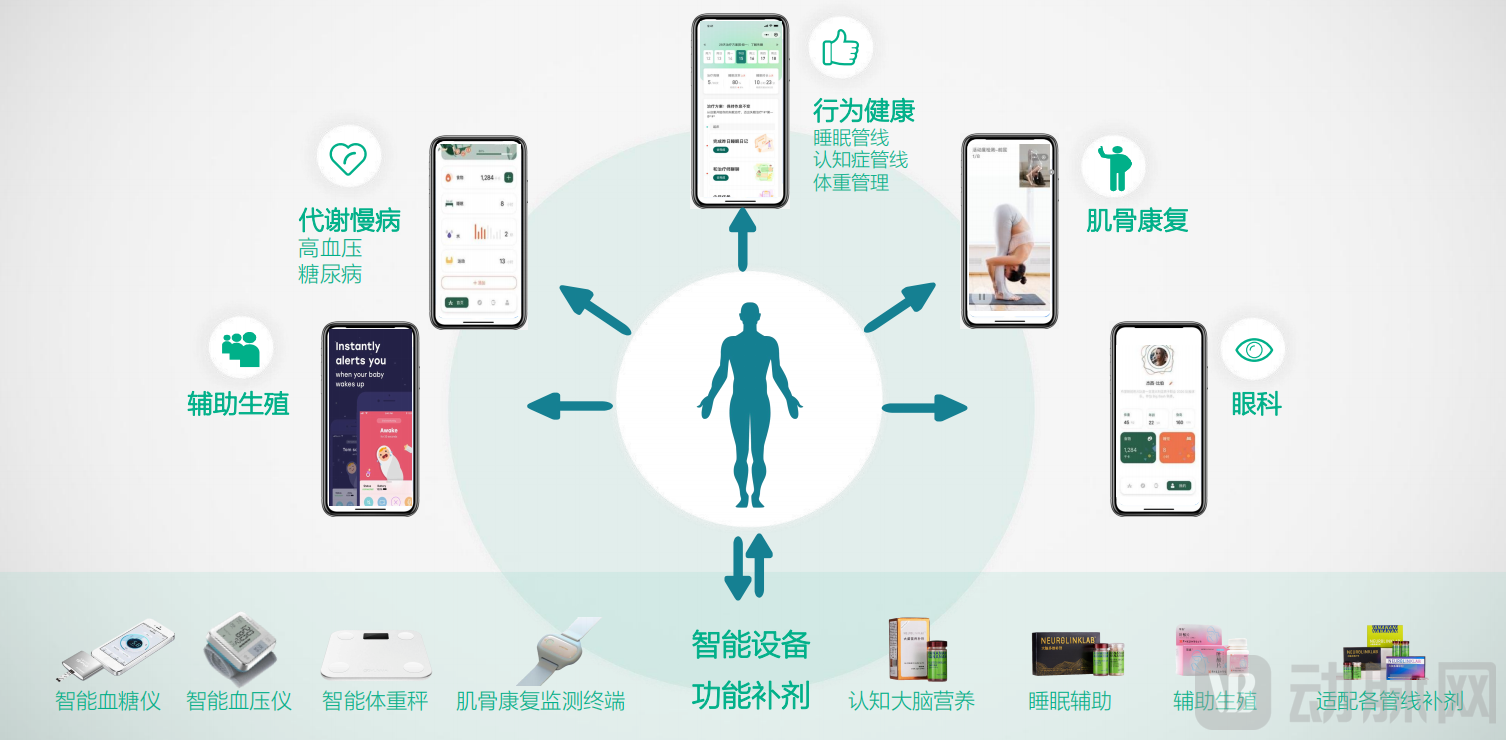
As an aggregation and distribution platform for DTx, Lianlian Technology has its own insights into the two core functional attributes of “aggregation” and “distribution.”
In terms of "aggregation," Lianlian Technology adheres to a "self-development + collaboration" model. Only by persisting in the self-development of its pipeline can the company maintain a deep understanding of Digital Therapeutics (DTx) and sustain an "upstream" industry mindset and perspective. Regarding the introduction (selection) of collaborative pipelines, evidence-based data serves as the baseline. Furthermore, these collaborations must align with the self-developed pipeline in terms of medical, demographic, and sociological attributes concerning targeted diseases and populations. This alignment ensures the delivery of modular, personalized, multi-pipeline DTx solutions for patients with comorbidities.
In terms of “distribution,” Lianlian Technology rapidly acquired users during the cold-start phase through strategies such as the D2D2C model and Link-value economic incentives, thereby building a precise user traffic pool. This established a pathway from serious medical care to consumer healthcare for both its in-house and collaborative pipelines, facilitating the commercialization of digital therapeutics (DTx) partners. Furthermore, feedback data generated by users during DTx usage is fed back to the platform and its partners, providing a data-driven basis for pipeline upgrades and iterations.
In the future, the company will also advance in-house R&D and collaborative partnerships across pipelines including assisted reproductive technology, pediatric optometry and vision care, pediatric postural correction, weight management, metabolic diseases, and musculoskeletal rehabilitation.
The development and evidence-based validation of digital therapeutics have established standards and implementation methodologies; however, there remains no effective solution to address user willingness to pay and adherence, nor is there robust data to demonstrate to payers their ability to reduce costs and enhance efficiency.
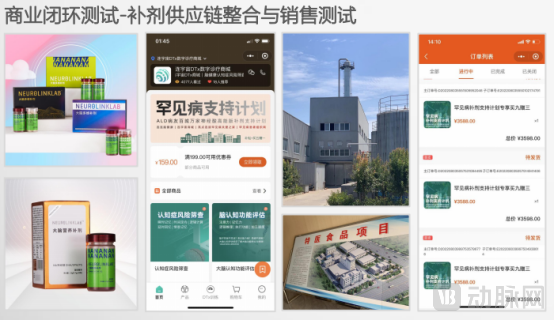
Lianlian Technology’s proprietary Link Value economic incentive system has been proven in preliminary tests to effectively enhance users’ willingness to pay and stimulate their self-driven motivation to complete longer-term treatment cycles. This Link Value system incorporates supply chain management (covering supplements, functional foods, smart wearable hardware, etc.) and an actuarial economic model, achieving a positive ROI during testing.
In terms of commercialization, Lianlian Technology has established partnerships with the Jingshi Brain Science Research Institute and Kangze Mingyang Pharmaceutical’s special medical food production base, among others. The company has achieved initial success in agent recruitment, precise off-hospital patient acquisition, and sales. It has expanded its network to include 88 prospective agents (across five cities) and 18 official agents, secured over 60 precisely acquired off-hospital customers, and generated sales revenue exceeding RMB 300,000. The LINK value economic model has realized a monthly operating cash flow of over RMB 40,000.
Since digital therapeutics originated in the United States in the 2010s and sparked keen industry interest in 2017, they have experienced rapid growth worldwide. According to the “Global Digital Therapeutics Industry Report (2022)” by VCBeat Research Institute, the global market size for digital therapeutics was USD 3.5 billion in 2020 and is projected to reach USD 19.1 billion by 2028. With broad opportunities emerging globally, prominent digital therapeutics companies such as Welldoc, Voluntis, and Propeller Health have emerged abroad.
As evidence-based data accumulates, guided by policy and enhanced physician-patient education, the advantages of digital therapeutics (DTx) will gain broader recognition and acceptance. With growing user adoption, real-world data will incentivize healthcare payers to enter the market, enabling DTx to achieve true business-to-business (B2B) integration in healthcare. Until then, Continuous Digital Technology Co., Ltd. will continue to explore a business model that “generates evidence-based proof from serious medical applications while creating value in the consumer healthcare market.”
Meanwhile, Xiang Guoliang has also charted a broader growth trajectory for the company. On the product R&D front, Lianlian Technology is exploring the use of AI to create modular combinations of product suites, aiming to reduce costs and enhance efficiency. On the user end, the company has implemented AI-guided ChatBOT interactions, which enable disease data collection during conversations with users for screening, assessment, and preliminary diagnosis, followed by personalized interventions. Furthermore, in addition to planning xR integration for its own proprietary pipelines, Lianlian Technology can also provide xR upgrades for its partners’ pipelines.
Finally, Xiang Guoliang expressed his hope to join hands with more industry peers and partners on the journey ahead, jointly building a digital therapeutics ecosystem platform. This will enable more users with healthcare needs to access the digital therapeutics products they require on the platform, injecting new momentum into the rapid growth of China’s digital healthcare sector.