

What's Inside the 'Natural Molecule' Gourd? A Novel Approach to Chronic Disease Therapeutics
At the end of 2022, Flagship Pioneering invested $50 million in its incubated company, Montai, and appointed the CEO of Flagship to personally take charge. Montai’s concept of “developing drugs for chronic diseases using natural molecules” has once again set off a wave in the field of chronic disease treatment.
Penicillin, morphine, paclitaxel, camptothecin, artemisinin... Throughout history and across the globe, the use of natural products as drugs has never been a rarity. So why has Montai garnered support from Flagship Pioneering and attracted significant attention within the industry?
“Dose and Toxicity,” “Synergistic Effects of Compounds”—Montai has proposed new approaches to these long-standing challenges that have hindered the development of natural medicines for centuries.
Montai initially focused its research on natural compounds within the category of “human-consumable, food-derived molecules” to ensure their inherent low toxicity and stable metabolic activity. Subsequently, Montai constructed the world’s first bioactivity map of human-consumable molecules, aiming to elucidate the relationships between known natural compounds found in human food, traditional Chinese medicine, and dietary supplements, and human diseases. This approach directly uncovers the links between natural compounds and diseases, while fully accounting for the synergistic effects of multi-molecule or macromolecular interactions in human metabolism.
Montai aims to pioneer innovative approaches in chronic disease drug development by focusing on safety, metabolic stability, and disease targeting.“Margo Georgiadis, CEO and Partner at Flagship Pioneering and CEO of Montai, stated, ‘The human body is complex, but starting with a fundamentally safe molecular structure enhances the solvability of the problem.’”
For the long-standing challenge of pharmacotherapy for chronic diseases, there is a not-so-niche “solution”: organically combining two active molecules to achieve synergistic effects that enhance efficacy while reducing toxicity. Novartis has taken this approach a step further:Combining two known molecules into a new, patent-protected molecular entity, the alteration of physicochemical properties through cocrystallization further amplifies the synergistic effects between the two active components.
In 2015, Novartis’s heart failure drug Entresto (Chinese brand name: Nuoxintuo; sacubitril/valsartan) was launched., at the time of its market launch, analytical articles predicted that it would become the best-selling drug in Novartis’s history. Judging from the 2022 financial report just released this February, Entresto has indeed proven to be a “key performer” for Novartis in the global market.
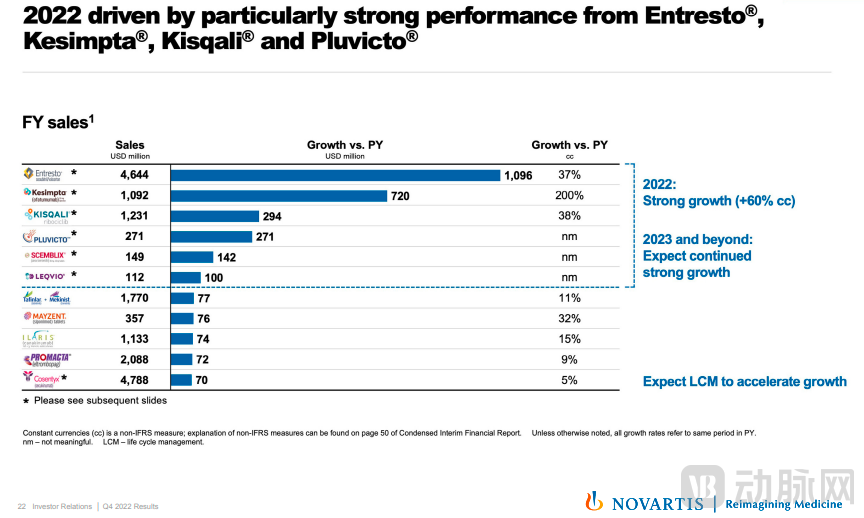
Image source: Novartis 2022 Annual Report
Entresto is a dual-acting angiotensin receptor-neprilysin inhibitor (ARNI) composed of valsartan, an approved antihypertensive drug, and sacubitril, a neprilysin inhibitor.Valsartan is an angiotensin II receptor antagonist that improves vasodilation and stimulates the excretion of sodium and water, while sacubitril inhibits the mechanisms of action of two peptides involved in lowering blood pressure.
Distinct from combination therapy, the conjugation of two substances yields a novel drug molecule with a synergistic mechanism of action., while enhancing the cardioprotective neuroendocrine system (NP system, natriuretic peptide system), it inhibits the RAAS system, the renin-angiotensin-aldosterone system, etc., to reduce heart failure.
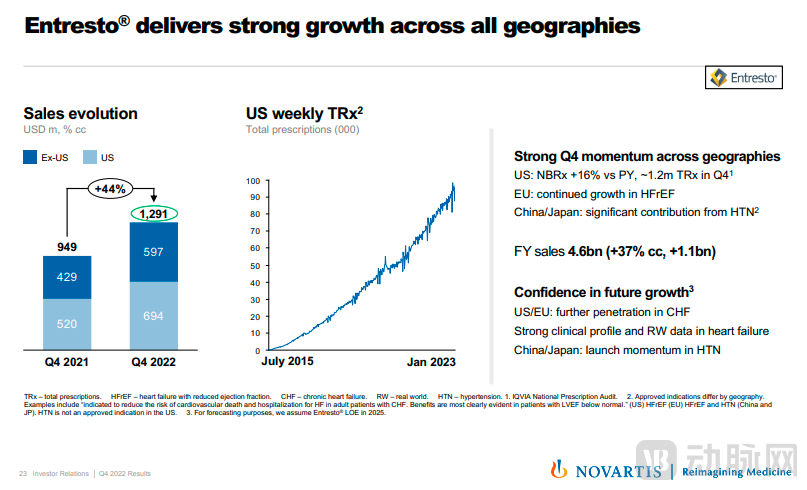
Image source: Novartis 2022 Annual Report
Driven by sustained clinical demand, Entresto has achieved robust sales growth across all markets, with global revenue reaching $4.644 billion in 2022, a 37% increase. In the United States, Entresto is the first drug approved for treating two major types of chronic heart failure and has become the preferred treatment regimen for patients with HFrEF and most cases of HFpEF. In China, Entresto’s indications for HFrEF and hypertension have both been included in the National Reimbursement Drug List. In Japan, Entresto is used for chronic heart failure and hypertension and is currently experiencing rapid volume growth. Looking ahead, as Entresto’s indications are expanded in various countries, its sales are expected to rise further.
Newton discovered gravity after being struck by an apple, yet the apple had certainly undergone free fall long before hitting him. Thus, Newton possessed a “Good Eye” and a “Good Mind.” Similarly, Novartis designed and invented Entresto by combining Diovan with sacubitril, relying on its own keen scientific “Good Eye” and “Good Mind.”
In China, there are also companies with “Good Eye and Good Mind,” such as Ascentage Pharma.
Junshengtai Pharmaceuticals stands out for its unique approach: like Montai, it bases drug development on natural compounds, while also achieving enhanced synergistic effects by combining two molecules into a new entity, akin to Novartis’s Entresto. This strategy has enabled the company to develop therapeutics for chronic diseases with positive clinical outcomes.
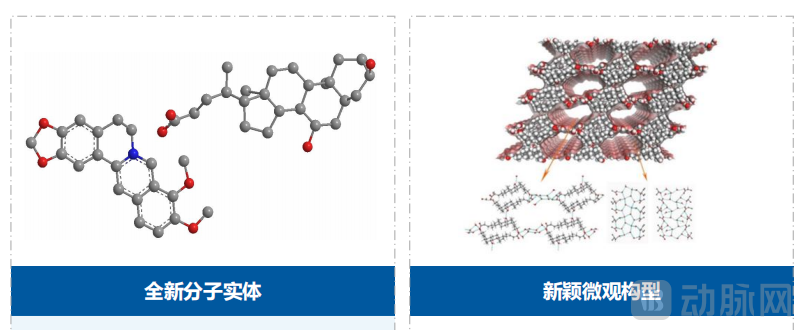
Going beyond the co-crystal configuration of Entresto, Junshengtai Pharma has taken a further step by combining two natural molecules, “berberine” and “ursodeoxycholic acid,” through ionic bonding to create a novel molecular entity, HTD1801.Berberine, also known as berberine hydrochloride, is the primary active ingredient in the traditional Chinese medicines Phellodendron bark (Huangbai) and Coptis rhizome (Huanglian). It is currently clinically approved for the treatment of various gastrointestinal infections, and its potential in regulating glucose and lipid metabolism has been extensively studied and validated. Ursodeoxycholic acid is the main active component of bear bile, a traditional Chinese medicine. It achieves therapeutic effects in hepatobiliary diseases such as gallstones, fatty liver disease, various types of hepatitis, and cholecystitis by increasing bile acid secretion and altering bile composition. Both compounds have a long history of medicinal use in humans and are widely recognized for their efficacy, safety, and tolerability.
HTD1801’s Innovative Molecular Structure (Image source: Sunstone Pharma)
HTD1801 exhibits distinct physicochemical properties compared to berberine hydrochloride and ursodeoxycholic acid, with significantly improved pharmacokinetic (PK) and pharmacodynamic (PD) profiles.Based on the multiple differentiated characteristics demonstrated by the innovative molecule, the U.S. FDA has recognized the distinction between HTD1801 and the simple combination of the two original natural molecules. Junshengtai Medicine has currently obtained patent authorization for the compound in major countries and regions worldwide, including China, the United States, Europe, and Asia, and has completed or is currently conducting 11 global clinical trials.
Preliminary research findings suggest that HTD1801 can activate hepatic AMPK, thereby comprehensively improving human metabolism.
HTD1801 exhibits multiple mechanisms of action, including anti-inflammatory, antioxidant, and anti-fibrotic effects, as well as the ability to improve insulin resistance and modulate gut microbiota. Consequently, it delivers multifaceted benefits such as improved glucose and lipid metabolism, reduced body weight, decreased hepatic fat accumulation, and enhanced liver function, thereby providing comprehensive therapeutic benefits for patients.
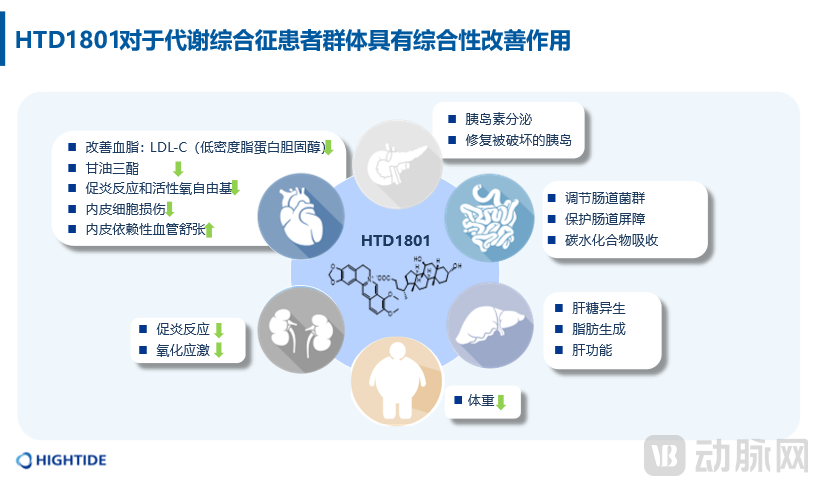
Based on this, Junshengtai Pharmaceuticals has selected type 2 diabetes mellitus (T2DM), non-alcoholic steatohepatitis (NASH), severe hypertriglyceridemia (SHTG), and cholestatic liver diseases (such as primary sclerosing cholangitis [PSC] and primary biliary cholangitis [PBC]) as the indications for this compound, targeting chronic metabolic and digestive system disorders, and has launched clinical studies globally.
In China, there are over 100 million patients with type 2 diabetes, more than 55% of whom have comorbid non-alcoholic fatty liver disease (NAFLD), affecting over 60 million individuals. However, no drugs have currently been approved for the treatment of type 2 diabetes complicated by NAFLD. Therefore, distinct from the various existing medications for type 2 diabetes,HTD1801 targets the significant clinical unmet need of type 2 diabetes associated with NAFLD.. The Phase II clinical trial for this indication has been successfully completed, demonstrating positive clinical outcomes in biomarkers related to glycemic control, weight reduction, lipid lowering, hepatic fat reduction, and fibrosis reduction.Junshengtai Pharmaceuticals expects to initiate Phase III clinical trials in 2023.。
NASH is a therapeutic area with high development challenges; however, as understanding of the disease and its pharmacology deepens, major pharmaceutical companies such as Takeda Pharmaceutical, GlaxoSmithKline, Novo Nordisk, and Gilead Sciences are continuing to intensify their efforts.This year, the NASH field is also expected to see the launch of its first approved drug.. What is rare is that,Junshengtai Pharmaceuticals’ NASH pipeline is also among the world’s leading cohorts and has received FDA Fast Track designation.. The Phase IIa clinical trial of HTD1801 for NASH has been completed in the United States, achieving its primary endpoint and multiple key secondary endpoints. The drug demonstrated a favorable safety and tolerability profile and has shown potential for comprehensive therapeutic benefits in the target patient population. The subsequent Phase IIb clinical trial has been simultaneously initiated at multiple centers worldwide to evaluate the histological improvement conferred by HTD1801 in patients with NASH comorbid with type 2 diabetes mellitus (T2DM) or prediabetes.
In another therapeutic area with no approved drugs globally—primary sclerosing cholangitis (PSC), is a chronic disease characterized by cholestasis, intra- and extrahepatic inflammation, and fibrosis resulting from multifocal biliary strictures, which gradually progresses to cirrhosis and liver failure. The European Association for the Study of the Liver (EASL) explicitly recognizes PSC as a life-threatening condition and one of the greatest unmet clinical needs in the field of hepatology.HTD1801 demonstrates a comprehensive “gut-liver-biliary” therapeutic effect in primary sclerosing cholangitis (PSC) through multiple mechanisms of action. It has received Orphan Drug Designation and Fast Track designation from the U.S. FDA, and its Phase II clinical trial has successfully met the primary endpoint.
Building on the effective mechanisms of action demonstrated by HTD1801 in chronic metabolic diseases, Junshengtai Pharma is also expanding its indications to include severe hypertriglyceridemia (SHTG).Preclinical data demonstrate that HTD1801 effectively reduces metabolic markers, and the results from the recently completed Phase I clinical trial further confirm its strong development potential in SHTG.
By discovering just one innovative molecule, HTD1801, Junshengtai Pharmaceuticals has already developed a diverse drug pipeline addressing the comprehensive clinical needs of patients with metabolic syndrome. If this can be described as “serendipity,”Thus, Junshengtai Pharma’s “connection” with HTD1801 likely stems from its strong focus on patients’ clinical needs, the mechanistic links between metabolic and digestive system chronic diseases, and the synergy of natural molecules that aligns well with the treatment of chronic conditions.。
They exert therapeutic effects by leveraging the synergistic interactions among natural medicinal compounds. This multi-mechanistic, molecular-level combination enables systemic regulation of the human body, thereby achieving therapeutic outcomes. Although specific issues such as efficacy, pharmacokinetics, and toxicity present complex challenges in clinical practice, the concept of “systemic regulation through multi-mechanistic combination” is highly compatible with and worth exploring for the treatment of chronic diseases.
The primary reason lies in the fact that chronic diseases are typically caused by long-term imbalances in the body’s metabolic system, leading to synergistic dysregulation. Identifying drugs that can act synergistically on damaged systems, the multi-mechanistic combination of natural molecules may serve as a “golden key.”
In fact, numerous innovative pharmaceutical companies worldwide have recognized the alignment between the pathogenesis of chronic diseases and the multi-mechanistic synergies of natural molecules, such as those found in traditional Chinese medicine (TCM). They are actively exploring and optimizing drug metabolism and toxicity profiles to achieve comprehensive therapeutic efficacy and clinical benefits.
Following Flagship’s investment in Montai, the development of drugs for chronic diseases using natural molecules has opened up a new avenue via “knowledge graphs.” By directly linking natural compounds to chronic diseases, this approach reduces the need for extensive exploration of natural molecular structures; however, the effective accumulation of data remains a time- and computation-intensive process.
It is a rare achievement for companies such as Novartis and Junshengtai Pharmaceuticals to construct a novel molecule by combining two molecular entities and demonstrate favorable clinical outcomes; nevertheless, this innovative approach is indeed worth pursuing and further exploring.
Regardless, the substantial unmet clinical needs arising from chronic diseases consistently demand novel approaches to “break the deadlock.” While technical methodologies may vary, the “multi-mechanistic combination of natural molecules” is indeed promising.
Reference Article:
Novartis 2022 Financial Report: Entresto Approaches $5 Billion, Ofatumumab Grows by 200%, and 4,000 Jobs Cut