

Guangyu Biomed Launches Non-Invasive, Real-Time In Vivo Blood Diagnostics Platform Covering Oncology, Metabolism, Neurology, and Pharmacokinetics
“Blood testing” involves drawing and analyzing a patient’s blood to examine changes in various blood cells and plasma biomolecules, thereby aiding in identifying the cause of disease, diagnosing and differentiating diseases, predicting patient outcomes, or evaluating treatment efficacy. Common tests such as complete blood count (CBC), liver function, renal function, blood glucose, and lipid profile, as well as less common assays including cell immunophenotyping, detection of specific fusion genes, or gene mutation analysis, can all be performed through “blood draw and laboratory analysis,” making it one of the most frequently utilized diagnostic procedures.
However, this traditional “blood draw testing” approach cannot address or meet all application scenarios. For instance, the technical difficulty and infection risk associated with neonatal blood sampling increase with the frequency of testing. Moreover, once blood samples are removed from the body, cellular viability and compound states undergo changes; coupled with the effects of transportation, storage, and laboratory processing, traditional blood testing is hardly capable of accurately reflecting the true in vivo status of substances within the bloodstream. More importantly, for trace yet critical analytes such as Circulating Tumor Cells (CTCs), real-time dynamic monitoring represents a more ideal option compared to ex vivo detection.
Thus, “non-invasive,” “real-time,” and “high-resolution” represent clinical needs that traditional “blood tests” currently fail to address.
Three founders from Peking University, Shanghai Jiao Tong University, and the Chinese Academy of Sciences jointly established Guangyu Biomedical Technology Co., Ltd. (hereinafter referred to as “Guangyu Biomed”). After nearly two decades of technological validation and accumulation, they have developed a novel blood testing solution—the in vivo circulating laser detection system—which may address the aforementioned unmet clinical needs. Furthermore, this technology has been extended to non-invasive in vitro detection of various indicators related to tumors, blood lipids, blood glucose, Parkinson’s disease, depression, and sleep disorders.
“In Vivo Flow Cytometry (IVFC)” is the core technology of Guangyu Biology. Unlike conventional in vitro diagnostics, IVFC primarily employs different light sources to vertically irradiate target blood vessels, enabling in vivo detection by analyzing the feedback signals generated from cells, molecules, and particles upon irradiation.
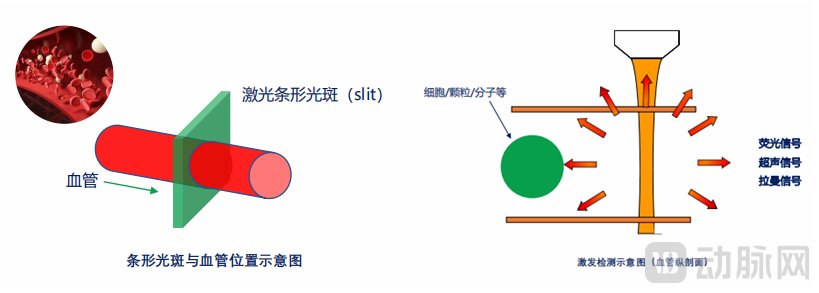
The overall operation of IVFC is simple and efficient. Once the detection device is secured, vascular localization can be achieved under optical image guidance, and the detection can be initiated immediately. During the detection process, real-time high-resolution data feedback is directly acquired and computed, ultimately generating qualitative and quantitative monitoring data as well as corresponding analytical conclusions based on the specific detection requirements.
Currently, Guangyu Biology has achieved technological applications in three areas: in vivo fluorescence signals, photoacoustic effects, and Raman spectroscopy, developing research and clinical application solutions for multiple scenarios including oncology, immunology, pharmacology, and stem cells.
1Fluorescent IVFC: Commercial Devices Now Available
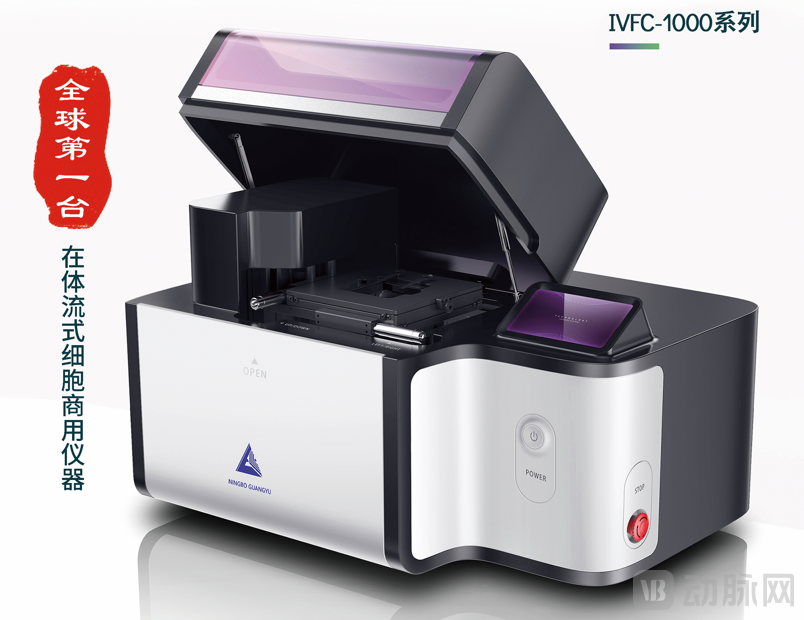
On September 16, 2022, Guangyu Biology launched the IVFC-1000, the world’s first commercial in vivo flow cytometer. As the company’s inaugural product in its in vivo fluorescence detection pipeline, it is primarily used for basic research on preclinical experimental animals.
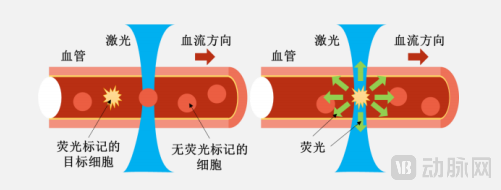
When establishing animal models, target cells are transfected with specific fluorescent protein genes, ensuring that these cells remain fluorescently labeled throughout the animal’s subsequent growth and reproduction. Taking a gastric cancer animal model as an example, all cells within the gastric cancer tissue, including circulating tumor cells (CTCs), will exhibit specific fluorescent signals during disease progression. Subsequently, intravital flow cytometry (IVFC) can be employed to detect these tumor-associated cells by capturing fluorescent signals at suitable sites such as the animal’s ear or tail.
In addition to tumor animal model studies, IVFC detection technology can also be applied in scientific research scenarios such as pharmacokinetics, drug delivery systems, immune cell detection, and cell-cell interactions within the circulatory system.
2Photoacoustic Effect PAFC: Precise Diagnosis of Melanoma CTCs
In terms of clinical applications, Guangyu Biotech has chosen to focus on the non-invasive in vivo detection of melanoma using “Photoacoustic Effect (In vivo Photoacoustic Flow Cytometry, PAFC).”
In vivo Photoacoustic Flow Cytometry Technology Based on the Photoacoustic Effect,
PAFC) focuses a beam of high-frequency pulsed laser through a microscope lens onto a suitable blood vessel. When target cells in the circulatory system (such as blood cells, cancer cells, lymphocytes, etc.) pass through the laser's focal point (window) in that vessel, they are irradiated by high-frequency pulsed lasers of different wavelengths, generating photoacoustic waves. The resulting ultrasound signals can be detected by an ultrasound probe placed on the tissue surface. Subsequently, the ultrasound signals from the detected circulating target cells are processed, and quantitative analysis is performed on the number of cells passing through the laser's focal point (window) in the blood vessel per unit time (e.g., per minute).
As a melanin-containing tumor, its tumor cells and circulating tumor cells (CTCs) also contain melanin. In the circulatory system, compared with ordinary red blood cells and white blood cells, melanoma CTCs exhibit stronger absorption capacity upon laser irradiation, thereby generating a pronounced thermal effect that causes cell volume expansion and produces more intense ultrasound signals.
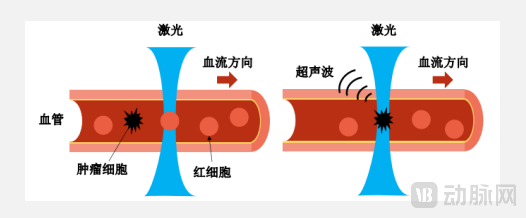
Detection of melanoma circulating tumor cells (CTCs) by capturing their unique ultrasound signals, thereby facilitating early diagnosis, treatment efficacy assessment, prognostic evaluation, and indication of metastatic risk.
In clinical practice, because circulating tumor cells (CTCs) fluctuate with the body’s circadian rhythm and considering individual differences and variations in daily routines, photoacoustic flow cytometry (PAFC) typically requires prolonged real-time monitoring of patients for 48 hours or even up to one week. Therefore, taking into account factors such as detection accuracy and patient compliance, the dorsal hand veins, radial artery at the wrist, and brachial artery in the upper arm have been proposed as three candidate sites for PAFC-based detection.
3Raman Spectroscopy Detection: Tumor CTCs, Blood Lipids, White Blood Cells, and Pharmacokinetics—All in One Glance
Compared to the first two in vivo detection methods applied to specific scenarios or conditions, the combination of Raman spectroscopy and in vivo flow cytometry appears to have generated more intense “sparks.”
When light irradiates matter, both elastic and inelastic scattering occur. During elastic collisions, there is no energy exchange between photons and molecules; only the direction of photon motion is altered. The scattering frequency remains equal to the incident frequency, and this type of scattering is known as Rayleigh scattering in spectroscopy. In contrast, during inelastic collisions, energy exchange occurs between photons and molecules upon impact. This not only changes the direction of photon motion but also alters their energy, resulting in a scattering frequency that differs from the incident frequency. Such scattering is referred to as Raman scattering in spectroscopy.
Raman spectra generated by Raman scattering have been found to provide rapid, simple, reproducible, and, more importantly, non-destructive qualitative and quantitative analysis. This technique requires no sample preparation, allowing samples to be measured directly via fiber-optic probes. Furthermore, a single Raman scattering measurement can simultaneously cover the wavenumber range of 50–4000 cm⁻¹, enabling the analysis of both organic and inorganic substances. The resulting Raman spectral peaks are sharp and well-defined, making the technique highly suitable for quantitative studies. More significantly, the laser beam diameter at its focal point is typically only 0.2–2 mm; therefore, conventional Raman spectroscopy requires only a small amount of sample. Raman microscope objectives can further focus the laser beam to 20 micrometers or smaller, facilitating the analysis of even smaller sample areas. This represents a major advantage of Raman spectroscopy over conventional infrared spectroscopy.
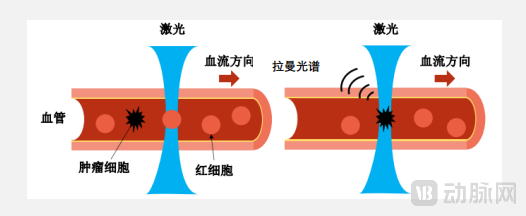
By leveraging the fundamental principles and unique characteristics of Raman spectroscopy, Guangyu Biology has enabled in vivo flow cytometry to be applied across both clinical and research settings for a wide range of scenarios, including pan-cancer circulating tumor cells (CTCs), blood lipids, white blood cells, and pharmacokinetics.
Compared to normal tissue cells, circulating tumor cells (CTCs) from solid tumors exhibit significantly higher lipid content. Raman spectroscopy-based flow cytometry enables in vivo detection by exciting and capturing the distinctive Raman spectra generated by CTCs due to their elevated lipid levels. The lipid content varies among CTCs derived from different types of solid tumors, resulting in distinct Raman spectral profiles. Guangyu Biology is currently conducting experimental validations to characterize the spectral signal differences among CTCs from various solid tumors, with the aim of establishing specific Raman spectral signatures for each type of solid tumor CTC.
Based on the principle of using optical signal feedback to determine fat content, Guangyu Biology has extended the application of Raman spectroscopy flow cytometry to blood lipid testing. As dyslipidemia is a major risk factor for numerous chronic diseases, including stroke, coronary heart disease, and hypertension, it requires close monitoring in patients and high-risk populations. Compared with traditional hospital-based venipuncture, Raman spectroscopy flow cytometry offers a simple, real-time, and non-invasive alternative, potentially enabling more convenient at-home self-testing for these individuals.
On the other hand, white blood cells, as important indicators of inflammation or infection in the human body, can also be monitored in real time using Raman spectroscopy flow cytometry.Guangyu Biotech believes that the application scenario with the strongest demand for this technology is none other thanNeonatal Intensive Care Unit (NICU). By securing wearable or patch-based detection devices on areas such as the wrist or forehead, real-time monitoring of white blood cell counts in neonates can be achieved, thereby avoiding secondary infections or injuries caused by repeated blood draws.
In scientific research, Raman spectroscopy-based flow cytometry can be applied in the preclinical studies and clinical trial phases of drug development.Leveraging the feasibility advantages of this technology for real-time monitoring of in vivo compounds, Guangyu Bio proposes that the metabolic processes of drugs in the real environments of animals or humans can be monitored in real time by identifying the unique Raman peaks formed by each drug molecule under specific light wavelengths. Furthermore, this detection process can be sustained for several hours or even days.In clinical trials, it is also possible to directly observe the varying outcomes resulting from factors such as drug dosage, individual variability, and combination therapies. For preclinical and clinical studies, which are characterized by extremely high failure rates, Raman spectroscopy flow cytometry undoubtedly represents a promising “new approach” worthy of exploration and adoption.
“Though small, it has all the vital organs.”
Surprisingly, as a startup,Guangyu Biotechnology has completed work related to technology development, prototype construction, and commercial unit production for portions of its pipeline. Its core components have achieved localization, and it has established a nationwide commercial sales team across China.
Next, the IVFC-1000, a commercial fluorescence detection system, will become a key focus for the company’s commercialization efforts. Guangyu Biomedicine will soon initiate clinical research projects on in vivo detection technology at three renowned hospitals in China. Building on this foundation, the company will conduct product clinical trials and type testing to apply for medical device registration certificates. Meanwhile, the photoacoustic flow cytometry product pipeline for melanoma detection will also enter the clinical trial phase, with active efforts to qualify for the National Medical Device Green Channel to accelerate the product registration process.
As a sustainable innovation-driven enterprise, Guangyu Biotech will continue to push the boundaries of technological applications.Raman spectroscopy-based flow cytometry technology will enter the prototype development and animal testing stages this year. Leveraging the founding team’s interdisciplinary expertise in biomedicine, molecular genetics, and optoelectronics, the company also plans to launch a fourth pipeline focused on non-invasive in vivo therapy, which enables simultaneous detection and ablation of specific cells. In addition to targeting tumor cells, Guangyu Biology will expand its efforts into near-infrared phototherapy for Parkinson’s disease.
Whether in technological exploration or corporate development, Guangyu Biotech is able to clearly identify challenges and formulate strategic plans based on a thorough understanding of its own strengths. We believe that the light of Guangyu will not only illuminate scientific research and clinical practice but also brighten the path forward for Guangyu Biotech.
It is reported that Sunlight Domain Biotech will officially launch a new round of financing to accelerate product R&D and registration, team building, and market promotion.We look forward to engaging with numerous colleagues in the healthcare and medical sectors to explore collaborative opportunities and co-create a promising future.