

Agilis Robotics Completes First Mainland China Test of World’s Smallest Fully Flexible Endoscopic Surgical Robot, Accelerating Path to Commercialization

Agilis Robotics
Surgical Robot Developer
Recently, the prototype of the endoscopic surgical robot independently developed by Qiaojieli Medical Robot (hereinafter referred to as “Qiaojieli”) completed its first test in mainland China at The University of Hong Kong-Shenzhen Hospital. This test was jointly conducted by Dr. Fan Jingwen, Assistant Dean of The University of Hong Kong-Shenzhen Hospital, and the Qiaojieli team.
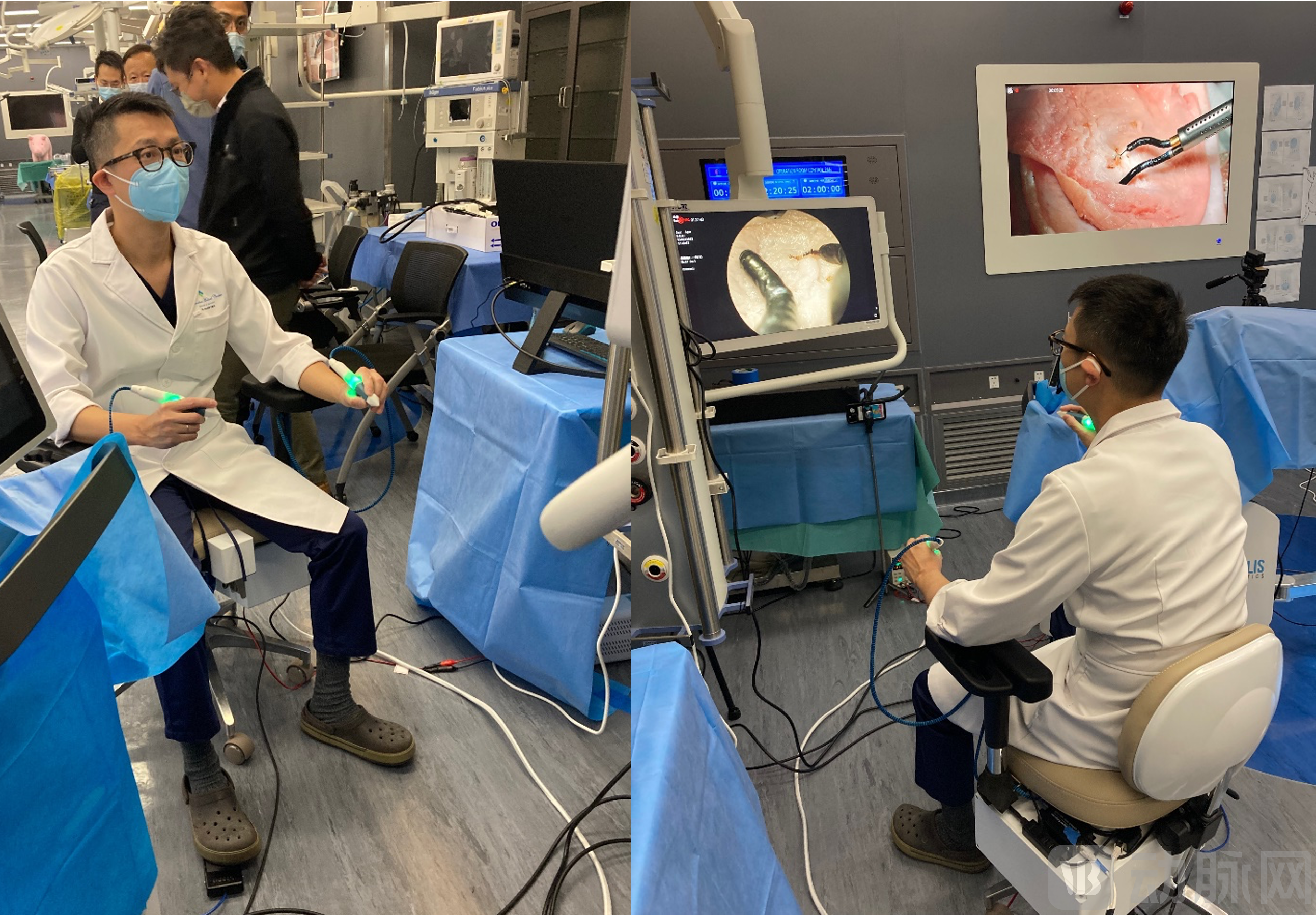
This test focused on validating the feasibility and versatility of the Qiaojieli surgical robot system in operating room settings within mainland China. The test invited Dr. Fan Jingwen, along with physicians from the departments of gastrointestinal surgery, gastroenterology, and urology at The University of Hong Kong-Shenzhen Hospital, to perform ex vivo resection of artificial tumor tissues. All test results met the expected objectives. After undergoing simulation training for endoscopic submucosal dissection (ESD) and en bloc resection of bladder tumour (ERBT), the participating physicians were all able to successfully operate the surgical robot to resect the ex vivo artificial tumor tissues, demonstrating the system’s significant advantages in clinical training.
It is worth noting that this marks the first testing of Qiaojieli’s surgical robot prototype in mainland China. Previously, the company had completed cadaveric tests and live animal tests with its second-generation prototype in Hong Kong. Moving forward, Qiaojieli plans to submit the product for type testing and conduct the next round of trials this year, aiming to launch its first-in-human (FIH) trial in 2024.
The successful testing of Qiaojieli’s surgical robot in mainland China sends a significant signal that the company is leveraging expert resources to accelerate performance iterations of its prototype, paving the way for the future large-scale adoption of its surgical robotic system.
Qiaojieli focuses on the research and development of natural orifice surgical robots. Its inception stemmed from the technological advantages in gastrointestinal endoscopic surgical robot systems held by co-founder Guo Jiawei, as well as co-founder Dr. Chen Yingquan’s assessment of opportunities in the surgical robotics sector.
Professor Guo Jiawei, who joined the Department of Mechanical Engineering at The University of Hong Kong in 2014, observed during his research on surgical robots that there were no comprehensive surgical robotic solutions available in the Asia-Pacific region for procedures involving the digestive tract and bladder. His project was well-positioned to fill this gap. Following joint evaluations by Dr. Chen Yingquan from a medical perspective and Mr. Xu Jiaming, the Chief Financial Officer, from a commercialization standpoint, they decided to co-found Guangzhou Qiaojieli Medical Robot Co., Ltd., focusing on the niche of natural orifice surgical robots.
The core technical barriers for natural orifice surgical robots are extremely high: surgical instruments must overcome the motion limitations of Da Vinci-style laparoscopic surgical robots caused by their rigid joint structures; and strictly control tool dimensions to find a balance between strength and flexibility within the narrow, multi-curved natural cavities of the human body, thereby successfully completing diagnostic and therapeutic procedures such as biopsy and resection. Furthermore, the flexible robotic arms equipped on natural orifice surgical robots impose exceptionally high requirements on the interactivity between surgeons and the robotic system.
It is precisely for this reason that the market for natural orifice surgical robots remains largely untapped, with fully flexible systems or those compatible with standard endoscopes being virtually non-existent both domestically and internationally; furthermore, there are currently no comparable products approved by either the NMPA or the FDA.
In addition to surgical applications, natural orifice surgical robots can also be used for diagnostic examinations, indicating substantial growth potential in this sector. Currently, their commercial prospects are gradually being realized. According to data on the market share of different types of surgical robots from 2015 to 2026, published by Kaiyuan Securities Research Institute, the market share of natural orifice surgical robots in China is projected to expand rapidly.
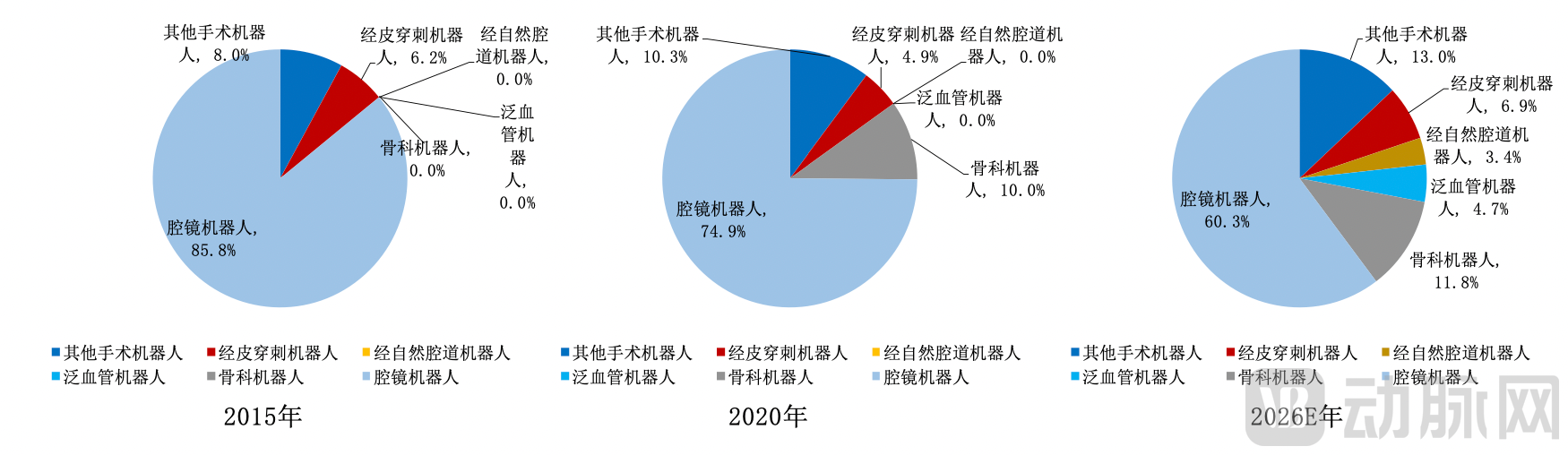
2015-2026: Rapid Expansion of the Market Share of Orthopedic, Pan-vascular, and Natural Orifice Robots in China
Image source: “Surgical Robotics Series Report I” by Kaiyuan Securities Research Institute
The Qiaojieli team focuses on technological R&D and maintains frequent, efficient communication, collaboration, and exchange with clinical practitioners. Shortly after its establishment, the company already had mature products, conducted cadaver tests within one year, and subsequently carried out multiple live animal trials, making it highly likely to emerge as a pioneer. The tests completed at Shenzhen Hospital of Hong Kong University mark the product’s first trial in mainland China, further validating its versatility and effectiveness across various operating room scenarios.
The surgical robot system developed by Qiaojieli consists of three components: the main console, flexible surgical robotic arms, and the control system.
For the surgical environment of endoscopic submucosal dissection (ESD)-induced strictures, Qiaojieli's robotic armAdopts a flexible continuum structure, and maintain the force required for surgery while minimizing its size. Subsequently, the prototype’s volume was reduced by 50% compared to the original design, and it is equipped with an endoscope holder that allows adjustment to the optimal position for surgical procedures.
Its fully flexible robotic arm has a minimum diameter of only 2.5 mm., which addresses the challenges of narrow endoscopic working channels and stringent tool size requirements. The Qiaojieli robotic arm can pass through the working channels of conventional gastrointestinal and urethral endoscopes for use in gastrointestinal and urological surgeries. Meanwhile,The design of the robotic arm’s diameter and size can be adjusted according to the type of surgery, enabling its application in any conventional endoscopic procedure and ensuring its versatility.. With only basic endoscopic training and corresponding robotic arm operation training, physicians can achieve surgical outcomes that currently require expert-level skills, significantly reducing training time and facilitating rapid adoption.
Furthermore,The system’s endoscopic bracket features high degrees of freedom and is equipped with an automatic locking function.. During the procedure, no assistant is required; the surgeon can adjust the endoscope and robotic arm positions with one hand, ensuring a smoother surgical workflow while maintaining procedural safety.
Most critically,Qiaojieli achieves a balance between tool size and flexibility, and enhances control system performance through artificial intelligence (AI) and augmented reality (AR) technologies.. The flexible robotic arm can bend significantly, offering a high degree of freedom, while the end-effector grasper can fully encapsulate and lift the tumor. Furthermore, the system’s robotic arms are collision-resistant, allowing surgeons greater flexibility in maneuvering during procedures. Leveraging intelligent algorithms, the system enhances surgical precision and ergonomic comfort for the surgeon while ensuring safety.
Moreover, the flexible robotic arm of the Qiaojieli surgical robot features a detachable design. For different surgical steps (tissue grasping, electrocautery cutting),The system’s flexible robotic arm can be configured with different surgical instruments. A quick-release modular design is employed between the robotic arm and the robot drive unit.,Rapidly replaceable as required by surgical needs, enabling the system to perform multiple dexterous tasks in confined spaces.。
Finally, taking into account the individual operational habits of physicians, the Qiaojieli systemEquipped with Multiple Control Modes, the system can configure preferred operational modes based on physicians’ usage habits. In addition to the default controller, the system also supports pedal control modes commonly used in general surgical robots. Physicians can equip different control modes according to their personal preferences and switch between them with ease. This allows the system to be configured with the most convenient operational mode tailored to the needs of physicians in different departments, enabling comfortable and intuitive control.Reduce the complexity and difficulty of surgical procedures.
After completing this test,Dr. Fan JingwenHe stated, “Compared with traditional surgery, Qiaojieli’s surgical robot system offers greater operational convenience. In this test, endoscopic tumor resection was completed with remarkable ease. The system aligns surgical procedures with the conventional workflow of established surgical robots, thereby reducing procedural complexity while enhancing precision and safety. Additionally, Qiaojieli’s AI-assisted system deserves mention; it enables surgeons to better perceive the depth of the surgical scalpel and assists in surgical training.”Optimize the learning curve for physicians, enabling young doctors to perform endoscopic surgeries and overcoming the previous limitation where only clinicians with extensive experience could operate.”
The successful development of the Qiaojieli endoscopic surgical robot is attributable not only to its outstanding technical advantages but also to the in-depth collaboration between the company and clinicians during the device R&D process, as well as to hospital support for innovative technologies. In this instance, Shenzhen Hospital of Hong Kong University and Dr. Fan Jingwen have offered positive evaluations and active support for the Qiaojieli endoscopic surgical robot system.
Dr. Fan Jingwen, Assistant Dean of The University of Hong Kong-Shenzhen Hospital (hereinafter referred to as “HKU-SZH”), also serves as the Director of the Hospital’s Department of Surgery, International Medical Center, and Clinical Skills Training and Conference Center. With extensive experience in robotic surgery, Dr. Fan introduced the robotic surgical system to HKU-SZH and is committed to advancing the development of robotic surgery in South China, having trained more than 1,000 surgical professionals to date. In the face of innovative technologies, Dr. Fan believes that new techniques and healthcare models can further enhance physicians’ capabilities, promote the advancement of clinical medicine, and address the uneven distribution of medical resources. More importantly, new surgical instruments and technologies will assist surgeons in providing better treatment options for patients, thereby delivering tangible benefits to patient care.
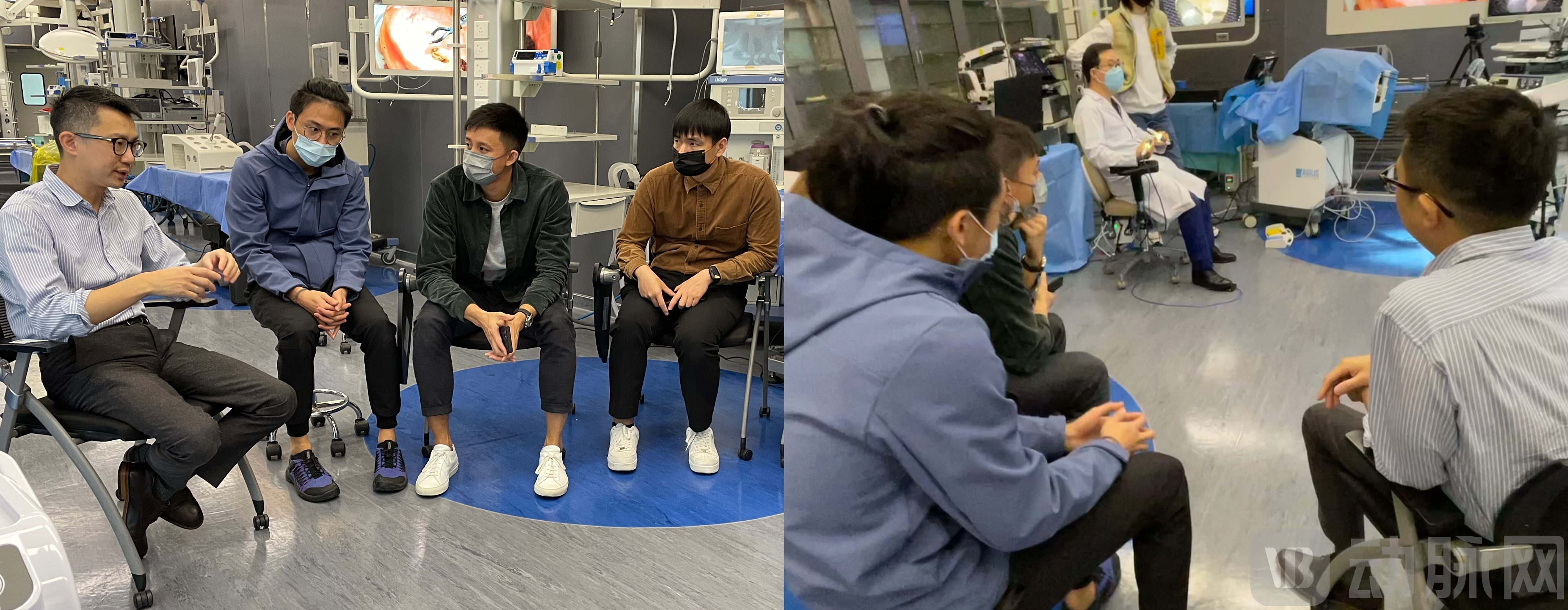
Following the completion of testing, Dr. Fan Jingwen provided Guangzhou Qiaojieli Medical Robot Co., Ltd. with numerous constructive recommendations based on his clinical experience and operational insights, thereby supporting the company’s product innovation and iterative development. He further elaborated on the value that innovative technologies bring to hospitals, physicians, and patients.
“The University of Hong Kong-Shenzhen Hospital has assembled a team of core professionals from The University of Hong Kong, along with experienced chief physicians from mainland China. In this context, we are capable of performing various complex surgical procedures. At the same time, we recognize the value of innovative technologies in clinical practice. Therefore, The University of Hong Kong-Shenzhen Hospital actively embraces innovative technologies and has established facilities such as the International Medical Center and the Clinical Skills Training and Conference Center. We aim to promote the development of innovative medical technologies in China through the integration of international and domestic innovations. Most importantly:”Empowering physicians to deliver a broader range of new services and surgical procedures, thereby genuinely helping more patients resolve their health issues.“Dr. Fan Jingwen said.”
Next, the Qiaojieli surgical robot prototype will be housed at the Qiaojieli Guangzhou office, where it will be open for visits to support clinical technical training for endoscopic surgery in mainland China. The company will also organize more seminars and focus group meetings in hospitals to collect feedback from various physicians while providing product trials, aiming to improve the prototype’s performance and prepare for the domestic NMPA certification application. Meanwhile, The University of Hong Kong-Shenzhen Hospital will continue to conduct basic and clinical research, while incorporating more innovative medical devices for usability testing to further enhance its capabilities and promote the development of the healthcare industry. Currently, Qiaojieli is jointly applying with The University of Hong Kong-Shenzhen Hospital for the Guangdong-Hong Kong Technology Cooperation Funding Scheme to comprehensively improve the surgical efficiency of robot-assisted endoscopic submucosal dissection (ESD).
It is reported that Qiaojieli previously secured Series A financing from Korea Investment Partners Co., Ltd. and K2 Venture Partners. Combined with its earlier angel round, the company has raised a total of over $7 million. Currently, Qiaojieli has launched a new funding round with a target of $10 million to support product iteration and prepare for NMPA and FDA certification applications.