

Shenzhou Hanfang Medical Submits IPO Prospectus for Its Standardized TCM 'Treating Internal Diseases Externally' System Adopted by Nearly 30 Tier-3 Hospitals and Manufactured on a Foxconn Production Line
According to the standardized terminology of the National Medical Products Administration, the commonly used routes of administration in clinical practice are categorized into four types: gastrointestinal administration, injection administration, respiratory tract administration, and transdermal administration. Factors such as plasma drug concentration, hepatic and renal burden, and pharmacodynamics and pharmacokinetics are indispensable considerations when selecting a route of administration.
Today, we will discuss Transdermal Drug Delivery (TDD).
Transdermal Drug Delivery (TDD) enables drugs to be absorbed through the skin into the systemic circulation, achieving effective plasma concentrations for disease treatment or prevention. This route bypasses hepatic first-pass metabolism and avoids drug degradation in the gastrointestinal tract. TDD offers advantages such as reduced fluctuations in plasma drug concentration, diminished toxic side effects, less frequent dosing, and improved patient compliance. However, it also faces challenges, including low delivery efficiency and a limited range of applicable drugs.
Transdermal administration is also one of the traditional routes for administering Traditional Chinese Medicine (TCM). Conventional TCM transdermal formulations, such as patches, tinctures, and ointments, are primarily designed for local application with localized effects, focusing mainly on analgesia and antipruritic actions. Due to factors such as the high molecular weight and complex composition of TCM ingredients, even topical TCM preparations enhanced with potent penetration enhancers struggle to achieve the therapeutic effect of “treating internal diseases through external application,” whereby visceral disorders are treated via transdermal delivery. Although previous studies have proposed increasing the administration temperature to accelerate the drug delivery rate of TCM, this approach has introduced a new problem: low-temperature burns. Such burns can cause skin erythema, blisters, and other adverse reactions in users. The presence of these safety concerns has made the concept of “treating internal diseases through external application” in TCM seem like an unattainable dream.
Can safe and efficient local administration for systemic therapy be achieved while preserving the unique advantages of transdermal delivery of traditional Chinese medicine?
TTS (Transdermal Temperature Seal) Dynamic Temperature-Controlled Transdermal Therapy System: “Yes.”
TTS (Transdermal Temperature Seal) Dynamic Temperature-Controlled Transdermal Therapy System (hereinafter referred to as "New Hanfang TTS") was independently developed by Beijing Shenzhou Hanfang Pharmaceutical Technology Co., Ltd. (hereinafter referred to as "Shenzhou Hanfang") over a period of nearly 20 years., with full independent intellectual property rights, it has gained support and recognition from multiple authoritative clinical institutions in terms of technology, products, and clinical applications, becoming a globally unique, efficient, and safe percutaneous treatment method.
Unlike traditional TDD transdermal therapy technologies, New Hanfang TTS fundamentally achieves “high efficiency” and “safety” through its proprietary technology.
Traditional transdermal drug delivery (TDD) techniques, characterized by low drug entry rates and insufficient driving force, struggle to overcome the absorption barrier of subcutaneous capillaries. Consequently, the portion of the drug that permeates the skin is absorbed into the systemic circulation and distributed throughout the body, making it difficult to achieve effective therapeutic concentrations at the target site. To address this issue,Shenzhou Hanfang has developed the core patented technology of “APS Thermal Coupling,” which creates a drug delivery environment characterized by coupled pressure and high temperature on the skin surface. This process establishes drug channels within the stratum corneum, enabling drug molecules to overcome the “sink effect” of capillaries under the unique driving force generated by the coupling of pressure and temperature. Consequently, the drugs reach the target treatment sites or tissues directly, achieving effective therapeutic concentrations.。
Currently, Xin Hanfang TTS has also overcome the formulation defect of conventional transdermal drug delivery systems, which often leads to the widespread dispersion of volatile active ingredients, through its unique product design.Achieved Unidirectional Permeation of Aromatic Hydrocarbon Components in Traditional Chinese Medicine, thereby increasing the likelihood of synergistic effects among multiple drug components.
Even more remarkably, the New Kampo TTS’s fully automatic control technology for skin temperature in the administration area enables highly efficient drug delivery through thermal coupling, while achievingNo burns occur with continuous drug administration at temperatures exceeding 50°C for 60 minutes.。
The single treatment session of the New Hanfang TTS lasts approximately 45 minutes, with the first 25 minutes primarily dedicated to establishing a continuous drug delivery pathway under a specialized structure, and the subsequent 20 minutes focused on achieving safe and efficient sustained drug permeation driven by continuous delivery dynamics.
After more than 20 years of practice, and building upon the traditional Chinese medicine (TCM) wisdom of transdermal drug delivery and the theory of acupuncture and meridian therapy, the "New Hanfang TTS Dynamic Temperature-Controlled Transdermal Therapeutic Device" series has been developed using the aforementioned innovative modern drug delivery technologies. New Hanfang TTS has screened three patented TCM formulations and their corresponding acupoint combination protocols from hundreds of commonly used medicinal herbs. Therefore,To a certain extent, New Kampo TTS ensures the quantification and standardization of transdermal therapy techniques for traditional Chinese medicine.。
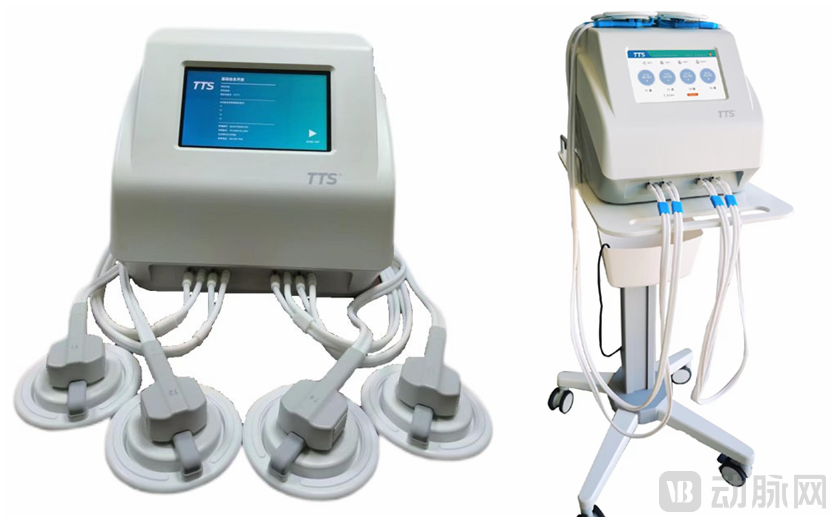 New Hanfang TTS Transdermal Therapeutic Device (Image source: Shenzhou Hanfang)
Based on varying requirements for treatment capacity and functional modules, the company has developed a series of therapeutic devices. Different models can address treatment needs across 2 to 8 distinct body areas, with the option to install Internet of Things (IoT) functionality.In other words, internet hospital platforms can directly customize programs on devices to connect to their own local area networks. After standardized treatment procedures are completed on the devices, treatment data can be centrally collected and managed. This functionality is equally applicable to large offline hospitals, community hospitals, or specialized disease departments.
Under the New Hanfang TTS drug delivery system, the stability of compounded traditional Chinese medicine (TCM) ingredients is better ensured, thereby maximizing the therapeutic efficacy of TCM.
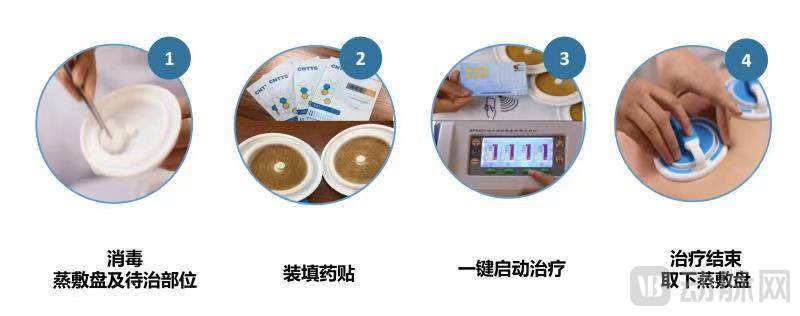
New Hanfang TTS Transdermal Therapeutic Device Operating Procedures (Image Source: Shenzhou Hanfang)
Currently, the company's core APS technology has been granted invention patents in major target markets including China, the United States, Japan, Italy, Germany, and India. The series of therapeutic devices have also obtained registration and certification from the National Medical Products Administration (NMPA) and the U.S. Food and Drug Administration (FDA), securing marketing and sales rights in China and North America.
In Traditional Chinese Medicine (TCM) meridian theory, the Qi of the five Zang organs and six Fu organs is infused into specific acupoints on the back, collectively known as the Back-Shu points. These points can be utilized to treat pathologies of their corresponding internal organs, associated sensory orifices, and disorders of the skin, muscles, tendons, and bones. Therefore, precise drug administration at the Back-Shu points enables deep delivery to the affected areas, maximizing the therapeutic efficacy of "eliminating disease upon drug application."
However, while conventional transdermal administration of traditional Chinese medicine (TCM) at acupoints for chronic diseases—through approaches such as “using herbal formulations to replace acupuncture” or “combining acupuncture with herbal therapy”—may enable the principle of “treating internal disorders via external interventions,” persistent challenges remain, including poor penetration of active pharmaceutical ingredients and difficulty in reaching deep-seated lesions.The novel transdermal therapy of New Hanfang TTS not only ensures a reduced burden on the liver and kidneys but also guarantees the synergistic effects of traditional Chinese medicine (TCM) components. By bypassing systemic administration to deliver drugs directly to the lesion, it achieves standardized TCM treatment and has gained full recognition from numerous clinical TCM experts in China.
Based on this theory, New Hanfang TTS employs three foundational herbal formulas in combination with different standardized acupuncture point protocols for treatment, andIt has demonstrated significant therapeutic and alleviating effects in clinical research and applications for numerous chronic diseases, cancers, and rare diseases.。
Clinical studies conducted in collaboration with affiliated hospitals—including the Department of Respiratory Medicine at Guang’anmen Hospital, China Academy of Chinese Medical Sciences; the Departments of Respiratory Medicine and Cardiovascular Medicine at Dongzhimen Hospital, Beijing University of Chinese Medicine; the Department of Traditional Chinese Medicine at Peking University People’s Hospital; the Department of Pulmonary Diseases at Inner Mongolia Autonomous Region Hospital of Traditional Chinese Medicine; Shenzhen Bao’an Pure TCM Therapy Hospital; Tsinghua University Hospital of Integrated Traditional Chinese and Western Medicine; and Xi’an Chest Hospital—have validated the efficacy of New Kampo TTS in alleviating and treating respiratory conditions such as chronic obstructive pulmonary disease (COPD), SARS-CoV-2 infection, chronic bronchitis, pulmonary nodules, pneumoconiosis, and pulmonary alveolar proteinosis.
New Hanfang TTS is a standardized Traditional Chinese Medicine (TCM) treatment modality characterized by ease of operation and remarkable therapeutic efficacy, facilitating its smooth promotion in clinical practice, particularly in its implementation within primary healthcare institutions across China. According to company statistics, as a primary treatment method, this technology has been adopted by nearly 30 large Grade A tertiary hospitals and approximately 300 primary healthcare institutions nationwide, covering multiple clinical departments including pediatrics, respiratory medicine, cardiology, urology, and gynecology.
In August 2022, a standardized production line for New Hanfang TTS was established at Foxconn. Following 15 months of in-depth collaboration with Foxconn, New Hanfang TTS secured a high-quality-control production line with an annual capacity of up to 1 million units.
Moving forward, Shenzhou Hanfang will prioritize efforts in accumulating clinical data, improving treatment adherence, and promoting product image. By establishing collaborative research partnerships with authoritative scientific research institutes and medical institutions, the company will conduct more basic research and clinical trials to minimize the duration of each treatment session. Additionally, multi-dimensional promotional strategies will be implemented to enhance awareness among physicians and the general public regarding the New Hanfang TTS Therapeutic Device. These initiatives represent critical challenges that must be addressed to ensure sustainable long-term development.
Whether it involves developing therapies for dominant indications, expanding services to primary healthcare institutions, or securing financing to advance clinical research, every step of New Hanfang’s TTS plan is firmly directed toward “scientific rigor” and “broad public accessibility.” This reflects Shenzhou Hanfang’s unwavering pursuit over the past two decades and embodies the principle of upholding tradition while fostering innovation under the national strategy for revitalizing traditional Chinese medicine.
This is not “stubbornly marching down a dead-end road”; rather, it is about blazing a trail where none existed and installing lights along the way.