

Hyperfine's Swoop Portable MRI Secures CE and FDA Dual Certification, Paving the Way for European Market Entry

Hyperfine
Precision Medicine Analysis Software Developer
Following market access approvals in Canada, Australia, and the United Kingdom, Hyperfine (NASDAQ: HYPR), a global leader in portable MRI technology, officially received CE marking for its “Swoop” portable MRI system from the European Union on February 12, 2023.
The EU Medical Device Regulation (MDR), implemented in 2021, has raised the requirements for the safety, performance, and related documentation of medical devices, while strengthening the post-market surveillance system. This means that the CE certification process has not only been significantly prolonged, but the difficulty of application has also risen sharply.
Therefore, the CE certification of the Swoop system at this time represents a significant milestone for its entry into the European and even international markets.
Over the following half-month, Hyperfine submitted two FDA filings for Swoop software upgrades. Data show that the company improved the image quality of the DWI (diffusion-weighted imaging) sequence and increased its signal-to-noise ratio by 42%.
Images provided by DWI sequences can be used to diagnose various neurological diseases, ensuring that patients receive timely and accurate treatment. The improvement in signal-to-noise ratio of the new software, combined with more robust compensation for subtle patient motion, has significantly enhanced the image quality and uniformity of DWI sequences, potentially elevating clinical benefits for patients to a new level.
On February 28, Swoop received FDA approval for further software updates. Compared with the previous version, the signal-to-noise ratio (SNR) of the DWI sequence was significantly improved by 42%.
Large MRI systems face challenges such as limited service radius, stringent environmental requirements, and high operational complexity during installation, operation, and maintenance. As the world’s first portable MRI capable of providing neuroimaging at the point of care, Swoop completely eliminates the traditional constraints on site selection and spatial requirements for operation, thereby expanding its usage scenarios and application fields.
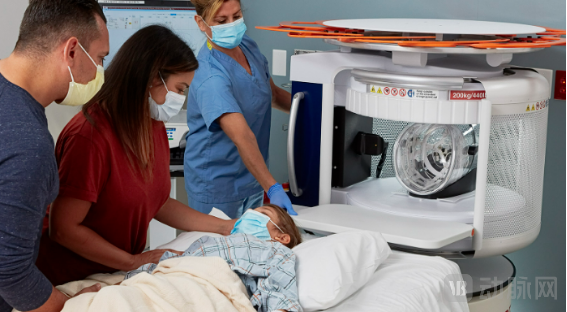 Swoop Portable MR Imaging System
Image source: Hyperfine official website
So, how does Swoop address the pain points encountered by traditional MRI equipment in the diagnostic service process?
Worldwide80% of the population has no accessMRI, and the average waiting time is as long as15hours. The high costs have made it unaffordable for many healthcare institutions in developing countries, as well as small healthcare facilities in developed nations, to bear the expenses that often run into millions.MRIEquipment.According to the “2021 China MRI Equipment Industry Research Report,” China has only 7 MRI units per million people, far lower than the 55 units in Japan and 29 units in South Korea, both also in the Asia-Pacific region.
To address this challenge, Hyperfine states that the per-scan cost of its Swoop system is 20 times lower than that of conventional MRI scanners, while power consumption is reduced by a factor of 35. Furthermore, the unit price of its device is only around $50,000, which is even lower than the annual service contract fees for large, fixed-site MRI systems.
Secondly, the operational procedures for large-scale MRI equipment are more complex, requiring trained professional operators. Furthermore, such large-scale systems demand strict control over environmental parameters, including temperature and humidity.
In contrast, Swoop can be wheeled directly to the patient’s bedside, connected via a standard power outlet, and controlled by a tablet. This highly efficient imaging modality, which generates images using low-power radio waves and magnetic fields, completes scans within three minutes, thereby optimizing staffing requirements in traditional diagnostic workflows and reducing diagnosis time.
Having addressed the fundamental diagnostic and treatment workflows, as well as environmental and service issues, Hyperfine further refined the Swoop workflow by seamlessly integrating BrainInsight, an AI-powered tool for automated brain imaging, into the Swoop system, thereby enabling AI-driven workflows for routine patient care.
BrainInsight processing takes approximately seven minutes, including midline shift (detection and measurement) and lateral ventricles (segmentation and volumetric measurement).
First, upload the images acquired by the Swoop system to the cloud-based image viewer. Next, BrainInsight retrieves the images and performs automated calculations to output measurement results. The images are further processed into color overlays, where each color represents a segmented region of an anatomical structure or a spatial measurement value.
BrainInsight’s implantation provides clinicians with quantitative biomarker information, thereby further streamlining patient care workflows and alleviating the burden on neuroradiology specialists to perform manual measurements.
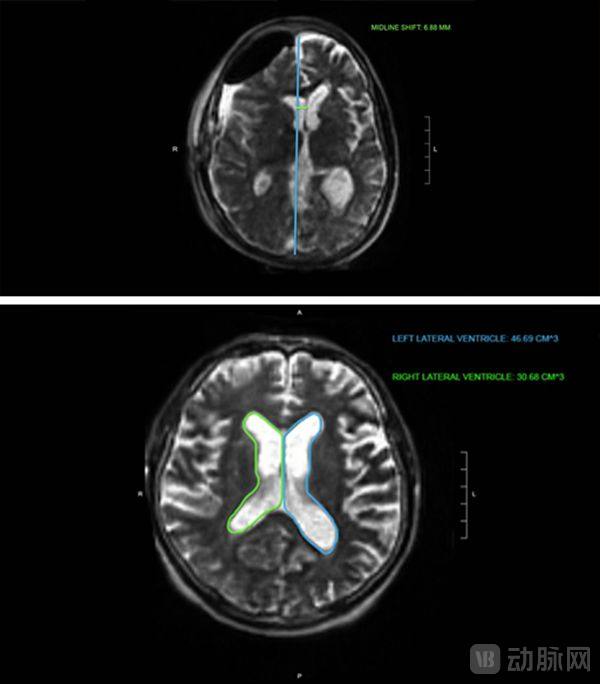
Top:Analyze and identify the slice with the most significant midline shift.
Midline (blue line), offset (green line), and midline offset measurements
Below: Visualization of the contours and calculated volumes of the left and right lateral ventricles via axial scanning.
Contours around the left (blue line) and right (green line) lateral ventricles
Image source: Hyperfine official website
Furthermore, Hyperfine entered into a partnership with Viz.ai in 2022. The latter is a leading AI-powered care coordination platform for disease detection and workflow optimization.
This collaboration integrates Viz.ai’s intelligent care coordination platform and leading image viewer with the Swoop system, accelerating clinical teams’ access to images while streamlining clinical workflows. This further reduces the time from patient admission to treatment, achieving a synergistic effect where 1+1>2.
Hyperfine, founded in 2014, is an innovative medical technology company on a mission to revolutionize healthcare for patients worldwide by providing affordable and easy-to-use imaging and monitoring devices. Founder Jonathan Rothberg is driven by a passion to redefine brain imaging.
The answer is Swoop, the world’s first portable MR imaging system.
Dr. Rosenberg, who holds degrees in chemical engineering, biology, and philosophy, is a successful serial entrepreneur. He is the founder of 4Catalyzer, a medical technology and pharmaceutical startup incubator that specializes in identifying talented engineers, chemists, and scientists and partnering with them to pursue innovative projects through startup ventures as research vehicles.
Since graduating from Yale University in 1991, Dr. Rosenberg has founded nine companies, including unicorn enterprises such as 454 Life Sciences and Butterfly Network.
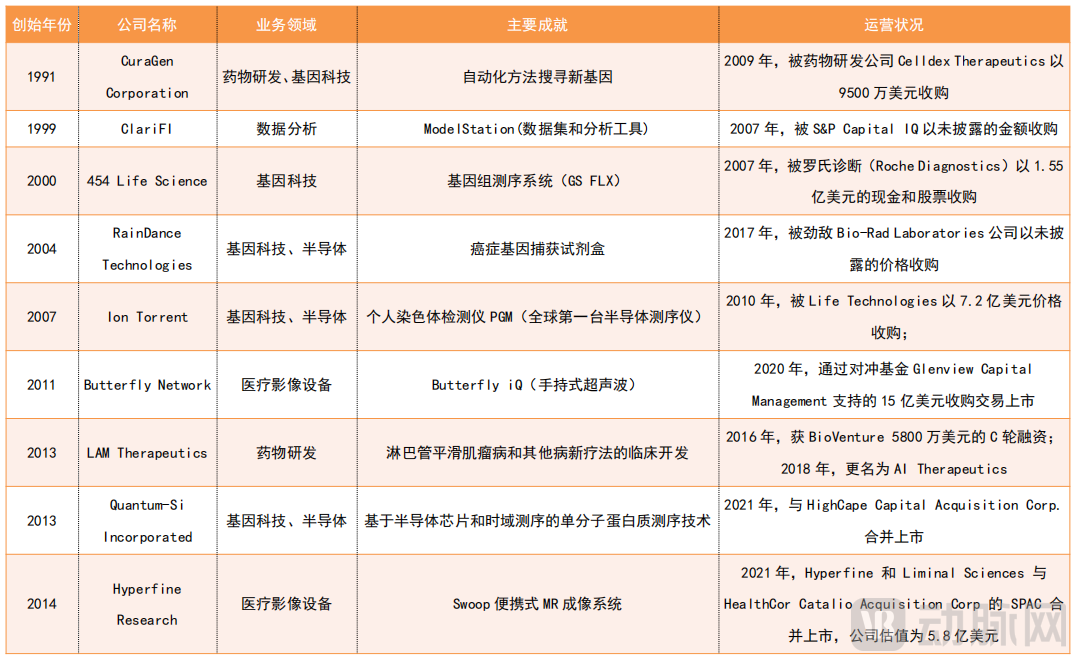
Jonathan Rothberg Startup Company Information
Table source: Compiled and organized by VCBeat
In addition to Jonathan Rothberg’s star-studded entrepreneurial background, Hyperfine’s management team is also composed of shrewd and capable leaders.
President and CEO Maria Sainz holds a Master’s degree in Language and Literature from Complutense University and a Master’s degree in International Management from the American Graduate School of International Management. With over 20 years of experience in the medical device industry, she has long served as President and CEO at major medical equipment companies and health technology startups. In 2022, Maria Sainz officially became the leader of Hyperfine’s commercial expansion, actively broadening the applications of Swoop to improve the global accessibility of MRI equipment.
CPO Tom Teisseyre holds a Ph.D. in Bioengineering from the University of California and a B.S. in Biomedical Engineering from the Georgia Institute of Technology in Atlanta, Georgia. He holds patents and has published works in the fields of medical imaging, medical image processing, intraoperative imaging, surgical techniques, and optimization of surgical workflows.
CFO and CAO Brett Hale joined Hyperfine in 2023. He holds a Bachelor’s degree in Accounting and an MBA from Indiana University, is a Certified Public Accountant (CPA), and brings over 25 years of financial expertise, including more than two decades in the medical technology industry. His appointment has not only optimized and enhanced Hyperfine’s existing technologies but also improved the efficiency of the company’s geographic expansion strategy through business model optimization.
Dr. Chip Truwit, Senior Medical Director, served as a Professor of Neuroradiology at the University of Minnesota for 27 years and held the positions of Chief Medical Officer for Diagnostic Imaging and Chief Medical Officer for Precision Diagnosis at Philips Healthcare. He also founded Image Guided Neurologics, a medical device supply company focused on the neurosurgery market, which was acquired by Medtronic in 2005. Dr. Truwit has authored more than 130 articles on neuroscience and four monographs, and holds 31 patents for medical devices.
Between 2021 and 2023, Hyperfine underwent frequent changes in its senior management team, consistently appointing individuals with backgrounds in medical technology and extensive managerial experience. Leveraging this world-class team, the company successfully optimized and upgraded its Swoop system multiple times from 2022 to 2023, securing approvals from both the U.S. FDA and the European CE certification.
Although MRI is one of the safest imaging modalities worldwide, over 90% of regions globally lack access to MRI services. Leveraging advances in computing power and AI technology, Hyperfine has developed this affordable, portable, and highly accessible low-field MRI system.
Meanwhile, the company has established close collaborations with various charitable foundations in more than ten countries with limited global resources, jointly advancing the widespread adoption of MRI imaging and striving tirelessly to achieve equity and democratization in healthcare.
In 2021, Hyperfine successfully went public with its Swoop system. The Swoop, standing approximately 1.5 meters tall, has unlocked our boundless imagination for bedside portable MRI.
Whether it was Swoop’s continuous improvements in precision imaging R&D that secured dual regulatory approvals, or Hyperfine’s $90 million Series D financing round in 2021 followed by its merger with HealthCor Catalio’s SPAC and subsequent public listing in July of the same year, Hyperfine has been actively expanding its market presence while advancing clinical research on cross-disciplinary technological integration.
As Swoop surges ahead in the global market, China’s domestically produced bedside portable MRI has also achieved breakthrough progress.
In 2020, the School of Electrical Engineering at Chongqing University, in collaboration with Southwest Hospital of Army Medical University, successfully developed a prototype of a head-dedicated bedside MRI system.
This domestically produced system has a field strength of 0.05 T, a total weight of less than 500 kg, and operates on standard 220 V/50 Hz power supply; these basic performance specifications are similar to those of the Swoop. Meanwhile, this prototype can also operate in intensive care units, general wards, and operating rooms, enabling bedside MRI imaging examinations.
Currently, the project has obtained ethical approval and is conducting a multi-center clinical trial in three hospitals in China.
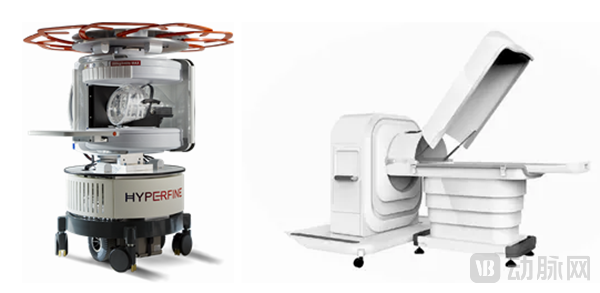
Left: Swoop Portable MR Imaging System
Image source: Hyperfine official website
Right:Prototype of a Head-Dedicated Bedside MRI System
Image source: Chongqing University official website
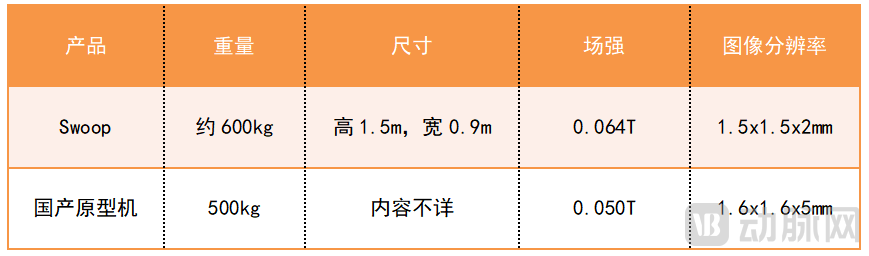
Comparison of Swoop and Domestic Prototype Parameters
Table Source:Compiled and organized by VCBeat
According to Hyperfine’s financial report, the company’s total revenue in the third quarter of 2022 was $2.348 million, representing a year-over-year increase of approximately 30% compared to the second quarter. Swoop has gained recognition in markets across approximately 19 countries and regions through its exclusive equipment, automated imaging processing, and comprehensive subscription services.
These successful experiences may offer some pioneering insights for domestically produced portable MRI devices.
First, the iterative optimization model of “clinical trials + development and upgrades.” After receiving initial FDA approval in 2020, Swoop has continuously optimized and upgraded its software development, artificial intelligence, and image quality through research on real-world clinical data. During this period, it obtained two FDA clearances for hardware improvements and seven approvals for software upgrades, five of which were granted in 2022.
This “toolbox” development model, driven by clinical needs of physicians and patients, is at the core of Swoop’s transformation of the MRI imaging market.
Second, “technology + service” shapes brand value. As the world’s first portable MRI system, Swoop boasts significant technological advantages and can rapidly capture market share in regions with mature MRI resources through a “product-driven demand” model.
However, as technology evolves and the market matures, existing technologies, products, and management practices will all become targets for imitation by competitors.Therefore, by taking the lead in entering high-spending-power markets such as the United States and the United Kingdom, Hyperfine continuously leverages technological upgrades to maintain its existing market presence, thereby establishing a brand advantage for Swoop.
Finally, since announcing its global expansion plan in 2021, Hyperfine has been marketing, distributing, and selling Swoop in countries including the United Kingdom, Canada, and Australia. For instance, its distributor in Canada is UpCare, an innovative medical technology distributor, while its distributors in Australia and New Zealand are Quantum HealthCare, a premium medical equipment distributor, among others.
Although the market for MRI supplements is vast, this low-cost expansion model, leveraging partners’ sales channels, has enabled Hyperfine to rapidly build a systematic and highly efficient global care network.
Both domestically produced portable MRI systems and Swoop serve as complements to traditional MRI equipment. However, for Chinese-made devices to enhance their product potential, expand application scenarios, and gain global recognition—much like Swoop has achieved through its brand and technological advantages—it is essential to conduct in-depth exploration into brand value, product innovation, and business models.