

From Lab to Market: 37-Year-Old Associate Professor Launches Affordable Digital Therapeutics for Cognitive Disorders
“My goal is not merely to publish academic papers, but to translate my research into tangible products that can help people. This was the original intention behind my research topic and one of the motivations for my subsequent entrepreneurial venture,” Dr. Yu Lei, founder of Bahezhi Health Medical, told VCBeat.

Yu Lei, Ph.D., Associate Professor, Master’s Supervisor.
He previously served as an Associate Research Fellow at the Suzhou Institute of Biomedical Engineering and Technology, Chinese Academy of Sciences. In September 2016, he joined the Institute of Complex Systems at Shanxi University as an Associate Professor.
Mainly engaged in research related to artificial intelligence and big data in health and medical care.
Shanxi Bahezhi Health Medical Technology Co., Ltd. was established in January 2022. It is a technology-driven enterprise dedicated to the early detection and non-pharmacological intervention of cognitive and motor impairments associated with neurodegenerative diseases. The company aims to revolutionize the intelligent diagnosis and treatment of Alzheimer’s disease, Parkinson’s disease, stroke, and other conditions through digital therapeutics, providing comprehensive intelligent solutions and services that cover early screening, precise assessment, personalized intervention, and follow-up care across both in-hospital and out-of-hospital settings. Currently, the company’s inaugural product is primarily targeted at individuals with cognitive impairments.
Logically speaking, young scientists have many directions to choose from when starting a business. Why did Dr. Yu Lei specifically choose to enter the already somewhat crowded niche of digital therapeutics for dementia first?
According to previous statistics from VCBeat, dementia is currently the hottest sector in digital therapeutics, with 24 digital therapy companies involved and 16 Class II medical device certificates already issued. In response, Dr. Yu Lei candidly stated, “From a research perspective, if similar products already exist on the market, there is indeed no need for us to develop another one. However, after closely examining the pricing of existing products and services on the market, I realized that there is still a significant gap before they can be truly accessible to the general public across China.”
The sense of mission to develop inclusive products stems directly from Dr. Yu Lei’s research and professional experience at the Suzhou Institute of Biomedical Engineering and Technology, Chinese Academy of Sciences (CAS). According to Dr. Yu, the Suzhou Institute is the only biomedical engineering institute under the CAS, and one of its primary research objectives is to achieve low-cost, domestically produced medical devices and information systems to counter the monopoly and technological blockade imposed by foreign companies.
The six years Dr. Yu Lei spent at the Suzhou Institute of Biomedical Engineering and Technology were undoubtedly a valuable experience. During this period, he participated in a startup project focused on remote rehabilitation of motor function in stroke patients, which was successfully incubated into an industrial venture. Later, after joining Shanxi University, Dr. Yu’s research continued in collaboration with the Department of Neurology at the First Hospital of Shanxi Medical University, where they developed a clinical workflow assistance system. Extending from the clinical side to the patient side was thus a natural progression.
Currently, Shanxi Bahezhi Health Medical Technology Co., Ltd.’s dementia care pipeline comprises four major product categories. Products directed at individual consumers (C-end) include the Personal Edition of the Cognitive Function Screening and Training System (WeChat Mini Program) and its accompanying Cognitive Function Training Kit Gift Box. Products designed for institutional clients (B-end) include the Cloud-Based Cognitive Function Assessment Platform System (Physician Edition) and the Institutional Edition of the Cognitive Function Screening and Training System (Infrared Touch All-in-One Machine).
Personal Edition of the Cognitive Function Screening and Training System (search “8 Hertz Brain Training” on WeChat Mini Programs) features embedded tools such as the AD8 cognitive screening, multidimensional cognitive assessment, Digital Clock Drawing Test, and targeted training modules. It enables a rapid five-minute self-assessment of cognitive function and includes a vast question bank with millions of items, covering eight key dimensions of brain health: executive function, attention, memory, calculation, spatiotemporal orientation, logical reasoning, verbal processing, and visuospatial ability. The mini-program has been officially launched and was demonstrated and promoted in local communities in Taiyuan during last year’s World Alzheimer’s Month.
According to Dr. Yu Lei, the digital Clock Drawing Test is currently only incorporated into the ADC Dementia Screening Public Welfare Mini Program, jointly developed by the Alzheimer’s Disease Branch of the China Health Care Association for the Elderly (ADC) and Alibaba DAMO Academy; however, this product provides only a risk level assessment.
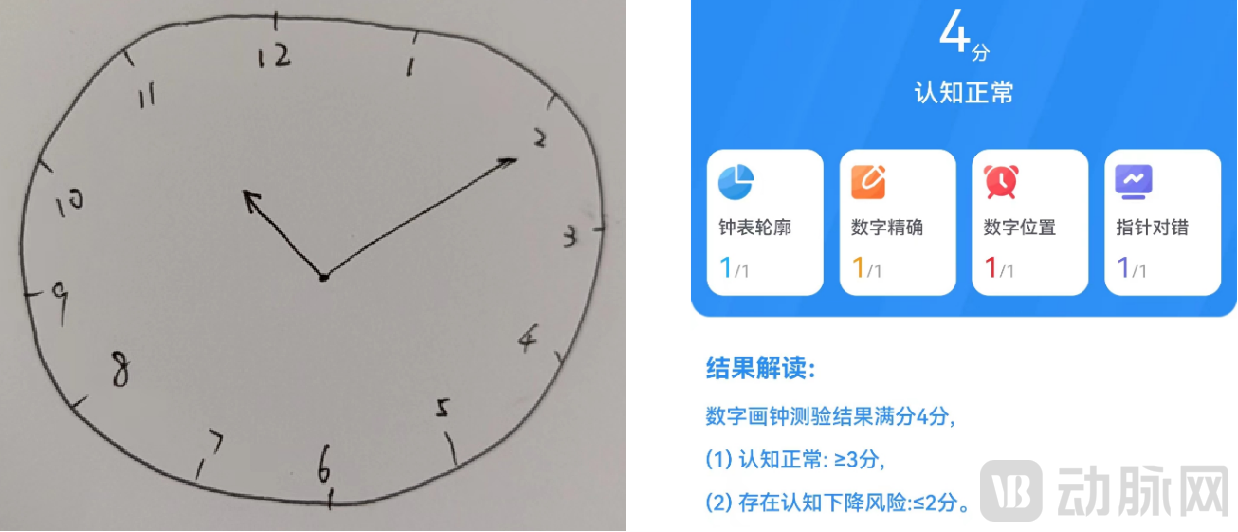
Shanxi Bahezhi Health Medical Technology Co., Ltd.’s digital Clock Drawing Test supports user-uploaded drawings. Its AI model employs a 4-point scoring system to automatically assess and score the clock outline, numerical completeness, numerical placement accuracy, and hand correctness, thereby generating multidimensional assessment reports and corresponding personalized training plans. The AI model was previously validated on a dataset of over 5,000 outpatient clock drawings, achieving an identification accuracy exceeding 90% and passing medical validation.
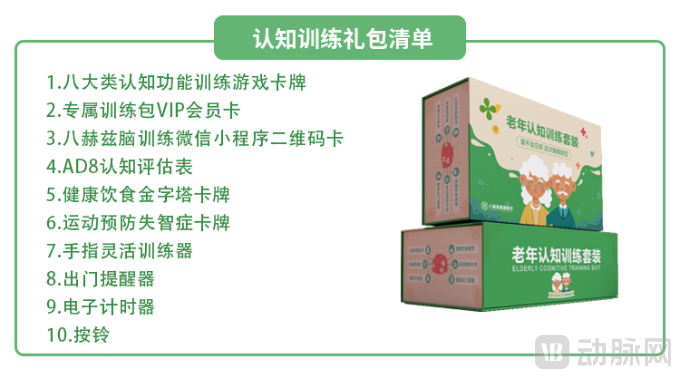
In addition to online products, Bahezhi Health Medical has also designed cognitive function training game cards targeting eight cognitive dimensions, enabling elderly individuals who are not proficient with smartphones to conduct daily training using physical props.
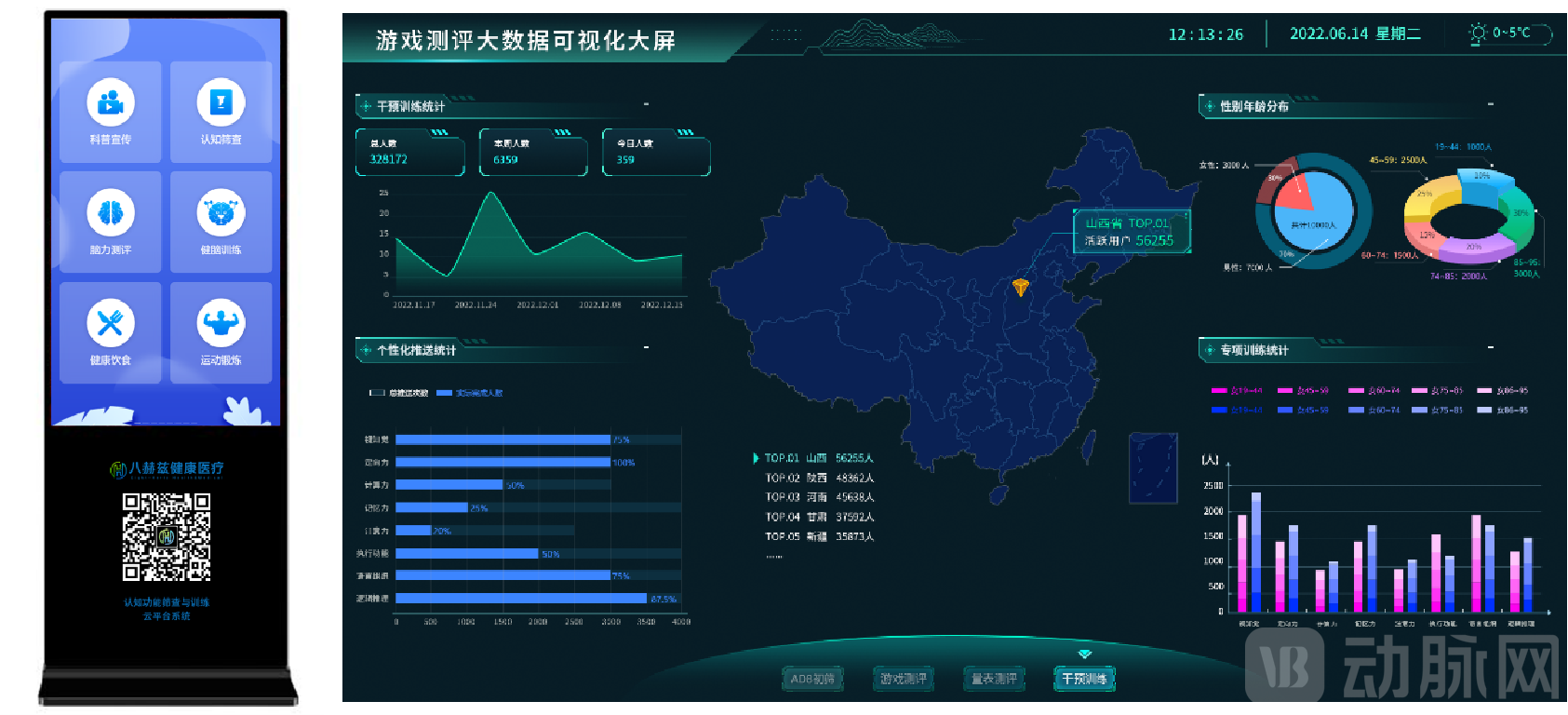
Cognitive Function Screening and Training System (Institutional Version) (All-in-One Infrared Touchscreen Device) is designed for institutional users such as nursing homes, community health centers, and adult day care centers. Each elderly resident within the institution can log in by scanning a QR code to complete training exercises via a mini-program, with all data stored on a visualized cloud platform to help institutions better demonstrate their operational effectiveness.
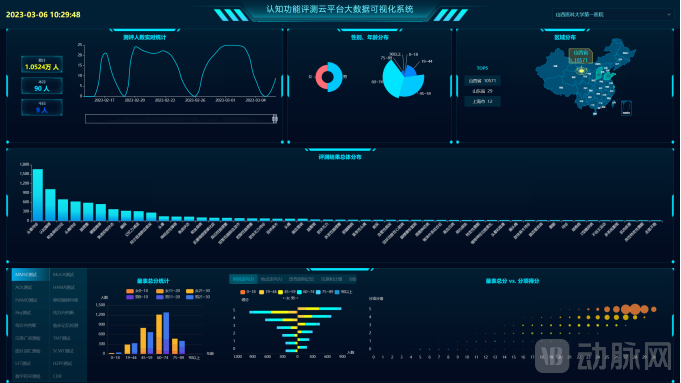
Cloud-Based Cognitive Function Assessment Platform (Physician Edition) incorporates over 20 commonly used clinical scales and supports report printing. Many digital assessment tools on the market only record item scores, lacking detailed documentation of patient performance during the evaluation process. However, identical total scores do not necessarily indicate consistent functional performance across various domains of brain function.
In response, Shanxi Bahezhi Health Medical Technology Co., Ltd. records patients’ testing processes and extracts quantitative metrics through functional modules such as voice recording and stylus trajectory tracking. Since its launch in March 2020, the system has accumulated data from over 10,000 outpatient visits.
But one cannot help but ask: Compared to merely digitizing traditional paper-based scales, can such granular data from Shanxi Bahezhi Health Medical Technology Co., Ltd. truly impact the improvement of cognitive function?
“To take an extreme example, suppose a user’s initial scale score is 0. After a period of training, although the user experiences significant subjective improvement, this progress may not be objectively reflected in the assessment results. This discrepancy could severely undermine the user’s confidence and motivation to continue training, leading to a substantial decline in adherence,” explained Dr. Yu Lei. “By incorporating detailed information, we can now adopt a 10-point or 100-point scoring system, providing more granular growth curves and more precise assessment outcomes. This represents the greatest value of our work.”
When discussing future plans, Dr. Yu Lei stated that after the product iteration is completed in May this year, the company will actively participate in industry exhibitions to showcase its products, engage with physicians and peers at academic conferences, and initiate the medical device registration process.
In the long term, he aims to establish a foothold in Shanxi Province over the next two to three years, leveraging university resources to expand pilot programs or secure government support for public welfare initiatives to promote its products. He stated, “Business models that work in first-tier cities may not be suitable for central and western regions. Therefore, we are willing to enter markets not yet covered by competitors to carve out a certain market share. I also hope that the presence of Bahezhi Health Medical will help drive down overall industry prices, making such services truly affordable for the general public.”
Yu Lei stated that although Shanxi Bahezhi Health Medical Technology Co., Ltd. is located in Shanxi Province, the Institute of Complex Systems at Shanxi University, where he is based, is an interdisciplinary institute integrating mathematics and computer science. It also hosts high-level research platforms, including the Key Laboratory of Cross-disciplinary and Applied Studies on Complex Systems and Data Science under the Ministry of Education, the Shanxi Provincial Key Laboratory of Mathematical Techniques and Big Data Analytics for Disease Prevention and Control, and the Shanxi Center for Applied Mathematics. Therefore, its scientific research capabilities in areas such as medical-engineering integration, artificial intelligence, statistics, and mathematics are on par with those of other leading institutions.
Dr. Yu Lei also shared his understanding of digital therapeutics with VCBeat: Digital therapeutics are by no means simply about connecting doctors and patients through information technology, nor are they merely about developing games for the elderly to play. Their efficacy must be demonstrated by significant improvements in both data metrics and subjective user experience following training. Furthermore, the language used in these training protocols must establish a positive mapping to clinical terminology. Why “positive”? Because scientific assessment and training should never involve mechanically replicating standardized scales; otherwise, user training would become akin to “rote test preparation,” putting the cart before the horse.