

Regulatory Crackdown Intensifies: The Golden Era for Compliant Aesthetic Medicine Products Begins

Fumeilei Medical
R&D Developer of Medical Aesthetic Devices
Regulators Once Again Take Strong Action Against the Medical Aesthetics Industry.
Recently, 18 departments, including the Ministry of Industry and Information Technology, the State Administration for Market Regulation, and the Cyberspace Administration of China, jointly issued the Action Plan for Further Improving the Quality of Products, Engineering, and Services (2022–2025), which proposes “setting annual national goals for improving medical quality and safety to promote the continuous improvement of healthcare service quality, and strengthening comprehensive regulatory enforcement in medical aesthetics.”
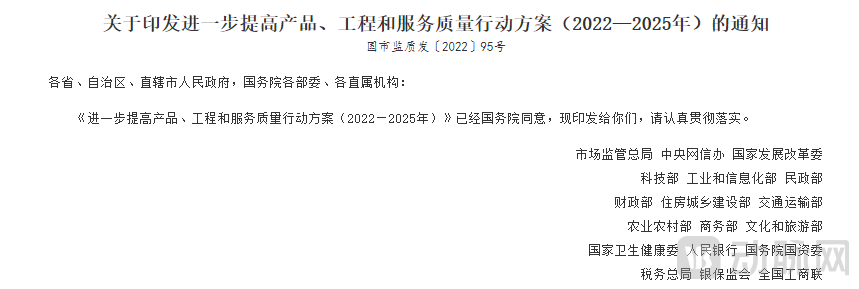
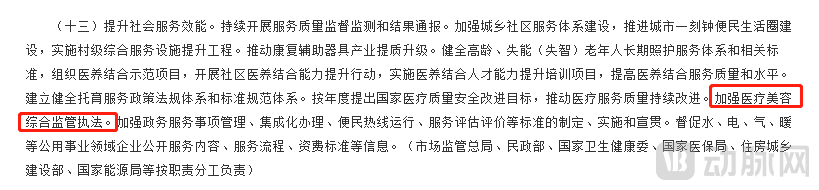 ▲ Image source: Official website of the State Council
Indeed, relevant national authorities had already taken frequent actions prior to this. For instance, in 2019, the National Health Commission required localities to conduct “follow-up reviews” on prominent issues such as illegal medical aesthetics, incorporating medical aesthetics into national supervisory spot checks and into the special rectification campaign against medical chaos jointly carried out by multiple departments.
In other words, regulatory oversight of the medical aesthetics industry has been ongoing and is intensifying. Under these circumstances, “compliance” is becoming a fundamental consensus across the entire medical aesthetics sector.
What is the rationale behind stringent policy regulation? What opportunities can it bring to the industry? How will future trends evolve? VCBeat will provide a detailed analysis of these questions in the following sections.
This article is an excerpt from the “White Paper on Energy-Based Devices in Medical Aesthetics.” To gain insights into the industry landscape, development logic, and potential opportunities of energy-based devices in medical aesthetics, please scan the QR code to contact our assistant for the full report.

Regulatory Logic:
Chaos in the Medical Aesthetics Industry: Compliance Is Imperative
The medical aesthetics industry has long been plagued by irregularities, with current issues spanning multiple segments of the sector, particularly driven by profit motives. For instance, media outlets have exposed non-compliant practices in various areas, including product distribution and marketing promotion.
Specifically, in the medical aesthetics sector: it is common for practitioners such as beauticians and licensed physicians within institutions to lack professional qualifications, engage in non-standardized procedures, use products off-label, and even commit regulatory violations that lead to personal injury accidents.
According to Deloitte data, the distribution of institution types in the medical aesthetics industry in 2021 included 1,507 public hospitals and 13,673 private institutions. As of 2021, the number of unqualified entities illegally providing medical aesthetic services in China was more than six times that of legitimate institutions. Some beauty establishments blur the line between lifestyle beauty services and medical aesthetics, operate beyond their authorized scope, and conduct business without proper licenses; notably, 15% of legally licensed medical aesthetic institutions engage in out-of-scope operations.
In terms of the number of practitioners in the medical aesthetics industry, the total exceeded 100,000 in 2021, among whom 71,662 were unlicensed illegal practitioners, accounting for a significant proportion of the workforce.
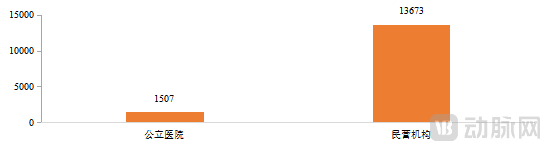
▲Distribution of Institution Types in the Medical Aesthetics Industry in 2021
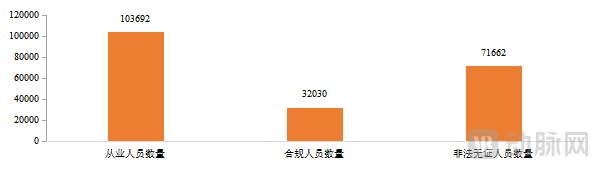
▲ Number of Practitioners in the Medical Aesthetics Industry in 2021, compiled by VCBeat
For instance, during the 2022 CCTV “3·15” Gala, the chaos surrounding accelerated training programs in medical aesthetics was exposed to the public: after paying several thousand yuan in tuition and undergoing merely six days of training, participants received so-called “Senior Certificates in Micro-Plastic Beauty,” thereby becoming “plastic surgeons.”
What is shocking is that these trainees all started from zero, and the vast majority had never been exposed to any medical knowledge. One trainee participating in the training stated on camera, “I have never held a needle, nor have I ever given anyone an injection.”
In addition, instructors at these training institutions also share contact information for medical aesthetics pharmaceutical wholesalers in class group chats, enabling trainees to procure various injectables at extremely low prices and resell them to customers at a markup.
In terms of product distribution: According to statistics from iResearch, as of 2019, over 90% of the medical aesthetic devices used in illegal medical aesthetic facilities were counterfeit. Approximately 10% of genuine products and parallel imports entered the market through leasing or smuggling. Among injectable agents circulating in the market, the authenticity rate was approximately 33.3%, meaning that for every one genuine injector sold, at least two illegal injectors were in circulation.
In terms of marketing and promotion: It is commonplace for marketers to engage in non-compliant practices, such as using absolute language, making assertions about efficacy and safety, exaggerating cure rates and treatment outcomes, inducing appearance-related anxiety, and enticing consumers to take out cosmetic procedure loans.
Therefore, compliant operations are imperative for the future of the medical aesthetics industry.
New Opportunities:
Regulatory Trends Tighten, Compliant Products Gain More Market Share
Industry regulation is becoming marginally stricter, promoting healthy and orderly development in the medium to long term, accelerating industry consolidation, and benefiting leading upstream enterprises and compliant medical aesthetic institutions.
In recent years, policy regulation has continued to tighten and gradually shifted toward normalized, routine oversight.
· In 2021, eight ministries and commissions jointly issued the "Special Work Plan for Cracking Down on Illegal Medical Aesthetic Services," and the General Office of the National Medical Products Administration released the "Notice on Further Strengthening the Supervision of Medical Devices Usable in Medical Aesthetics," to severely crack down on illegal medical aesthetic institutions and the illegal production and sale of drugs, and to strictly regulate medical aesthetic service practices;
· In 2022, the National Medical Products Administration (NMPA) issued the “Catalogue for Classification of Medical Devices” and the “Catalogue of Medical Devices Prohibited from Contract Manufacturing,” explicitly bringing products such as skin boosters (water-light injections), radiofrequency devices, and thread lifts under Class III medical device supervision and prohibiting their contract manufacturing. These measures aim to strengthen the implementation of primary responsibility for product quality and safety, enhance quality control in the medical device production process, and effectively combat industry irregularities such as the circulation of unauthorized parallel imports and counterfeit products.
Although the number of non-compliant medical aesthetic institutions is expected to decline rapidly in the short term, which may lead to a decrease in overall market demand, from a long-term perspective, the rectification and cleanup of the market will create a more favorable marketing environment for domestically produced, certified, and compliantly distributed products. This will benefit medical aesthetic institutions with high compliance standards, strong operational capabilities, and robust risk resistance, ultimately delivering better and more compliant services to consumers.
For instance, the use of gray-market products, counterfeit goods, and off-label devices is currently widespread in the medical aesthetics industry. Product shortages and significant price differentials have fueled a substantial market for counterfeit and gray-market photoelectric medical aesthetic devices.
Furthermore, the sales of imported photoelectric medical aesthetic devices in China generally adopt an agency model, whereby overseas companies rely on authorized distributors to secure NMPA certification, establish marketing networks, and fulfill other prerequisites necessary for commercialization. Off-label promotion is prevalent in the medical aesthetic device industry, often manifesting as the use of Class I and II devices for indications reserved for Class III devices. Additionally, certain Class II devices manufactured by domestic producers are marketed by medical aesthetic institutions beyond their approved indications, contributing to widespread disorder within the industry.
With the advent of an era of stringent regulation, enhancing compliance has become the core focus of medium- to long-term policy oversight in China’s medical aesthetics industry. The overarching theme is “increasingly strict and standardized regulation.” Legislative and law enforcement authorities have gradually shifted from passive governance to proactive intervention, targeting upstream manufacturers, downstream medical aesthetics institutions, and promotional platforms alike. This transition marks a move from merely rectifying chaotic practices to purify the industry environment, toward establishing sound standards and systems and improving the regulatory framework. Data shows that since the implementation of stringent regulations in the medical aesthetics sector, the number of administrative penalties imposed on the industry increased by 247% year-on-year from 2017 to 2020. During the same period, the number of judicial rulings related to the medical aesthetics industry rose by 104% year-on-year.
It is foreseeable that domestically produced, certified, and compliantly distributed products will gain greater market share.
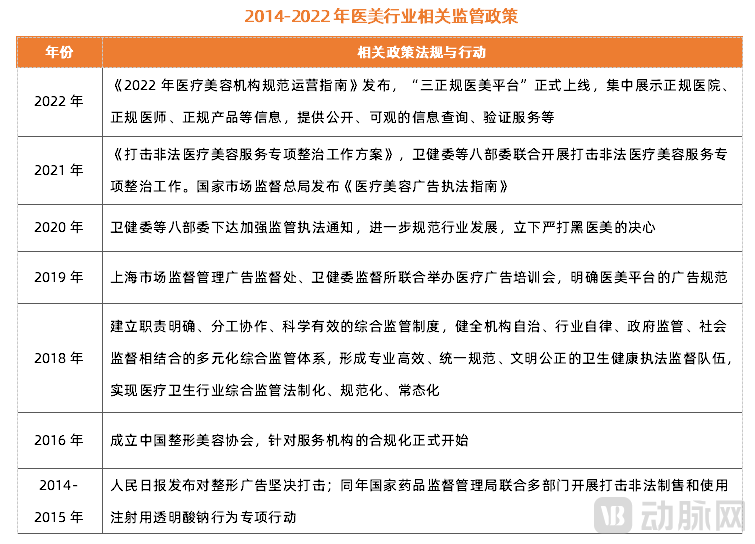 ▲ Source: Public resources, compiled by VCBeat.
Future Evolution:
Stringent Regulation Safeguards the Market Size for Authentic Products, Paving the Way for the Rapid Rise of Domestic Mid-to-High-End Manufacturers
Amid intensified regulatory crackdowns, illegal medical aesthetic practices and unlawful marketing will be further eradicated, facilitating the clearance of disreputable companies that exploit medical aesthetic concepts.
Furthermore, this is positive news for compliant medical aesthetic institutions, as it helps eliminate unscrupulous competitors from the market, thereby reducing competitive costs and enhancing profitability.
On the upstream side, the medical aesthetics market has entered an era of stringent regulation, severely impacting the markets for gray-market and counterfeit products. For instance, in the niche segment of medical aesthetic energy-based devices, regulatory trends will further compress the space for gray-market and counterfeit goods, thereby more effectively safeguarding the market size for authentic products.
On the other hand, domestically produced medical devices are currently concentrated mostly in the mid-to-low-end product segments, with sales prices generally ranging from RMB 50,000 to 100,000; the high-end market is almost entirely monopolized by imported brands.
Therefore, high-end domestic manufacturers are urgently needed in the market. With the successive launch of mid-to-high-end domestic optoelectronic products, Chinese manufacturers represented by Fumeilei Medical are expected to rise rapidly in a short period and become potential industry leaders.
In this process, enterprises need to pay more attention to brand reputation. In addition, the management, technology, education, and infrastructure of the medical aesthetics industry will accelerate towards standardization, efficiency, and high quality in the future.
Looking back on the industry’s development, medical aesthetics originated during the two World Wars, when surgeons performed reconstructive procedures for numerous wounded soldiers suffering from deformities and tissue defects—an act of humanitarianism embodying the spirit of saving lives and healing the injured. As the “appearance economy” has gained prominence, medical aesthetics has also taken on the role of enhancing people’s confidence in their appearance.
Thus, we have reason to believe that the medical aesthetics industry will ultimately complete its own beautiful transformation from wild growth to compliant operations, under societal oversight and the test of time.