

Why This Dentist-Founder Bet Big on China's Underserved Dental Markets — And Now Files for IPO
Has the lower-tier market become a “prized asset” for chain providers of dental care services?
In 2019, Topchoice Medical launched the “Dandelion Plan,” proposing to jointly invest in and establish branches of Hangzhou Stomatological Hospital in 100 counties (cities, districts) and key townships across Zhejiang Province, in collaboration with renowned local dentists.
In 2022, Sunny Dental partnered with Align Technology to launch the “Smile in Ten Thousand Cities” initiative, aiming to help dentists in third- and fourth-tier cities enhance their technical skills and extend high-quality dental care to a broader population;
Meanwhile, Songbo Investment, which focuses on investments in the dental sector, is also promoting the development of grassroots dental services and supporting the growth of dental care in county-level and rural areas through a series of investments and public welfare initiatives.
Although it is premature to draw conclusions about the outcomes of these well-known dental care chain brands and investment firms’ explorations in lower-tier markets, their moves have at least sent a clear signal to the outside world: the dental market in lower-tier cities and even at the grassroots level holds substantial opportunities.
In contrast to large dental service chains that initially took root in first- and second-tier cities and have only recently begun expanding into lower-tier markets, VCBeat has recently identified Eya Dental—a chain brand that started in and focused on lower-tier markets from the outset, steadily expanding its footprint to operate 7 hospitals and over 50 clinics, with an annual revenue exceeding RMB 1 billion (as disclosed by the company).
A week ago, the company officially announced that it had secured hundreds of millions of yuan in investment from Fountainvest Partners and completed the strategic acquisition of Shanghai Xuhai Yingbo, formally changing its name to Eya Yingbo Group (hereinafter referred to as “Eya Yingbo”). This is the only disclosed financing deal in the dental healthcare services sector since 2022. (Source: Artery Orange Database) More importantly, VCBeat has learned that Eya Yingbo is preparing for an initial public offering (IPO), putting listing plans on the agenda.
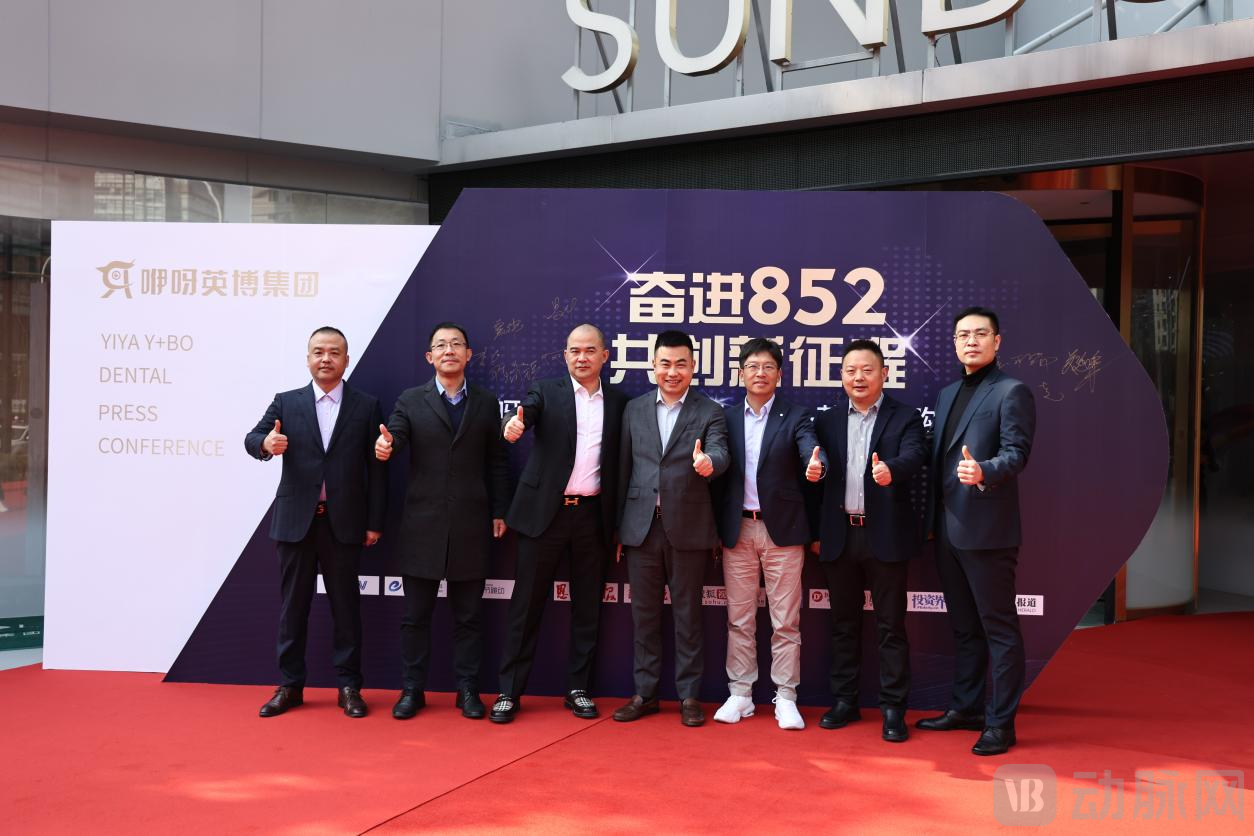
This has undoubtedly boosted confidence in the dental healthcare services industry, which has endured a long winter. Yet beyond the excitement, curiosity surrounds Eya Yingbo—driven by its DNA rooted in lower-tier markets and its current achievements.
One morning in February, VCBeat met with Yan Feng, founder of Eya Yingbo, who recounted the company’s rather dramatic development journey.
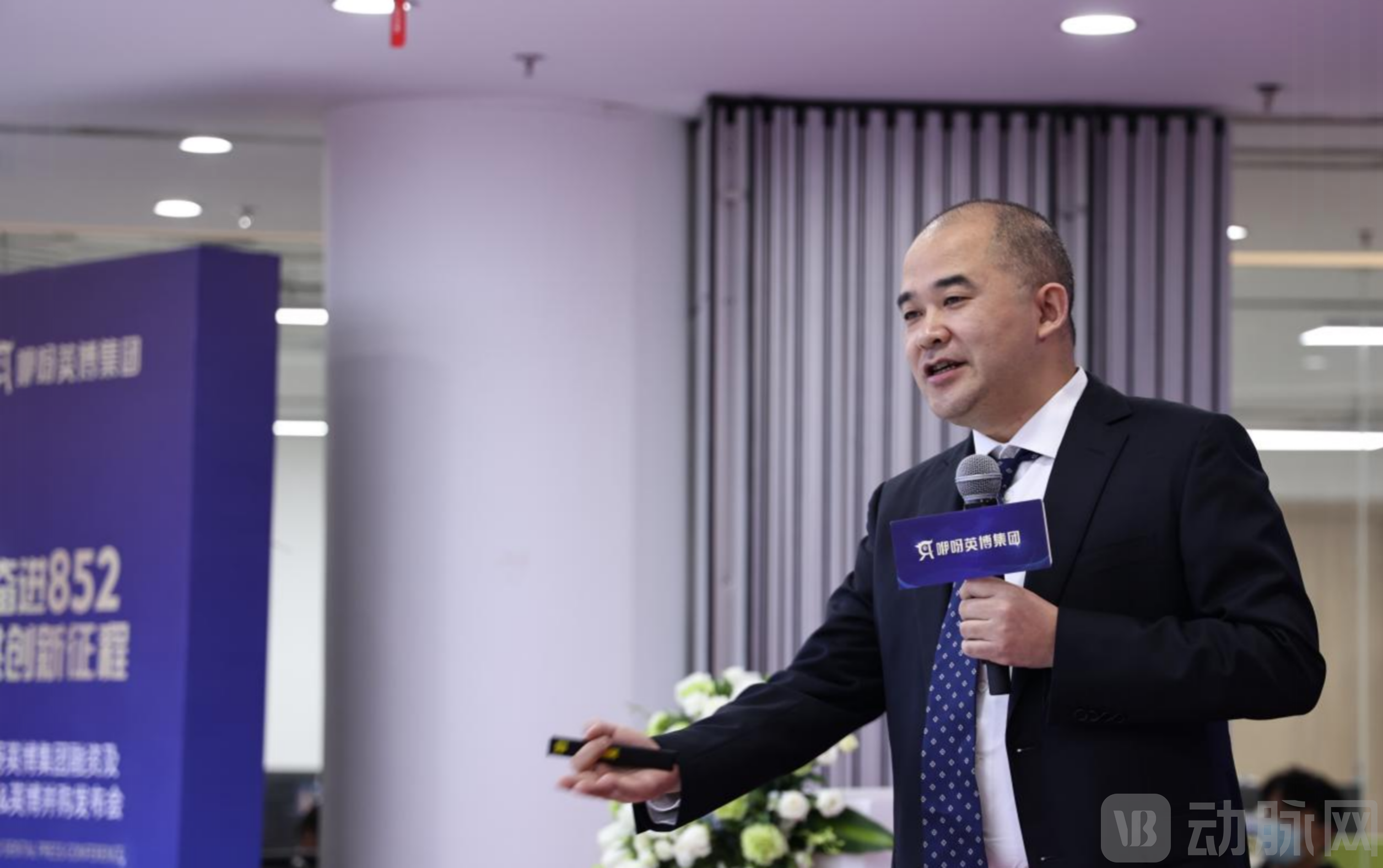
Unlike the aloof image often associated with many entrepreneurs, Yan Feng is a man with a distinct “jianghu” spirit—straightforward, candid, and down-to-earth.
Perhaps it was precisely this chivalrous spirit that enabled Yan Feng to make the most critical decisions of his life.
The first decision was to leave the public hospital system and embark on an entrepreneurial venture. The reason was simple: “I didn’t want a life whose entire trajectory was visible from the start.”
The source was a staff hospital in Zhengzhou where Yan Feng was employed at the time. Perhaps due to its lower medical authority compared with higher-level public hospitals’ stomatology departments, or because of limited diagnostic and treatment equipment, many patients who came to the hospital were not seeking care there but rather requesting referral letters. This led Yan Feng to self-doubt: “Is my clinical skill level still insufficient?”
Amidst the voices of self-doubt, Yan Feng began to pursue advanced studies in various locations. Yet, at the same time, another feeling was slowly rising within him.
“At that time, I felt that if I stayed here, I might end up being no more than a deputy hospital director for the rest of my life. That struck me as ‘pointless’; I don’t like a life whose trajectory is clear from the outset,” Yan Feng remarked.
From this point on, Yan Feng began working part-time at private clinics in his spare time to accumulate experience for his entrepreneurial venture.
What truly convinced Yan Feng to start his own business, and even to do so in the “grassroots market,” was a dinner with a friend after returning to his hometown. As they discussed salaries, Yan Feng, feeling that his friend was underpaid, immediately asked him: “You could certainly earn more than this in a big city. Why are you determined to stay here?”
The response from his close friend deeply moved Yan Feng, to the extent that he was still visibly emotional when recounting it at a financing and M&A press conference more than two decades later: “They need me.”
This concise response captures the state of China’s dental care services market at that time and even now—substantial demand for dental care services in primary-level markets, coupled with an uneven distribution of high-quality dental medical resources.
“Compared with 2019, among the top 25 cities, all except Beijing and Wuhan saw an increase in order volume. Notably, second- and third-tier cities generally experienced higher growth rates than first-tier cities, suggesting that market penetration into lower-tier cities may become a key trend in the dental care sector.” This observation from the “2020 China Dental Healthcare Industry Report,” jointly released by Meituan, MedTrend, and Med+ Research Institute, indirectly confirms the growing demand for dental healthcare services and increasing purchasing power in lower-tier markets.
However, the current state of grassroots dental care in China remains far from optimistic. In 2019, there were 723 private dental hospitals in China (this figure rose to 780 by the end of 2020), primarily distributed in the developed eastern regions. Chain dental clinics are also heavily concentrated in first-tier cities such as Beijing, Shanghai, Guangzhou, and Shenzhen. (Source: “Supporting Grassroots Dental Care: Songbai Dental Illuminates the ‘Last Mile’ with Digitalization,” Shenghuo Shangbao, January 5, 2022)
According to the “Top 10 Private Chain Oral Healthcare Service Providers in China 2020,” jointly released by the Hurun Research Institute and the Huayi Research Institute, six of the top ten private chain oral healthcare service providers are located in Beijing and Shanghai.
Moreover, although the number of dentists in China has continued to grow in recent years (according to the Health Statistics Yearbook, the compound annual growth rate [CAGR] of licensed (assistant) stomatologists in China from 2012 to 2019 was 11.2%), there remains a significant gap compared with developed countries. (According to Guohai Securities’ report “A Detailed Analysis of the Specialized Stomatological Market: Exploring Paths to Increase Chain Affiliation Rates,” in 2019, China had 17.5 dentists per 100,000 population, far lower than South Korea’s 50, the United States’ 61, and Japan’s 81.) This shortage is even more pronounced in economically underdeveloped regions.
A friend’s remark struck a chord with Yan Feng, who also recognized the latent opportunities in the lower-tier dental care market. At that time, as national policies promoting the development of private healthcare were being rolled out one after another, Yan Feng, having already accumulated considerable experience in private dental clinics, made an immediate decision to return to his hometown and start his own business.
The relatively lax competitive environment in lower-tier markets has become fertile ground for Yan Feng’s entrepreneurial ventures, while his return to his hometown to start a business has also introduced advanced diagnostic and treatment concepts and technologies to his home region.
“How did my dental clinic become the best in the local area? Because my previous work experience in Zhengzhou, Fujian, and Wuhan exposed me to advanced concepts and techniques in dental diagnosis and treatment. When I later started my own business, I simply brought these advanced practices to the local community, enabling residents to access high-quality dental care.” Yan Feng could hardly conceal his pride when reflecting on the early days of his entrepreneurial journey.
Subsequently, to maintain this “advanced” status amidst the rapidly evolving landscape of dental diagnostic and treatment technologies, Yan Feng and his team have frequently pursued external training opportunities and engaged in cross-border academic exchanges with numerous internationally renowned dentists and institutions.
But just as Yan Feng’s clinic was flourishing, a sudden accident reduced all his entrepreneurial achievements to ashes.
In the fire caused by an accidental electrical meter ignition, due to inadequate firefighting facilities at the time, Yan Feng watched helplessly as the flames gradually consumed his entrepreneurial endeavors, spreading from the first floor to the second.
After a brief setback, Yan Feng rallied once again, borrowing money from friends and family to fund his second entrepreneurial venture. “That’s just who I am—the more difficulties I encounter, the more determined I am to press on.”
However, this major fire “taught” Yan Feng a lesson: don’t put all your eggs in one basket. This also marked the “germination” of Eya Dental’s chain expansion strategy.
It was also from that time that Yan Feng began to consider how to systematically operate dental medical service institutions.
Specifically, Yan Feng took two key actions: one was to build a team by recruiting professionals such as Xia Wei (current CEO of Eya Yingbo), who brings 19 years of experience in dental healthcare and operations; Su Weiping (current CSO of Eya Yingbo), a Ph.D. in Health Economics from the University of Minnesota with investment experience in the medical industry; and Li Fei (current CTO of Eya Yingbo), who has 15 years of experience in internet platform R&D and management, to join Eya Yingbo and work together.
Meanwhile, another critical step was the formulation of two strategic plans vital to the development of Eya Yingbo: the “Triple-Three Goals” and the “852” Plan.
Among these, the “Three-Three Goals,” formulated at the end of 2008, marked Yiyaya Dental’s (the predecessor of Yiyaya Yingbo) entry into the chain operation stage. The goals can be summarized as follows: in the first three years, open 3–5 clinics in Enshi, Hubei Province, and achieve profitability in more than three clinics; in the second three years, capture the Enshi market and expand clinics to Wuhan; and in the third three years, secure a place in Hubei’s private dental sector.
In 2017, Eya Dental announced the achievement of its “3-3 Goal,” and in 2019, it proposed the “8-5-2” Plan.
The so-called “852” Plan refers to the following: in the first phase, over eight years, become a leading enterprise in Hubei Province, expand clinics to Beijing, build momentum, and simultaneously consolidate brand influence and accumulation in Hubei; in the second phase, over five years, become a leading dental enterprise nationwide and engage with capital markets; in the third phase, over two years, evolve into a world-class dental brand, ultimately achieving status as a globally top-tier dental brand.
From the “12th Five-Year Plan,” we may observe an interesting trend: Yiyayingbo, which has its roots in lower-tier markets, is extending its expansion reach upward into first-tier cities such as Beijing and Shanghai. To date, Yiyayingbo has opened three dental clinics in Beijing and five in Shanghai.
Regarding the rationale behind its upward expansion, Yan Feng was candid in the interview: “First, to attract more talent; second, to gain experience, whether in advanced technologies and concepts or in management practices. Competition is, in essence, the best form of learning.”
It is worth noting that to address the scarcity of high-quality dental resources, Eya Yingbo has developed its own solution: in the recruitment process, leveraging the resources of the Wuhan University Medical Consortium (in 2018, Eya Dental became a member unit of the Wuhan University Stomatological Medical Consortium), Eya Yingbo has alleviated some of the pressure in talent reserve.
Furthermore, at the press conference announcing Eya Dental’s acquisition of Xuhai Yingbo, Xia Wei, CEO of Eya Yingbo, revealed that Eya Yingbo is seeking collaborations with specialized vocational institutions and actively participating in student recruitment and training programs to alleviate pressure on its talent reserve.
Meanwhile, Eya Yingbo places significant emphasis on physician training. It has not only established a comprehensive training mechanism but also launched the Falcon Physician Development Program to help physicians in grassroots markets enhance their technical skills. Furthermore, to rapidly address the shortage of high-quality physicians in lower-tier markets, Eya Yingbo has introduced various incentive mechanisms to attract physicians from first-tier cities to practice in these regions.
However, for dental healthcare service providers seeking to develop through chain expansion, talent reserves are only one of the key factors; additionally, they must address standardization, digitalization, and patient acquisition.
However, when VCBeat raised the issue of standardization during the interview, Yan Feng offered a response that differed from those typically given by founders, stating bluntly, “The oral healthcare services industry cannot achieve complete standardization.”
In this effort to maximize standardization, Eya Yingbo has established a standardized outpatient operation and management system, developed a comprehensive and clear set of Standard Operating Procedures (SOPs) for service delivery, along with corresponding rules and regulations. (For instance, at every key stage of the patient visit process, relevant images or video recordings are archived to regulate physicians’ clinical behavior and assess whether their technical performance during each consultation meets expected standards.)
Furthermore, Yan Feng places great emphasis on digitalization, even investing heavily in the independent development of an intelligent Hospital Information System (HIS). This system encompasses modules for clinic management, electronic medical records (EMR), and customer relationship management. It not only provides comprehensive, end-to-end management of physicians’ workflows—including EMRs, treatment plans, intraoral examinations, and integrated imaging analysis—but also enables patient information sharing across its chain of affiliated clinics. The fully digital operational data analysis allows management to promptly and thoroughly grasp the company’s operational status, facilitating rapid and informed decision-making that guides the company into a virtuous cycle of development.
As for the long-standing challenge in the dental care service industry—difficulty in customer acquisition and high acquisition costs—Yan Feng appeared both resigned and composed: “Customer acquisition costs are currently high and continue to rise. However, the ‘Putian-style’ operators have demonstrated excellent capabilities in advertising and marketing. While upholding the core essence of medical practice, dental care service providers can also learn from their marketing expertise. We are not afraid of advertising; on the contrary, we intend to increase our investment in advertising and marketing, as advertising is merely the first step in attracting patients to our clinics. What truly ensures patient retention is the quality of medical care and service. At Eya Yingbo, we boast professional medical expertise and high-quality medical services.”
“High-quality dental healthcare services” are the foundation of confidence for Yan Feng and Eya Yingbo, while enabling “people at the grassroots level to access high-quality dental healthcare services” is Eya Yingbo’s mission. To date, Eya Yingbo has established more than 50 dental institutions across 27 cities and counties in eight provinces (including municipalities directly under the central government), namely Shanghai, Beijing, Hubei, Hunan, Jiangsu, Zhejiang, Sichuan, and Chongqing. In the future, to fulfill its corporate mission, Eya Yingbo will strategically focus on underserved lower-tier markets where high-quality dental healthcare services are lacking, continuing to adhere to its inclusive healthcare development strategy and bringing premium dental care to residents in non-first-tier cities.