

Kerubal Group Awarded Best Technical Demand Prize, Poised to Break Foreign Monopoly in Medical Nutrition Technology
Since the introduction of the “Administrative Measures for the Registration of Formula Foods for Special Medical Purposes” in 2016, the sector of formula foods for special medical purposes has embarked on a path of standardized development, with its growth further accelerating.
On one hand, the number of approved foods for special medical purposes (FSMP) has been continuously increasing. As of March 9, 2023, the number of FSMP products approved by the State Administration for Market Regulation had exceeded 100, reaching 104. This is undoubtedly the result of the entire market’s growing emphasis on medical nutrition and the vigorous promotion by various stakeholders in the industry.
On the other hand, there is a continuous enrichment of product types catering to diverse populations. For instance, among the 104 approved foods for special medical purposes (FSMPs), product categories now include modular components, complete nutritional formulas, and partially hydrolyzed formulas, thereby initially meeting the varied nutritional needs of different patients.
However, it is important to recognize that there remain certain differences in product categories between domestically produced FSMPs and imported, approved foreign FSMPs. For instance, currently, there are no extensively hydrolyzed formula products—which demand more stringent manufacturing processes—among the FSMPs approved for domestic production. This indicates the need for innovation in manufacturing processes and a breakthrough in the current technological monopoly held by foreign FSMPs manufacturers.
At the 7th China Innovation Challenge (Ningbo) · Qianwan New Area Challenge, co-hosted by the Ningbo Municipal Science and Technology Bureau and the Administrative Committee of the Economic and Information Technology Bureau of Ningbo Qianwan New Area, with support from the Fudan Science and Innovation Park in Qianwan New Area, KHS Group recognized the significant disparity between domestic and international production processes for foods for special medical purposes (FSMP). Consequently, it proposed a key technical requirement focused on the development of key enzyme preparations for whey protein hydrolysis and associated hydrolysis processes. Following expert review and other evaluation stages, KHS Group was awarded the Best Technical Requirement Award.Subsequently, a renowned expert team from universities will collaborate with KHS Group to conduct research and development on related processing technologies, achieving a breakthrough in China’s "extensively hydrolyzed formula" for foods for special medical purposes (FSMP), marking the first of its kind in the country.
Newborns with Cow's Milk Protein Allergy “Call for” Domestically Produced Extensively Hydrolyzed Formula
One of the most common conditions among food allergies is Cow’s Milk Protein Allergy (CMPA). According to “Progress in the Diagnosis and Treatment of Neonatal Cow’s Milk Protein Allergy,” “Neonatal cow’s milk protein allergy often leads to misdiagnosis or missed diagnosis due to the lack of specific clinical symptoms and signs, varying severity, and the absence of specific diagnostic indicators to confirm or rule out the condition; currently, there is no unified expert consensus.” In general, CMPA often affects the digestive system function of neonates and frequently impairs the growth and development of infants and young children.
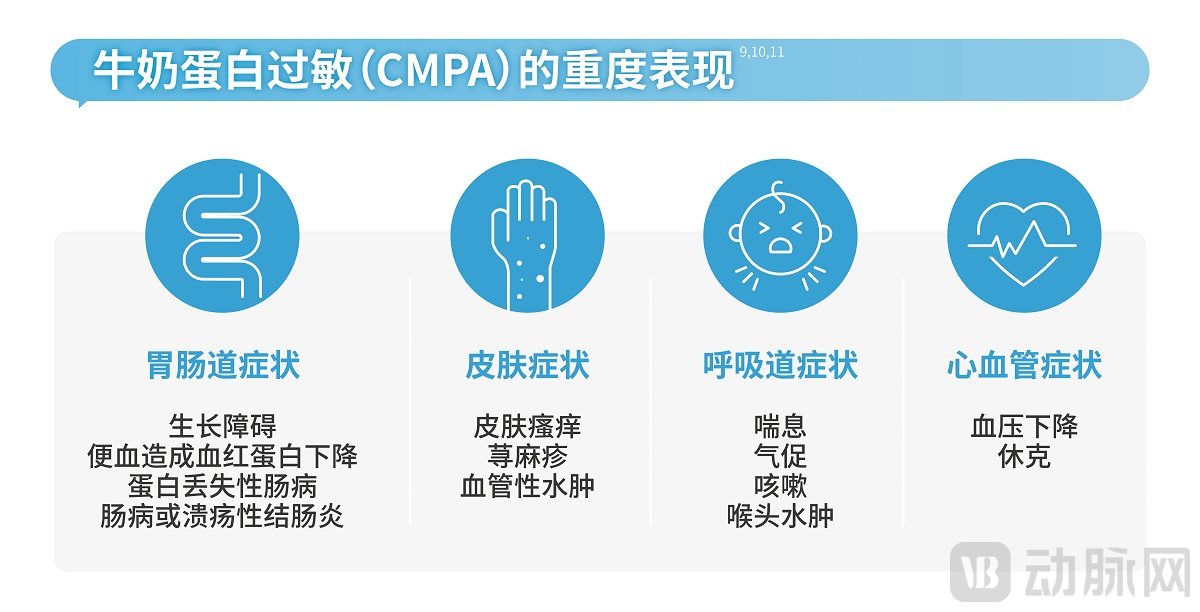
To mitigate the impact of cow's milk protein allergy (CMPA) on neonates, formulas for special medical purposes designed for CMPA commonly include partially hydrolyzed formulas, extensively hydrolyzed formulas, and amino acid-based formulas.
“Impact of Extensively Hydrolyzed Formula on Development, Nutritional Status, and Stool Routine in Infants with Cow’s Milk Protein Allergy” states that “partially hydrolyzed formula involves the hydrolysis of proteins prone to acting as allergens at the initial stage of production; however, this hydrolysis is not complete. While it may enhance IgE- and IgG-mediated immune tolerance to allergens, it is not suitable for infants with a confirmed diagnosis of cow’s milk protein allergy (CMPA). In contrast, extensively hydrolyzed formula alters the spatial structure and epitope sequence of allergenic protein molecules through enzymatic hydrolysis and temperature control, while maintaining unchanged levels of fat and carbohydrates. Its nutritional profile more closely resembles human breast milk, making it a favorable alternative feeding option. Clinical studies have demonstrated that extensively hydrolyzed protein formula can significantly alleviate clinical symptoms in infants and young children with CMPA, achieving an efficacy rate as high as 98% after 90 days of substitute feeding.” Amino acid-based medical foods for special medical purposes, typically composed of free amino acids and containing no cow’s milk protein components, allow infants to synthesize proteins endogenously after absorption, thereby effectively reducing the incidence of allergic reactions.
Different formulas have different indications for specific populations: extensively hydrolyzed formula is the first-line choice for infants and young children with mild to moderate cow's milk protein allergy, while amino acid formula is preferred for those with severe cow's milk protein allergy.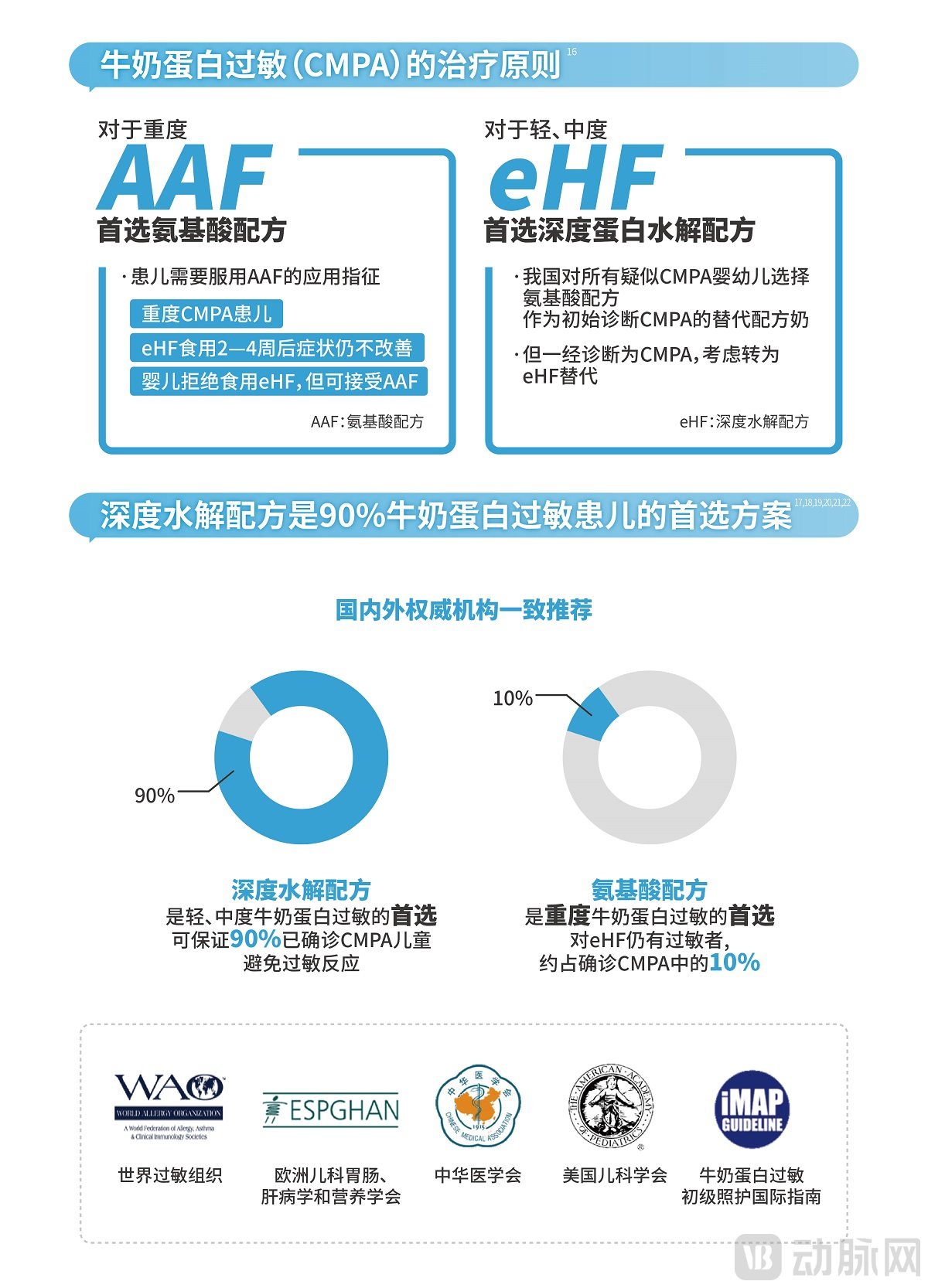
However, a major current reality of China's FSMP industry is:For cow's milk protein allergy in infants and young children, all solutions offered by domestic manufacturers of foods for special medical purposes are partially hydrolyzed formulas; there is currently no deeply hydrolyzed formula or amino acid-based formula available.Among the 104 FSMP products actually approved, there are three extensively hydrolyzed formula products and two amino acid formula products. All five products are imported.
Domestic manufacturers of foods for special medical purposes (FSMP) aiming to better address cow’s milk protein allergy (CMPA) in infants and young children must shift their production focus from extensively hydrolyzed formulas to deeply hydrolyzed formulas, or even amino acid-based formulas. However, Dr. Gao Yuyou, Vice President of R&D at KHS Group, pointed out that China currently lacks applicable standards for amino acid-based formulas. What remains as a viable area for domestic manufacturers to concentrate their efforts—and what is urgently “called for” by infants and young children with cow’s milk protein allergy—is precisely deeply hydrolyzed formula products.
Targeting the "Deep Hydrolysis" Process, Leveraging "Platform" Synergies to Drive Solution Implementation
The technical need proposed by KHS Group for the development of key enzyme preparations and hydrolysis processes for whey protein powder hydrolysis in the 7th China Innovation Challenge (Ningbo) · Qianwan New Area Challenge, hosted by the Ningbo Municipal Science and Technology Bureau and the Management Committee of the Economic and Information Technology Bureau of Ningbo Qianwan New Area, and co-organized by the Fudan Sci-Tech Innovation Park in Qianwan New Area, is of great significance.
In fact, practitioners in the FSMP (Food for Special Medical Purposes) industry are well aware of the importance of “extensively hydrolyzed formulas” and the underlying hydrolysis technology. However, since the approval of the first domestically produced partially hydrolyzed milk protein formula product in 2018, no domestically produced extensively hydrolyzed infant FSMP has been approved to date. This situation, to some extent, highlights certain challenges—namely, that the manufacturing processes behind extensively hydrolyzed formulas involve significant technical complexities, which have hindered the research and development efforts of domestic brands.
According to Dr. Gao,To achieve a breakthrough from “zero” to “one” and secure approval for extensively hydrolyzed formula products, two major hurdles must be overcome:
First, relevant documentation demonstrating the product’s suitability for infants with food protein allergies must be provided. Second, standardized, comprehensive, and clear materials detailing the enzymatic hydrolysis steps, critical control points, process parameters, and methods for controlling the degree of hydrolysis must be submitted.
Teams lacking technical expertise, financial strength, and business acumen will find it difficult to simultaneously overcome the aforementioned challenges. At the 7th China Innovation Challenge, KHS Group raised a critical issue that the industry is currently unable to resolve. However, by leveraging this platform, KHS Group may achieve technological breakthroughs more rapidly in the subsequent development of key enzyme preparations for whey protein hydrolysis and related hydrolysis processes.
On one hand, KHS Group is driving source-level innovation in key areas that currently constrain the development of the FSMP industry, such as raw material sourcing and process R&D.In terms of production, KHS Group employs internationally advanced manufacturing equipment, processes, and production workflow management, with established production bases for dry-process, wet-process, and liquid formulations. Its in-house laboratory is capable of conducting over 2,000 specialized tests across the entire value chain, from raw materials and production processes to finished products. The company’s long-term focus on the field of Foods for Special Medical Purposes (FSMP) has enabled it to effectively guide scientific research and development with a commercialization mindset, ensuring the successful translation of research achievements into market-ready products.
On the other hand, the China Innovation Challenge platform will subsequently allocate more high-quality expert team resources from universities to address the technical needs proposed by KHS Group, thereby facilitating collaborative research and development.For example, Professor Zhang Guoqiang’s team at Jiangnan University will participate in the development of solutions. Jiangnan University maintains a leading position in China in technologies related to proteolytic enzymes, and Professor Zhang’s team stands out as a premier group within this field.
In other words, by leveraging the platform of the 7th China Innovation Challenge, KHS has forged a powerful alliance that will significantly accelerate the R&D and commercialization of key enzyme preparations for whey protein hydrolysis and the associated hydrolysis processes. Ultimately, while helping KHS build technical barriers spanning raw materials, processing, and final products, this initiative will also achieve a breakthrough from “zero” in China’s FSMP (Food for Special Medical Purpose) industry regarding key enzyme preparations and hydrolysis technologies for whey protein, thereby breaking the current technological monopoly held by foreign manufacturers.
Meet the nutritional support needs of infants and young children at home and abroad, and further expand the formulas for foods for special medical purposes
Given the lack of established clinical guidelines for diagnosis and treatment, first-time parents concerned about their infants’ health may prioritize extensively hydrolyzed formula products when feasible. This implies that the actual target population may be significantly larger than the number of infants with cow’s milk protein allergy.
In the field of solutions for cow's milk protein allergy, KHS is poised to become a pioneer in China's foods for special medical purposes (FSMP) industry. Notably, having overcome key challenges in developing enzyme preparations and hydrolysis processes for whey protein powder, KHS also plans to further develop amino acid-based metabolic disorder formulas for infants with phenylketonuria (PKU).
Dr. Gao also revealed that while Kelubao Group is developing extensively hydrolyzed formula products by mastering technical barriers in China, it will also provide extensively hydrolyzed and amino acid-based formula products to overseas markets. In addition to filling the gap in the domestic market, Kelubao Group will further meet the demands of international markets.This undoubtedly means that practitioners in the FSMP industry, represented by KHS Group, will not only further break the technological monopoly in the FSMP sector but also expand into the global market to compete on an equal footing with their overseas counterparts.
References:
1. Wang Zhaokang, Huang Shuqing. Progress in the Diagnosis and Treatment of Cow's Milk Protein Allergy in Neonates. Clinical Rational Drug Use, March 2021, Vol. 14, No. 3A.
2. Huang Xiaoling, Lu Qiuyue, Xu Jiehua. Effects of Extensively Hydrolyzed Formula on Growth, Nutritional Status, and Routine Stool Examination in Children with Cow’s Milk Protein Allergy. Journal of Shenyang Medical College, November 2022, Vol. 24, No. 6.