

Peijia Medical R&D Day: Dual-Engine Growth in Transcatheter Valve Therapy and Neurovascular Intervention Drives Innovation and Global Expansion
Peijia Medical
Developer of Cardiac and Cerebrovascular Interventional Medical Devices
“Despite the impact of the pandemic in the first half of 2022, Peijia Medical’s transcatheter valve therapy business and neurointerventional business revenues still increased by 455.4% and 57.6%, respectively, compared to the same period in 2021. TaurusOne®and TaurusElite®Approximately one year after obtaining regulatory approval, the product has been adopted by a cumulative total of 209 hospitals. Four ischemic products under its neurointerventional business have been launched successively, marking the Group’s initial completion of its ischemic product portfolio layout and enabling it to provide a comprehensive suite of solutions for both hemorrhagic and ischemic diseases. Today, Peijia Medical is embarking on its internationalization journey...
In March, in the water town of Suzhou in Jiangnan, Dr. Zhang Yi, founder of Peijia Medical, summarized the company’s achievements over the past year with a series of impressive data, kicking off Peijia Medical’s Annual R&D Open Day and Investor Open Day.
At this event, Peijia Medical presented its impressive 2022 R&D achievements, offering more than 300 investors and analysts, corporate executives, and domestic and international experts in the fields of heart valve and neurointerventional therapies a clear view of the Group’s innovations and breakthroughs throughout its development journey.
The Group has further strengthened its portfolio of valve and neurointerventional products: its transcatheter valve therapy business has seen both BD collaborations and core in-house developed products advance into human clinical trials, while its neurointerventional business has achieved significant successes through medical-engineering collaboration.Moreover, Peijia Medical joined hands with the Administrative Committee of Suzhou Industrial Park, Suzhou Institute of Industrial Technology, and an entrepreneurial team to jointly establish the Suzhou Sicui Interventional Medical Technology Research Institute (hereinafter referred to as “Suzhou Sicui”)., leveraging it as an incubation platform to provide project management, operational, talent, and R&D support for early-stage interventional projects, thereby perfecting the full ecosystem product portfolio for valve surgery at the lowest cost.
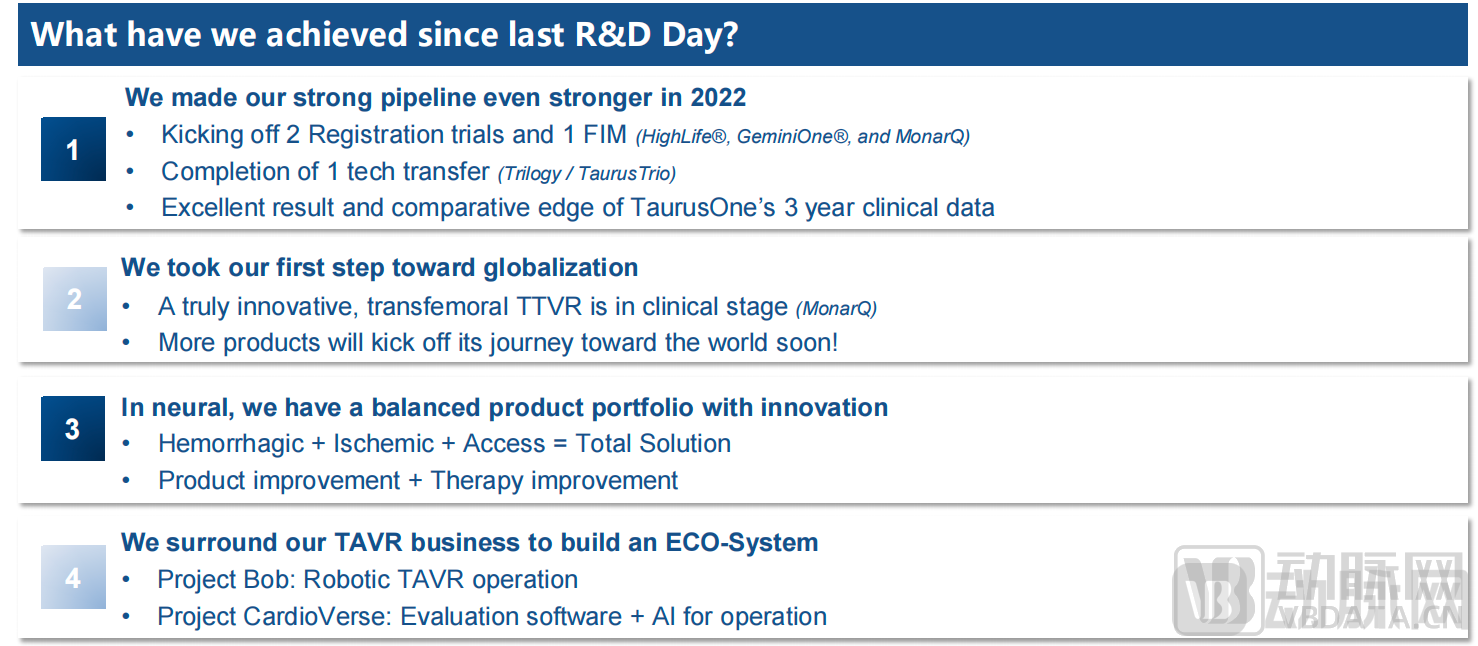
Today, Peijia Medical’s strategic layout has largely matured. As the Group continuously enhances its heart valve and neurointerventional businesses, its operational scope has expanded from the domestic market to overseas markets.
Interventional therapy for valvular heart disease represents a revolutionary transformation, addressing the limitations of traditional cardiac treatments—such as insufficient surgical precision, large incisions, low safety profiles, and slow postoperative recovery—thereby enhancing the accuracy, safety, and efficacy of surgical procedures.
Currently, product lines related to aortic valve replacement and repair (including indications for regurgitation and stenosis), mitral valve replacement and repair, and tricuspid valve replacement and repair are experiencing leapfrog development, where any breakthrough technological advancement could become a landmark milestone. This is precisely the core focus of Peijia Medical’s development.
Peijia Medical has an in-depth and extensive R&D layout for heart valve disease.The company has four business development projects, strategically positioned in the fields of aortic regurgitation, mitral valve replacement, mitral valve repair, and tricuspid valve replacement.Meanwhile, enhancing the durability of prosthetic heart valves and exploring optimized, non-implantable interventional therapies for disease management have long been key strategic priorities for Peijia Medical.
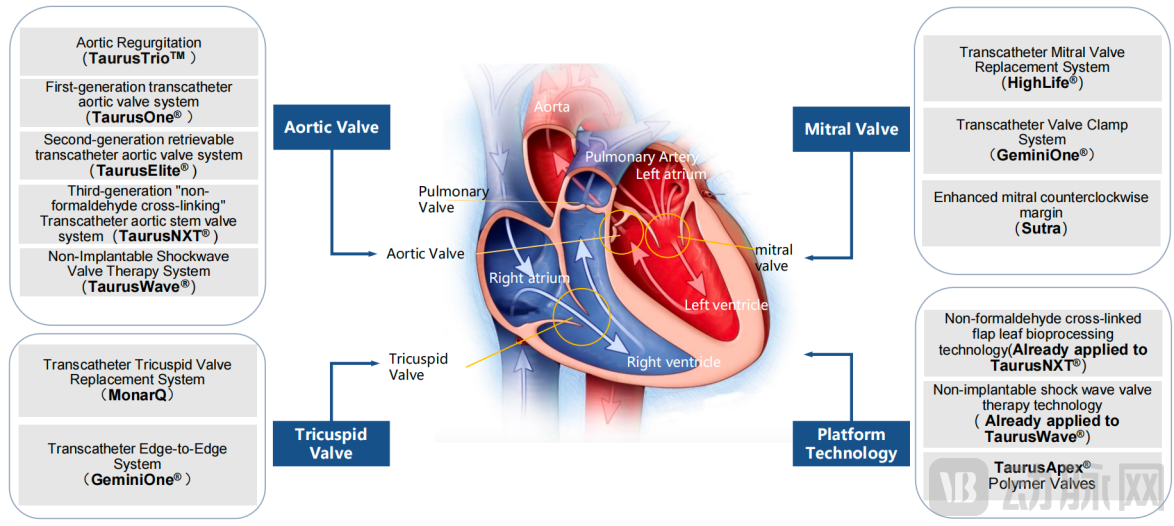
Peijia Medical's Heart Valve Business
Among them,It is worth mentioning the TaurusNXT, a third-generation “non-aldehyde cross-linked” long-acting dry valve developed by Peijia Medical.®TAVR System.
To address the two major bottlenecks in TAVR that urgently require breakthroughs—namely, improved durability and expanded indications—TaurusNXT®As the world’s first transcatheter aortic valve system to apply “aldehyde-free cross-linking” leaflet bio-processing technology and ultra-low temperature vacuum freeze-drying technology, it fundamentally addresses valve calcification (the primary cause of bioprosthetic valve degeneration) at its source, enhances the durability of prosthetic aortic valves, and thereby significantly extends their service life.
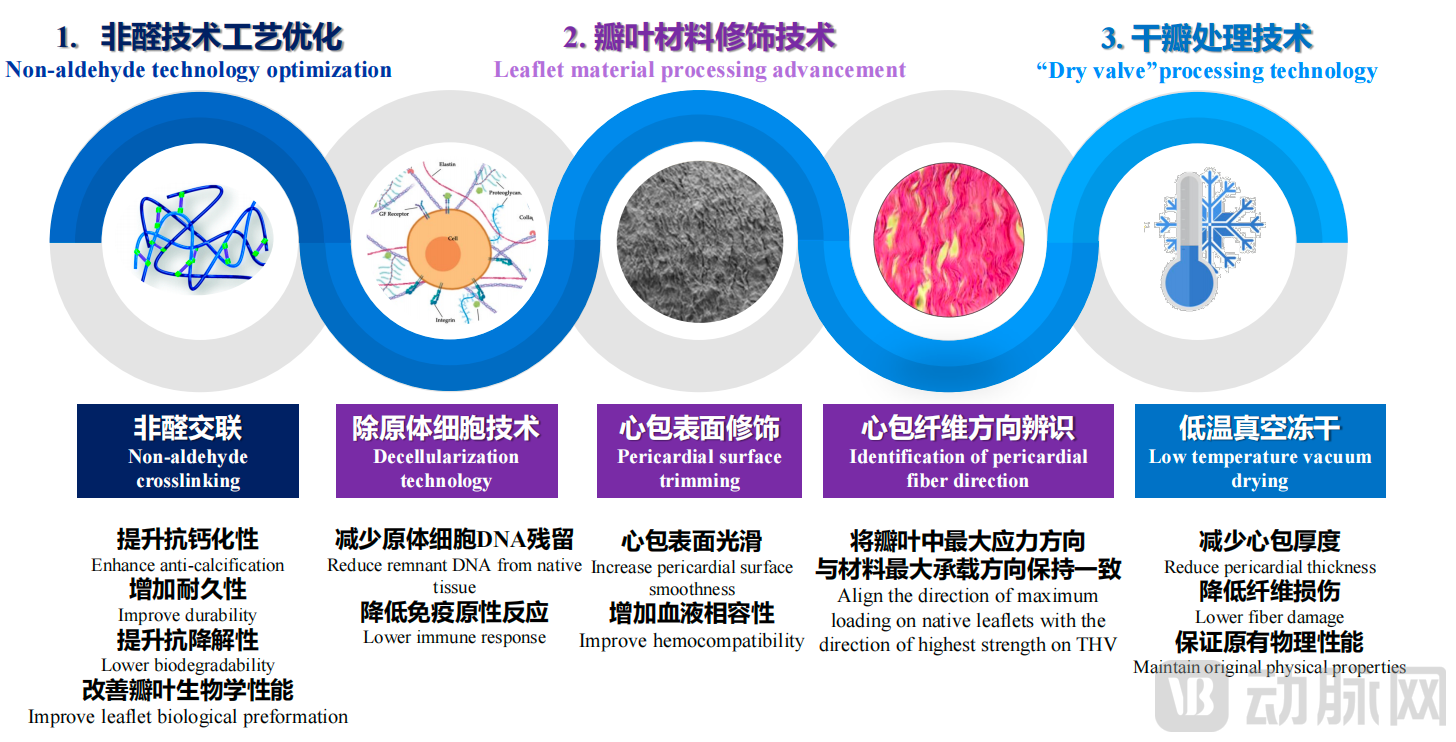
TaurusNXT®Core Technologies of the TAVR System
Unlike the common aldehyde group blocking or aldehyde group cleaning technologies on the market, TaurusNXT®The non-aldehyde leaflet biological processing technology applied in the TAVR system avoids tissue calcification induced by residual aldehyde groups from glutaraldehyde-treated leaflets, thereby eliminating the primary risk of calcification at the mechanistic level.
Meanwhile, TaurusNXT®Low-temperature vacuum freeze-drying technology is employed to preserve the physical integrity of valve tissue, demonstrating superior efficacy compared to traditional glycerol-based desiccation methods.
At this event, Professor Zhou Daxin from Zhongshan Hospital, Fudan University, shared insights on TaurusNXT®Progress in Multicenter Clinical Trials and Single-Center Data from Zhongshan Hospital. The data show that, to date, TaurusNXT®Enrollment of 44 patients in the pivotal clinical trial has been completed. The device success rate was 97.7%, and the procedural success rate was 97.7%. Postoperative outcomes were excellent, with zero all-cause mortality, zero strokes, one valve-in-valve procedure, and zero reinterventions. These data demonstrate that TaurusNXT®Demonstrates a favorable safety and efficacy profile, with early-stage data superior to that of previous-generation同类产品.
In a single-center study at Zhongshan Hospital involving 11 enrolled patients, data demonstrated stable and effective valve function one year postoperatively, with excellent valve orifice area and hemodynamic performance. The optimized design of the dry valve’s pre-loaded system, metallic frame, and skirt met clinical needs, further confirming its overall performance.
In addition to improving the durability of its replacement products, Peijia Medical is committed to treating aortic stenosis caused by leaflet calcification through interventional non-implantable repair methods, and has launched TaurusWave.®Shockwave Valvular Therapy System.
Unlike traditional treatments for calcific valvular stenosis, TaurusWave®During balloon dilation,Utilizing shockwave technology to remodel calcified structures on heart valves can effectively soften both superficial and deep calcifications without damaging soft tissues.. Unlike traditional ultrasound technology, shockwaves exhibit less attenuation within the human body and cause significantly less thermal injury to tissues than ultrasound, making them a more efficient and safe technique for calcification remodeling.
It is reported that this product can be used as a standalone treatment for transcatheter aortic valvuloplasty (TAV), or prior to transcatheter aortic valve replacement (TAVR) surgery, to alleviate valvular stenosis. This new breakthrough in interventional valve therapy will also serve as a powerful tool against calcific valvular heart disease, offering a novel therapeutic option.
In addition to deeply refining its existing products, Peijia Medical has also established an extensive R&D pipeline for valvular heart disease, including transfemoral aortic regurgitation products, mitral valve repair and replacement products, and MonarQ.TMTranscatheter tricuspid valve replacement system, etc.
In the field of aortic valves, Peijia Medical has introducedTransfemoral Aortic Regurgitation Product TrilogyTMSystemIt is currently the only transfemoral aortic valve replacement product globally with CE certification for dual indications of regurgitation and stenosis. Its safety and efficacy have been commercially validated in Europe, with excellent post-market clinical data. Future registration trials in China can draw on clinical experience from Europe and the United States, eliminating the need for repeated verification and adjustment of device design, thereby accelerating clinical development.
In the mitral valve field, Peijia Medical has deployed a portfolio of blockbuster products. For example, it collaborates with the French medical device company HighLife to jointly developHighLife®The first transseptal mitral valve replacement product in Asia to enter registered clinical trials, has entered the NMPA’s Green Channel for Innovative Medical Devices and is expected to become the first transseptal mitral valve replacement product approved in China. Meanwhile, in overseas clinical trials, HighLife®It also demonstrated excellent clinical data.
At the event, Professor Nicolo Piazza from the McGill University Health Centre and the Munich Heart Center stated, “Unlike other products, HighLife®Adopting a “Valve-in-Ring” design, it achieves active positioning and anchoring through the interlocking and clamping of the fixation ring and valve stent with the native leaflets, thereby addressing the greatest challenge in mitral valve replacement—anchoring—and effectively preventing paravalvular leakage.
Professor Chen Mao and Professor Zhao Zhengang from West China Hospital of Sichuan University shared insights on HighLife.®clinical status: To date, a total of 6 procedures have been completed in combined research and registrational clinical trials, HighLife®The device success rate was 100%, with no postoperative regurgitation or paravalvular leakage. The first six procedures were performed independently under remote proctoring guidance. It is anticipated that as surgical experience accumulates, the operator’s learning curve will further shorten, and procedure time will become more predictable.
In the field of mitral valve repair, Peijia Medical possesses independent intellectual property rights for itsEdge-to-Edge Repair System GeminiOne®Featuring an original design that distinguishes it from MitraClip and Pascal, GeminiOne offers differentiated features such as integrated self-locking and stepless release.®Poised to go global with differentiated advantages and independent patents, serving patients with mitral valve disease worldwide.
In addition,Peijia Medical has also laid out its transcatheter tricuspid valve replacement product, MonarQ.TM. According to the introduction, MonarQTMThe system is an innovative tricuspid valve replacement product developed by inQB8. Peijia Medical acquired and exclusively owns the global rights to inQB8’s TTVR technology. In November 2022, MonarQTMThe system successfully completed the world’s first human implantation at the Heart Center of Rigshospitalet, Copenhagen University Hospital in Denmark, thereby launching its overseas clinical trials. Subsequently, it will continue to conduct EFS clinical studies abroad and apply for CE certification for MonarQ.TMlaying the foundation for its global commercialization. MonarQ is expected toTMIt will be the first product of Peijia Medical to embark on internationalization.
At the conference, Dr. Arshad Quadri, founder of inQB8, introduced MonarQ.TMperformance, safety, efficacy, and healing data. He stated: “MonarQTM"The valve features a unique biodynamic design that does not rely on compressing the annulus to achieve strong radial support. It naturally conforms to the rhythm of blood flow, shares systolic load forces, and minimizes paravalvular leakage across various sizes of native annuli."
By strategically deepening its portfolio in niche segments such as aortic regurgitation, mitral valve repair and replacement, and tricuspid valve replacement, Peijia Medical has reinforced its positioning as a platform-based company, significantly enhancing the market competitiveness of both the corporation and its products.
However, Peijia Medical did not stop there.
To enhance its product ecosystem, Peijia Medical plans to continuously listen to the needs of doctors and patients, consistently incubate projects, and strive to build a comprehensive portfolio of products for valve surgery at the lowest cost, delivering maximum investment and clinical benefits while benefiting the entire ecosystem. At the event, Peijia Medical unveiled its interventional device incubation platform, “Suzhou Sicui,” for the first time, based on the aforementioned logic and philosophy.
As an incubation platform integrating industry and investment,“Suzhou Sici” primarily focuses on four categories: neurointervention, structural heart disease, non-vascular intervention, and electrophysiology., providing project management, operations, talent, and R&D support for early-stage interventional projects. If product prototype development is successful, it can assist founding teams or projects in establishing companies and facilitate investment through Jiasheng Fund and other venture capital firms.
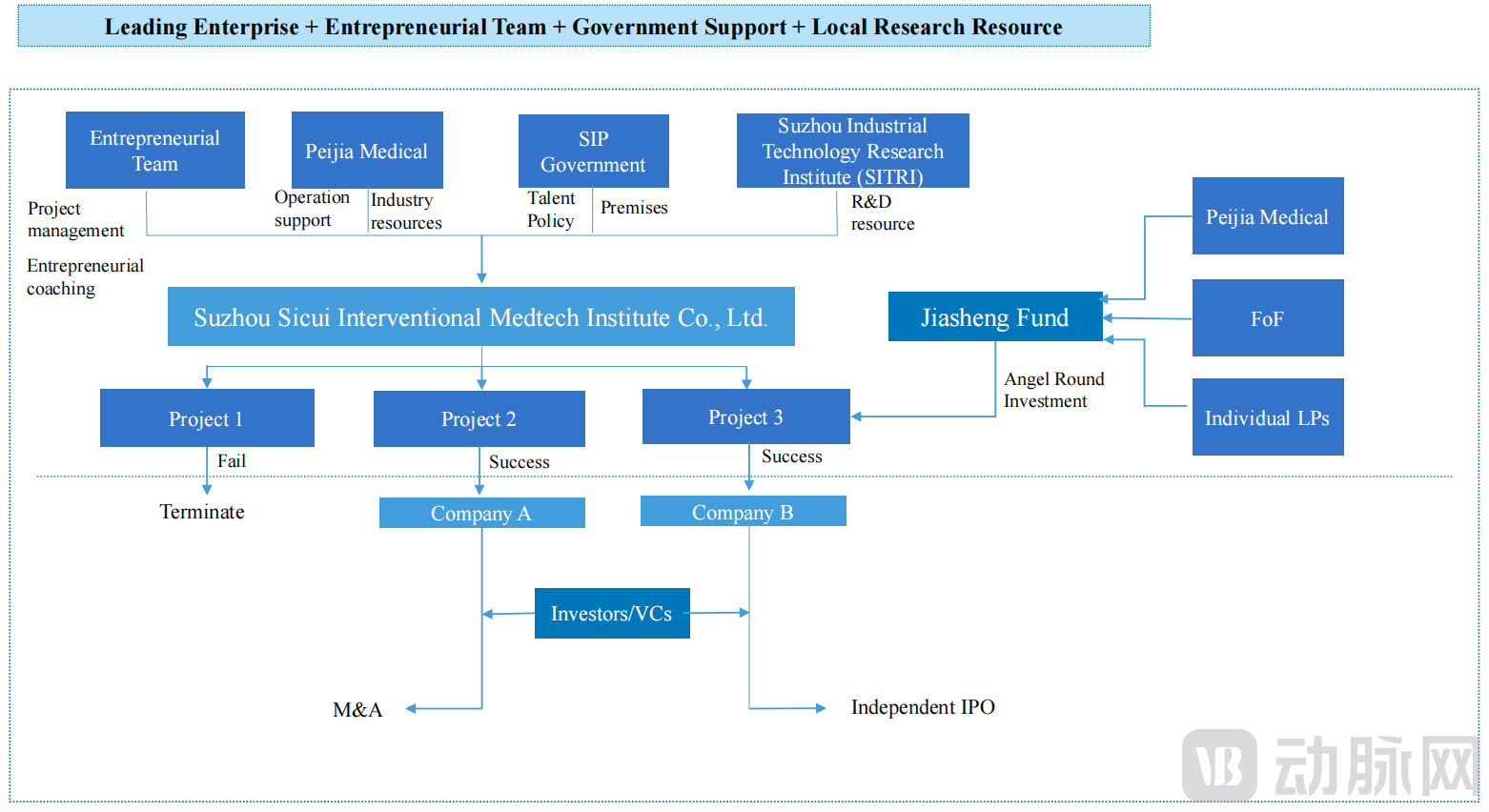
“Suzhou SICUI” Platform Structure and Incubation Process
According to reports, “Suzhou Sicui” offers a one-stop service package that includes comprehensive corporate development planning, funding and premises, access to experts and key opinion leaders (KOLs), hospital resources, and startup team incubation and enhancement programs, enabling founding teams to achieve a “turnkey” entry. Founding teams need only focus on product R&D to successfully navigate the project’s development from “0” to “1.”
Most importantly, throughout the entire project incubation cycle, Peijia Medical will continuously provide enterprises with comprehensive resource support covering the full process from early-stage R&D incubation to subsequent animal studies, clinical trials, and product commercialization, while also offering market- and sales-related guidance during the product development process.
For example,Suzhou Peixin Technology (hereinafter referred to as “Peixin Technology”) is a technology company incubated by “Suzhou Sicui” that specializes in artificial intelligence for medical imaging, currently focusing on surgical planning and assisted diagnosis for heart valve procedures.At the event, Ms. Yuan Jingxian, Chief Executive Officer, recounted the entrepreneurial journey of her team from its inception. She noted that, with the incubation support of Peijia Medical, the team developed and launched its first-generation commercial software—the innovative CardioVerse imaging platform for structural heart disease—in just one and a half years.
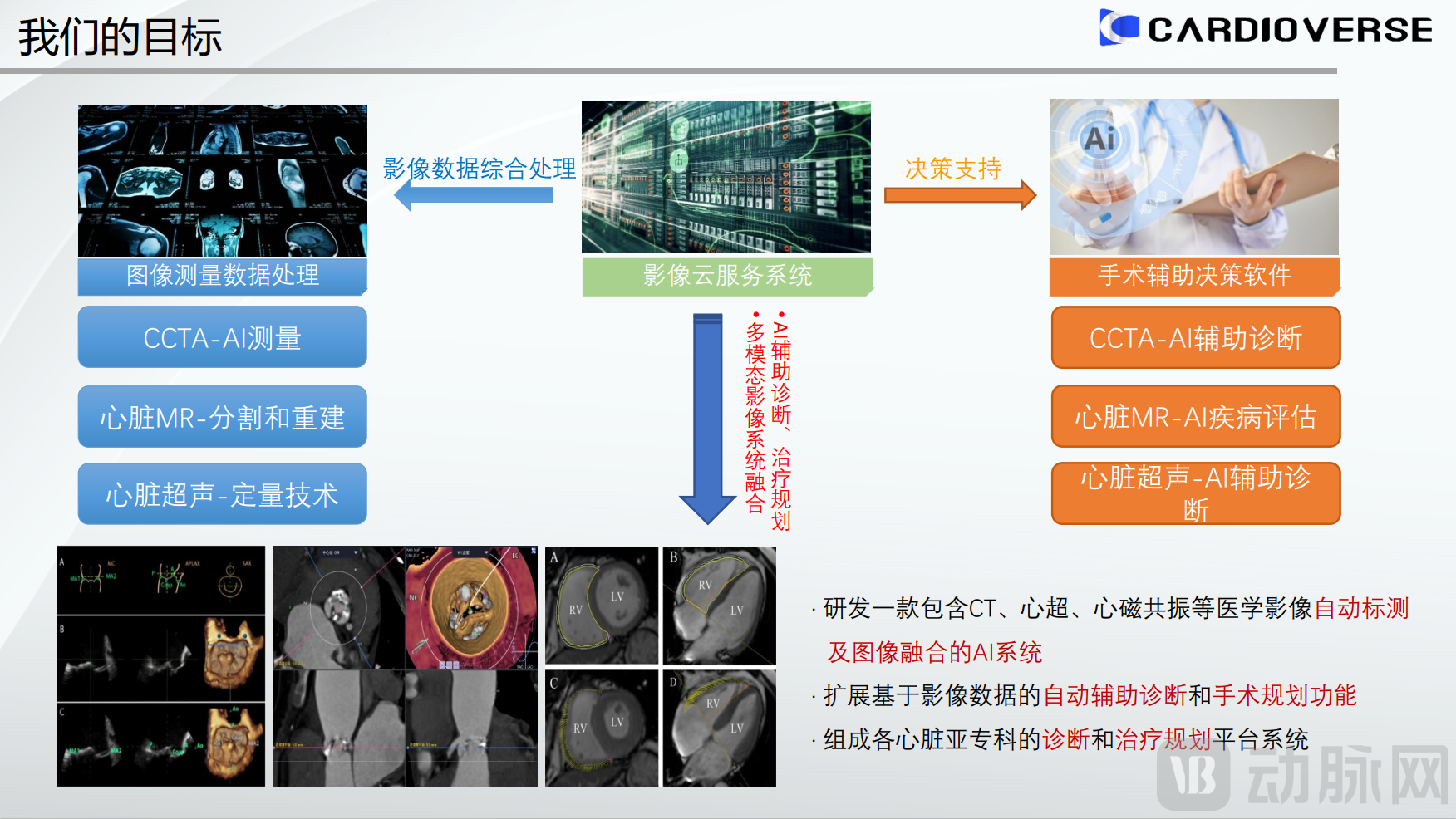
Medical Imaging AI Technology Company — Peixin Technology
Ms. Yuan Jingxian stated, “Peixin Technology possesses a fully independent proprietary underlying codebase, with its products demonstrating high scalability, reusability, and portability. Meanwhile, CardioVerse integrates an expert knowledge base with few-shot deep learning techniques, significantly accelerating product development. Currently, the product’s scope has been extended upstream to early disease screening and diagnosis, and downstream to simulated registration with DSA and echocardiography, thereby serving surgical navigation systems.”
In addition to Peixin Technology, an AI company specializing in medical imaging,“Suzhou SICUI” has also internally incubated the BOB TAVR surgical robot project.At this event, Wang Sixin, Vice President of Intelligent Medical Solutions at Peijia Medical, unveiled the company’s robotics project to both online and offline audiences.
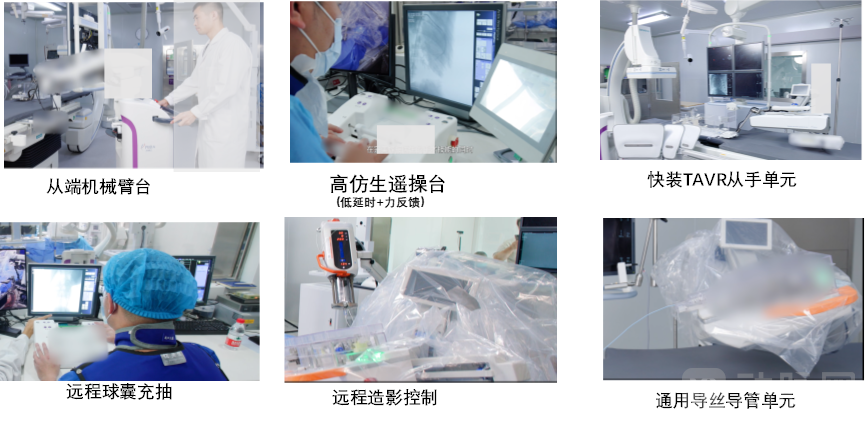
BOB TAVR Surgical Robot Project
The BOB TAVR surgical robot consists of modules such as remote manipulator arms, a low-latency teleoperation system, and innovative TAVR-specific instruments. Its remote control capability prevents operator hand tremors and fatigue while enabling the precise execution of delicate maneuvers, thereby eliminating the challenges associated with multi-person collaboration through single-operator control. The open-architecture design allows the surgeon to perform the entire procedure with the assistance of the robotic system, further enhancing procedural fluency and precision, and demonstrating a high degree of robotic-assisted automation.
Furthermore, the system is built on a "platform-based" architecture to ensure scalability across all aspects of interventional procedures. Empowered by robotic and artificial intelligence technologies through its digital imaging system, it enhances operators' transcatheter intervention capabilities, making procedures safer, more precise, and standardized.
More importantly, the BOB TAVR surgical robot can empower a series of transcatheter heart valve interventions, accelerate the optimization and standardization of procedural techniques, simplify procedures, drive the scale-up of TAVR surgeries, and ultimately benefit more patients with valvular heart disease. Currently, the product prototype has successfully completed multiple animal experiments, with the first-generation product expected to be launched in 2025–2026.
To date, “Suzhou Sicui” has incubated multiple projects. We anticipate that, leveraging this incubation platform, Peijia Medical will not only consolidate its core competitive advantages but also deepen its pipeline layout and expand the boundaries of its pipeline capabilities at minimal cost.
During this event, Peijia Medical also highlighted a key word: innovation.
For Peijia Medical, both internal innovation and business development opportunities are of critical importance to the Group’s R&D. Currently, the Group is achieving breakthrough innovations not only in the field of heart valves but also in neurointervention.
In the neurointerventional business, Peijia Medical’s subsidiary, Jiaqi Biologics, has 14 registered products with a comprehensive pipeline.Surgeons can independently perform procedures for hemorrhagic stroke, ischemic stroke, and intracranial atherosclerotic disease (ICAD) using Jiaqi Biologics’ products. Meanwhile, Jiaqi Biologics continues to innovate and develop new-generation products that are safer and more effective for physicians and patients.There are currently seven products under development at various stages.
In the first half of 2022, Jiaqi Biotech's Fastunnel®Over-the-Wire Balloon Dilatation Catheter, Tethys AS®Thrombectomy Catheter, Fluxcap®Balloon Guide Catheter, Syphonet®Innovative neurointerventional products, such as thrombectomy stents, have all received approval for market launch.
To date, neurointerventional surgical devices have reached a high level of maturity in both design and functionality. Consequently, current R&D efforts primarily follow two pathways: innovating upon existing products to better address clinical needs by enhancing usability, efficacy, and safety; or combining existing devices to create novel procedural techniques.Fastunnel®Delivery Balloon Dilatation Catheter and Syphonet-Based®The BASIS (balloon angioplasty under the protection of a distal retrieval stent) of the thrombectomy stent is a representative product of the two major R&D paths.
Fastunnel®It is China’s first delivery-type balloon dilation catheter, featuring an integrated “balloon + microcatheter” design that combines balloon dilation functionality with the capability to deliver diagnostic and therapeutic devices, such as intracranial stents.
Historically, endovascular interventions for the treatment of intracranial atherosclerotic stenosis (ICAS) typically involved twelve steps and required multiple exchanges of guidewires, catheters, and balloons, making the procedure highly complex. Clinical studies have demonstrated that during such interventions for ICAS, the exchange of guidewires, catheters, and balloons carries a high risk of guidewire-induced vascular perforation, leading to complications.
Professor Liu Jianmin from the Cerebrovascular Disease Center of Shanghai Changhai Hospital stated at the conference: “Fastunnel®The delivery-type balloon dilation guide integrates the functions of two types of catheters: the balloon catheter and the microcatheter, through Fastunnel®“With the delivery-type balloon dilation catheter, clinicians can omit the multiple exchange procedures previously required during surgery, thereby reducing complications associated with exchanging guidewires and catheters, ultimately lowering procedural risks and enhancing surgical safety.”
Via Fastunnel®Deliverable balloon dilation catheters will bring about a fundamental shift in interventional procedures for intracranial stenosis, transforming them from complex and technically challenging operations into simple and easy-to-perform procedures.
It is worth mentioning that this product is a pioneering innovation jointly developed by Gage Biotech and Professor Liu Jianmin through in-depth collaboration, truly embodying Gage Biotech’s philosophy of integrating medicine with engineering and taking clinical needs as the fundamental starting point.
Except Fastunnel®Delivery Balloon Dilatation Catheter, Based on Syphonet®Balloon Angioplasty with the Distal Protection of Stent Retriever (BASIS) is also an innovative product inspired by clinical needs.
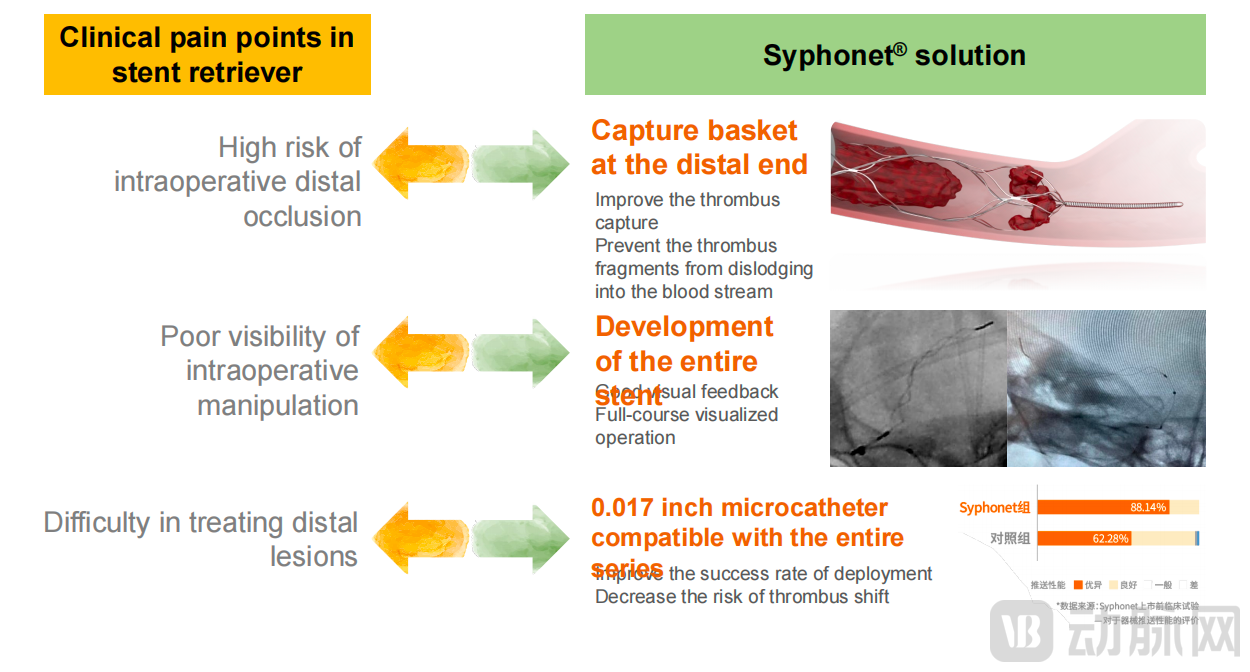
Syphonet®Thrombectomy Stent Products
This procedure involves the combined use of a stent retriever, balloon, and intermediate catheter, with Syphonet as the core product.®Thrombectomy Stent: The device’s capture basket serves as a protective mechanism, reducing the risk of thrombus embolization caused by balloon dilation. Due to the thin profile of the stent delivery wire, the balloon can be advanced over the delivery wire to the stenotic segment for dilation. Furthermore, the entire stent series is compatible with 0.017-inch microcatheters, thereby avoiding the risks of intimal injury, plaque rupture, and vasospasm associated with conventional thrombectomy stents when crossing severe stenotic lesions.
From Fastunnel®From the delivery balloon dilation catheter to BASIS technology, Jiaqi Biologics has demonstrated its product innovation capabilities. This underscores that Jiaqi Biologics, with innovation ingrained in its core, will continue to advance steadily through innovation.
In fact, a single product can no longer sustain the rapid growth of a large medical device company. The growth potential driven by organic expansion is becoming increasingly limited. Therefore, companies must support their development by continuously enhancing their product ecosystems and pursuing global strategic layouts.
From aortic valves, mitral valves, to tricuspid valves. From cardiac valves to neurointerventional procedures. From independent R&D to an integrated model of R&D, business development (BD), and incubation. From the domestic market to overseas markets. Peijia Medical continuously breaks through its own boundaries, enriches its R&D pipeline, optimizes its product portfolio, and embarks on a path of globalization.
Peijia Medical, with product innovation capability and independent patents as its core, continuously drives product innovation and actively lays out a pipeline of innovative self-developed products. Moreover, it has established R&D platforms and innovation incubation platforms in California and Boston, respectively, to enhance its international innovation strength and global visibility, laying the foundation for the subsequent overseas expansion of its technologies and products.
A closer look at Peijia Medical’s journey reveals that its heart valve and neurointerventional businesses act as “dual wheels,” continuously driving the group’s forward momentum. As the domestic market accelerates in volume, Peijia Medical is deepening its strategic layout by enriching its product ecosystem through a model combining independent R&D, business development (BD), and incubation. This approach facilitates rapid product commercialization and advances the company’s internationalization process.
At this event, Peijia Medical undoubtedly provided the best answer centered on this strategy through its achievements, actions, and data.
March, when spring is in full bloom and flowers are blossoming, marks the conclusion of this event, as Peijia Medical embarks on a new journey.