

Bispecific Antibodies: The Next Frontier in Oncology as Dozens of Chinese Biotechs Vie for Dominance
In 2022, bispecific antibody (hereinafter referred to as “bispecific antibodies”) drugs entered the spotlight.
This year, the number of bispecific antibody drugs launched globally has exceeded the total from the previous 12 years combined. In China, more than 30 biopharmaceutical companies have established pipelines for bispecific antibodies, with over 300 candidates in development and nearly 100 having entered clinical trials. In addition to Cadonilimab, marketed by Akeso in June 2022, several other candidates—including Alphamab Oncology’s KN046, Akeso’s AK112, and BeiGene’s ZW25—have advanced into Phase III clinical trials. Key bispecific antibody pipelines from innovative pharmaceutical companies such as Innovent Biologics, Zelgen Biopharmaceuticals, Wuhan Youzhiyou Biopharmaceutical Co., Ltd., Sichuan Baili Pharmaceutical, and Promiscence Biotech have also progressed to Phase II clinical trials, underscoring the intense competition in this field.
At the end of 2022, Wuhan Youzhiyou Biopharmaceutical Co., Ltd. submitted an IPO application to the Hong Kong Stock Exchange, which was accepted, marking the next significant milestone in the company’s corporate development. As one of the earliest biotechnology enterprises in China to independently establish a core technology platform for bispecific antibody drugs, Wuhan Youzhiyou Biopharmaceutical has built a robust pipeline of innovative bispecific antibody therapeutics. In early February, the National Medical Products Administration (NMPA) accepted the clinical trial applications for two bispecific antibody candidates, Y332 and Y400, developed by Wuhan Youzhiyou Biopharmaceutical. To date, among the ten candidate drug pipelines independently designed and developed by the company, five have entered clinical development stages in China, in addition to the aforementioned two, while the remaining three are in critical stages of research and development and preclinical evaluation.
At a time when domestic innovative pharmaceutical companies are embarking on the development of bispecific antibody drugs, Youzhiyou Biopharma, having started earlier, has in a sense already demonstrated the first-mover advantage of its differentiated pipeline layout.
Like all major breakthroughs in biotechnology, bispecific antibody drugs are the culmination of multidisciplinary technological advancements and the fruit of developers’ persistent efforts despite repeated setbacks.
In 1960, researchers first proposed the concept of bispecific antibodies. Due to their theoretically superior functionality and greater versatility, bispecific antibodies have continued to captivate researchers’ interest over the subsequent nearly half-century, as they have strived to identify stable and efficient manufacturing processes for these agents.
However, manipulating matter at the molecular level in the microscopic world is inherently challenging, requiring a cross-disciplinary integration of complex fields such as genetic engineering, recombinant biomacromolecule technology, and cellular engineering. Consequently, for a prolonged period after their emergence, the development of new bispecific antibody drugs progressed slowly, with few candidates successfully translated into marketable therapeutics.
It was not until 2009 that Removab, the world’s first bispecific antibody (targeting EpCAM/CD3 and indicated for malignant ascites), was approved for marketing in Europe. However, it soon met with a major setback, and Removab was quietly withdrawn from the market in 2017. According to an industry insider speaking to VCBeat, a key reason behind Removab’s withdrawal was that its initial manufacturing process was imperfect, resulting in excessively high production costs and insufficient capacity for bispecific antibodies, thereby making large-scale commercialization unsustainable.
Bispecific AntibodiesSo-called bispecific antibodies are artificial antibodies formed by combining two different heavy-chain amino acid sequences and two different light-chain amino acid sequences through chemical conjugation, recombinant DNA technology, or cell fusion. As an engineered antibody, a bispecific antibody can simultaneously and specifically bind to two distinct antigen epitopes, whereas natural monoclonal antibodies can only bind to a single antigen epitope.
The enhanced antigen-binding capability of bispecific antibodies is critical in the treatment of complex diseases.
For instance, in cancer therapy, tumor cell progression often involves multiple factors. When a signaling pathway activated by genetic mutations is blocked by an inhibitor, tumor cells can still activate alternative signaling pathways to evade the treatment, thereby diminishing therapeutic efficacy and leading to inhibitor ineffectiveness or drug resistance. Bispecific antibodies, however, can target two distinct antigenic epitopes. When the two antigens are expressed on different cells, such as tumor cells and T cells, the bispecific antibody bridges these cells, inducing T-cell activation and subsequent tumor cell killing. Additionally, when the two antigens mediate different signaling pathways, the bispecific antibody simultaneously blocks both pathways, thereby exerting a potent and highly specific cytotoxic effect against tumor cells.
Therefore, despite the immense challenges, the development of bispecific antibodies has been quietly advancing through continuous efforts. Developers have gradually concluded that “while monoclonal antibodies depend on targets, bispecific antibodies rely on platforms,” which has since become an industry consensus.
The turning point came in 2022, when pharmaceutical companies that had previously invested heavily in bispecific antibody pipelines began to reap the rewards. Roche, Johnson & Johnson, and Biogen all secured approvals for new bispecific antibody drugs, while Akeso’s independently developed domestic bispecific antibody also received marketing approval. In less than a year, as many as five bispecific antibody drugs were launched. In contrast, for many years prior, only three bispecific antibody therapies—Blincyto, Hemlibra, and Rybrevant—were available globally.
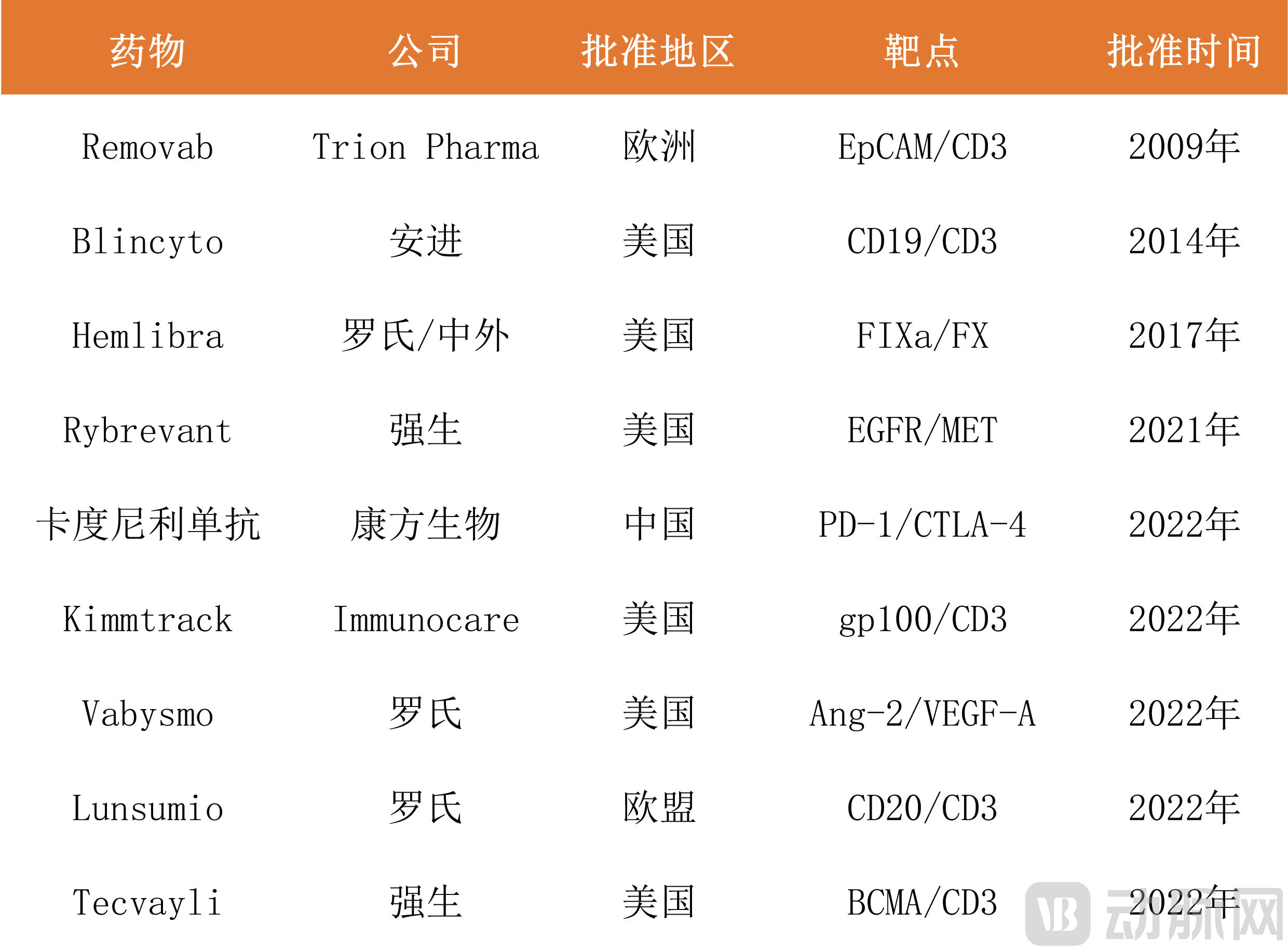
Globally Marketed Bispecific Antibody Drugs Data Source: Artery Orange Database
Interestingly, five years later, Lingteng Pharma has restarted the marketing application for Removab. The return of this legendary product adds a new layer of suspense to an already bustling bispecific antibody market.
The market enthusiasm for these products has also extended to the R&D sector, making bispecific antibody pipelines highly sought-after assets in global licensing deals. As early as 2018, multinational pharmaceutical companies accelerated their efforts to build up pipelines of novel bispecific antibodies. Since 2022, both the number and value of such transactions have continued to hit record highs.
In September, Seagen licensed LAVA Therapeutics’ EGFR-targeting γδ T-cell-engaging bispecific antibody, strengthening its bispecific antibody portfolio; in October, Gilead Sciences and MacroGenics entered into a collaboration to develop the latter’s CD123/CD3 bispecific antibody MGD024, with total consideration of up to $1.7 billion; in December, Akeso announced that it would grant Summit Therapeutics exclusive rights to develop and commercialize ivonescimab (a PD-1/VEGF bispecific antibody) in the United States, Canada, Europe, and Japan, with the total value of the collaboration reaching up to $5 billion; in January 2023, GlaxoSmithKline spent $1.5 billion to license four bispecific and multispecific antibody candidates from WuXi Biologics.
According to incomplete statistics from VCBeat, multinational pharmaceutical companies have invested nearly $10 billion in their bispecific antibody drug pipelines.
Turning our focus back to China, we find that nearly all innovative pharmaceutical companies with substantial technical capabilities are exploring and laying out bispecific antibody (BsAb) drug pipelines. In the competitive race for innovation in BsAb development, enterprises that have independently built core technological platforms for bispecific antibodies often hold greater initiative, enabling them to advance faster and further.
In June 2022, cadonilimab, developed by Akeso on its proprietary platform, received marketing approval, becoming the first domestically produced bispecific antibody drug to be launched in China. Data show that among the more than 100 bispecific antibody new drugs entering clinical trials in China, most are in Phase I clinical trials, with fewer having advanced to Phase II or Phase III. Akeso and Alphamab Oncology, which also possesses a proprietary bispecific antibody platform, have both advanced their core pipelines to Phase III clinical trials. Meanwhile, companies with self-developed bispecific antibody technology platforms, including Wuhan Youzhiyou Biopharmaceutical Co., Ltd., Promiscience Therapeutics, Zeltis Biosciences, and Weilizhibo, have progressed their core pipelines to Phase II clinical trials.
Currently, based on differences in target combinations and indications, mainstream bispecific antibodies can be categorized into three types: those involving the PD-1/PD-L1 axis, CD3-engaging bispecifics, and others. Specifically, different bispecific antibody technology platforms each have their own strengths in the design and development of bispecific drugs targeting different antigens, while different targets correspond to differentiated therapeutic area layouts that reflect companies’ competitive advantages.
Among them, innovative pharmaceutical companies developing bispecific antibodies targeting the PD-1/PD-L1 axis, such as Akeso and Alphamab Oncology, represent the largest number of bispecific antibody R&D pipelines and have achieved the fastest clinical progress. For instance, Akeso’s AK104 and Alphamab Oncology’s KN046 were both developed based on this type of platform. Wuhan Youzhiyou Biopharmaceutical’s Check-BODY adopts a symmetric tetravalent bispecific antibody platform design; Y101D, developed on this platform, is currently the only PD-L1/TGF-β symmetric tetravalent bispecific antibody in clinical trials.
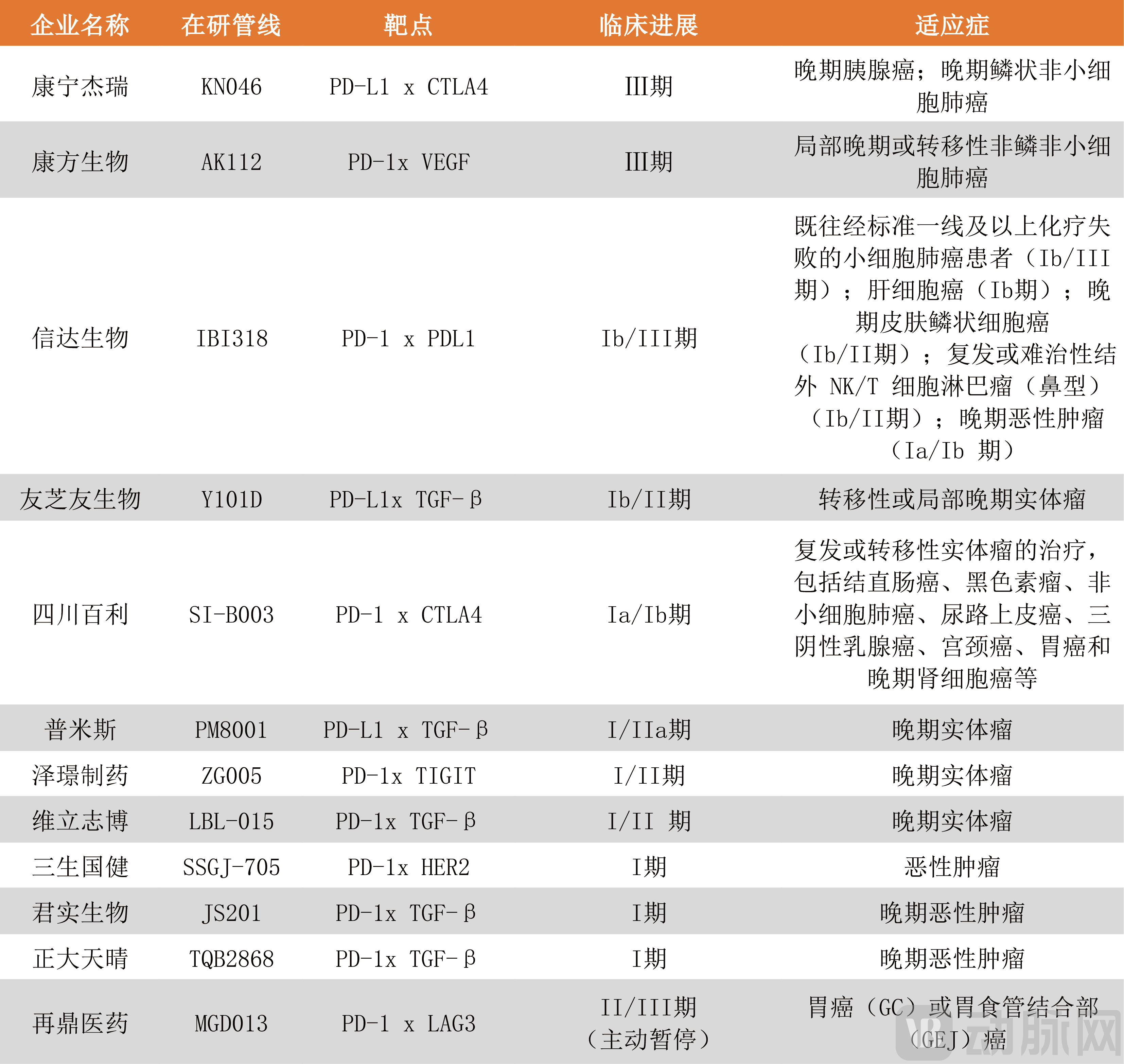
Bispecific Antibody Pipelines Partially Based on the PD-1/PD-L1 Axis PlatformData Source: Arterial Orange Database
Innovative pharmaceutical companies developing CD3-engaging bispecific antibodies are represented by Wuhan Youzhiyou Biopharmaceutical Co., Ltd. (Youzhiyou Bio), while other companies such as Genor Biopharma, Zai Lab, and EMBiologics have also developed multiple novel bispecific antibody drugs based on similar platforms. According to statistics from the Center for Drug Evaluation (CDE), among all domestic competitors with proprietary bispecific antibody platforms, Youzhiyou Bio’s pipeline of T-cell-engaging bispecific antibody candidates ranks first in terms of both development stage and quantity.
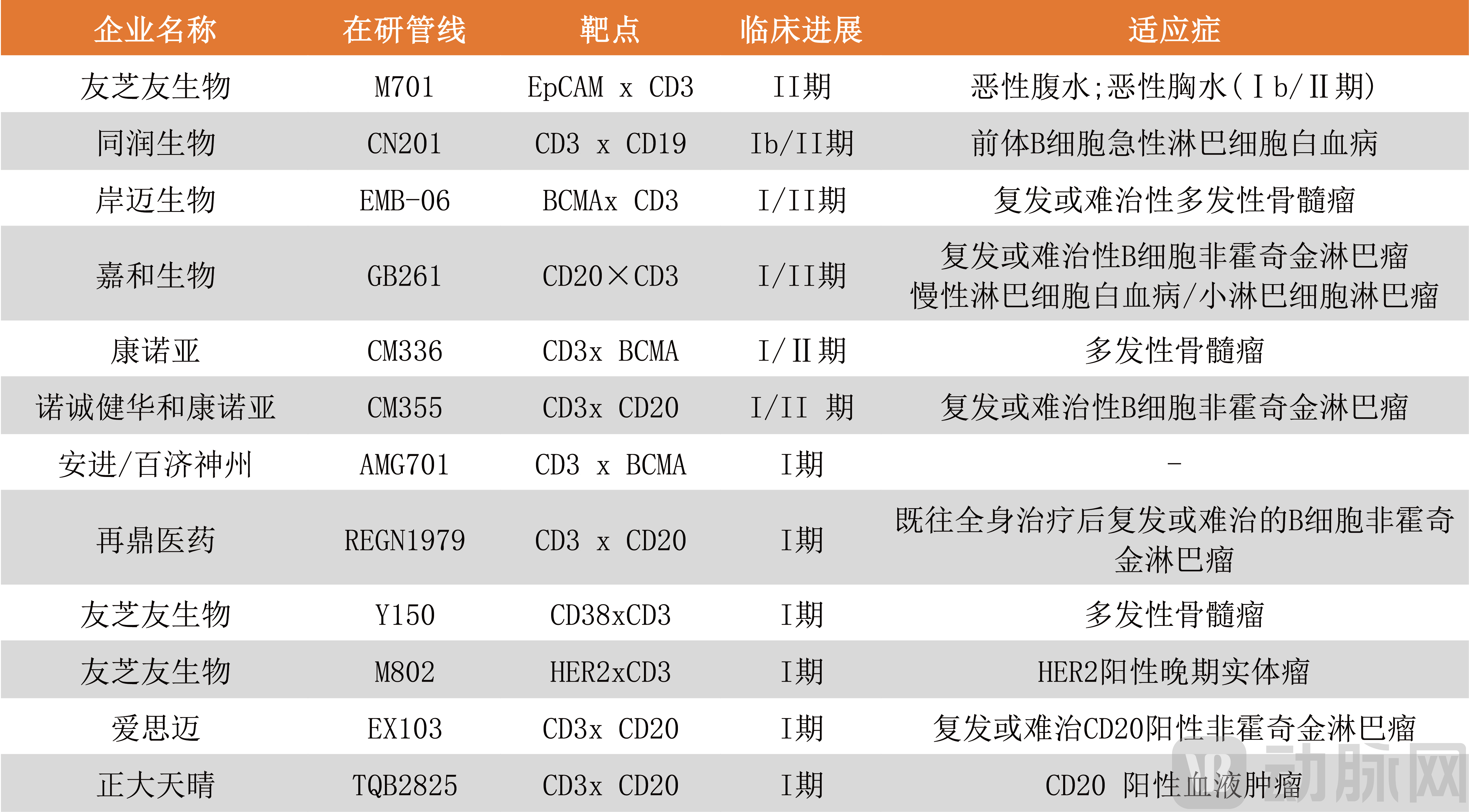
Bispecific Antibody Pipeline Partially Utilizing CD3 Recruitment Platform Data Source: Arterial Orange Database
YBODY, independently developed by Youzhiyou Biopharma®It is the first-of-its-kind platform globally dedicated to the development of asymmetric IgG-like bispecific antibodies with an scFv-Fab-Fc structure, offering advantages such as favorable safety and stability profiles, as well as high purity. Based on the YBODY® platform, Youzhiyou Biopharmaceutical has developed M701, one of only two EpCAM × CD3 bispecific antibody drugs worldwide to enter clinical studies, which has also been demonstrated to be effective in treating various advanced solid tumors. Another product developed on the YBODY® platform, Y150, is the only bispecific antibody targeting CD38 and engaging T cells to enter clinical development in China.
The third category of bispecific antibodies comprises other types, representing a relatively niche technical platform. Examples include Innovent Biologics’ IBI324, Keymed Biosciences’ KP104, and Y400 developed by Youzhiyou Biopharmaceuticals, all of which fall into this category. Among these, Youzhiyou Biopharmaceuticals’ other symmetric tetravalent bispecific antibody platform, Nano-YBODYTM, the designed molecules can achieve higher binding affinity, greater stability, lower immunogenicity, and higher product yield.
Based on Nano-YBODYTMLeveraging its platform, Wuhan Youzhiyou Biopharmaceutical Co., Ltd. developed Y400, a novel bispecific antibody for age-related ophthalmic diseases, which addresses the current manufacturing challenges associated with high-concentration formulations of such drugs. Notably, in July 2022, Wuhan Youzhiyou Biopharmaceutical licensed Y400 to China Medical System Holdings Limited, with total upfront and milestone payments reaching up to $220 million. Additionally, Wuhan Youzhiyou Biopharmaceutical is entitled to receive low single-digit percentages of the annual net sales of Y400 as royalty fees.
A review of the development history of Wuhan Youzhiyou Biopharmaceutical Co., Ltd. reveals that, as one of the earliest innovative pharmaceutical companies in China to engage in bispecific antibody technology development, it has established a presence across three distinct bispecific antibody technology platforms. These functionally diverse platforms complement each other, providing foundational support for a differentiated product portfolio and thereby constructing an insurmountable technological barrier.
Amid the fervor, there are growing concerns that the short-term clustering of pharmaceutical companies may lead to product homogenization. In reality, the bispecific antibody (BsAb) candidates currently making rapid progress still predominantly target well-established pathways. For instance, PD-1/CTLA-4—the target combination chosen for cadonilimab—remains a popular focus in the development of novel BsAbs. According to statistics from VCBeat, among nearly 100 BsAb drugs undergoing clinical trials in China, more than 50% adopt a PD-1/PD-L1-centric target design. Admittedly, the influx of additional R&D resources will accelerate the optimization of new BsAbs; however, the concentration of development pipelines on hot targets is not necessarily beneficial.
Whether for monoclonal antibody drugs that have previously experienced rapid growth, or for bispecific antibodies, cell therapies, and gene therapies that hold great promise, technology is merely a tool, while clinical value remains the ultimate goal. Previously, the “Guiding Principles for Clinical Development of Antineoplastic Drugs with Clinical Value as the Orientation” also explicitly stated that new drug development should be patient-need oriented, pay attention to the dynamic changes in treatment needs, and improve treatment experience and convenience.
Malignant ascites is a large accumulation of fluid in the abdominal cavity caused by the metastasis of tumor cells, and it is associated with various cancers such as ovarian cancer, gastric cancer, colorectal cancer, lung cancer, and pancreatic cancer. It can cause patients to experience abdominal pain and bloating, leading to mobility issues or an inability to eat. Malignant pleural effusion, on the other hand, involves the accumulation of fluid and cancer cells between the chest wall and the lungs, which may cause patients to feel shortness of breath and chest discomfort. It is a very common complication in different types of cancer, including lung cancer, breast cancer, and ovarian cancer. Data shows that malignant pleural effusion may occur in approximately 45% of lung cancer patients, 2% to 11% of breast cancer patients, 41.6% of lymphoblastic lymphoma patients, and 33% of ovarian cancer patients.
Nowadays, malignant tumors are increasingly altering people’s life trajectories, and the number of new cases of malignant ascites and malignant pleural effusion is rising year by year. According to statistics, the number of malignant ascites cases in China increased from 533,300 in 2017 to 591,800 in 2021, and is projected to reach 654,000 and 729,800 in 2025 and 2030, respectively. Meanwhile, the number of malignant pleural effusion cases in China also rose from 536,400 in 2017 to 605,600 in 2021, and is expected to increase to 683,100 and 779,100 in 2025 and 2030, respectively.
However, clinically, there is no effective treatment regimen for these more than one million patients annually.
Specifically, current treatments for malignant ascites and malignant pleural effusion primarily rely on puncture drainage to alleviate symptoms in patients with advanced-stage cancer. However, this approach addresses only the symptoms rather than the underlying cause, providing only a brief period of efficacy. Consequently, these patients often spend their final days making repeated trips to the hospital for puncture drainage procedures.
Although clinicians currently alleviate the symptoms of malignant pleural and ascitic effusions through local treatment with certain chemotherapeutic agents, there is not even a universally recognized evidence-based guideline for the treatment of these conditions worldwide, making the management of malignant pleural and ascitic effusions a significant and difficult-to-bridge clinical gap.
Yzy Biologics’ M701 is a recombinant bispecific antibody targeting EpCAM, an antigen on the surface of cancer cells, and CD3, an antigen on the surface of T cells. It is an innovative bispecific antibody drug specifically developed for the treatment of malignant pleural and ascitic effusions. Data show that in Phase I clinical trials for malignant ascites, M701 demonstrated favorable safety and encouraging efficacy in controlling ascites. The objective response rate (ORR) for monotherapy via local administration in treating ascites reached 61.1%, while the disease control rate (DCR) for ascites reached 94.4%.
In terms of prolonging patient survival, based on previously released clinical data, the median overall survival (mOS) reached 151.5 days among patients enrolled in the Phase I clinical trial of M701 for the treatment of malignant ascites. This represents an increase of nearly 110% compared to the mOS of 72 days observed with Removab, the world’s first bispecific antibody targeting the same antigen, in its pivotal IP-REMAC-01 trial.
In fact, Wuhan Youzhiyou Biopharmaceutical Co., Ltd. has established significant development advantages in the field of bispecific antibodies. In addition to the relatively mature M701, Y150 and Y101D, which target different tumor-associated antigens, are rapidly advancing through clinical trials. Specifically, Y150 is a CD38 × CD3 bispecific antibody for the treatment of relapsed/refractory multiple myeloma and is currently undergoing Phase I clinical trials. As the only symmetric tetravalent PD-L1/TGF-β bispecific antibody, Y101D is conducting Phase I clinical trials as a monotherapy for metastatic or locally advanced solid tumors, and has also received Investigational New Drug (IND) approval for combination therapies in pancreatic cancer, hepatocellular carcinoma, and other advanced solid tumors.
It has taken nearly half a century for bispecific antibodies (BsAbs) to evolve from abstract concepts into tangible therapeutics. Driven by interdisciplinary breakthroughs in foundational theories, along with substantial inflows of capital and talent, more BsAb drugs with improved safety and efficacy profiles are expected to enter clinical practice in the future. According to the Technical Guidelines for Clinical Development of Bispecific Antibody Antineoplastic Drugs, the development of BsAbs should be guided by clinical needs and primarily aim to address limitations that cannot be resolved by monoclonal antibodies. In this process, innovative pharmaceutical companies with independent R&D capabilities serve as a critical supporting force, and we anticipate seeing more enterprises mastering core BsAb technology platforms reach maturity.