

Richen Medical Nutrition Gains Favor of Over 400 Hospitals as Ingredient Supplier Enters FSMP Market; Files IPO Prospectus
The FSMP sector is booming, but are companies in the field truly sailing smoothly?
On the one hand, from the proposal of “implementing clinical interventions” in the Outline of the Healthy China 2030 Plan issued in 2016 to the release of the Expert Consensus on Clinical Management of Foods for Special Medical Purpose (FSMP) in 2021, state-level policy support for FSMP has progressively evolved from emphasizing “the necessity of implementation” to specifying “how to implement it.” During this period, the demand for professional nutritional support among numerous domestic patient populations (such as those with cancer or chronic diseases) and the elderly has not diminished; rather, it has become increasingly pronounced due to growing awareness and understanding of FSMP.
This is directly reflected in the rapid growth of the market size for foods for special medical purposes (FSMP). According to relevant data, from 2016 to 2021, the domestic FSMP market expanded steadily, with a growth rate significantly higher than the global average. (Data source: iiMedia Research)
Furthermore, in the primary market, some companies have also attracted significant investments from institutional investors in recent years. For example, in January 2021, Richen completed an investment round led by Yida Capital.
On the other hand, there is a significant disparity between the market size of foods for special medical purposes (FSMP) in China and that globally. In 2020, for example, the former was RMB 7.72 billion, while the latter was RMB 81.48 billion, representing a more than tenfold difference. (Source: iiMedia Research)
Indeed, driven by policy support and the emerging demand for professional nutritional care among the public, China’s market for foods for special medical purposes (FSMP) has experienced robust growth due to various factors, attracting significant attention from investment institutions. Enterprises, investors, and relevant experts and professors are optimistic about the development prospects of domestic FSMP companies, while also recognizing the obstacles hindering their growth.
In a market with an overall scale just exceeding RMB 10 billion, “survival” may be the most realistic and urgent issue facing domestic FSMP (Food for Special Medical Purpose) enterprises.
“Although there is widespread optimism about the development of foods for special medical purposes (FSMP), most domestic FSMP enterprises in China are struggling to break even,” Yang Qinghao, COO of Richen Nutritional Technology Co., Ltd. (Richen), told VCBeat. Richen is one of the few companies that have achieved profitability. However, even Richen is exploring ways to further expand its profit margins.
Amid the booming development of the industry, why do companies specializing in foods for special medical purposes (FSMP) still face survival challenges? And how has Richen managed to achieve profitability? On a morning in February, Yang Qinghao, COO of Richen, provided VCBeat with a detailed analysis of the logic behind Richen’s business layout and the foundation of its sustainable success.
Unlike most pharmaceutical or food companies that have entered the FSMP sector, Richen was a raw material supplier before venturing into the field of foods for special medical purposes.
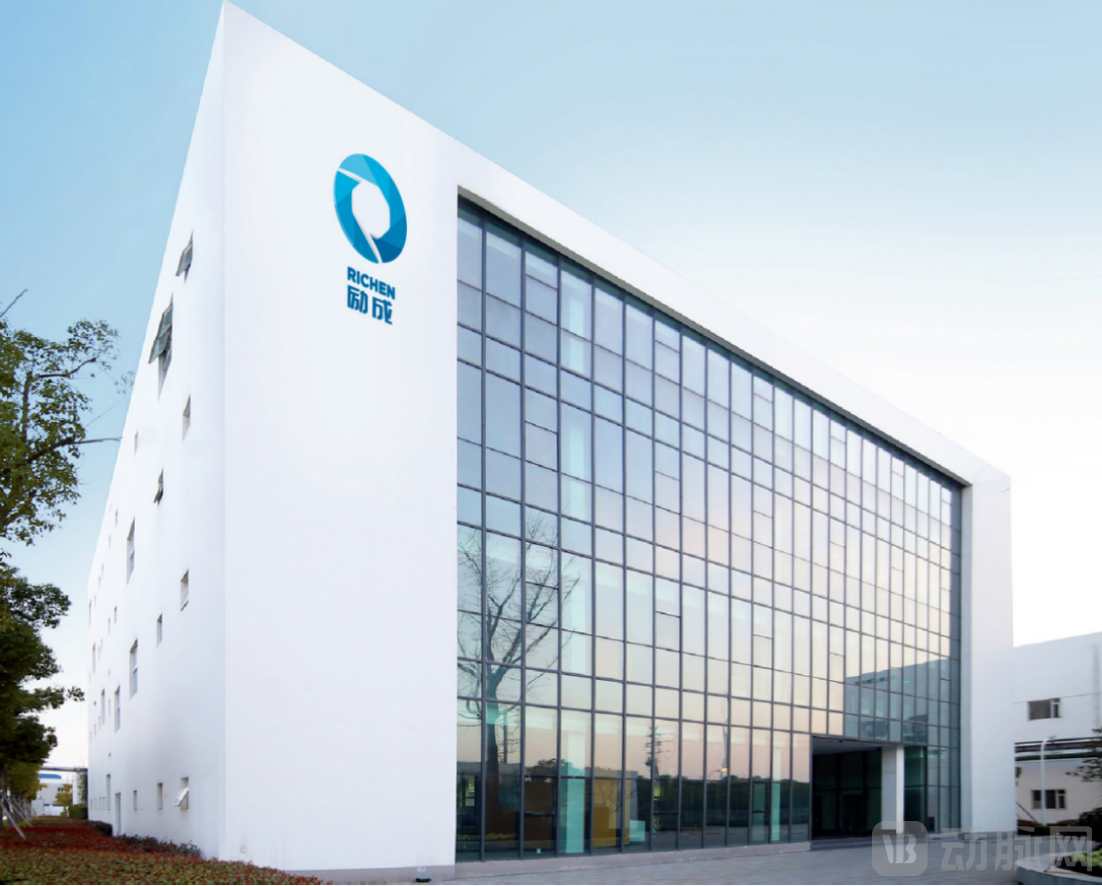
1999, Richen was founded; 2002, it launched its custom vitamin and mineral premix business.
“Customized Vitamin and Mineral Premix Business” refers to providing premixed processing packages of vitamin and mineral nutrients to food and beverage manufacturers, such as infant formula and health supplement producers. Specifically, it involves “blending nutrients uniformly according to the product’s specific nutrient fortification requirements and supplying them to food and beverage manufacturers.”
Subsequently, Richen has successively launched product lines for mineral-based raw materials and bioengineered ingredients, continuously empowering the food and beverage industry.
It was not until 2012, when Richen launched the nutritional brand “Licun®” for professional channels, that the company officially announced its expansion from B2B raw materials to B2C finished products. (Note: At that time, the concept of foods for special medical purposes (FSMP) did not exist in China; however, in retrospect, the business segment Richen sought to pioneer in 2012 was undoubtedly FSMP.)
“From raw materials to finished products, and from serving a diverse range of food and health supplements to more specialized medical nutrition products, Richen’s business development logic is straightforward and clear. ‘The production technology and quality control for medical nutrition products are directly derived from those used in our nutritional ingredients business. Therefore, extending the business chain from nutritional ingredients to finished medical nutrition products not only increases Richen’s value weight across the entire industry chain but also meets market demands and aligns with market development trends,’ summarized Yang Qinghao.”
Overall, Richen’s business layout can be summarized into three aspects: nutrition fortification, nutritional supplementation, and nutritional intervention. The first two belong to the raw material business, while the latter constitutes the medical nutrition business. This strategic layout represents a concrete implementation of founder Shen Yufeng’s entrepreneurial vision to “become China’s DSM.”
To date, Richen has accumulated 20 domestic invention patents and 4 PCT invention patents, participated in 11 national, provincial, and municipal scientific research projects and 8 industry-university-research collaboration projects, and contributed to the formulation of one national standard and one industry standard. In the field of medical nutrition alone, Richen has amassed 10 years of experience. Over this decade, Richen has become a nutritional brand recommended by hundreds of hospitals.
During this same 10-year period, Richen strategically focused on adult foods for special medical purposes (FSMP), particularly addressing the nutritional and health needs of three specific populations: individuals with impaired gastrointestinal function (especially those with gastrointestinal/digestive organ tumors), the elderly, and patients with chronic metabolic diseases (particularly those with prediabetes and type 2 diabetes).
Currently, Richen has obtained two registrations for Foods for Special Medical Purpose (FSMP), namely the complete nutritional FSMP products Licun Youtai® approved in 2019 and Licun Quanhangsu® approved in 2022. Additionally, more than 10 other FSMP products are under registration or in development, including tumor-specific complete nutritional formulas and diabetes-specific complete nutritional formulas.
Among these, according to the company, Licun Youtai® is the first domestically produced complete nutritional formula food designed for individuals aged 10 and above, with protein derived from hydrolyzed whey protein. Additionally, 50% of its fat content comes from medium-chain fatty acids (MCTs), making it particularly suitable for individuals with compromised gastrointestinal function. To date, Licun Youtai® has gained the favor of over 400 hospitals and achieved a doubling in sales volume.
Licun Quanhengsu® is a new product launched in December 2022, positioned as a cost-effective, nutritionally complete medical food for special medical purposes. The product features an intact protein formula, with added dual-source proteins from both plant and animal origins to provide a more complete amino acid profile. Its dietary fiber content helps restore intestinal function and alleviate constipation or diarrhea.
Richen’s identity as a nutritional raw material supplier is perhaps the most distinguishing feature that sets it apart from other companies in the medical food sector. What specific advantages does this identity bring to Richen’s medical food business?
The most intuitive empowerment lies in its ability to facilitate the compatible use of different nutrient raw materials and stabilize nutrients in final products.
Beyond this, the identity of a nutrient ingredient supplier empowers its FSMP (Foods for Special Medical Purposes) business line primarily in areas such as production processes and quality control. As Yang Qinghao stated, “FSMPs are consistent with Richen’s existing nutritional ingredient business in terms of production technology and quality control.”
Specifically, according to Liu Lu, Head of R&D at Richen Nutritional Technology Co., Ltd. (Richen), the company currently employs a dry powder blending process, for which the greatest challenge and most critical evaluation metric is the uniformity of raw material mixing. Achieving optimal homogeneity involves addressing numerous intricate key issues, such as the sequence in which multiple raw materials are added to the mixer and the processing techniques for blending raw materials with different particle sizes.
“Richen’s prior experience in raw material handling and dry powder blending has provided valuable support for our application of dry mixing processes in the field of foods for special medical purposes (FSMP), enabling us to achieve excellent blend uniformity. This represents a distinctive technical advantage of Richen.”
Meanwhile, Liu Lu, Head of R&D, added, “Richen has achieved self-sufficiency, covering everything from the innovative development of raw materials and their application to their performance in final products.”
Liu Lu’s statement is not without merit. This is because, in addition to the supply of nutritional raw materials, Richen possesses in-house testing capabilities, with its testing laboratory equipped to handle 74 test items across 8 major categories. In the field of foods for special medical purposes (FSMP), “testing and R&D are inseparable.”
In addition, Richen operates four R&D centers in Nantong (Jiangsu), Shanghai, Yixing (Wuxi), and Jiangnan University.
Among them, the Nantong (Jiangsu) Biotechnology Innovation Center focuses on research into bio-fermentation technologies, studies on the physical properties of nutrients, R&D of new processes and technologies for minerals, and research on production technologies and processes for foods for special medical purposes (FSMP). The Shanghai Nutrition Technology Innovation Center specializes in the R&D of FSMP, research on nutrient raw materials, formulation technology research, and product sensory R&D. The under-construction Yixing (Wuxi) FSMP R&D Center is dedicated to the R&D of FSMP formulations and technical processes. The FSMP Innovation Laboratory, jointly established with Jiangnan University, undertakes functions such as FSMP R&D, development of new technologies and raw materials, and efficacy validation.
It is evident that the functions of Richen’s four R&D centers span all key stages of the research, development, and production of foods for special medical purposes (FSMP), from the development of innovative raw materials and formulation to the research and development of sensory technologies and efficacy verification.
It is worth noting that research and development in sensory technology are also crucial for the development of foods for special medical purposes (FSMP). This is primarily aimed at addressing the widespread clinical concern that FSMPs often have an unpleasant taste and flavor.
Although foods for special medical purposes (FSMPs) must be used under the guidance of physicians or clinical dietitians and are commonly utilized in clinical settings, they retain their fundamental classification as food products. Compared with pharmaceutical dosages, FSMPs are consumed in significantly larger daily quantities. Therefore, enhancing palatability and ensuring a food-like character are critical aspects of FSMP development.
However, optimizing mouthfeel is no easy task. Richen’s solution involves modifying or exercising a certain degree of control over raw materials. This capability is also underpinned by its more than 20 years of accumulated experience in the nutritional ingredients sector.
According to Yang Qinghao, Richen’s years of experience in the medical nutrition niche market since 2012 have enabled it to develop a set of marketing strategies. Marketing, in Yang Qinghao’s view, is one of the biggest challenges facing enterprises in the special medical purpose food industry.
Theoretically, FSMPs must be used under a physician’s prescription or under the guidance of a dietitian. Therefore, hospitals should be the primary sales channel for FSMPs.
However, at present, hospitals have limited acceptance of foods for special medical purposes (FSMPs), and the lack of clear policies for their admission into hospitals further hinders the rationale for their sale within these institutions. “In plain terms, FSMPs currently lack official recognition in hospitals and cannot be assigned billing codes. As a result, hospitals are unable to issue prescriptions or charge fees appropriately,” said Yang Qinghao.
Moreover, the non-pharmaceutical nature of FSMPs will further constrain their expansion in out-of-hospital channels, such as into designated retail pharmacy chains covered by medical insurance.
Therefore, Yang Qinghao believes that although policy support for the development of foods for special medical purposes (FSMP) is strong, many detailed issues still require coordination and resolution. In the future, the industry must prioritize how to optimize regulatory approaches to reduce production costs and expand distribution channels for FSMP, while ensuring food safety.
At present, based on the current industry development environment, Richen has formulated its own development plan: to achieve sales revenue exceeding RMB 500 million within 2–3 years, with annual growth rates of 25%–30% for special medical purpose foods and 10% for raw material businesses. Meanwhile, Richen will continue to optimize its product portfolio and accelerate product iteration and upgrades, such as launching new biotechnology-based products and upgrading mineral-based products.
As for Richen’s long-term goals, COO Yang Qinghao candidly stated that in the field of foods for special medical purposes (FSMP), the company aims to become the leading brand in China in terms of both sales volume and market influence; in the raw materials market, it strives to become a top-tier domestic provider of nutritional ingredient solutions and the preferred partner for China’s food and beverage industry as well as the dietary supplement sector.
Beneath the bold ambitions lies a sober understanding of the industry. “We are fully aware of the gap between domestic companies and internationally renowned brands in the field of foods for special medical purposes (FSMP). This gap is primarily reflected in the diversity of formulations and brand influence. However, we also recognize that neither R&D of formulations nor the accumulation of brand influence can be achieved overnight; progress must be made step by step with down-to-earth efforts,” said Yang Qinghao, COO. “Richen is confident in its ability to persevere on this journey.”