

Kangle Weishi Debuts as A-Share's First Domestic 9-Valent HPV Vaccine Company, Poised to Reshape the Market

Health Guard
Recombinant Protein Drug Developer
On March 15, Health Guard, a company dedicated to the development of recombinant protein vaccines, listed on the Beijing Stock Exchange, becoming the first A-share stock for a domestically produced nine-valent HPV vaccine.
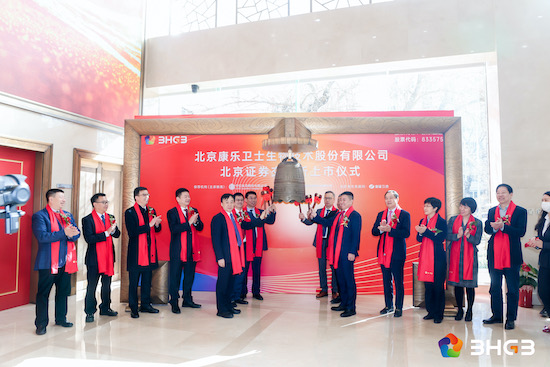
Prior to its IPO, Health Guard, as one of the domestic manufacturers with the most rapid R&D progress in nine-valent HPV vaccines, has attracted significant attention for its every move. It was also a star project in the primary market, having received angel-round investment from industrial investor Sirius Group and the renowned Chinese VC Shenzhen Capital Group (SCGC).
Since its establishment in 2008, Health Guard has built a comprehensive vaccine development technology platform centered on antigen structure design, covering the entire process from antigen structure design and recombinant protein expression to vaccine engineering, pilot-scale production, and potency evaluation. The company possesses three expression systems—Escherichia coli, yeast cells, and CHO cells—and has sequentially laid out 10 ongoing R&D projects for recombinant human vaccines, targeting multiple viruses to which humans are susceptible.
Among these, Health Guard’s trivalent HPV vaccine, 9-valent HPV vaccine (for female indications), and 9-valent HPV vaccine (for male indications) have entered Phase III clinical trials. Its 15-valent HPV vaccine has received the Clinical Trial Approval Notice from the National Medical Products Administration (NMPA). Meanwhile, other recombinant vaccines, including multivalent norovirus vaccine, respiratory syncytial virus (RSV) vaccine, and varicella-zoster virus vaccine, have advanced into key preclinical research stages.
It is understood that Health Guard plans to leverage its initial public offering (IPO) as an opportunity to further strengthen the development and commercial expansion of its HPV vaccines. Starting in 2025, Health Guard will sequentially complete the commercialization of various HPV vaccines under development.
Nine-Valent HPV Vaccine Remains in Short Supply
Since the launch of the first HPV vaccine in 2006, supply has consistently fallen short of demand, making it a scarce and highly sought-after commodity.
HPV vaccines are undoubtedly one of the few phenomenal products in the field of biotechnology, captivating the attention of women worldwide wherever they are introduced. From GSK’s bivalent HPV vaccine, CERVARIX®To Merck's Quadrivalent HPV Vaccine GARDASIL®, 9-valent HPV vaccine GARDASIL®9. HPV vaccines became instant hits upon market launch.
In fact, compared with most biotechnologies, the technological evolution of HPV vaccines has been sufficiently rapid, with products undergoing high-speed iteration. To date, only five HPV vaccines have been launched globally, in addition to the aforementioned CERVARIX®、GARDASIL®、GARDASIL®9 imported HPV vaccines, a batch of domestically produced HPV vaccines have been launched to fill the gap, such as Xinkening, the bivalent HPV vaccine under Wantai BioPharma®, Walvax Biotechnology's subsidiary Shanghai Zerun's bivalent HPV vaccine WozeHui®, providing women of eligible age with a more diverse range of options.
However, the continuous emergence of new products has consistently failed to keep pace with the expansion of demand. For global HPV vaccine developers, this is undoubtedly a sweet burden. Taking the nine-valent HPV vaccine, which is in highest demand, as an example, Merck, the first company to master the supply capability for this vaccine, achieved tremendous commercial success. According to its latest annual report, Merck’s global performance saw significant growth in 2022, driven by its cervical cancer vaccine, Gardasil®/Gardasil®9. Sales reached $6.897 billion, a 22% year-on-year increase, primarily driven by growing demand outside the United States, particularly in China.
The vast market gap for HPV vaccines has naturally attracted numerous well-established companies to invest heavily in the development of related products. In China alone, statistics show that by the end of 2022, there were 20 HPV vaccine candidates in clinical trials. These included three bivalent vaccines, one trivalent vaccine, five quadrivalent vaccines, one hexavalent vaccine, six nonavalent vaccines, and one each of the 11-valent, 14-valent, 15-valent, and 17-valent vaccines, indicating intense competition in R&D.
Among them, five companies—Health Guard, Recombinant Biotechnology, Wantai BioPharm, Walvax Biotechnology, and Bowei Biologics—are leading the race in the development of nine-valent HPV vaccines, with their respective pipelines having entered Phase III clinical trials. However, based on the data disclosed by each company, these domestically developed nine-valent HPV vaccines are not expected to enter the market until around 2026.
The underlying reason is that numerous thorny issues must be addressed before an HPV vaccine can be launched, including the lengthy product development cycle, stringent production technical requirements, and highly regulated approval and sales processes—all of which pose significant challenges. Any HPV vaccine manufacturer must undergo extensive development and optimization to consistently deliver safe and effective HPV vaccines.
Health Guard is one of the earliest enterprises in China to lay out the industrialization technology for HPV vaccines. The company’s early founders, Professor Chen Xiaojiang, Professor Liu Yongjiang, and Professor Ma Runlin, were classmates who specialized in structural biology. Among them, Professor Chen Xiaojiang is a globally renowned structural biologist and the first scientist in the world to resolve the three-dimensional structure of the HPV virus. Building on this foundation, the three colleagues achieved a breakthrough in solving the world-class challenge of efficiently expressing HPV pentameric proteins in Escherichia coli, thereby laying the groundwork for the company’s development of HPV vaccines.
According to the prospectus, R&D personnel account for more than half of Health Guard’s total workforce, and the company’s financial investment in HPV vaccine development has increased year by year. After more than a decade of development, Health Guard has built a diversified technology platform based on its core patents for papillomavirus capsid proteins, including a structure-based antigen design platform, a genetic engineering and protein expression platform, a vaccine engineering platform, and a recombinant vaccine potency evaluation platform. These platforms have facilitated many critical steps in the HPV vaccine lifecycle, from design and development to mass production.
For example, engineered HPV viral capsid proteins are mostly misfolded, thus failing to elicit specific protective antibodies against HPV. Although correctly folded virus-like particles can be obtained through steps such as inclusion body purification and protein refolding, the refolding process is complex and results in low protein yield.
Based on the three-dimensional structure of HPV L1 virus-like particles (VLPs), Health Guard has truncated and modified the amino acid sequence of the L1 protein. This approach ensures that, during expression and purification, the protein predominantly exists as correctly folded, soluble L1 pentamers while effectively preserving the immunogenicity of the L1 VLPs. Furthermore, this process reduces the formation of disordered L1 multimers, simplifies L1 protein purification, and enhances both purification yield and overall production. It also prevents stability defects in L1 VLPs caused by degradation of terminal amino acid residues, thereby improving the product quality of the HPV vaccine.
For another example, although a very small amount of correctly folded, soluble pentamers of HPV virus capsid protein expressed in Escherichia coli exist, it is difficult to capture them from the cell lysate. Health Guard has modified the regulatory elements of the HPV capsid protein expression vector at the structural level and optimized the coding sequence, achieving high-level soluble expression of this protein in E. coli. This approach reduces process complexity while addressing issues such as low yield.
Even today, with HPV vaccines having reached peak popularity, the global HPV vaccine market remains a blue ocean.
Among all viruses associated with tumorigenesis, the pathogenicity of human papillomavirus (HPV) has been extensively studied. Substantial data have demonstrated the association between HPV infection and a variety of serious conditions, including cervical cancer, vaginal cancer, vulvar cancer, penile cancer, anal cancer, oropharyngeal and other head and neck cancers, as well as genital warts.
For instance, according to Frost & Sullivan data, 99% of cervical cancer cases, 88% of anal cancer cases, and 77% of vaginal cancer cases in China are found to be associated with HPV infection; whereas in the United States, HPV infection is the cause of 99% of cervical cancer cases, 91% of anal cancer cases, and 75% of vaginal cancer cases.
Among these, cervical cancer has long been a feared threat to women’s health. According to World Health Organization data, cervical cancer is the second most common malignant tumor among women aged 15–44 years. In 2020, there were over 600,000 new cases of cervical cancer worldwide, with up to 340,000 deaths. For a long time, countries around the world have been exploring various strategies to eliminate cervical cancer.
In November 2020, the World Health Organization released the Global Strategy to Accelerate the Elimination of Cervical Cancer, setting a target to ensure that 90% of girls are fully vaccinated with the HPV vaccine by age 15 before 2030. By the end of 2020, 110 countries and regions worldwide had included the HPV vaccine in their national routine immunization programs.
Since the launch of HPV vaccines, the global HPV vaccine market has expanded rapidly, driven by rising vaccination rates in developed countries and the gradual introduction of HPV vaccination programs in developing nations.
According to Frost & Sullivan, the global HPV vaccine market size grew from $2.26 billion in 2016 to $4.22 billion in 2020, representing a compound annual growth rate (CAGR) of 16.2%. Driven by factors such as increased HPV vaccine penetration in low- and middle-income countries and the expansion of vaccination programs to include age-appropriate male populations, the global HPV vaccine market size is projected to reach $10.52 billion in 2025 and $16.82 billion in 2031, respectively.
In China, the growth rate of the HPV market has been even more remarkable. Between 2017 and 2020, the market size of HPV vaccines in China grew from RMB 940 million to RMB 13.56 billion, with a compound annual growth rate (CAGR) as high as 143.43%, far exceeding that of the global market. According to statistics from Frost & Sullivan, in 2020, among the 315 million women of eligible vaccination age in China, the cumulative HPV vaccination rate was only 3.61%, whereas in 2017, this figure was merely 0.15%.
The extremely low penetration rate provides ample room for growth for domestic HPV vaccine companies.
Currently, in China's HPV vaccine market, HPV vaccines supplied by Merck & Co. still dominate, holding over 90% of the market share. With the continuous development of domestically produced HPV vaccines in China, the trend of local products replacing imports is becoming increasingly evident. It is projected that within the next five years, several HPV vaccines will complete clinical trials and apply for marketing approval. Compared with imported HPV vaccines, domestically produced versions offer better cost-effectiveness and are poised to compete effectively.
As evidenced by the clinical data released by Health Guard, its 9-valent HPV vaccine demonstrated comparable safety and efficacy in head-to-head trials against GARDASIL® 9 and GARDASIL®.

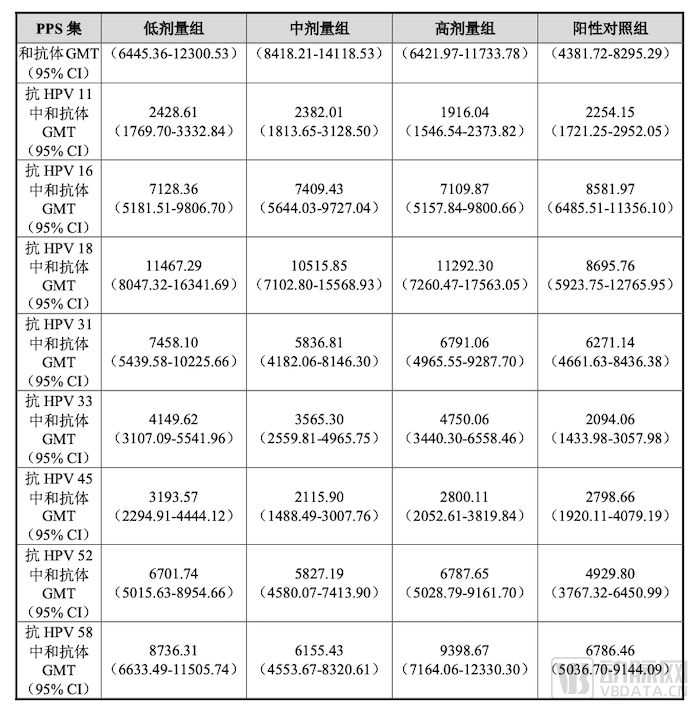
Comparative Data of Health Guard’s Nine-Valent HPV Vaccine vs. GARDASIL® Data Source: Prospectus
Notably, the HPV vaccine products currently approved in China are primarily indicated for females. However, beyond their significant preventive efficacy against female diseases caused by HPV infection, HPV vaccines can also provide protection against certain cancers and lesions in males attributable to HPV infection. Given that HPV is predominantly sexually transmitted, promoting HPV vaccination among age-eligible males contributes to the early realization of the WHO’s global strategic goal of accelerating the elimination of cervical cancer. Regulatory guidance documents issued by the WHO and several developed countries recommend considering HPV vaccination for age-eligible males once the vaccination needs of the primary target population have been met. Countries such as the United Kingdom, Canada, and Ireland have already incorporated HPV vaccination for adolescent males into their national immunization programs.
As of today’s IPO, the nine-valent HPV vaccine (with male indications) developed by Health Guard has completed Phase I clinical trials and initiated Phase III clinical trials. Upon market launch, it will be primarily used to prevent diseases in men caused by persistent infection with high-risk HPV types, including anal cancer, genital cancers, and condyloma acuminatum. With a population of 344 million males aged 9–45 in China, the domestic market potential is substantial. Health Guard’s nine-valent HPV vaccine is the first domestically produced HPV vaccine to enter pivotal Phase III clinical studies evaluating protective efficacy for male indications. Once launched, this vaccine will secure a first-mover advantage in the male market and, combined with the female market, drive a phenomenal transformation in the industry.
In addition to HPV vaccines, Health Guard has also developed novel biological vaccines covering multiple highly pathogenic viruses, such as recombinant multivalent norovirus vaccines and recombinant respiratory syncytial virus (RSV) vaccines, based on its independently built core technology platform.
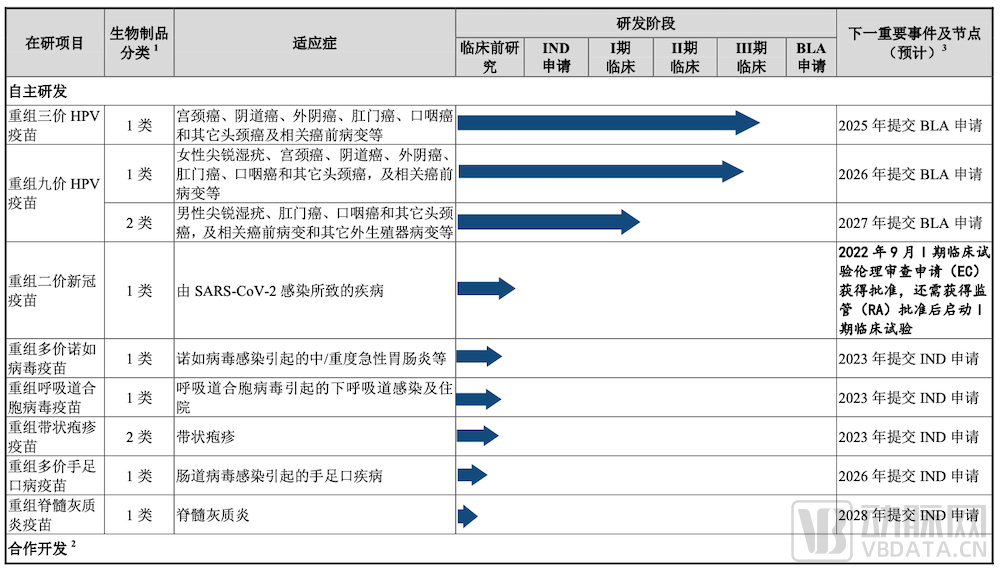

Health Guard’s Pipeline Under Development Data Source: Prospectus
Among them, Health Guard’s recombinant multivalent norovirus vaccine, developed using genetic engineering technology and employing a yeast expression system, has basically completed the laboratory-scale process research. The company is now preparing to develop pilot-scale production processes and expects to submit an Investigational New Drug (IND) application for the recombinant multivalent norovirus vaccine in 2023.
According to Frost & Sullivan, norovirus causes approximately 685 million cases of illness globally each year, including around 200 million infections in children under five years of age, resulting in approximately 35,000 child deaths. The substantial disease burden imposed by norovirus infection underscores the urgent need for the development of therapeutic and preventive agents; however, there are currently no vaccines or specific antiviral drugs available on the market, and prevention and control rely primarily on non-pharmaceutical interventions.
Furthermore, Respiratory Syncytial Virus (RSV) infection can lead to severe respiratory symptoms, such as bronchiolitis, pneumonia, laryngitis, tracheitis, and asthma. It is a virus to which children, the elderly, and immunocompromised individuals are highly susceptible. Statistics show that over 95% of children have been infected with RSV by the age of two. Globally, RSV infection is one of the leading causes of death in children aged 1 month to 1 year, second only to malaria in terms of harm. In the elderly, RSV infection often leads to exacerbation of obstructive lung disease accompanied by cardiopulmonary complications. Clinically, Palivizumab and Ribavirin are used to treat severe diseases caused by RSV infection. Currently, no RSV vaccine has been approved for market launch worldwide.
Based on the three-dimensional structure of the pre-fusion conformation of the RSV virus F protein, Health Guard has designed and recombinantly expressed key antigenic domains to develop a recombinant RSV candidate vaccine. If Health Guard’s RSV vaccine is successfully developed, it will effectively reduce the disease burden caused by RSV infection. Health Guard is expected to complete preclinical studies and submit an Investigational New Drug (IND) application in 2023.
Meanwhile, Health Guard’s recombinant zoster vaccine, recombinant multivalent hand, foot and mouth disease (HFMD) vaccine, and recombinant polio vaccine are all scheduled to submit Investigational New Drug (IND) applications in 2023.
Furthermore, the 15-valent HPV vaccine project, jointly developed by Health Guard and Chengda Biologics, covers all 13 high-risk HPV types identified by the International Agency for Research on Cancer (IARC) of the World Health Organization as having reached scientific consensus. Compared with the 9-valent HPV vaccine, the 15-valent HPV vaccine can increase the cervical cancer prevention coverage from 90% to over 96%, further reducing the disease burden potentially caused by HPV infection, and has already received approval for clinical trials.
Industrialization. According to reports, Health Guard’s recombinant vaccine clinical and industrialization base in Kunming, Yunnan Province, commenced construction in early 2021. At this facility, Health Guard plans to invest RMB 1.1 billion to build production workshops for recombinant trivalent and nonavalent HPV vaccines, recombinant multivalent norovirus vaccines, and other products, thereby providing stable, large-scale production capacity for the subsequent commercialization of its recombinant vaccines.
While actively pursuing a differentiated strategy in the domestic market, Health Guard has also launched an internationalization strategy for its HPV vaccines. It is reported that in 2021, Health Guard entered into a formal cooperation agreement with a Russian pharmaceutical group for the development and commercialization of its nine-valent HPV vaccine within Russia. Meanwhile, the company has maintained productive communications with the Bill & Melinda Gates Foundation and PATH (Program for Appropriate Technology in Health), actively responding to the WHO’s international procurement initiative for HPV vaccines.
From an invention patent for the preparation of HPV viral capsid proteins to becoming the first listed company for a domestically produced nine-valent HPV vaccine, Health Guard has spent 15 years completing the foundational phase. With its core products successively launched on the market, we look forward to biotechnology companies, including Health Guard, providing more and better solutions for human health.