

Guangdong Health Information Net Association Advances Integration of Medical and Information Technologies to Drive High-Quality Healthcare Development
On March 11, the Inaugural Meeting of the Clinical Specialty Informatics Branch and the First Academic Forum on Specialties of the Guangdong Health Information Network Association were held in Guangzhou.
Four specialized committees, namely the Committee on Informatics in Thoracic Diseases, the Committee on Informatics Applications in Neurosurgery, the Committee on Informatics Applications in Mental Health, and the Committee on Digital Pathology Applications, were officially established. Association leaders, hospital administrators at all levels, clinical medical experts, and directors of information centers engaged in in-depth exchanges and discussions on topics such as the integrated development of clinical specialties with information technology and medical science and technology, the digitalization of clinical specialties, and the high-quality development of clinical specialties.
The Guangdong Health Information Network Association, established in 2002, is the first provincial-level social organization in the field of health information networks in China, with the Guangdong Provincial Health Commission as its supervisory authority.
In recent years, the state has issued a series of important policies aimed at guiding and accelerating the deep integration of next-generation information technology with the health sector, integrating digital technologies and systems thinking throughout the entire process of building a Healthy China and a Digital China, and fully leveraging the supportive and leading role of informatization in health work.
The “14th Five-Year Plan” for Scientific and Technological Innovation in Health outlines multiple key tasks, including accelerating breakthroughs in frontier technologies such as AI-based disease diagnosis and treatment technologies and brain-computer interface technologies. It calls for research on smart healthcare information systems, including clinical diagnosis and decision support systems. An intelligent monitoring and early warning system for infectious diseases will be established. The high-quality development of public hospitals also emphasizes strengthening the supporting role of informatization, promoting the construction of “three-in-one” smart hospitals—encompassing electronic medical records, smart services, and smart management—as well as advancing hospital information standardization.
Zhu Hong, Party Secretary and Director of the Guangdong Provincial Health Commission, proposed at the 2023 Guangdong Provincial Health Work Conference to leverage the supporting roles of science and technology, talent, and informatization with high efficiency. During the Two Sessions, Director Zhu stated that the goals for high-quality development in healthcare include establishing a more coordinated and efficient healthcare science and technology innovation system.
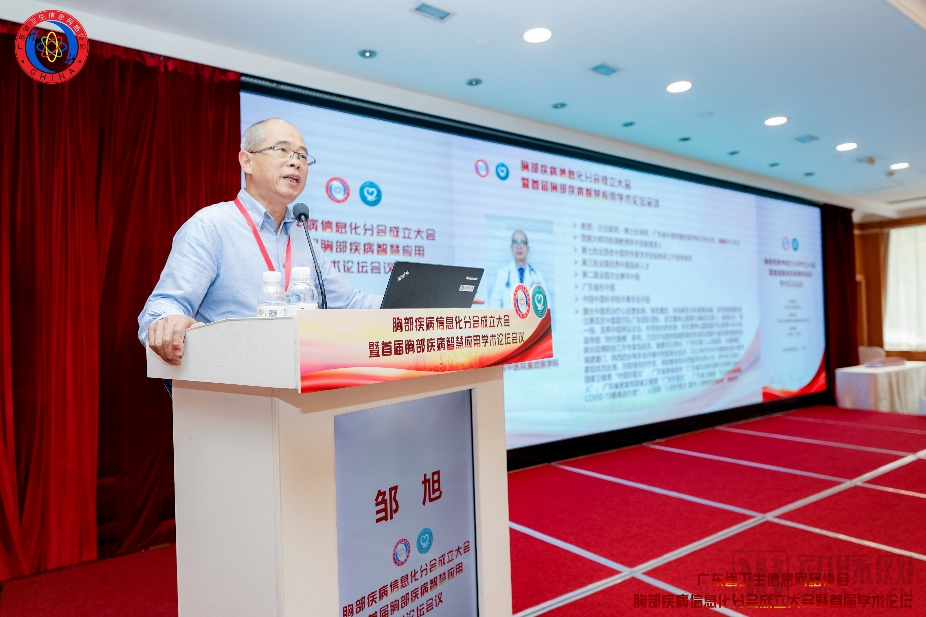
President Zou Xu stated that new-generation information technologies, such as big data, artificial intelligence, 5G, the Internet of Things (IoT), medical robots, and the metaverse, are increasingly becoming deeply integrated into clinical practice, transforming into core elements and key modules of health and healthcare technology.
Against the backdrop of policy developments and profound transformations in information technology, industry service platforms represented by associations will keep pace with the times. By closely aligning with policy directions and clinical needs, these platforms will build an interdisciplinary collaboration platform integrating medicine, engineering, and information technology. They will place equal emphasis on academic research, clinical application, and industrial support, promoting the organic integration of information technology with clinical specialties. This approach aims to bring information technology closer to clinical practice, serve clinical needs, and provide robust support for clinical work, while allowing clinical practice to guide, enrich, and enhance information technology, thereby facilitating high-quality development in healthcare and public health.
As a demonstration province for the “Internet + Healthcare” initiative, Guangdong has taken a national lead in many aspects of informatization construction. However, it is well known that the Pearl River Delta region serves as a national-level healthcare hub, whereas eastern, western, and northern Guangdong suffer from a relative scarcity of high-quality medical resources. The Action Plan for High-Quality Development of Close-Knit County-Level Medical Communities in Guangdong Province (2022–2025) proposes strengthening the development of specialized departments at primary healthcare institutions and enhancing the informatization of county-level medical communities.
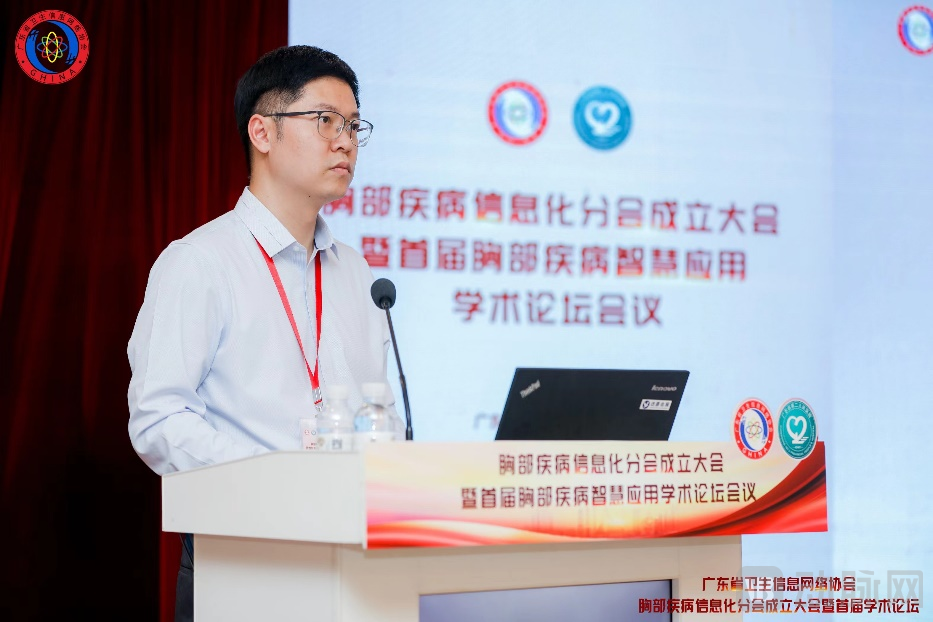
Xu Wenhua, Vice President and Secretary-General of the Guangdong Provincial Health Information Network Association, stated that information technology is not only a powerful tool for addressing cutting-edge medical challenges and pain points, but also a crucial means to promote the decentralization of high-quality medical resources to grassroots levels, optimize models of medical assistance, and narrow regional disparities in healthcare standards.
Currently, the association is focusing on promoting the development of its specialty branches. At this inaugural meeting, Professor Lv Junhong from the Department of Thoracic Surgery at Guangdong Second Provincial General Hospital was elected as the President of the Branch for Informatics in Thoracic Diseases; Professor Long Hao, Director of Functional Neurosurgery within the Department of Neurosurgery at Nanfang Hospital of Southern Medical University, was elected as the President of the Branch for Informatics Applications in Neurosurgery; Professor Hou Cailan, Director of the Department of Psychology at Guangdong Mental Health Center, was elected as the President of the Branch for Informatics Applications in Mental Health; and Professor Han Anjia, Director of the Department of Pathology at the First Affiliated Hospital of Sun Yat-sen University, was elected as the President of the Branch for Digital Applications in Pathology.
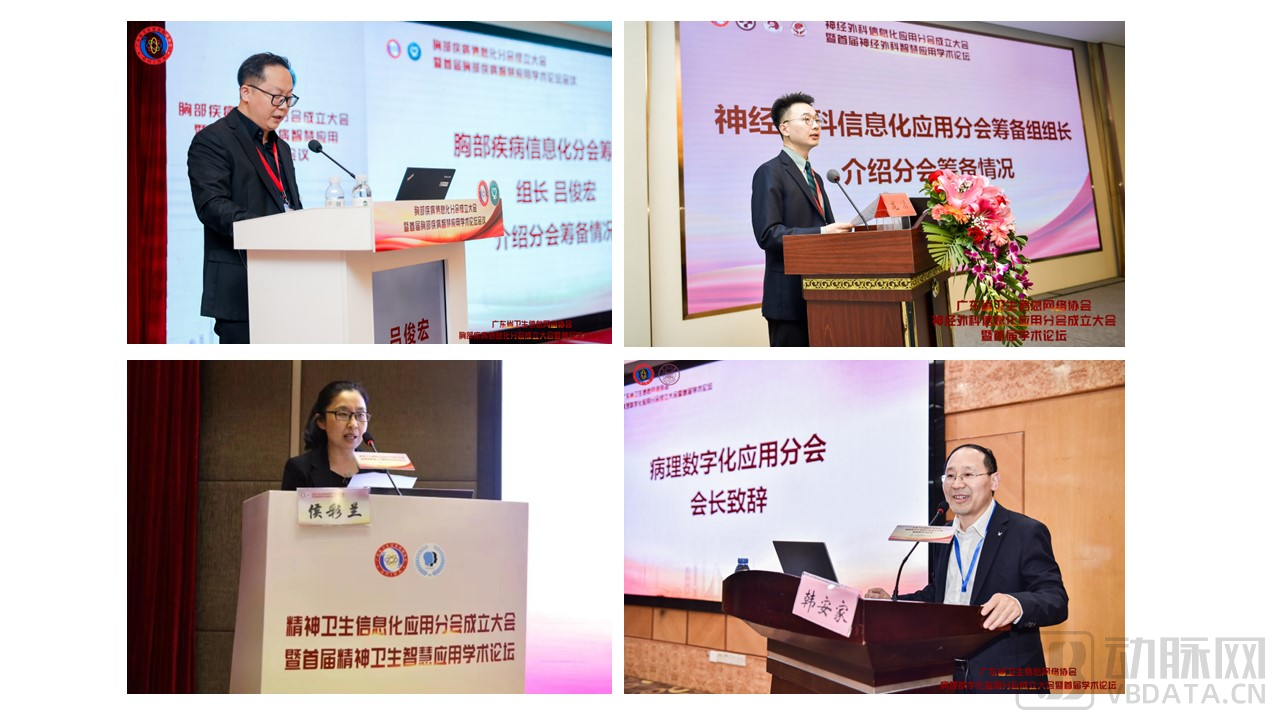
Each sub-branch will serve as a service platform oriented toward clinical specialties and information technology, closely promoting the use of IT to address the needs, challenges, and pain points of clinical specialties. This includes guiding and planning the development of clinical specialty data centers, advancing the sharing and application of data across industry, academia, and research sectors, facilitating the translation of clinical research achievements, and promoting the implementation and dissemination of innovative solutions.
Meanwhile, the specialty branches also serve as the professional pillars and service extensions of the Association in serving the health sector. Leveraging the expert resources of these specialty branches, we will promote the decentralization of high-quality medical resources to the grassroots level through an information technology platform, implement team-based assistance programs, and enhance the diagnostic and therapeutic capabilities of clinical specialties in primary care hospitals.
In the field of Traditional Chinese Medicine (TCM), the association will also be guided by policies, leveraging information technology to support TCM research and development, promoting appropriate TCM technologies through the “Internet + TCM” model, enhancing primary-level TCM service capabilities, and facilitating innovative explorations such as TCM-based chronic disease management.