

From $149K NSF Grant to $10M Funding: How TeraPore Technologies Broke Into the Biomembrane Market

RA Capital
Life Sciences Venture Capital Firms

Anzu Partners
Venture Capital and Private Equity Firms

TeraPore
Developer of Biomaterials Nanofiltration Membrane Systems
The car was driving on the road, and the experimental equipment was clattering.
In 2015, with a $1.55 million grant from the National Science Foundation, Rachel Dorin carefully packed her glassware into a moving van. She drove across the continental United States, covering 4,700 kilometers, to relocate her company from Rochester to the San Francisco Bay Area.
Two years ago, fresh out of graduation, Dorin used a $149,000 grant from the National Science Foundation to establish Terapore Technologies (hereinafter referred to as “Terapore”). Located in a corner of Rochester, Terapore has been struggling to grow, much like a frail infant in its swaddling clothes.
The decision to establish a presence in the San Francisco Bay Area was undoubtedly correct. The “Golden City” of San Francisco has also brought gold to TeraPore.
In March 2023, TeraPore announced that it had raised $10 million in new funding. The round was led by existing investor Anzu Partners, with participation from EnIntegris, a leading company in the field of materials science, and existing investor RA Capital Management. This marks the second investment in TeraPore by the top-tier international investment advisory firm RA Capital. TeraPore will use the proceeds to launch its IsoBlock virus filter.
In the San Francisco Bay Area, which holds many of Dorin’s dreams, she is encouraged to be an adventurer in her office on Cabot Road.
Prior to founding TeraPore, Dorin earned a bachelor’s degree in chemistry and biology from the University of New Mexico and subsequently worked at the Advanced Materials Laboratory of Sandia National Laboratories, where he researched energy applications of nanostructured metals.
When she began her graduate studies in the Materials Science and Engineering program at Cornell University, she aspired to become a professor. “That was my goal when I arrived there,” she said.
With the assistance of her advisor, Professor Uli Wiesner, she and her colleague Gu Yibei began exploring the use of block copolymers to create platinum nanostructures. During this period, she realized that her research could generate rare opportunities, with significant potential to advance knowledge and technology.
As her research project progressed, Dorin’s career aspirations gradually evolved. Although her mentor told her she would become a great professor and encouraged her to pursue an academic career, Dorin was uncertain whether this path was right for her. Instead, she discovered a passion for business knowledge; in addition to earning a Ph.D. in Materials Science and Engineering, she also completed a minor in Business.
The project is progressing smoothly. Dorin, along with his mentor Wiesner and colleague Gu Yibei, conducted their first study on time-resolved in situ analysis of nanopore formation at the Cornell High Energy Synchrotron Source (CHESS) at Cornell University.
Dorin continued to advance this research project, developing it into an industrial product, and founded TeraPore Technologies, Inc. in 2013.
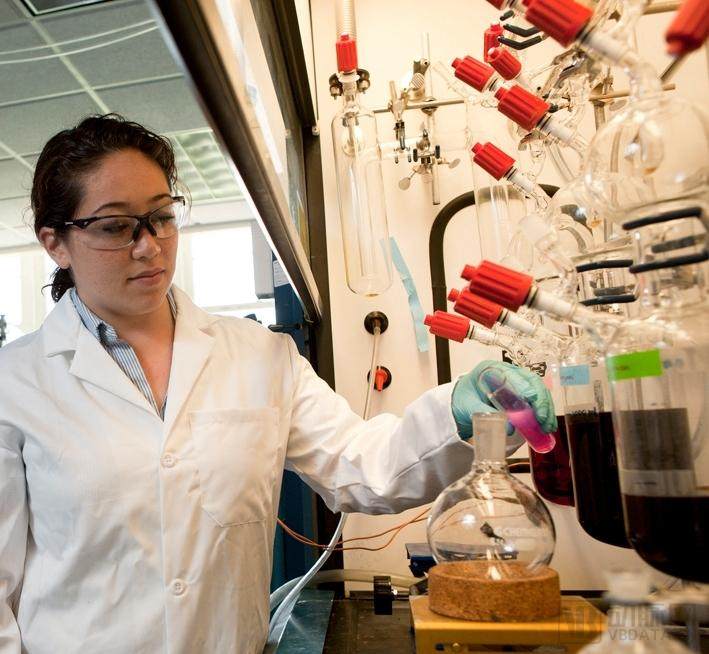
Rachel Dorin (Image credit: Cornell Engineering)
Six months before completing her Ph.D., she applied for a grant from the National Science Foundation. One month after graduation, she was awarded the NSF grant, which became the funding source for her startup.
She described herself as “flying blind,” likening the creation of her company to a professor establishing a new laboratory, but without the departmental structure of an academic institution and without guidance from faculty members as a newcomer. The first two years were arduous, with Dorin handling most of the work herself; she also invited friends and family to invest in TeraPore.
As a spin-off from Cornell University, TeraPore initially received support from the National Institutes of Health (NIH), the National Science Foundation (NSF), and the Defense Threat Reduction Agency (DTRA) of the U.S. Department of Defense.TeraPore has also established a leadership team and a Scientific Advisory Board. The advisory board includes industry veterans in the biofiltration sector: Dr. Ulrich Wiesner, Dr. Roberta McKee, and Dr. Mark Plavsic. Dr. Mark Plavsic is one of the world’s leading experts in viral clearance during bioprocessing and serves as a member of TeraPore’s Board of Directors.
After relocating to San Francisco, TeraPore began to grow rapidly. Its employee count first expanded from two to ten. In March 2018, TeraPore completed a $6 million seed financing round, led by Anzu Partners.
Financing participants RA Capital Management and Artiman Ventures have identified the promising prospects of applying TeraPore technology in the biologics industry. The supply of novel biologics is rapidly increasing, and viral filtration is essential in the manufacturing process of these drugs.
They believe that TeraPore’s nanofiltration technology can provide a competitive advantage to the biopharmaceutical industry. Furthermore, they recognize the application potential of TeraPore technology in other fields, such as water treatment, semiconductor manufacturing, and responsive fabrics.
Three months after its Series A financing round, TeraPore launched its nanofiltration membrane product at the BioProcess International Conference and Exhibition in Boston, Massachusetts. Leveraging proprietary block copolymer technology, TeraPore has developed a novel nanofiltration membrane capable of removing viral particles and other contaminants from pharmaceutical products during biopharmaceutical manufacturing processes.
Viral filtration is a common unit operation in biopharmaceutical manufacturing. Some biotherapeutic products are manufactured using mammalian cell lines or human plasma, thereby posing a risk of contamination by known or unknown viruses.
During downstream purification, manufacturers need to use virus filters to remove potential viruses and contaminants from pharmaceutical products. These filters feature specially designed membranes with pore sizes small enough to retain viruses while allowing smaller particulate matter to pass through.
Historically, based on their performance, virus filters have generally been classified into two categories: retrovirus-retaining filters, which retain larger viruses while allowing smaller particles to pass through; and parvovirus-retaining filters, which retain smaller viruses while allowing monoclonal antibodies and other smaller substances to pass through.
According to the Growth Plus report, the virus filtration market is projected to grow at a compound annual growth rate (CAGR) of 10% from 2021, reaching a market value of $21.8 billion by 2030.
Over the past three years, the COVID-19 pandemic has had a favorable impact on the virus filtration business. The virus filter market has gained prominence due to the large number of clinical trials involving virus filtration aimed at identifying methods to prevent SARS-CoV-2 infection. The rapid expansion of global R&D departments, the increasing capital availability in the biopharmaceutical industry, and heightened government assistance have also accelerated the growth of the global virus filtration market.
TeraPore’s parvovirus-retentive filters have gained momentum, yet innovation in its core technology remains the key factor attracting capital.
Smart Membranes with Tunable Structures for Precise Nanofiltration
TeraPore developed the IsoBlock filter using a proprietary, scalable block copolymer self-assembly technology.Filtration membranes can be tailored with different surface coatings and structures to target specific molecular properties, thereby accommodating unique pharmaceutical manufacturing and bioprocessing applications. When fabricated into membranes, this block copolymer material spontaneously self-assembles into highly uniform structures, forming precise pores at the nanoscale.
Unlike the non-uniform filter membranes used in traditional filtration technologies, TeraPore’s smart membrane platform features tunable chemical structures and uniform pore sizes, overcoming the limitations of conventional bioseparation and virus filtration technologies by delivering targeted and consistent nanofiltration capabilities.
During the Bioprocess International Conference in Boston, Massachusetts, TeraPore shared third-party evaluation results of its filtration membranes.Evaluation shows that the IsoBlock filter membrane has improved its capacity for downstream virus filtration and upstream protection of cell culture bioreactors by nearly 1.5- to 2.0-fold.Product quality and cell culture yield are unaffected by the IsoBlock filtration membrane. When images of various bioprocess membranes are magnified, TeraPore’s membrane technology demonstrates a clearer structure in visual representation.
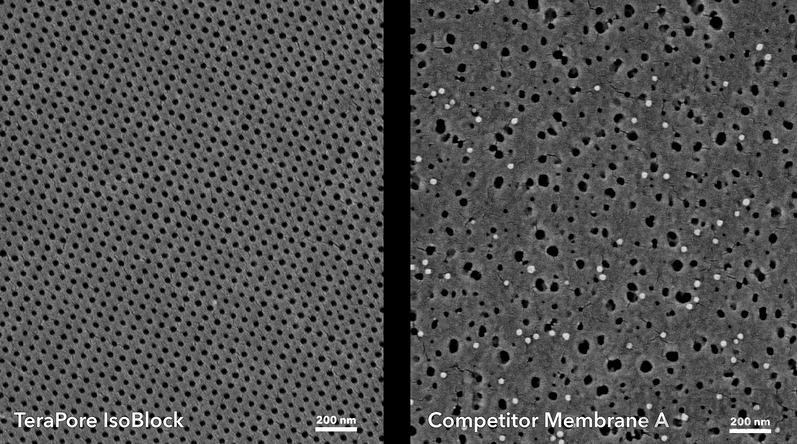
Visualized Image of IsoBlock Filtration Membrane (Image Source: TeraPore Technologies)
Uniform pore structure, nanofiltration of smaller-scale viruses
As a parvovirus-retaining filter, the IsoBlock filter membrane can also nanofilter smaller-scale viruses and contaminants.During the purification process, the IsoBlock filter membrane can nanofilter small viruses with a diameter of 25 nanometers, allowing monoclonal antibodies with a diameter of 10 nanometers to pass through.
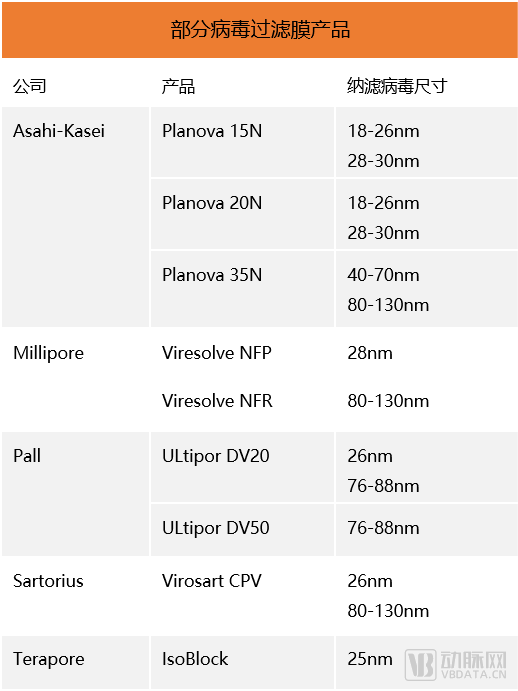
Selected Viral Filtration Products (Data Source: Gerd Kern; Chart by VCBeat)
The self-assembled, uniform pore structure of IsoBlock filtration membranes enables high-flux nanofiltration, delivering high filtration capacity during process development, clinical trials, and manufacturing at production scale.Each single-use IsoBlock filter undergoes integrity testing to ensure its performance.
Flagship Products: A Dual-Pronged Approach
Currently, TeraPore has two filters under its portfolio: IsoBlock Blue and IsoBlock Red.
IsoBlock Blue is a pre-filter capable of removing trace aggregates and viruses. IsoBlock Red is designed for biopharmaceutical purification processes. According to TeraPore, this filter operates at twice the throughput of industry-standard virus removal membranes, thereby reducing overall production time and minimizing bioburden.
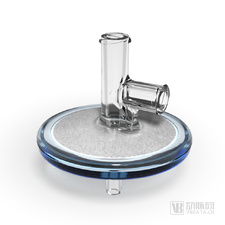
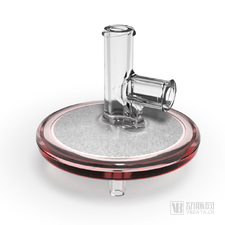
IsoBlock Blue and IsoBlock Red
In June 2020, TeraPore announced that it had successfully demonstrated itsIsoblock viral filtration technology can remove more than 99.9% of SARS-CoV-2 from water.SARS-CoV-2 is the virus that causes COVID-19.
SARS-CoV-2 is considered to be transmitted via respiratory droplets and the fecal-oral route. Studies have shown that coronaviruses can persist in water and sewage while remaining infectious, posing a potential risk of human exposure if aerosols are generated.
In the early stages of the COVID-19 pandemic, Rachel Dorin and her team did not yet fully understand the potential risks of SARS-CoV-2 transmission via aerosols. However, they were aware that the virus could survive in aquatic environments, and that water contaminated with SARS-CoV-2 or other emerging infectious viruses could have significant implications for public health. Dorin believed that TeraPore’s membranes for viral filtration might help water engineers and professionals mitigate the potential risk of transmitting COVID-19 and other diseases by treating contaminated water sources.
In April 2020, TeraPore team members validated the reverse transcription polymerase chain reaction (RT-PCR) method for detecting SARS-CoV-2. Subsequently, they evaluated the efficacy of TeraPore’s IsoBlock filters in removing inactivated viruses, demonstrating in May that two variants of the IsoBlock filter achieved a removal rate exceeding 99.9% for SARS-CoV-2. No residual virus was detected in the filtrate after filtration. Currently, TeraPore is filing patents for its virus-removal materials.
TeraPore’s performance in this incident was undoubtedly a successful trial in its exploration of application directions.
In addition to viral filtration, TeraPore’s intelligent filtration membranes have potential applications in emulsion formation, supercritical fluid density, retrovirus filtration, membrane chromatography, and chromatographic bead formation.
TeraPore is also developing a series of filtration products. Products currently under development include the IsoBlock filter cartridge, with a footprint of approximately 0.2 square meters, and the IsoBlock filter cartridge, with a footprint of approximately 1.5 square meters.
In the latest round of investment, Olivier Blachier, Senior Vice President of Entegris, also expressed similar expectations: “We believe this technology holds significant potential and can address critical nanofiltration challenges in many applications.”