

Paragonix Technologies Announces FDA-Approved Organ Transport Platforms Preserving Over 2,000 Donor Organs

Paragonix Technologies
Organ Preservation and Transport Systems Developer

Signet Healthcare Partners
Venture Capital Firms
In 1989, the first heart transplant in Arkansas, USA, was performed at Baptist Health.
In the past, physicians at Baptist Health Center preserved organs for transplantation by placing them with ice in coolers. However, organs stored on ice often became excessively cold.
Karol Mudy, a surgeon at the Baptist Health Monitoring Center, candidly acknowledged that this traditional method of organ transport may cause certain parts of the organ to freeze, resulting in irreversible cellular damage.
In the world of organ transplantation, there is no room for error. In 2022, Baptist Health adopted a new device, SherpaPak, for transporting donated organs. It was invented and developed by Paragonix Technologies (hereinafter referred to as “Paragonix”). The company claims that,SherpaPak is the only commercially available cryopreservation device approved by the FDA for heart transportation.
In March 2023, Paragonix raised $24 million in a Series B financing round led by Signet Healthcare Partners.
Paragonix, which originated in Massachusetts, has expanded its commercial footprint across the United States by relying on three FDA-approved organ transport devices. According to 2022 U.S. organ transplantation data, 19 of the 30 largest heart transplant programs in the United States, as well as more than 80 transplant programs worldwide, rely on Paragonix’s devices to preserve, track, and transport donated organs.
To conduct genetic research, Lisa Anderson once ordered a human pancreas.
It was packed in a cheap insulated box and placed on crushed ice. It was her first time witnessing the transportation process of human organs. What shocked her was that, due to unmonitored exposure to icy temperatures, the organ tissues were at risk of cellular damage.
“This moment has never left my mind. How could it be? In the 21st century, an era of rapid technological and innovative advancement, there are still such significant shortcomings in the organ transplantation process.”
Since the advent of organ transplantation approximately 70 years ago, the standard of care for organ preservation has remained unchanged: placing organs in sterile bags filled with fluid and storing them on crushed ice inside a refrigerator.From that moment on, Lisa conceived the idea of establishing a new standard for the preservation of donated organs.

Lisa Anderson (Image source: Business Wire)
Holding a Ph.D. in Genetics from the University of Cambridge, she was serving as a lecturer at Harvard Medical School at the time. This vision compelled her to abandon her academic career at Harvard Medical School. In 2010, Lisa and her co-founders established Paragonix, with the aim of developing medical devices capable of safely transporting organs between donors and recipients.
According to a report by Grand View Research,In 2019, the global market size for organ transplant boxes was USD 7.5 billion, with a projected compound annual growth rate (CAGR) of 8.6% from 2020 to 2027. The rising incidence of multi-organ failure and an increasingly aging population are the primary drivers fueling the growth of the organ transplant box market.
The rising incidence of chronic diseases will also drive the growth of the organ transplant box market during the forecast period. For example, over the past three decades, cardiovascular disease has become one of the leading causes of increased mortality in the United States. According to 2018 data from the American Heart Association, more than 92.1 million people in the U.S. suffer from cardiovascular disease, making it the country’s most common cause of death compared with other chronic conditions.
Furthermore, government encouragement of organ donation and technological advancements are also driving market growth.
Lisa capitalized on the surge in the organ transplantation market. Prior to 2021, she served as Chief Operating Officer of Paragonix Technologies, leading its commercial expansion in the United States and Europe and launching multiple commercial products.
In 2013, the FDA granted 510(k) clearance for the SherpaPak Cardiac Transport System. In early 2018, the SherpaPak Cardiac Transport System and the SherpaPerfusion Cardiac Transport System received CE pre-market approval.Subsequently, Paragonix launched its commercial product, the SherpaPak Cardiac Transport System, at the 98th Annual Meeting of the American Association for Thoracic Surgery.
The SherpaPak Cardiac Transport System employs cold preservation technology, utilizing a suspension system to provide physical and thermal protection for the organ. The International Society for Heart and Lung Transplantation (ISHLT) stated in its Consensus Statement that the SherpaPak CTS is a novel freeze-prevention technology that establishes regulated standards for organs during procurement.
To date, Paragonix’s patented technology has protected, tracked, and monitored more than 2,500 donated organs in the United States and Europe.
In March 2021, Lisa succeeded William Edelman as Chief Executive Officer. Mr. Edelman, who had served as Chairman and CEO since 2012, recently announced his retirement.
Board member John Cammett commented, “There is no one better suited than Lisa to lead Paragonix. The company has successfully validated its commercialization concept, and under Lisa’s leadership, Paragonix will expand its market size, broaden its product portfolio, and usher in a new era.”
The use of sterile plastic bags, ice, and coolers represents the traditional method for organ transport. These “ice boxes” are not subject to FDA regulation, with uncontrolled temperatures and no monitoring during transit. Currently, manufacturers in the organ transplantation sector are striving to develop advanced devices to overcome various challenges, such as the short viability window of organs prior to transplantation.
In organ transplantation, the feasibility of heart transplantation depends on “ischemic time,” i.e., the time elapsed from cardiac donation to implantation in the recipient.The ISHLT’s “Guidelines for the Care of Heart Transplant Recipients” indicate that the expected ischemic time should not exceed 4 hours. “Ischemic time” naturally limits the transport distance of donor hearts.
Paragonix’s primary objective is to improve outcomes for transplant patients and optimize the utilization of donor organs by protecting donated organs during transport, while providing real-time monitoring, tracking, and communication services to organ transplantation teams.
Paragonix's SherpaPak cardiac transport system combines organ oxygen perfusion and organ preservation technologies,The ultimate goal is to extend the ischemic time to 12 hours, thereby expanding the transport range for donor hearts. Moreover, the SherpaPerfusion heart transport system is disposable, eliminating issues related to maintenance, equipment transportation, and contamination.
Beyond technological upgrades, Paragonix has also built an end-to-end service network for its customers.
Paragonix provides clinical support services to clinical experts, including product promotion, clinical training, communications and global positioning systems, and organ transportation.Based on the specific needs of each transplant center, Paragonix can help clients find surgeons, surgical assistants, organ preservation specialists, coordinators, or transportation. The service model is available 24/7.
Using the application developed by Paragonix, transplant teams can pair via Bluetooth with Paragonix’s organ preservation system to track the progress of the transplantation procedure throughout the entire process. Team members can monitor the organ transport workflow during a conference call and use GPS tracking to follow procurement teams traveling to and from donor centers. The Paragonix application calculates the estimated time of arrival for the organ, enabling the team to take immediate action once the organ is in place.
Paragonix has also launched a web portal. This is a multi-device accessible support platform that connects to the Paragonix organ transport system,Enable the transplant team to participate in on-site meetings digitally or review historical cases and clinical case data.The portal also provides real-time temperature data for organs during transport.
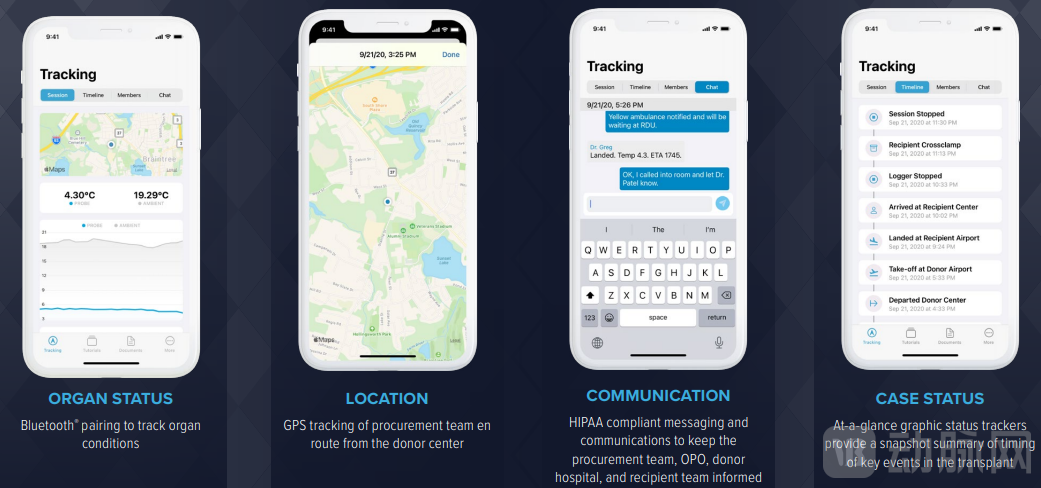
End-to-End Tracking of Transplant Surgery (Image source: Paragonix Technologies)
Paragonix currently has three FDA-cleared and CE-marked devices: the SherpaPak Cardiac Transport System, the LUNGguard Lung Transport System, and the LIVERguard Liver Transport System.
As Paragonix’s first commercialized product, the SherpaPak Cardiac Transport System has preserved more than 800 hearts since its clinical application in 2018.
Its rigid outer shell provides mechanical isolation and protection for the transported organ, while its leak-proof dual-canister system safeguards the heart against physical and thermal damage. To prevent excessively low temperatures within the loading chamber, Paragonix employs its proprietary SherpaCool® technology to create a precise internal cooling system. The entire heart transport system connects via Bluetooth to smart devices, enabling real-time monitoring and data reporting through the Paragonix app.
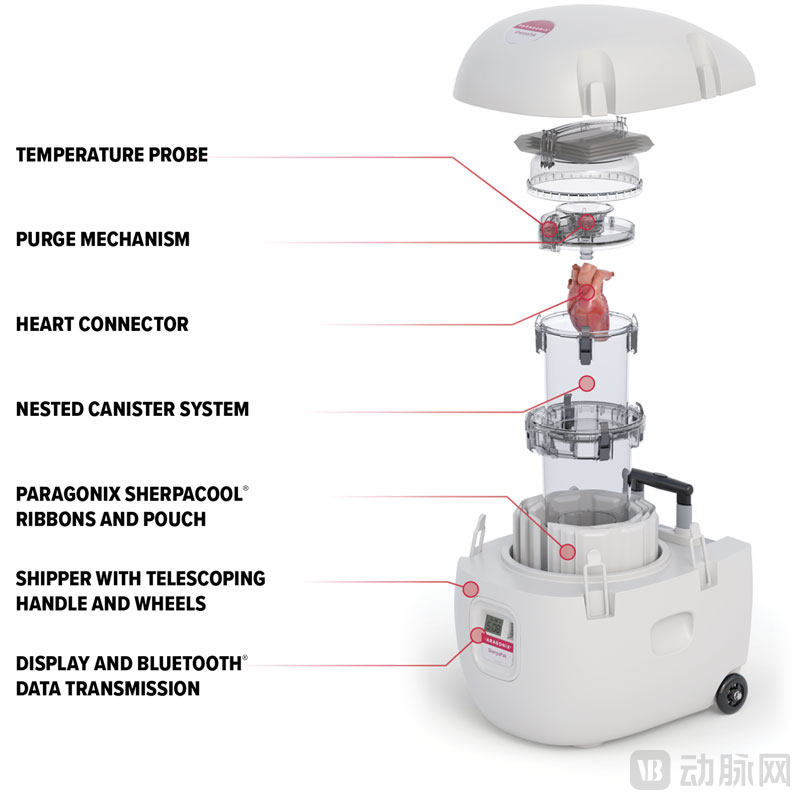
SherpaPak Cardiac Transport System (Image source: Paragonix Technologies)
The GUARDIAN study (NCT04141605), led by Paragonix, is a post-market clinical evaluation trial. In the “1-Year Transplant Survival Analysis” of the GUARDIAN study, researchers compared the percentage difference in one-year post-transplant outcomes between recipients of donor hearts preserved using the SherpaPak system and those receiving donor hearts preserved via static cold storage.The results showed that transplant recipients who received organs transported via SherpaPak experienced a 7.7% increase in one-year graft survival, a 6.7% reduction in primary graft dysfunction (PGD), and an 8.7% reduction in severe PGD.
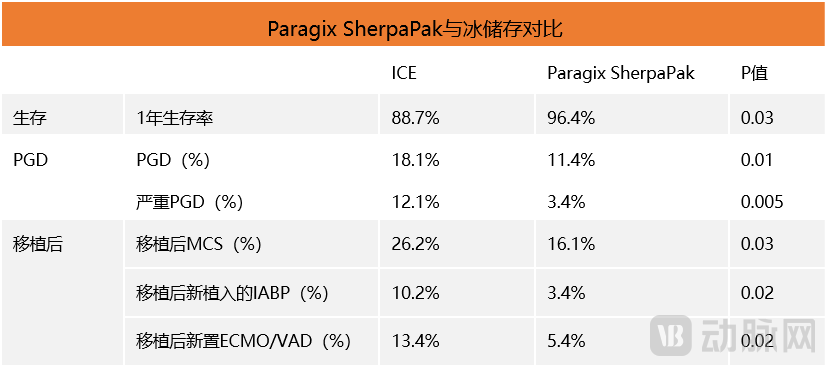
(Data sourced from the GUARDIAN study; chart by VCBeat)
At the time of this analysis, GUARDIAN included data from 849 patients across 17 sites (384 ice-storage transports and 465 SherpaPak transports).
In addition to its emerging heart transportation system, Paragonix has also expanded into product lines for lung and liver preservation.
The LUNGguard Lung Transport System has also received FDA clearance and CE marking. Its core patented technology and real-time monitoring capabilities are similar in design to the Heart Transport System.LUNGguard offers an expected organ preservation time of up to 8 hours.
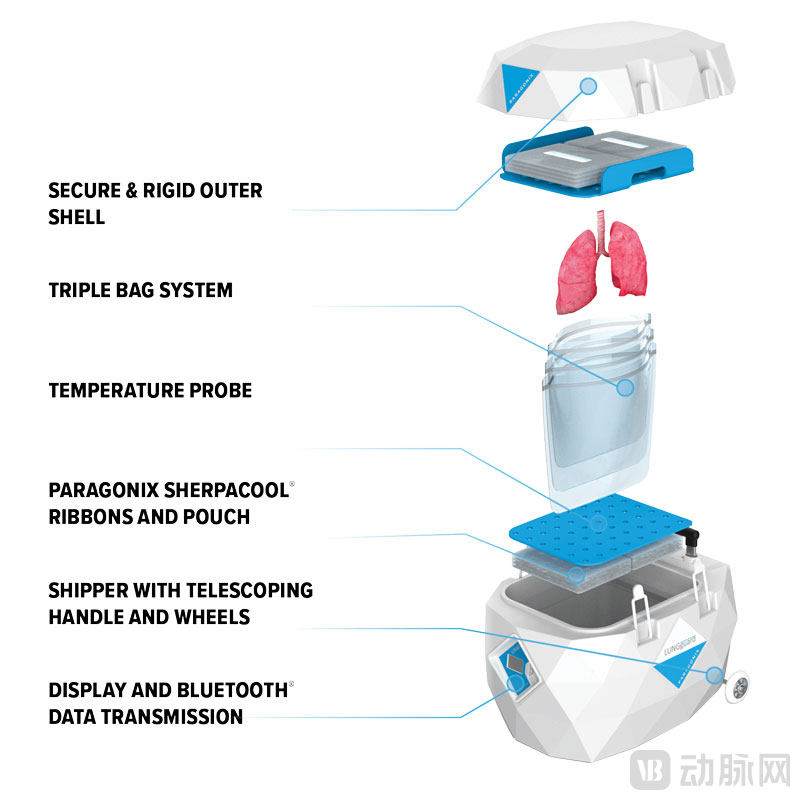
LUNGguard Lung Transport System (Image source: Paragonix Technologies)
In its “Consensus Statement,” the ISHLT warns that “direct contact of lung allografts with ice should be avoided to prevent tissue injury,” and recommends that lung allografts be stored at temperatures between 4°C and 8°C.Verified, the LUNGguard lung preservation system can maintain the temperature of donor lungs between 4 and 8 degrees Celsius for up to 44 hours.Meanwhile, to enable real-time monitoring of organ temperature, the lung is placed on a tray equipped with an embedded temperature probe that continuously measures the temperature of the preservation solution.
According to the study by Olthoff KM, cold ischemia time during donor liver preservation is a known factor contributing to early allograft dysfunction and reduced one-year post-transplant survival rates. Uncontrolled ice cooling and the absence of temperature monitoring in traditional organ transport fail to ensure that organs are preserved under the intended conditions.
LIVERguard Liver Transport System is another product line in Paragonix’s portfolio, with an expected organ preservation time of up to 15 hours. Utilizing a triple-bag isolation system encased in a rigid tray and rack structure, LIVERguard provides additional protection against physical and thermal injury to organs.
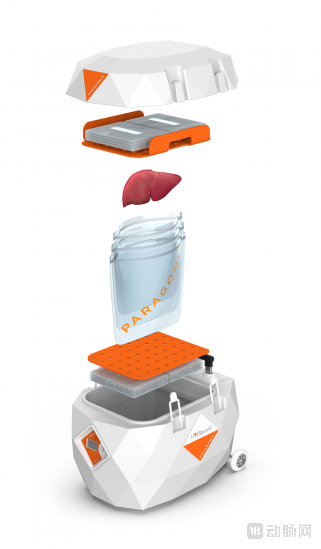
LIVERguard Liver Transport System (Image source: Paragonix Technologies)
In August 2022, Paragonix announced that its transport systems had preserved more than 2,000 donated organs.
Since its founding over a decade ago, Paragonix has contributed to global clinical data statistics and organ tracking in the field of organ transplantation:
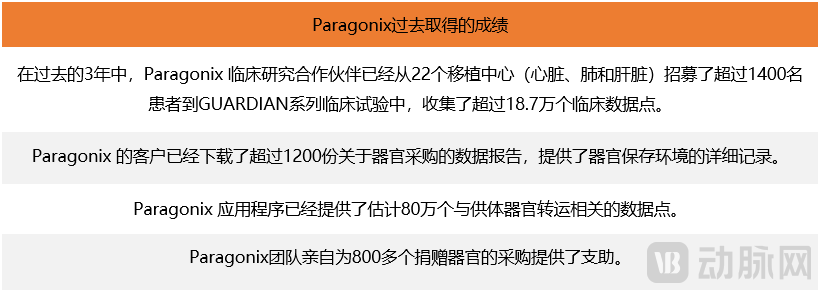
Paragonix’s commercial and clinical achievements left a deep impression on Signet Healthcare Partners, the latest round of investors. Signet Healthcare PartnersWe were drawn to Paragonix’s highly innovative attributes and its capacity for rapid growth.
Paragonix is having a significant impact on the future of transplant medicine.