

Zhouling Medical Completes China's First Clinical Study of Pulsed Electric Field System for COPD Treatment, Benefiting Over 100 Million Patients
Following the completion of the world’s first two cases of surgical pulsed field ablation for atrial fibrillation, Zhouling Medical, a Chinese leader in pulsed field ablation, has once again set an industry benchmark.
Zhouling Medical's independently developedPulsed Electric Field System PbroAShanghai Chest Hospital Completes Enrollment of the First Patient in China’s Clinical Study on Pulsed Field Ablation System for Chronic Obstructive Pulmonary Disease (COPD)The first enrolled patient was a 72-year-old male with a 50 pack-year smoking history, who had long been troubled by symptoms such as cough and sputum production. The procedure was performed on March 13, 2023, at the Respiratory Endoscopy Center of Shanghai Chest Hospital by the team led by Director Sun Jiayuan. The surgery lasted 30 minutes. After awakening from anesthesia, the patient was able to move freely and experienced no adverse reactions.
The successful completion of this procedure validates the feasibility of using Zhouling Medical’s Pulsed Field Ablation (PFA) system, PbroA, for the treatment of chronic obstructive pulmonary disease (COPD), as well as the safety of the surgical approach. This procedure marks the first application of pulsed field technology in the field of chronic respiratory diseases in China, signifying a new milestone in COPD treatment within the country and offering more precise, efficient, and safe therapeutic options for the vast number of COPD patients suffering from cough and sputum production.
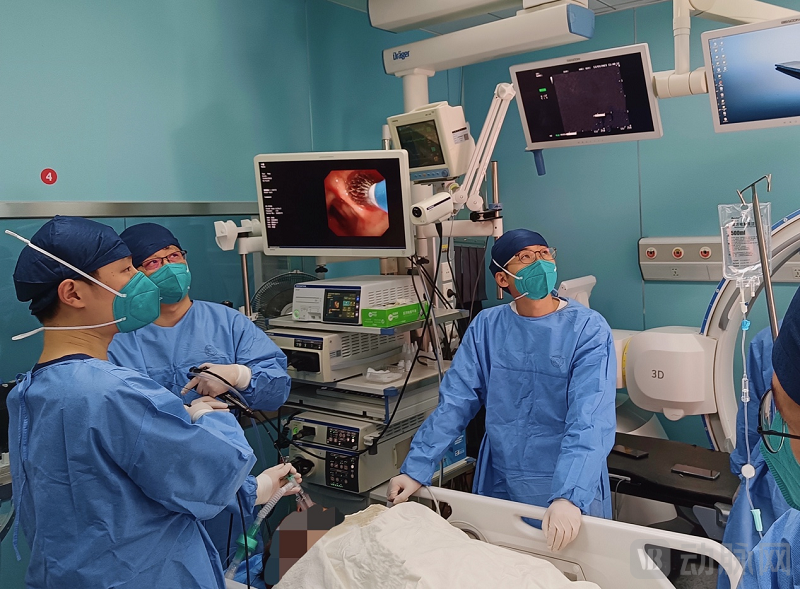
Clinical Enrollment Surgical Site
Postoperatively, Professor Sun Jiayuan commented, “The pulsed ablation system is easy to operate, with the catheter achieving excellent conformity across airways of various calibers. The pulsed electric field energy is stable, making the procedure safe and controllable. China has over 100 million patients with chronic obstructive pulmonary disease (COPD), most of whom exhibit structural changes associated with chronic bronchitis. These patients often suffer from persistent cough and sputum production, and pharmacological therapy frequently yields suboptimal results. The pulsed ablation system is safe and efficient, offering a broader range of treatment options and a novel therapeutic experience for the vast population of COPD patients.”
Chronic Obstructive Pulmonary Disease (COPD), commonly referred to as chronic obstructive lung disease, is one of the three major chronic diseases in humans, with an incidence rate second only to cardiovascular disease and diabetes. Its mortality rate ranks third in China and fourth globally, characterized by “five highs and one low”: high prevalence, high disability rate, high case fatality rate, high economic burden, and low public awareness.
Smoking and air pollution are the two major risk factors for chronic obstructive pulmonary disease (COPD) in China. According to the "Status and Progress of Prevention and Control of Chronic Obstructive Pulmonary Disease in China (2020)," the prevalence of COPD among Chinese residents aged 20 years and older was 8.6% from 2012 to 2015, with a rate as high as 13.7% among those aged 40 years and older. The prevalence was 11.9% in males and 5.4% in females. Additionally, common predisposing factors include occupational environmental exposure, natural aging of the lungs, bronchial asthma, genetic factors, and infections.
According to Frost & Sullivan data, although China has a large population of patients with chronic obstructive pulmonary disease (COPD), the actual diagnosis rate in 2020 was only 27.2%, far lower than the 68.3% in the United States. Due to its insidious onset and atypical symptoms, patients often seek medical attention only when significant symptoms appear, by which time the disease has usually progressed to moderate or severe stages; hence, COPD is also known as the “silent killer.” Furthermore, COPD increases other health risks, such as cardiovascular and cerebrovascular diseases, osteoporosis, and muscle atrophy.
According to the report titled “Missed Early Diagnosis of COPD at First Visit Is Associated with Disease Severity” from Nanfang Hospital, Southern Medical University, patients with severe or very severe chronic obstructive pulmonary disease (COPD) accounted for 48.8% of all COPD patients seeking medical care. A large number of patients in China still fail to receive timely and effective treatment; among those who do present to hospitals, approximately half are already in the advanced stage of the disease, exhibiting prominent symptoms such as dyspnea.
As patients age and their condition worsens, those in the advanced stages experience extreme fatigue and dyspnea, often struggling to perform simple daily activities and requiring 24-hour oxygen therapy. In China, one person dies from chronic obstructive pulmonary disease (COPD) every 2.5 minutes, with annual COPD-related deaths exceeding one million. Yuan Longping, known as the “Father of Hybrid Rice,” also suffered from COPD during his lifetime, which left him breathless after just a few steps.
With the development of industrial society, coupled with factors such as vehicle exhaust emissions, air quality is deteriorating day by day, leading to increasingly strong irritation of the bronchial mucosa, and the incidence of chronic obstructive pulmonary disease (COPD) will continue to rise.
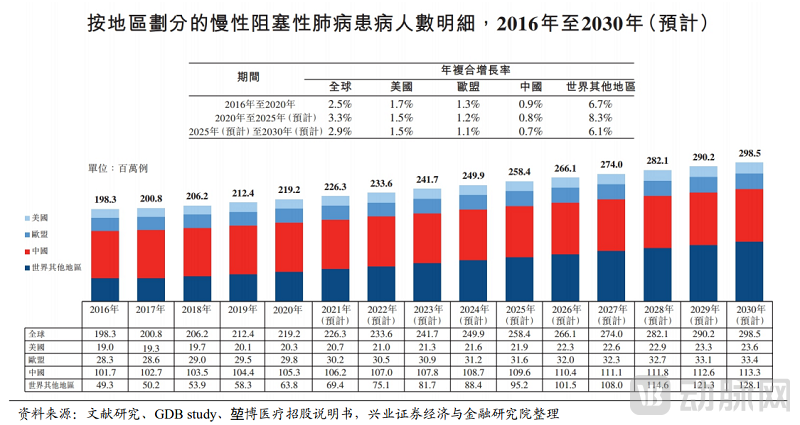
Patients with chronic obstructive pulmonary disease (COPD) often undergo a care continuum that includes pharmacological management, the purchase and use of home oxygen concentrators for oxygen therapy, and hospitalization during exacerbations. This underscores the substantial market size inherent in COPD treatment. Given the large global patient population and the rising prevalence of COPD, this market undoubtedly holds significant growth potential.
According to Industrial Securities' forecast, the market for consumables used in interventional therapy for chronic obstructive pulmonary disease (COPD) will reach approximately RMB 4.62 billion in 2025, growing at a compound annual growth rate (CAGR) of 27.0%.
Chronic bronchitis (CB) and emphysema are the most important structural changes in chronic obstructive pulmonary disease (COPD).
Chronic bronchitis is often associated with long-term inhalation of irritants such as cigarette smoke and biomass fuel emissions. Upon stimulation of the airway mucosa, ciliated cells responsible for clearing harmful substances decrease in number and are replaced by goblet cells, which produce mucus and serve as the primary source of sputum secretion. The increased number and heightened secretory activity of goblet cells, coupled with a reduction in ciliated cells and impaired mucociliary clearance, lead to symptoms of excessive sputum production and ineffective expectoration in patients with chronic obstructive pulmonary disease (COPD). Progression of chronic bronchitis results in airway obstruction and air trapping; the alveoli at the terminal ends of the bronchioles become increasingly distended like overinflated balloons. When the tension on the alveolar walls is exceeded, irreversible structural changes occur, leading to emphysema characterized by numerous hyperinflated alveoli. Chronic bronchitis not only promotes the development of emphysema but also increases the risk of pulmonary infections, leading to frequent exacerbations, diminished quality of life, and an elevated risk of acute exacerbations and hospitalization.
Currently, the treatment of chronic obstructive pulmonary disease (COPD) mainly relies on pharmacological symptom control, with suboptimal efficacy. Surgical or interventional therapies are mostly targeted at the emphysema phenotype, such as:
Lung Transplantation,Donor scarcity and high costs severely limit applicability, with numerous restrictions (e.g., infection and rejection), while the extreme surgical complexity demands exceptionally high proficiency from surgeons.
Surgical Lung Volume Reduction, primarily targeting patients with emphysema; due to significant surgical trauma and poor prognosis, such surgical procedures are now rarely performed in clinical practice;
Valve Implantation Therapy,Primarily for patients with emphysema, only applicable to COPD patients without collateral ventilation;
Steam Ablation,Primarily for patients with emphysema, with no restrictions on bypass ventilation;
Currently, there are no interventional therapies directly targeting mucus-producing goblet cells, representing a significant treatment gap. There is an urgent need for safe and effective targeted therapeutic strategies.
Pulsed Electric Field (PEF) Therapy Effectively Fills the Gap in This Field. Pulsed electric field therapy is a world-leading novel interventional respiratory technology for the treatment of chronic obstructive pulmonary disease (COPD). PEF therapy induces irreversible electroporation in cells, offering unique non-thermal and tissue-selective ablation capabilities. It can ablate hyperplastic goblet cells, reduce airway mucus secretion, alleviate airway obstruction, and avoid damage to surrounding tissues. With advantages such as safety, efficacy, and low complication rates, pulsed electric field therapy represents a highly promising novel interventional technique for chronic respiratory diseases worldwide.
According to publicly available information, U.S.-based Gala Therapeutics has validated the efficacy of pulsed electric field (PEF) therapy for chronic obstructive pulmonary disease (COPD) and successfully achieved commercialization. The therapeutic mechanism involves reducing mucus-producing cells in COPD patients, thereby decreasing mucus production and preventing airway obstruction. Clinical studies published by Gala demonstrate that PEF therapy led to a 41% reduction in mucus, a 28% reduction in coughing, a significant decrease in acute exacerbations, and improved dyspnea among COPD patients. In terms of commercialization, Gala merged with two other PEF companies in 2022 and swiftly completed a $100 million (approximately RMB 700 million) Series B financing round.
The successful implementation of this clinical treatment by Zhouling Medical fills the gap in China for the use of pulsed electric field systems in treating chronic respiratory diseases, offering a novel therapeutic option for COPD patients suffering from symptoms associated with chronic bronchitis, and marking another milestone in the field of COPD treatment in China.
Adhering to the innovative philosophy of “derived from clinical practice, applied back to clinical practice,” Zhouling Medical, building on its self-developed PbroA Pulsed Field Ablation System, has engaged in close collaboration with the team led by Director Sun Jiayuan at Shanghai Chest Hospital. Through multiple rounds of animal experiments and extensive exploration and practical refinement, the integrated medical-engineering teams have jointly developed a clinical protocol for treating COPD using a transbronchial pulsed ablation system.
Zhouling Medical’s pulsed electric field therapy system, PbroA, consists of a pulsed electric field ablation generator and a disposable bronchoscopic pulsed ablation catheter. It is primarily indicated for patients with severe cough and sputum production due to chronic obstructive pulmonary disease (COPD), who often exhibit goblet cell hyperplasia and mucus hypersecretion in their airways.
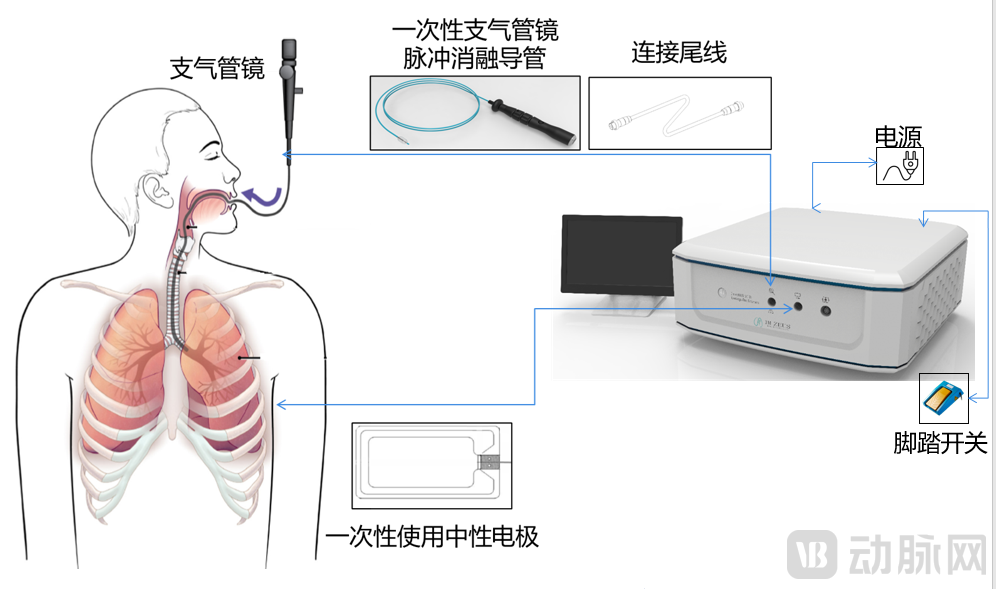
Zhouling Medical's Innovatively Self-Developed Chronic Bronchitis Ablation System
Under bronchoscopic guidance, a pulsed ablation catheter is inserted through the working channel. The operator deploys the basket at the distal end of the catheter via the handle to ensure close apposition to the airway wall, followed by the delivery of non-thermal pulsed electric field energy for treatment. Post-treatment, there is a significant reduction in the number of mucus-secreting goblet cells in the airway mucosa, and the clearance function of ciliated cells is restored. This can improve or even cure refractory cough and sputum production, substantially enhancing patients' quality of life.
The PbroA Pulsed Field System, independently developed by Zhouling Medical, offers the following advantages:
Targeted delivery provides highly precise and effective treatment.The treatment process ablates only the superficial layer of the airway mucosa, reducing mucus-producing goblet cells without damaging adjacent tissues.
Safe and Controllable.Treatment via natural orifice endoscopic intervention minimizes patient trauma to the greatest extent. The pulsed electric field energy is controllable during the procedure, ensuring a safe and controlled surgical process.
High treatment efficiency and rapid patient recovery.Thanks to the low energy and targeted nature of pulsed electric fields, unilateral total lung lobe surgery took only 30 minutes with the assistance of conventional endoscopy, resulting in no significant adverse reactions and allowing patients to resume free movement immediately after the procedure.
Furthermore, Zhouling Medical continuously optimizes its disposable bronchoscopic pulsed ablation catheter. Through specialized material selection and process design, the basket electrode exhibits enhanced elasticity and support, allowing for smooth deployment and retraction while conforming more closely to the airway anatomy. To improve procedural convenience for operators, Zhouling Medical has incorporated measurement markings on the ablation catheter, enabling more precise and controlled treatment while minimizing the risk of missed or overlapping ablation zones.
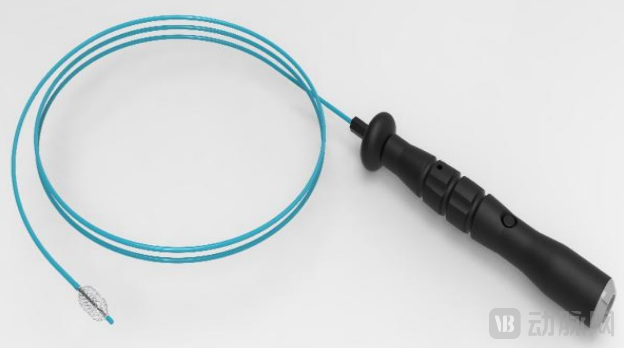
Zhouling Medical's Self-Developed Disposable Bronchoscope Pulsed Ablation Catheter
Meanwhile, to ensure the safety and efficacy of treatment, Zhouling Medical has ingeniously incorporated a dielectric matching feature that ensures optimal contact between the catheter and the airway once the catheter is positioned at the treatment site. In cases of suboptimal contact, the device automatically detects the issue, inhibits energy delivery, and alerts the physician to reposition the catheter, thereby preventing inadvertent operations caused by visual misjudgment or improper handling.
It is reported that Zhouling Medical’s pulsed field ablation system, PbroA, is expected to receive regulatory approval in 2024. Moving forward, Zhouling Medical will continue to optimize the PbroA pulsed field ablation system and leverage its pulsed field energy platform technology to explore additional indications and clinical scenarios. Upholding its vision of “Boundless Life, Unified Across the Five Continents,” the company aims to harness technological innovation as a sharp tool to address clinical challenges and contribute Chinese wisdom to the world.
Department Introduction
The Respiratory Endoscopy Center of Shanghai Chest Hospital is a National Health Commission Training Base for Endoscopic and Minimally Invasive Medicine, a Chinese Medical Doctor Association Training Base for Respiratory Endoscopists, a Shanghai Municipal Key Clinical Specialty, and the Shanghai Research Center for Respiratory Endoscopy Engineering Technology. The center is capable of performing all Level IV respiratory endoscopic diagnostic and therapeutic procedures as well as transthoracic diagnostic and therapeutic techniques. It specializes in interventional diagnosis and treatment of peripheral pulmonary nodules, endoscopic management of complex airway lesions, and treatment of chronic inflammatory airway diseases. With over 15,000 respiratory endoscopic procedures performed annually, the center ranks among the leading institutions in China in both volume and quality within the field of respiratory interventional medicine.

Professor Sun Jiayuan
Professor Sun Jiayuan, Executive Deputy Director of the Department of Respiratory and Critical Care Medicine, Director of the Respiratory Endoscopy Center, Director of the Respiratory Intervention Center, and Director of the Shanghai Engineering Research Center for Respiratory Endoscopy Technology at Shanghai Chest Hospital; Chief Physician; M.D.; Doctoral and Postdoctoral Supervisor.