

Stepping Back from C端 to Move Forward: Ping An Good Doctor's Strategic Pivot Toward Sustainable Growth

Ping An Healthcare
One-stop Solution Provider for Health Management
According to the recently released "The 51st Statistical Report on China's Internet Development," as of the end of 2022, the number of internet medical users in China reached 363 million, an increase of 64.66 million from December 2021, accounting for 34.0% of the total internet users. Compared with previously published data, both the number of users and the proportion have hit new highs.
Faced with a massive user base, achieving scalable revenue generation and profitability—particularly income and profits centered on medical services—remains an aspirational goal for companies in the industry.
On March 13, Ping An Healthcare released its performance report, showing that the company’s total revenue in 2022 was approximately RMB 6.16 billion, with an overall increase in gross profit margin. Notably, the proportion of revenue from medical services expanded, and the gross profit margin for this segment rose to 36.2%. How were these performance results achieved? What signals do they convey? Do they indicate that Ping An Healthcare is moving closer to the aforementioned goals? To answer these questions, VCBeat conducted an exclusive interview with Fang Weihao, Chairman of the Board and CEO of Ping An Healthcare.
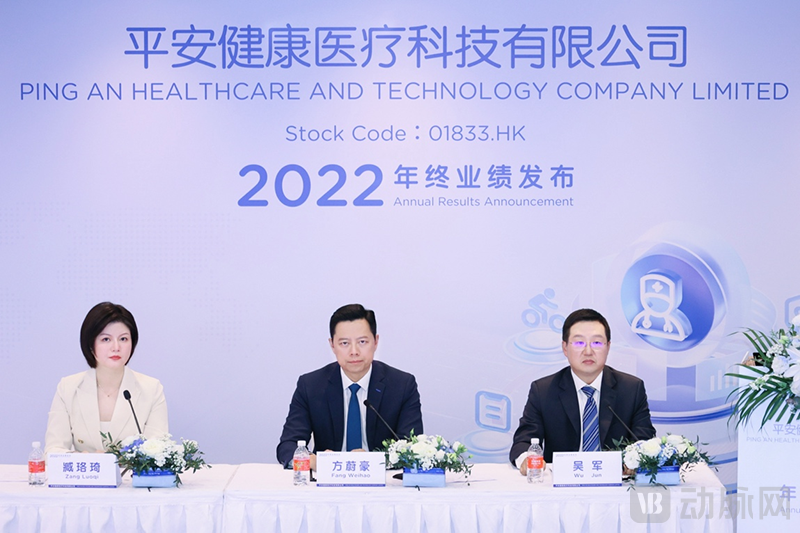
Ping An Healthcare Releases 2022 Full-Year Results
Since the second half of 2021, Ping An Healthcare has further deepened its Strategy 2.0 layout, establishing a model of “managed care + family doctor membership + O2O medical and health services.”
Under this business model structure, Ping An Healthcare achieved a total revenue of RMB 6.16 billion in 2022, representing a decline compared to 2021.
“We have proactively adjusted our revenue structure by reducing income streams with low strategic relevance and limited value for future development,” explained Fang Weihao. For instance, in the health services segment, the company has scaled back certain product categories with thin gross margins and uncertain competitive advantages, while gradually transitioning some pharmaceuticals from a self-operated model to a platform-based model.
These adjustments contributed to a decline in revenue to some extent, but also reduced the proportion of low-gross-margin revenue within total revenue.
Building on its “streamlining and optimization” strategy, Ping An Healthcare has redirected greater resources toward medical services with high strategic synergy. As of the end of 2022, Ping An Healthcare had expanded its internal and external physician team to cover 23 specialties, comprising more than 49,000 doctors, and had contracted with over 2,000 renowned medical experts, thereby meeting users’ healthcare needs across diverse scenarios and at multiple levels.
As a result, Ping An Healthcare generated RMB 2.447 billion in revenue from its medical services segment, representing a year-on-year increase of 2.0%; notably, revenue in the second half of the year rose by 25.1% quarter-on-quarter. It is worth mentioning that the proportion of medical services in total revenue has increased to 41%, with the gross profit margin steadily rising to 36.2%.
Overall, the “decluttering” strategy has enabled Ping An Healthcare to achieve stronger profitability. The performance report shows that in 2022, the company’s overall gross profit margin increased by 4.0 percentage points year-on-year to reach 27.3%, while losses narrowed simultaneously.
Furthermore, Ping An Healthcare has halted its high-cost customer acquisition campaigns targeting the consumer segment, thereby reducing sales expenses, which also contributed to the significant reduction in losses.
“We do not place significant emphasis on short-term fluctuations in revenue; rather, we prioritize high-quality, sustainable revenue. In the past, certain business segments generated exploratory revenue, which required evaluation before drawing conclusions; underperforming areas were adjusted decisively,” said Fang Weihao. He stated that the company will focus more heavily on medical services in the future, extending its reach to both ends of the user health spectrum. On one hand, it will leverage family doctor membership products to expand coverage among the healthy population, a segment with substantial scale. On the other hand, it will strengthen disease management for patients with critical illnesses, who demonstrate greater demand for disease management and a higher willingness to pay.
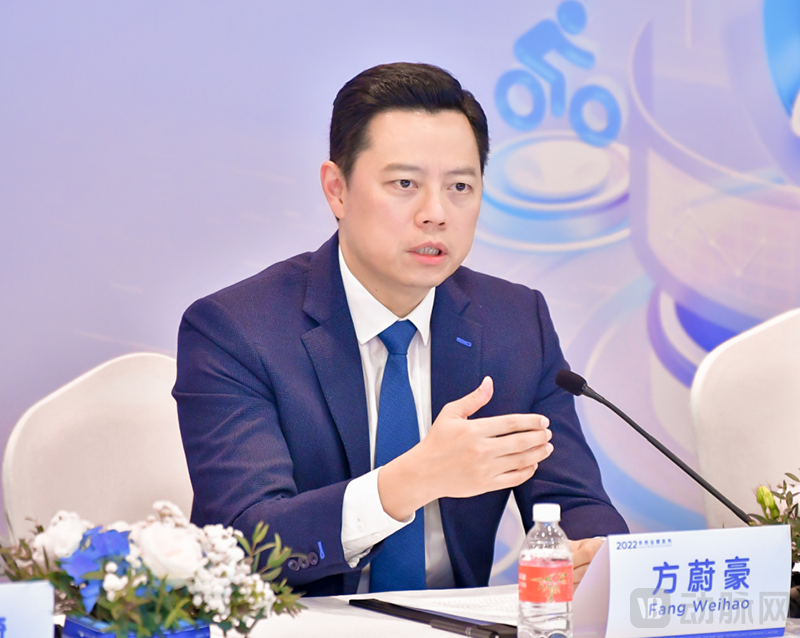
Fang Weihao, Chairman of the Board and CEO of Ping An Healthcare
In this performance report, Ping An Healthcare summarized the three major payers of its managed care model: Ping An Group’s integrated financial channels (F-side), corporate clients (B-side), and individual users (C-side).
According to Fang Weihao, among the three major payers, revenue from the B-side is growing the fastest.
In 2022, Ping An Healthcare vigorously expanded its corporate health management market. Leveraging the channels of Ping An Group, the company reached out to corporate clients and deepened collaborations, focusing on medium-to-large enterprises with sufficient health management budgets, clear employee health management plans, and strong payment capacity and willingness. It provided comprehensive solutions for employee health management.
“Among the enterprises we have engaged with, eight or nine out of ten consider employee health management essential. However, what are their specific needs? How do such services differ from corporate supplemental insurance? These are questions that require our assistance to help clients clarify and define.” Fang Weihao expressed strong confidence in the prospects of the corporate health management market, describing it as being in an “accelerated phase prior to takeoff.”
In fact, employee health has become a focal point of societal concern. In recent years, there has been a high incidence of health problems caused by workplace stress. Corporate health screenings have shown rising detection rates for conditions such as thyroid nodules and thyroid cancer. Suboptimal health status requires timely intervention, while diseases necessitating in-hospital treatment or even surgery call for more rigorous continuous management.
However, the corporate health management market also has its unique characteristics and challenges. In Fang Weihao’s view, the difficulty in corporate health management lies in better achieving “dual satisfaction.” Behind an enterprise client’s purchase of services is a decision-making chain, rather than an individual decision-maker; within this chain, there are key figures who influence the decision. After the service is purchased, the enterprise is the payer, while employees are the users. “Therefore, our services must satisfy both enterprises and employees to secure contract renewals in the following year.”
To meet the diverse needs of enterprises and employees and enhance satisfaction, Ping An Healthcare has developed the “Yi Qi Jian Kang” product ecosystem to address issues such as fragmentation and decentralization in traditional corporate health management services. With “Check-up+” and “Health Management+” as its core solutions, the system can be combined with other customized services to form a differentiated product matrix.
In the employee health management solution provided by Ping An Healthcare to a central state-owned enterprise, service offerings included customized health screenings, interpretation of screening reports, proactive follow-up by family doctors, assistance with offline medical consultations, and an exclusive welfare e-commerce platform. By leveraging multi-scenario and multi-touchpoint strategies, the solution effectively reached key populations, strengthening proactive employee care and full-cycle health management. By the end of 2022, revenue from this corporate employee health management project exceeded RMB 18 million, with a paid conversion rate of approximately 30% among employee users.
As of the end of 2022, Ping An Healthcare had cumulatively served 978 corporate clients, an increase of 458 from the end of 2021, covering nearly 3 million corporate employees and users. Among its large enterprise clients (with more than 3,000 employees), the renewal rate reached nearly 90%.
The substantial volume of corporate orders and the conversion rate of individual paid users highlight the vast potential of the corporate health management market. By meeting market demand through a “standard + customized” product portfolio, Ping An Healthcare is striving to overcome the challenge of achieving “dual satisfaction,” thereby demonstrating its significant potential in the marketplace.
Fang Weihao stated that the company would continue to adhere to its B2B strategy. In 2023, it planned to develop several core flagship products through continuous exploration, rather than focusing primarily on customization. Additionally, the company would prioritize the launch of its enterprise membership program, providing tiered services with content tailored to different membership levels.
In fact, Ping An Healthcare has leveraged the Ping An Group’s distribution channels as a unique advantage since its inception. Nevertheless, external observers inevitably question: “Beyond relying on the resources of Ping An Group, what else can Ping An Healthcare do?”
However, from Fang Weihao’s perspective, even within the Ping An ecosystem, there remains substantial value to be unlocked, particularly in the insurance sector.
“Empowering the insurance sector with healthcare services is highly complex. If a viable business model could be formed by simply bundling insurance and healthcare, it would long have ceased to be a competitive barrier,” Fang Weihao admitted. He noted that Ping An Healthcare currently provides services to policyholders, achieving a breakthrough by integrating healthcare services into insurance products where none existed before. The company’s future focus will be on: facilitating product differentiation for insurers, helping them acquire customers through differentiated services; and shifting health management upstream to reduce disease incidence and medical costs, thereby assisting insurers in cost containment. “All of this requires deep collaboration with the insurance side.”
Indeed, in recent years, the models of UnitedHealth Group and Kaiser Permanente have served as benchmarks for domestic healthcare enterprises in China. However, significant differences exist in areas such as the domestic medical service system, healthcare security framework, commercial health insurance coverage, and patient healthcare-seeking behaviors. To date, a mature model featuring robust and synergistic integration among pharmaceuticals, healthcare services, and insurance has yet to emerge.
Therefore, if Ping An Healthcare can leverage the resources of Ping An Group to pioneer a path that truly synergizes insurance product innovation with cost containment for insurers, scaling up the export of its services and products to clients outside the Ping An ecosystem should not be difficult.
Furthermore, Ping An Group also provides services to financial institutions such as banks, securities firms, and leasing companies, offering their clients health and medical benefits. This initiative aims to enhance customer satisfaction for these financial institutions and even facilitate business expansion.
In 2022, Ping An Healthcare provided high-value-added services, including access to renowned specialists, health check-ups, and online consultations, to the private banking clients of a certain bank. In the second half of the year, it helped the bank increase its assets under management (AUM) by over RMB 30 billion.
Such services also represent a key strategic focus for Ping An Healthcare in the B2B sector.
From the perspectives of business structure and resource allocation, Ping An Healthcare will focus primarily on the F-end and B-end, having ceased high-cost customer acquisition campaigns for the C-end. In this performance report, the explanation regarding C-end payers was limited to a brief section of just over 100 characters.
So, has Ping An Healthcare abandoned the consumer-facing (C-end) market?
“The consumer end is undoubtedly a future worth committing to for the long haul; on the path whose ultimate destination is the consumer market, our current choices may seem distant but are in fact close,” Fang Weihao stated. “Between consumer users and internet healthcare, there remain three major barriers: habits, trust, and payment. A catalyst is needed to break through these obstacles, and the B-end (business) and F-end (financing/insurance) payment models could serve as that catalyst.”
In Fang Weihao’s view, C-end users have not yet developed sufficient habits of using internet-based medical services, leading to a lack of trust and, consequently, limited willingness to pay. By shifting the payment burden to B-end (business) and F-end (financial/insurance) stakeholders, C-end users can be encouraged to use internet-based medical services more frequently. Over time, this will help them form habitual usage and build trust, ultimately fostering their willingness to pay out-of-pocket.
What kind of services can better foster user habits and trust? Fang Weihao believes that the answer lies in a seamless, end-to-end solution integrating online and offline channels.
"In the past, internet-based healthcare moved medical services online, offering low-frequency, one-off consultation and prescription dispensing services. 'This model will continue to exist, but we are increasingly productizing our services and tangibilizing these products to give users a concrete experience; in this context, online consultations are merely one component of the product. Although we carry the 'internet healthcare' label, we are also attempting to redefine ourselves. At our core, we should be regarded as a healthcare service provider, with online or offline channels serving simply as the mediums for service delivery,' stated Fang Weihao."
Certainly, a comprehensive end-to-end solution requires the integration of multiple key nodes, as it involves collaboration between internal and external physician teams, as well as connectivity among online platforms, partner hospitals, partner pharmacies, and partner consumer healthcare institutions. The participation of numerous stakeholders makes the true realization of an “end-to-end” process far from easy.
The performance report shows that in 2022, in addition to online service resources, Ping An Healthcare expanded its network of offline partner hospitals to over 5,000 and partnered with 224,000 pharmacies. It achieved one-hour medication delivery in 216 cities and launched 24/7 medication delivery services in 88 cities. Meanwhile, family doctors play a pivotal role by integrating online and offline services, general practice and specialty care, pre-diagnosis, during-diagnosis, and post-diagnosis services, as well as medical and health services. Going forward, Ping An Healthcare will continue to leverage family doctors as the key link to enhance service quality and user experience.
Through a series of business structure adjustments, the results of Ping An Healthcare’s deepened Strategy 2.0 layout have become increasingly clear. From a longer-term perspective, the company’s net loss has not only narrowed compared to 2021, but its loss ratio has also dropped to the lowest level in five years.
“Healthcare is not an industry for quick profits. In the future, we will continue to prioritize the quality and sustainability of our development,” summarized Fang Weihao. Achieving profitability in 2025 is the company’s target, but both Ping An Group and the company have ample patience to make longer-term strategic arrangements, including:
Ping An Healthcare will further create value for F-end clients through managed care, including improving renewal and additional coverage rates for insurance clients, and increasing assets under management for banking clients;
Tap into the vast new B2B market, fully leveraging the combined strengths of Ping An Group and Ping An Healthcare.
Supported by these two major payers, there is confidence and endurance to incubate, nurture, and await the maturation of the consumer market.
Fang Weihao stated that the improvement in gross margin and reduction in losses driven by changes in business structure would not be limited to 2022 but would be sustained.
We believe that, with continued strategic optimization and stable performance trends, Ping An Healthcare is not far from achieving scaled revenue and profitability centered on medical services.