

Dongze FSMP: Pioneering Innovation and Clinical Translation in China's Medical Foods Sector
Selection“"Innovation-Driven R&D First"This path should beDongze Medical NutritionThe Most Important Decision.
From2015From the outset, this FSMP enterprise, established just a year prior, embarked on a path of independent R&D and innovation commercialization—building an R&D team, hosting academic forums, delving into clinical needs, and conducting clinical validation of its products. Eight years later, the General Manager of Dongze FSMPYuan Binwenrevealed: “In the university sector, Dongze Medical Nutrition has already partnered with Northeast Agricultural University, Jilin University, and other”Nearly 10Collaborative R&D of FSMPs with universities and research institutes; on the hospital side, withOver 300Establish partnerships with Grade 3A hospitals to build a product moat.”
 The photo shows Yuan Binwen, General Manager of Dongze Special Medical Food. Photo provided by the interviewee.
From Desert to Oasis
Perhaps good things take time; Dongze Special Medical’s collaborations with universities and hospitals were not entirely smooth. The primary reason was the relatively low attention paid to the special medical food industry in China at that time, insufficient development of market demand, and a scarcity of research projects on special medical foods at universities and research institutes, which are the sources of innovation. Deputy General Manager of Dongze Special MedicalLiang ShuxiaTell Orange Bureau: “In the early stages, regulations and registration procedures for foods for special medical purposes (FSMP) were not yet fully clarified or detailed, clinical trial guidelines remained in draft form, and public awareness of FSMP across various societal dimensions was very low. We collaborated with universitiesIt is difficult to achieve tangible results in implementation., relying more on internal team capabilities and conducting initial R&D through establishing overseas strategic partnerships.”
“Flowing water does not compete to be first; it strives for unceasing continuity.” The “zero” output of previous years did not deter Dongze Medical Nutrition. They have consistently signed collaboration agreements with universities and maintained close ties with experts in the industry. FinallyIn 2020A Turning Point.
In recent years, driven by multiple factors such as population aging, increasing downstream demand, and the development of hospital nutrition departments, the special medical purpose food (FSMP) industry has shown a gradually improving trend. According to the "2021 Big Data Monitoring and Analysis Report on the Operation of China's Special Medical Purpose Food Industry," the market size of China's FSMP industry increased from 2.59 billion yuan in 2016 to 7.72 billion yuan in 2020, expanding approximately threefold, and is projected to reach 10.01 billion yuan in 2021.
Similarly, universities and colleges have been establishing institutes for nutrition and health, with some research efforts beginning to focus on the FSMP industry.
Seizing the opportunity, Dongze Medical Nutrition once again took the initiative by leveraging academic resources and collaborating with researchers to develop and implement specific projects.
However, more important than collaboration is choosing the right direction. In fact, innovation projects from universities tend to focus more on technological innovation and often lack sufficient orientation toward clinical needs. Liang Shuxia also stated, “At times, researchers are more inclined toward basic theoretical research, and the practical applicability and implementation of projects need to be strengthened.”
To address this challenge, Dongze Special Medical Foods started from the demand side by conducting market research in hospitals to inquire about clinical needs from physicians. Combining these insights with its own development requirements, the company collaborated with researchers at universities and identified two strategic directions:
One isRationally optimize the formulation characteristics and advantages of existing parenteral nutrition products into enteral nutrition product design based on evidence-based medicine.It is reported that in the 1970s, the ratio of enteral nutrition to parenteral nutrition used internationally was 1:9. After the 1990s, this ratio shifted to 9:1, gradually forming a consensus that “enteral nutrition should be the first choice whenever the gastrointestinal tract is functional.”
Certainly. In addition to international consensus, from a feasibility standpoint, the majority of parenteral nutrition can be replaced by enteral nutrition through evidence-based medicine approaches. For instance, parenteral nutrition formulations containing amino acids and fatty acids can be developed into disease-specific enteral nutrition products. This is currently the focus of collaborative research and development between Dongze Medical Foods for Special Medical Purposes (FSMP) and universities.
Another isDevelop diverse dosage forms.There is a wide variety of dosage forms for foods for special medical purposes (FSMPs), including solids, liquids, semi-solids, and even flowable or jelly-like forms. However, at present, the approved FSMP dosage forms in China remain relatively limited, consisting only of powders and liquids.Relatively Limited Dosage Forms and Relatively Fixed Manufacturing Processes, which has greatly limited people’s imagination regarding foods for special medical purposes. “We hope to develop and commercialize a wider variety of products in different dosage forms through industry-academia-research collaboration,” she added.
If defining the direction is akin to outlining a framework, Dongze Medical Foods for Special Medical Purposes will also provide researchers withProvide a conversion path for similar products, guiding researchers to develop new products for different medical conditions. As of now, Dongze Medical Foods has been approvedDongze Sutang, Dongze Changkang, Dongze Quantai, and Dongze DingFour FSMP products, ranking among the top domestic companies.
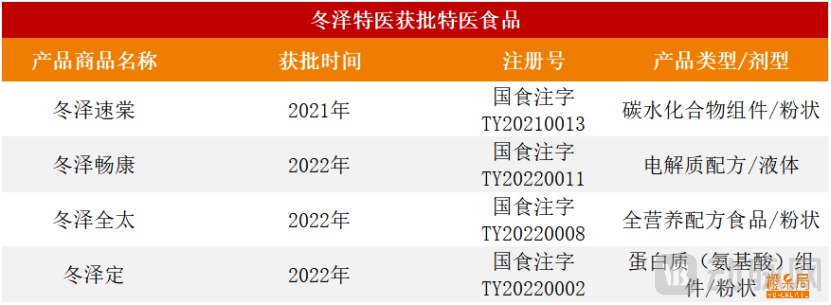
The image shows Dongze Special Medical Food’s approval as a food for special medical purposes (source: State Administration for Market Regulation)
Seize Key Milestones in Industry-Academia-Research Collaboration
The Birth of a New Product Requires a Process.
Similarly, the journey of a new Food for Special Medical Purposes (FSMP) from concept to market launch begins with laboratory R&D, followed by product registration and production licensing, before it can finally be manufactured and commercialized. In addition, FSMPs are currently required to undergo clinical trials to demonstrate their efficacy for specific diseases. This entire process typically takes approximately7 YearsTime.
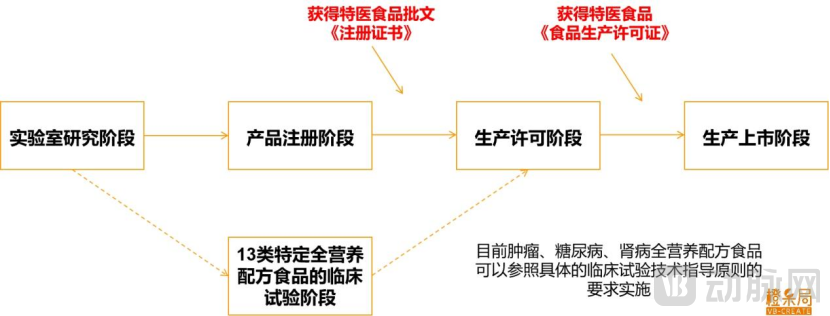 Figure: The Process of FSMP from R&D to Production
Work priorities also differ across stages. Liang Shuxia stated, “For enterprises, there are three key milestones in the commercialization of foods for special medical purposes (FSMP). Meanwhile, the focus of collaborations with universities also varies.”
The first key point isDefinitive medical evidence.At this stage, companies need to determine the product's innovativeness, nutritional value, efficacy, and clinical safety, which form the basis for project initiation and entry into the engineering phase. Based on this, Dongze Special Medical Food has developed and submitted applications for special medical foods targeting patients with rare diseases. As individuals with rare diseases progress through different life stages—from infancy to toddlerhood, childhood, adolescence, and adulthood—their nutritional requirements change, sometimes significantly. Therefore, medical evidence such as pathological metabolism in rare diseases, evidence of nutrient absorption efficacy, and existing clinical nutrition trial results in rare disease populations is crucial when designing products for rare disease patients at different life stages.
Once the formulation is finalized, the second key point isIntegrating the Company’s Own Production Lines to Achieve Continuous Manufacturing and Study Product Stability. This requires ensuring consistency and continuity by integrating the product status with the conditions of the commercial production line prior to the completion of product process development. A comprehensive assessment of product stability encompasses multiple aspects, including accelerated testing, factor-influencing studies, long-term testing, transportation testing, and in-use testing.
The Third Key PointProduct registration filing and on-site inspection.Products targeting specific diseases must complete clinical trials prior to registration submission. After submission, the clinical trial sites are also subject to on-site audits to verify the consistency and compliance of the entire study. Only when both components meet the requirements can the product achieve full commercialization.
These three key nodes are mutually corroborative and supportive. Failure to execute any single link properly may prevent the product from being successfully commercialized. Throughout the entire translation process, universities play a crucial role in the first and second key nodes. This is because, foods for special medical purposes (FSMP) are essentially aAn interdisciplinary industry encompassing three major fields: medicine, pharmacy, and food science。
“In fact, clinical nutrition is evidence-based medicine; the initial stage of developing formulas for foods for special medical purposes (FSMP) requires medical evidence to clarify the relationship between nutrients and diseases. This is exactly analogous to the quality assurance system in pharmaceutical manufacturing,” explained Liang Shuxia.
By collaborating with researchers in the fields of pharmacy and medicine, enterprises can establish medical evidence at the early stages, thereby enabling subsequent engineering translation. Furthermore, since the process development for certain foods for special medical purposes (FSMP) is, to some extent, similar to that of infant formula, collaboration with researchers specializing in food engineering or food science can better ensure the continuous development of product manufacturing processes.
Collaborative R&D: This Is Just the Beginning
True collaboration has only “just” begun.
It is understood that,Over the next five years, Dongze Medical Foods will remain steadfastly committed to focusing on two key pillars: evidence-based medicine and process development.. Collaborating with universities and research institutes on R&D serves to accelerate the company’s development speed while pooling top-tier talent to drive innovation from its source, thereby effectively enhancing product innovativeness.
Beyond Collaborative R&D. To promote its FSMP products and concepts, Dongze FSMP not only actively participates in academic conferences across China but also collaborates with hospitals to conduct academic outreach and educational activities.
From 2015 to 2017, Dongze Special Medical Food consecutively heldThe 3rd Interdisciplinary Summit on "Foods for Special Medical Purposes", inviting top domestic and international experts in policy, nutrition, and clinical practice, including Shi Hanping, former Chairman of the Parenteral and Enteral Nutrition Branch of the Chinese Medical Association; Ding Gangqiang, Director of the National Institute for Nutrition and Health at the Chinese Center for Disease Control and Prevention; and Liu Xinqi, Professor at Beijing Technology and Business University. They will engage in in-depth discussions on the latest frontier developments and critical challenges in clinical nutrition and foods for special medical purposes (FSMP), actively fostering industry-academia-research collaboration to enhance the translation of research outcomes into practical applications.
2021, Hosted by Dongze Special Medical FoodThe 6th Shanghai Hongqiao Forum on Foods for Special Medical Purposes and the Launch Event of Dongze Sutang, bringing together top industry experts, including Professor Yu Zhen, Director of the Department of Gastrointestinal Surgery at Shanghai Tenth People’s Hospital, Tongji University; Professor Cai Honglin, Director of the Department of Clinical Nutrition at Union Hospital, Tongji Medical College, Huazhong University of Science and Technology; and Professor Chen Wei from the Department of Clinical Nutrition at Shanghai Pulmonary Hospital. These experts shared insights and clinical experiences on the application of foods for special medical purposes (FSMP) in the field of nutrition, significantly enhancing public and clinicians’ understanding of FSMP and creating new opportunities for its development in the post-pandemic era.
Currently, there are still some voices in the external environment claiming that “the FSMP and dietary supplement industry has a low barrier to entry.” Yuan Binwen believes this is a stereotype that FSMP enterprises need to break: “Industry promoters must play their role,”Stakeholders such as the government, enterprises, universities, and hospitals“, to advocate for FSMP in the marketplace, academia, and policy spheres; actively promote the clinical value of FSMP; conduct public science education for consumers; and enhance consumer awareness.”
Obviously,Innovation and translation in the FSMP industry are neither urgent nor confined to a single model.