

He Dan, Founder of Forethought Medical: Addressing Unmet Needs in the Billion-Dollar Scoliosis Screening and Correction Market
As a serial entrepreneur in the medical technology sector, Dr. He Dan has assumed many roles. She began her career as a surgeon before leaving the traditional healthcare system to engage with high-value medical consumables, artificial intelligence, and wearable devices.

In 2022, after Fusote, its medical device company specializing in scoliosis, achieved a technological breakthrough, He Dan decisively shut down his trading company and AI-powered traditional Chinese medicine company to go all-in on tech-driven healthcare.
Last December, Shanlan Capital and Xingfu Capital successively entered the fray, as Fusote successfully secured tens of millions of yuan in its Pre-A financing round.
It is clearly not luck that underlies continuous transformation and sustained success.
He Dan is currently focusing on "scoliosis," a disabling deformity common among adolescents. It involves abnormal alignment of the spinal vertebrae in the coronal, sagittal, and axial planes, and its onset is often insidious.
If timely intervention is lacking, scoliosis can lead to mild deformities of the trunk and thoracic cage, or severe damage to the spinal cord and spinal nerves, resulting in respiratory and cardiac dysfunction.
Based on a 5% incidence rate from statistical data, approximately 10 million children and adolescents in China are suffering from the detrimental effects of scoliosis.
Therefore, the "Opinions on Comprehensively Strengthening and Improving School Hygiene and Health Education in the New Era," issued in 2021 by the Ministry of Education and four other departments, has included spinal health screening as part of the physical examinations for primary and secondary school students.
According to conventional policy evaluation logic, the inclusion of spinal screening in routine health examinations for primary and secondary school students leads to an increased detection rate of scoliosis, thereby driving up the demand for patient treatment.
However, in the view of He Dan, who has five years of medical practice experience, the policy transmission mechanism first acts on scoliosis screening, and then on scoliosis treatment. Among these, the screening process alone is highly nuanced.
“Currently, hospitals commonly use X-ray imaging to detect scoliosis. While this is the most accurate diagnostic method available in modern medicine, it involves a relatively large radiation field, which can cause irreversible damage to the human hematopoietic and reproductive systems. This is particularly concerning for children who have already been diagnosed with scoliosis or show a predisposition to it; to ensure effective treatment and correction, they require continuous follow-up until the age of 18, necessitating repeated X-ray examinations,” explained He Dan. “This diagnostic and treatment approach poses significant risks to children. I once read a relevant study indicating that when scoliosis patients undergo follow-up monitoring for twenty years, their cancer incidence rate surges dramatically, reaching 500% of that observed in the general population.”
“On the other hand, large-scale scoliosis screening also poses a challenge for medical institutions. We cannot guarantee that physicians in every region possess sufficient experience and capacity to analyze and interpret patients’ spinal imaging for scoliosis. As the scale of screening expands while the supply of physicians remains inelastic, the rates of missed diagnoses and misdiagnoses across various regions inevitably rise, ultimately causing the screening outcomes to diverge from the intended purpose of the screening.”
Addressing these two needs, Fusote has developed a 3D digital diagnosis and intelligent treatment system for the spine.
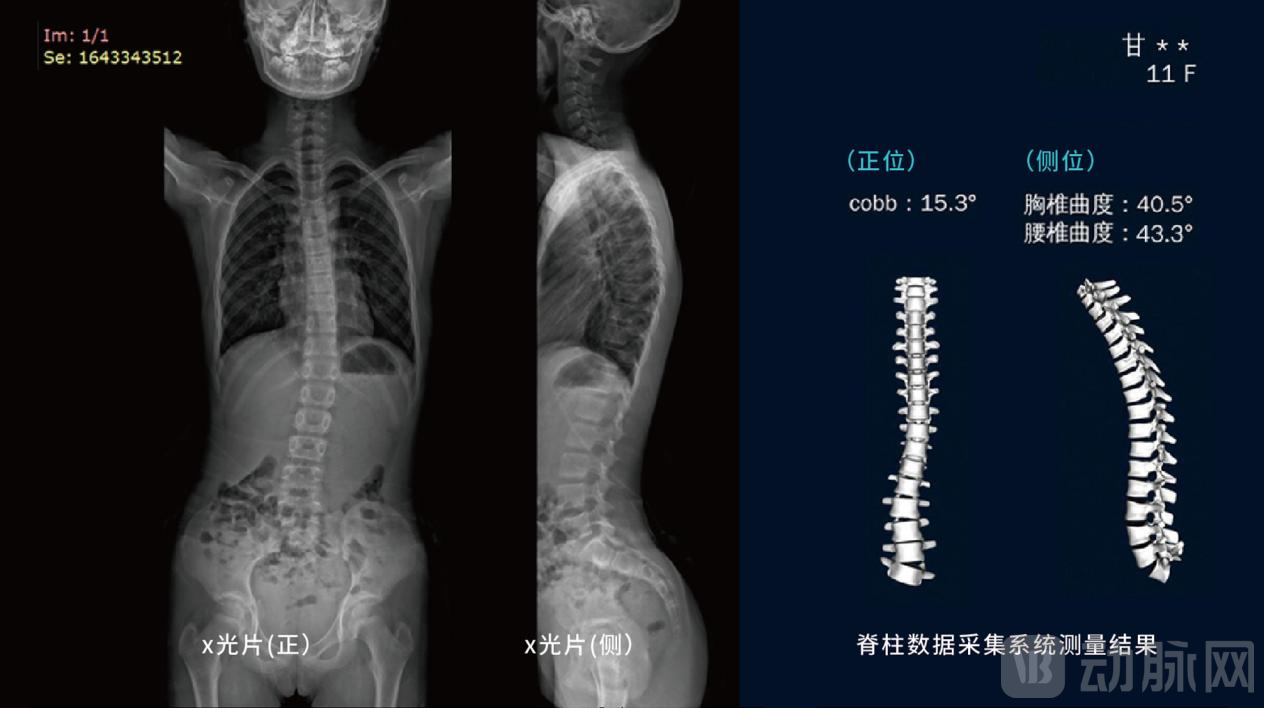
According to He Dan, this system is currently the world’s first radiation-free spinal health examination device capable of directly measuring the spinal Cobb angle and ATR (Angle of Trunk Rotation), supported by artificial intelligence technology.
In a double-blind clinical validation study conducted at the Department of Radiology, Ruijin Hospital in Shanghai, comparing the device with EOS, the most advanced international scoliosis X-ray imaging system, preliminary measurement results demonstrated significant agreement between the device and conventional X-ray in the detection of scoliosis.
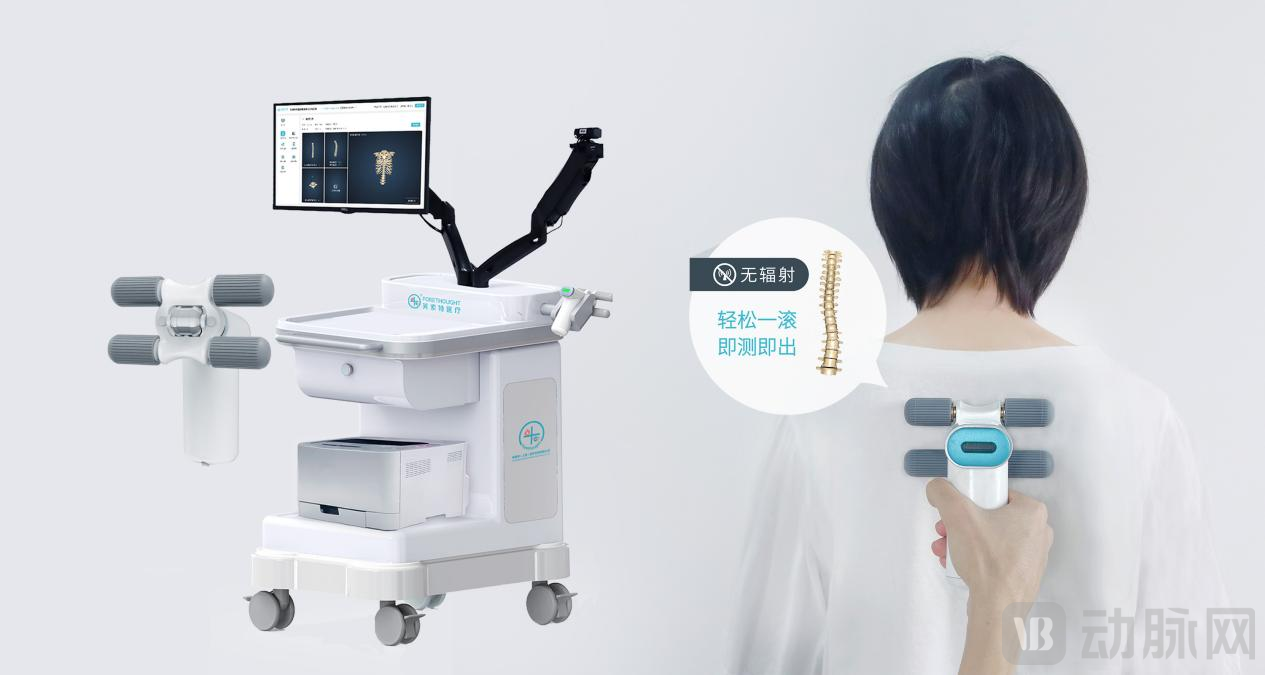
During operation, the user simply holds the device and rolls it once from the C7 to L5 vertebrae along the spinous processes in a top-to-bottom direction, completing the measurement and obtaining results within 10 seconds.
Both physicians and non-professionals, such as parents, can master the operational procedures after receiving professional training, indicating that the device also has the potential for home use.
In addition to spinal screening, Fusote’s smart braces will also be launched this year.
“Smart braces are an extension of smart detection, and together they form a closed-loop system for the diagnosis and treatment of scoliosis,” said He Dan. “This closed loop can exist both within and outside hospital settings, as protecting healthy spinal growth is a continuous, long-term process. We hope more children can maintain their health while staying away from hospitals.”
Since obtaining the medical device registration certificate in December 2022, Fusote’s 3D electronic spine measurement system has been marketed in hospital settings. However, as He Dan noted, Fusote does not intend to limit its commercial deployment solely to hospitals.
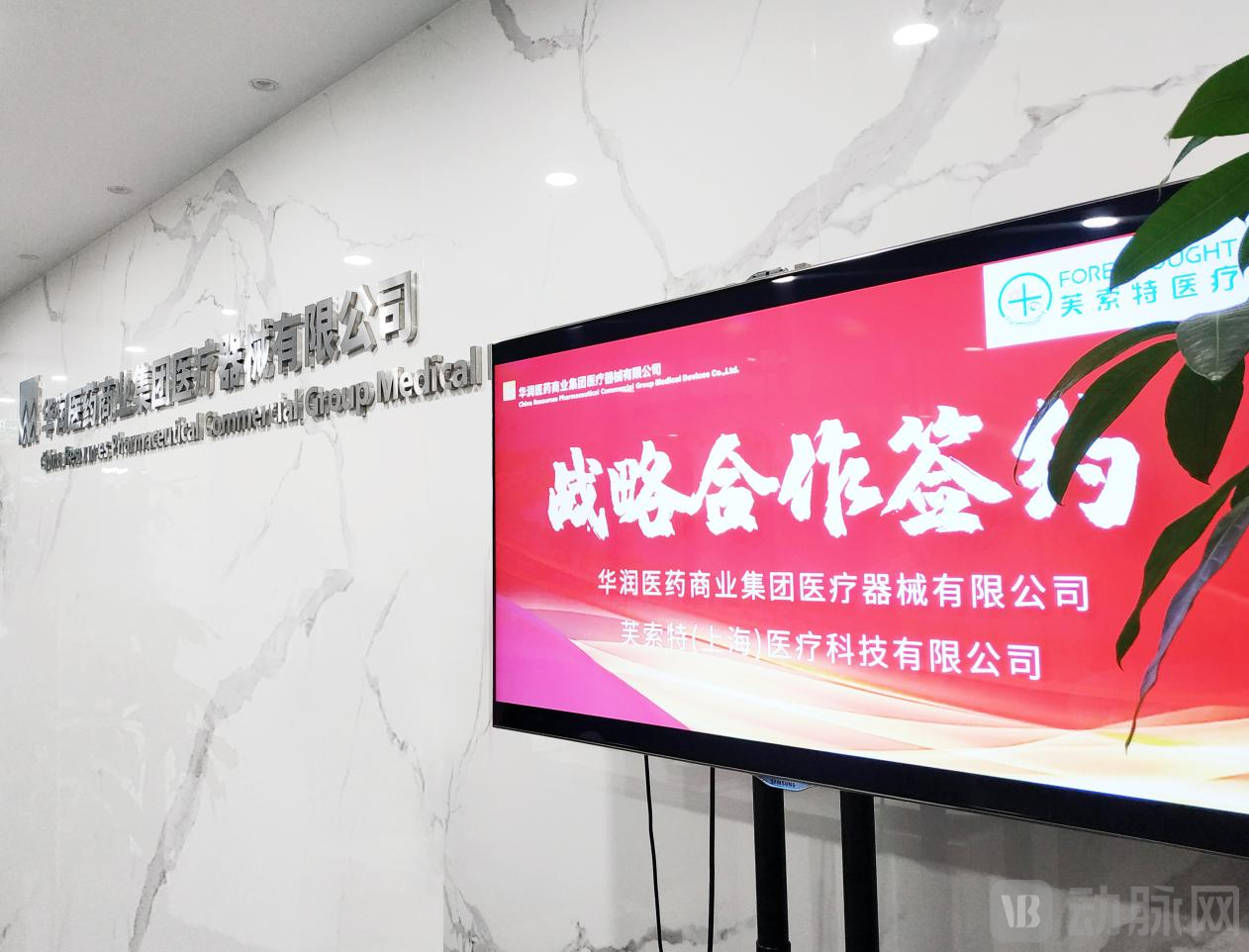
At the beginning of the year, Fusote entered into a strategic partnership with China Resources Pharmaceutical Commercial to jointly launch the “National Backbone Protection Project,” aiming to gradually achieve nationwide adolescent spinal screening using Fusote’s measurement devices.
This year, the two parties have set a target to complete screening in at least 10 cities, with a total screened population of no less than 10 million.
In addition, Fusote is also making significant efforts to expand its consumer-facing (C-end) business.
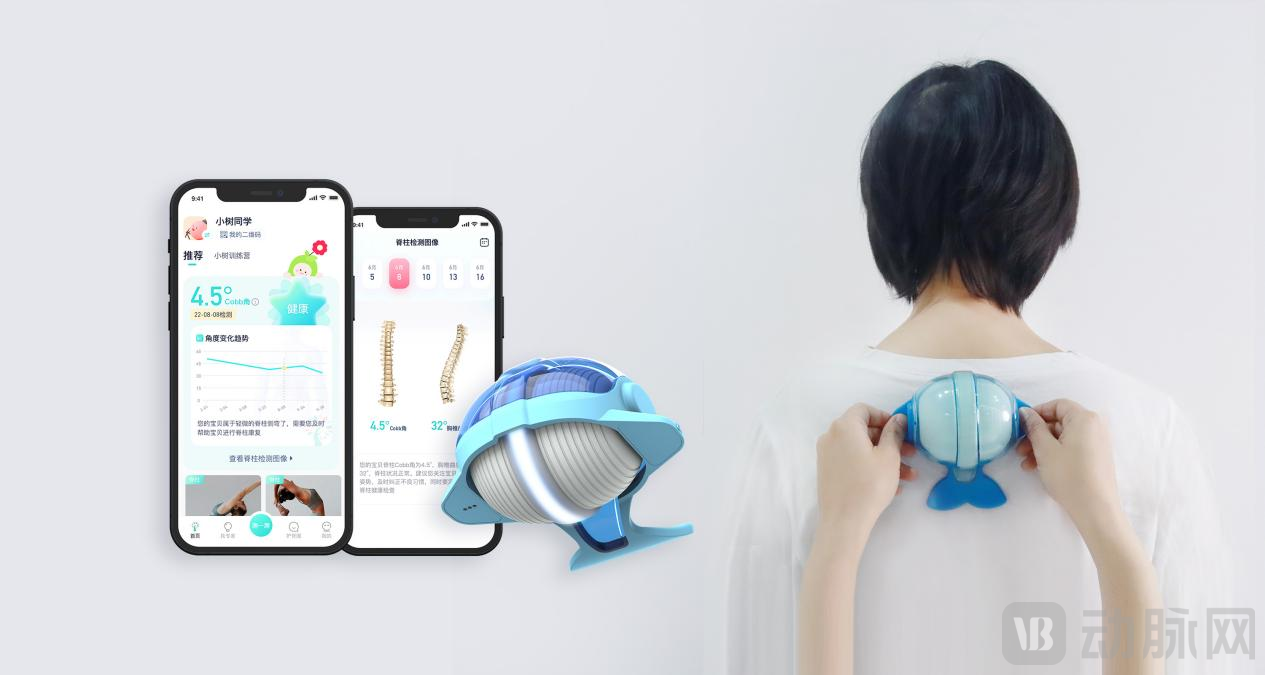
He Dan revealed, “Many parents hope to obtain continuous, long-term data, which means they expect to understand their children’s spinal conditions beyond regular hospital screenings. Therefore, we have developed a home-use spinal detection device called ‘Xiaoshu Tongxue Spinal Detector’ and launched the accompanying ‘Xiaoshu Tongxue’ APP spinal monitoring platform. By integrating in-hospital and out-of-hospital scenarios, this solution enables parents to conduct daily monitoring and correction.”
This app not only evaluates the subject’s development by measuring multiple developmental indicators and provides families with “improvement trend curves” generated from each test record, but also enables online experts to deliver customized professional exercise plans based on the patient’s test results, facilitating rapid recovery.
In He Dan’s vision, the ultimate goal of Fusote is to build an internet hospital for spinal rehabilitation, enabling home-based diagnosis and treatment for spinal conditions.
For a medical technology startup, the most challenging aspect of development is building competitive barriers.
In He Dan’s view, regardless of the specific niche within medical technology, building core competitiveness requires, first and foremost, substantial investment in research and development (R&D), and translating R&D outcomes into quantifiable achievements such as patents and academic papers. Secondly, companies must build upon their accumulated experience to deepen their expertise, thereby ensuring sustainable competitive advantage.
Currently, Fusote has filed 26 patents covering both B-side and C-side products, including eight invention patents, three utility model patents, and two integrated circuit layout-design registrations, and has been recognized as a “National High-Tech Enterprise.”
Furthermore, Fusote’s spinal data acquisition and analysis system has obtained a Class II medical device registration certificate, passed the novelty search conducted by the Chinese Academy of Sciences, and received certification for radiation-free detection.
How long can these core competencies sustain Fusote’s leading advantage? He Dan’s answer: 1–2 years.
“If other companies attempt to catch up by following the path we have taken, it will take approximately one year to obtain regulatory approval and another year to implement marketing and deployment. While two years may seem short, given our current pace of implementation, it is sufficient to achieve screening coverage for the vast majority of children across China. By that time, Fusuote will have secured a substantial market share and leveraged ‘Xiaoshu Tongxue’ to retain end-users. Therefore, we are not afraid of being caught up.”
Going forward, Fusote will continue to innovate along both horizontal and vertical dimensions to solidify its competitive moat.
Horizontally, Fusote will, on the one hand, continue to increase its investment in research on scoliosis devices, expand the indications to include degenerative scoliosis in the elderly, and extend the detection scope to the cervical spine through probe iterations; on the other hand, it will leverage the patient community established by “Xiaoshu Tongxue” to seek collaborations with pharmaceutical companies and insurance providers.
From a vertical perspective, He Dan disclosed research projects conducted in collaboration with the academic community. The product directions represented by these initiatives may include Alzheimer’s disease treatments based on brain-inspired research, or rehabilitation devices for patients with high-level paraplegia.
When asked whether she had entered this field out of sympathy for children with scoliosis, He Dan gave a direct negative response.
“To be honest, there were no particularly moving stories throughout our entrepreneurial journey. We simply observed the current state of scoliosis diagnosis and treatment in China, recognized the support from national policies, and thus sought to address this issue,” said He Dan.
“I often apply ‘first principles’ when contemplating the essence of business. In the context of tech-driven healthcare entrepreneurship, with patients being the most critical element in the system, my primary focus is invariably on understanding what patients need and what value I can deliver to them, then striving wholeheartedly to meet those needs. By comparison, competitors’ growth and strategies are less significant; it is difficult to ascertain with certainty before market entry that our products will outsell those of our rivals.”
When venturing into the tech-healthcare sector, He Dan has returned to her role as a surgeon, making objective and neutral diagnoses based on established information, prioritizing rationality over emotion—addressing problems precisely where they arise.
This is precisely the key to He Dan’s successive entrepreneurial successes.
Navigating across industries requires entrepreneurs to have the courage to cut through the fog and the ability to clarify the roles of various stakeholders within an industry, along with their corresponding supply and demand dynamics. The healthcare technology sector is far from stagnant; demand has always existed, but it takes entrepreneurs to seize those faint signals.