

AI-Powered Platform DeepDrugDiscovery Identifies BBB-Permeable Autophagy Enhancers as Promising Candidates for Alzheimer’s Disease Therapy

MindRank
AI Drug Developer

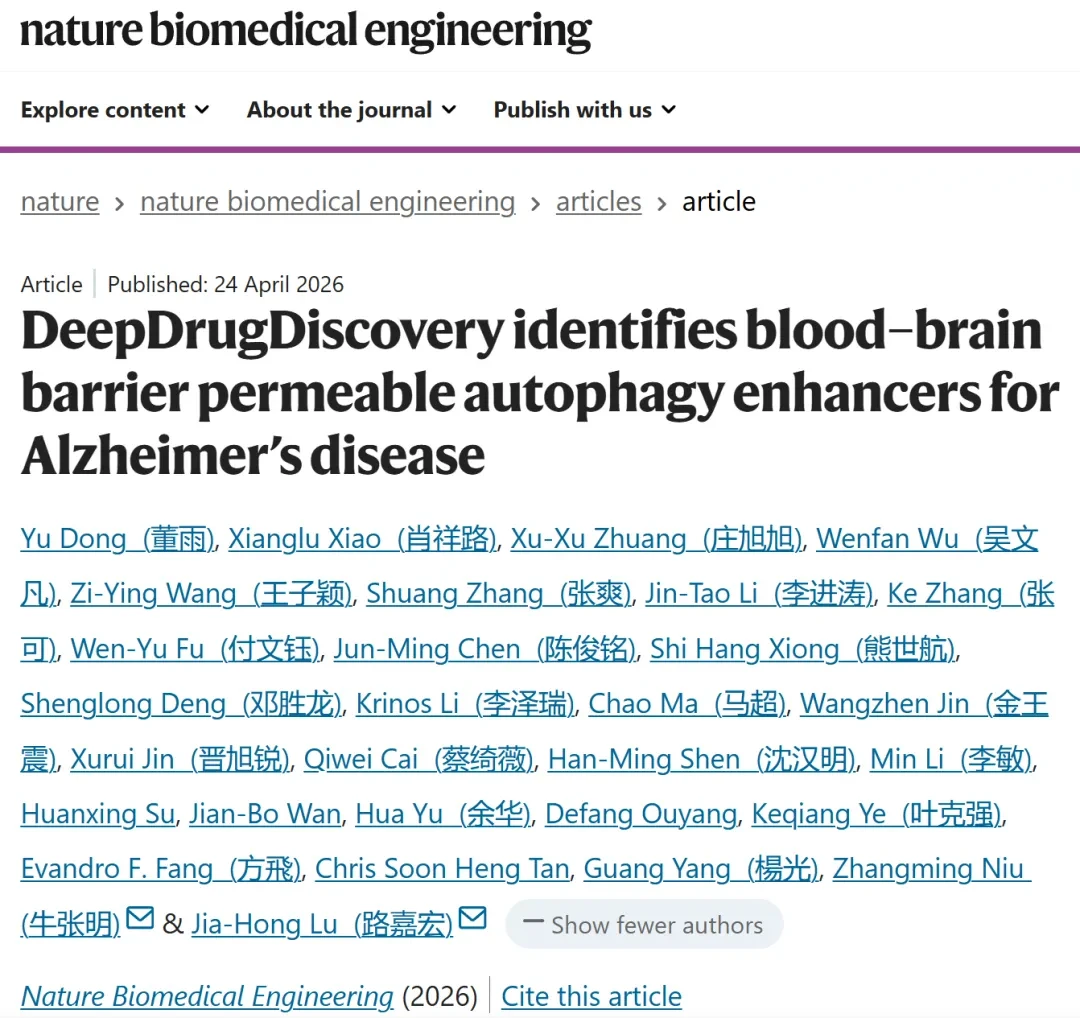
Autophagy is an evolutionarily conserved cellular process in eukaryotic cells that is crucial for the clearance of cellular waste and material recycling. This lysosome-dependent pathway degrades damaged and unnecessary cellular subunits (such as organelles and misfolded proteins), maintaining homeostasis in the central nervous system (CNS).An increasing body of evidence highlights the potential driving role of autophagy dysfunction in the pathogenesis and progression of neurodegenerative diseases, particularly Alzheimer's disease (AD).
The clinical translation of autophagy enhancers in AD remains challenging. Although most known autophagy enhancers act through mTOR-dependent pathways, their clinical translation is limited. Targeting mTOR-independent pathways is a promising alternative that may offer better safety. However, advancing this strategy is hindered by two major factors:The diversity of biological mechanisms targeted by drugs, and the inherent difficulty for such compounds to achieve sufficient blood-brain barrier (BBB) penetration.
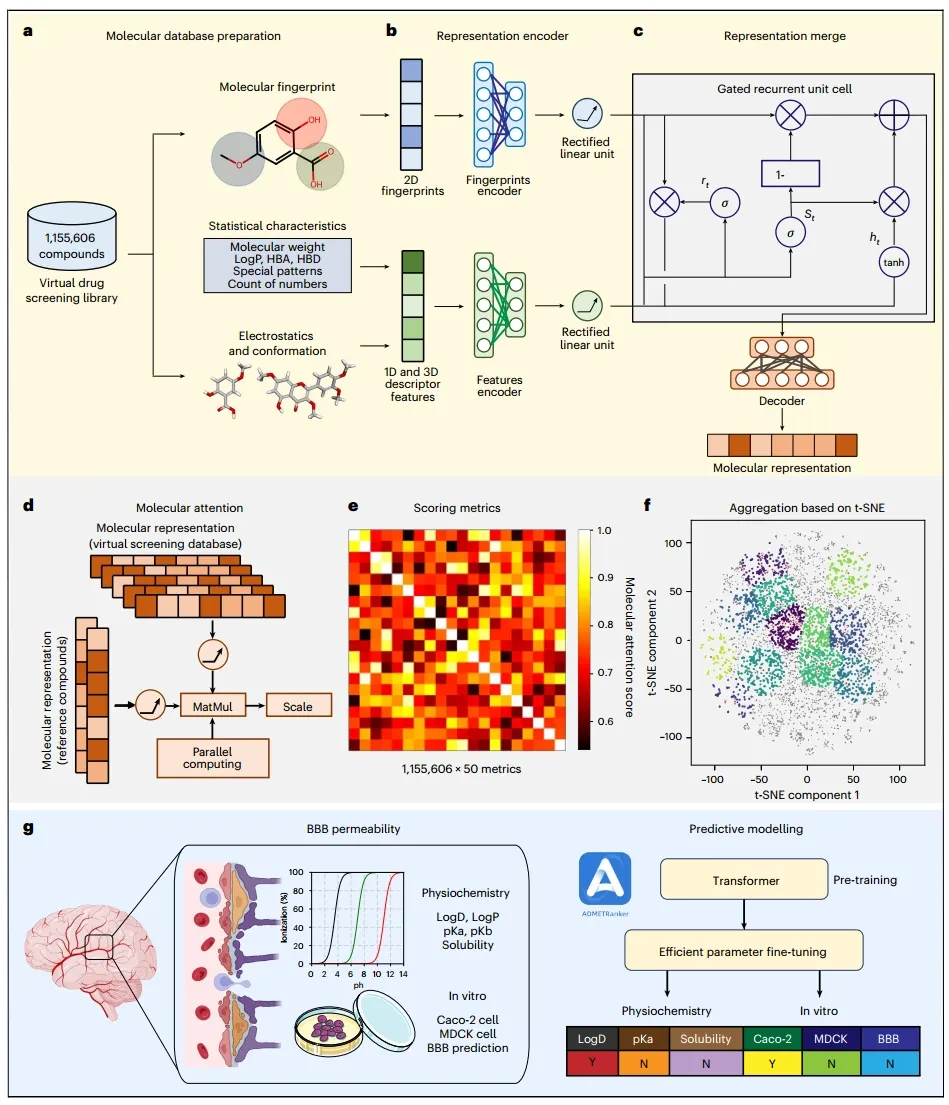
DeepDrugDiscovery Workflow (Figure SourceNature Biomedical Engineering)
The study developed DeepDrugDiscovery – a mechanism-aware, AI-driven screening platform that integrates ADMET (absorption, distribution, metabolism, excretion, and toxicity) and blood-brain barrier (BBB) permeability prediction. The platform successfully identified novel mTOR-independent autophagy enhancers, with two lead compounds demonstrating the ability to cross the blood-brain barrier, clear AD-related protein aggregates, and restore memory function in worm and mouse AD models.This work establishes a scalable, AI-driven process integrating cross-species validation to rapidly discover mechanism-based treatments for diseases with high unmet medical needs.
https://www.nature.com/articles/s41551-026-01667-x

—END—
Content is【iNature】Original article from the WeChat Official Account,
Please indicate the source of the reprint.【iNature】
WeChat Group Addition
iNature has gathered 40,000 researchers and doctors in the life sciences. We have formed 80 integrated groups (16 PI groups and 64 PhD groups), and also established specialized professional groups in related fields (such as plants, immunity, cells, microbiology, gene editing, neuroscience, chemistry, physics, cardiovascular, oncology, etc.).Reminder: Please leave a note when joining the group (in the format of School+Major+Name. If you are a PI/Professor, please...IndicatesPI/Professor, otherwise directlyDefault: Ph.D. Candidate, thank you)。You can first add the editor's WeChat ID (love_iNature), or long press the QR code to add the editor, then join the relevant group. Serious inquiries only.

Submission, Cooperation, and Reposting Authorization Matters
Please contact WeChat ID:Love_iNatures
If you find this article interesting, please click here!