

Shenzhen's New Policy on Healthcare Institution Tech Transfer: Beyond Just Funding
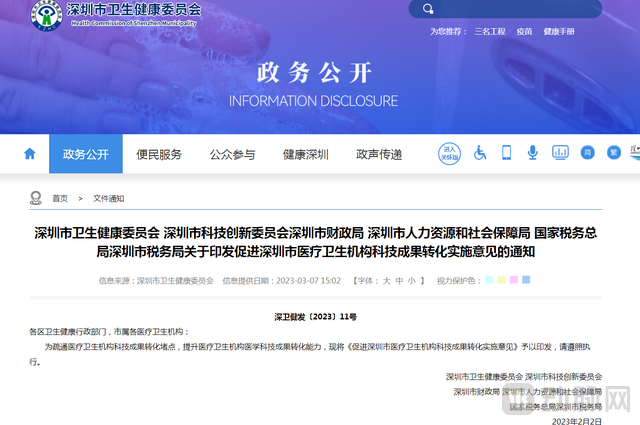
Recently,"Implementation Opinions on Promoting the Transformation of Scientific and Technological Achievements in Medical and Health Institutions in Shenzhen"The release of the (hereinafter referred to as the “Opinions”) has caused a significant stir in the technology transfer community.
"The Opinions" propose:All proceeds from the commercialization of scientific and technological achievements shall be retained by the institution.,Incorporated into the unit's budget, subject to unified management, and not remitted to the State Treasury.After deducting the rewards and remuneration for personnel who have made significant contributions to the completion and commercialization of scientific and technological achievements, the remaining funds shall be primarily used for activities related to research and development in science and technology, as well as the transformation of such achievements, while ensuring support for the operation and development of technology transfer institutions.
It is no exaggeration to say that this robust policy underscores the Shenzhen municipal government’s commitment to the commercialization of scientific and technological achievements and its determination to drive development. We also look forward to leveraging Shenzhen as a launching pad to spark a nationwide wave of achievement commercialization across China.But is reality truly as we hope? What are the perspectives of frontline researchers and professionals in technology transfer?
New Policy Signal: Autonomy in Conversion Reverts to Medical Institutions
At first glance, the most appealing aspect of the new policy is that “all proceeds from the commercialization of scientific and technological achievements shall remain with the institution.” This provides research universities and institutes with the most direct incentive to carry out commercialization activities, namely, increased research-related revenue. It also indirectly motivates researchers to engage in scientific research and facilitate the translation of related research projects.
But in fact, the “Opinion” contains many thought-provoking details.
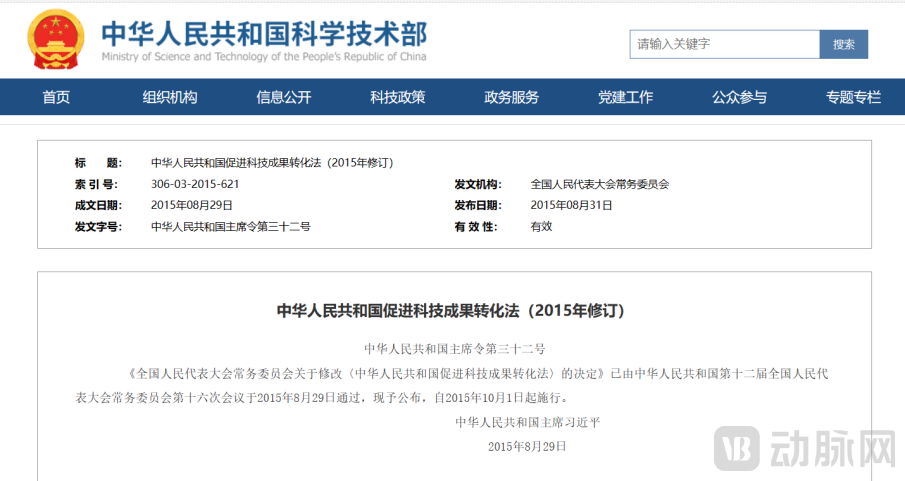
First, the release of the “Opinions” sends a clear signal thatMedical and health institutions may independently carry out the transformation of scientific and technological achievements.Some might argue: Hasn’t the state been encouraging the translation of scientific and technological achievements into practical applications for quite some time? In fact, in"Law of the People's Republic of China on Promoting the Transformation of Scientific and Technological Achievements (Revised in 2015)"The text mentions that “the State encourages research and development institutions and higher education institutions to collaborate with enterprises to jointly promote the transformation of scientific and technological achievements,” as well as detailed provisions such as “the State encourages enterprises to cooperate with research and development institutions, higher education institutions, and other organizations through industry-university-research collaboration models, including the joint establishment of R&D platforms, technology transfer offices, or technological innovation alliances, to jointly carry out activities such as research and development, application and promotion of achievements, and standard research and formulation.”There has never been a clear regulation stipulating that medical and health institutions may independently carry out the transformation of scientific and technological achievements.
In other words, the Shenzhen “Opinions” permit medical and health institutions to decouple their technology transfer activities from institutional constraints. Instead, these institutions may independently establish procedures and rules for the management, utilization, and disposition of scientific and technological achievements in accordance with actual conditions, thereby granting them full autonomy in commercialization.
On the other hand,“The Opinion” further emphasizes the primary responsibility for the commercialization of research outcomes.This means that healthcare institutions opting for independent technology transfer are responsible for their own commercialization outcomes, while enabling the government to more intuitively monitor the progress of such technology transfers within these medical and health institutions.
Of course, concrete measures are essential for medical translation. Shenzhen’s “Opinions” also provide healthcare institutions with specific, highly actionable implementation guidelines for the commercialization of scientific and technological achievements. The “Opinions” clearly stipulate regulations regarding revenue from the commercialization of such achievements and bonuses for researchers, while offering corresponding tax incentives. For instance, net income generated by healthcare institutions from activities such as technology development, technical consulting, and technical services is treated as net income from the commercialization of scientific and technological achievements. Cash rewards received by researchers for the commercialization of job-related scientific and technological achievements are included in the total performance-based salary pool of their respective institutions but are not subject to the approved cap on total performance-based salaries. Furthermore, these rewards are not used as the basis for the human resources, social security, and finance departments to determine the institution’s total performance-based salary pool for the following year.Not used as the contribution base for social security.
From an institutional perspective, this policy not only encourages institutions to engage in activities beyond technology development but also promotes their overall growth.Technical Consulting, Technical Services, and affirmed the recruitment of professionals in related fields to support the commercialization of scientific and technological achievements, while giving the green light in terms of taxation. When net income derived from activities such as technical consulting and technical services is treated as net income from the commercialization of scientific and technological achievements, institutions that are less proficient in scientific research can also share in the benefits of achievement commercialization through alternative means.
To some extent, this measure is expected to encourage more healthcare institutions to establish systematic, professional, and tailored technology transfer offices to carry out translation activities. This will likely foster the development of more interdisciplinary professionals who possess both a deep understanding of clinical pain points and the capability for technology translation. Meanwhile, it indirectly addresses employment challenges for professionals specializing in technology transfer, as promising career prospects are essential to attract more individuals with specialized expertise to engage in this field.
From the perspective of individual researchers, this policy has increased their actual income and enhanced their sense of gain, as well as the quality and level of their daily lives and scientific research.
Of course, Shenzhen is also a beneficiary. A city’s social security provisions for researchers and the level of importance it attaches to them also determine whether it canRetaining Scientific Researchers, preserve sufficient original impetus for scientific research.
Overall, Shenzhen’s “Opinions” are far more than just a policy that provides funding to medical and health institutions; they also bear the responsibility of promoting the translation of scientific research achievements in these institutions, boosting the enthusiasm of researchers, and retaining local talent.
Viewing Shenzhen from Liaoning: Sending Money Is Not the Only Solution
Looking back at history, there were actually others who “ate the crab” even earlier.
As early as2016Released by Liaoning Province“Notice of the People's Government of Liaoning Province on Further Promoting the Transformation of Scientific and Technological Achievements and Technology Transfer”It also mentions that all income derived from scientific and technological achievements shall be retained by the institution, incorporated into its budget, and not remitted to the state treasury.
Similar policy orientations may also offer insights into the future of Shenzhen’s “Opinions.”
First, we must understand the background behind the issuance of Liaoning’s policies. At that time, Liaoning Province had no shortage of outstanding scientific and technological achievements, yet very few were commercialized locally. Many projects “bypassed nearby opportunities to seek distant ones,” choosing to land in Shanghai, Beijing, or even overseas. This phenomenon of outflow of scientific and technological achievements was jokingly referred to as “blooming within the wall but fragrant outside.”
To retain projects, Liaoning Province issued the "Notice of the People's Government of Liaoning Province on Further Promoting the Transformation of Scientific and Technological Achievements and Technology Transfer." The Department of Science and Technology of Liaoning Province revealed in an interview that, by the end of October 2017, the total transaction value of registered technology contracts in the province had reached RMB 30.79 billion.Year-on-year growth of 33.8%。
The precedent set by Liaoning Province demonstrates that this policy facilitates the commercialization of scientific research achievements. However, unlike Liaoning, Shenzhen’s challenge lies not in retaining local projects, but in unlocking the greater potential for translation within its medical and health institutions.
To achieve the goal of increasing conversion rates, China’s first recipient of the RTTP (Registered Technology Transfer Professional) certificationZhang XiaoyuThink“Paying money” is not the only approach, as the success of technology transfer depends on many other factors.
Zhang Xiaoyu told VCBeat’s Orange Fruit Bureau that, for many clinicians, the primary consideration in conducting research and pursuing translational applications is not just whether funding is sufficient, but more importantly, whether they have enough time. Although many hospitals that prioritize translation link it to physicians’ evaluations and performance metrics—a approach that undoubtedly provides a considerable positive incentive—it is essential to clearly recognize its limitations. Physicians’ income is primarily structured at the departmental level, comprising direct and indirect revenue streams, including fees associated with patient consultations, the number of surgeries performed, and the number of qualified discharge cases. These responsibilities constitute physicians’ routine work, which neither requires them to meet with investors for project financing roadshows nor to leave their hospital positions to manage a company, thereby avoiding decision-making risks such as the loss of state-owned assets.
“At least from my professional experience, hospitals do indeed have high-quality scientific research projects. However, if the support systems of external service providers and the policy and financial support from the market for early-stage innovative achievements are inadequate, it will still be difficult to facilitate the translation of these achievements out of hospitals,” he stated.
In addition to sufficient autonomy, improving the rate of research translation may also require coordinating clinicians’ workloads, enabling them to balance their time between scientific research and clinical practice, thereby generating high-efficiency, high-value research patents. Healthcare institutions are more inclined to keep projects in-house for translation, leaving fewer opportunities accessible to private-sector entities. Over time, this could lead to a decline in the number of private translation organizations, which would be detrimental to the overall development of research translation.
In short, prior experience indicates that Shenzhen’s “Opinions” have indeed helped boost the rate of achievement transformation, yet many detailed issues remain to be refined. As policy implementation proceeds, the problems that emerge will surely be addressed and optimized.
Beyond Revenue, What Else Should We Focus On?
Ke Zhuang (a pseudonym), who has long been engaged in the commercialization of scientific and technological achievements on the front lines, is also closely monitoring policy developments. Following the release of Shenzhen’s “Opinions,” he stated that this isA Practice of the "Law of the People's Republic of China on Promoting the Transformation of Scientific and Technological Achievements (2015 Revision)" in the Medical and Health Sector in 2015.
He mentioned that, in addition to revenue issues, two other aspects of Shenzhen’s “Opinions” are also worth noting: one isDecentralized the authority for medical and health institutions to dispose of scientific and technological achievements.; the other isEnsured the income distribution for personnel involved in the transformation of scientific and technological achievements。
First, the “Opinions” explicitly state that medical and health institutions may independently decide to transfer, license, or make equity investments based on the valuation of their scientific and technological achievements. Except for those involving state secrets, national security, and key core technologies, such actions do not require approval or filing with the competent administrative departments or finance departments. The competent administrative departments of medical and health institutions are authorized to handle management matters related to the transfer, gratuitous allocation, or external investment of state-owned equity formed through the valuation-based investment of scientific and technological achievements, without the need for approval or filing with the finance departments.
This isSignificantly shortened the management chain, thereby enhancing the efficiency of translating scientific and technological achievements into practical applications. Meanwhile, researchers have gained greater initiative in conducting translation activities, enabling more diverse forms of commercialization and facilitating earlier market entry for projects.
Furthermore, regarding the distribution of benefits to personnel involved in the commercialization of scientific and technological achievements, Shenzhen’s newly issued policy highlights incentives through a “three-character difference.” The Law of the People’s Republic of China on Promoting the Transformation of Scientific and Technological Achievements (2015 Revision) advocates for the allocation of rewards to full-time staff engaged in internal transformation services at medical and health institutions, as well as for talent development."Can be"3% of the revenue generated from the commercialization of research findings. The “Opinions” issued by Shenzhen explicitly specify the proportions for rewarding full-time personnel engaged in internal technology transfer services at medical and health institutions and for talent development."not less than"3% of the revenue from achievement transformation.
Shenzhen’s “Opinions” clearly define minimum standards, providing policy safeguards for the income researchers earn from their projects. They also encourage the recognition of the labor value of personnel engaged in technology innovation services. In the past, hospitals had relatively weak talent pools for the transfer of scientific and technological achievements; with these policy safeguards now in place, more individuals can be incentivized to pursue careers in achievement transfer services.
Ke Zhuang stated, “Overall, the release of Shenzhen’s new policy is highly timely. Indeed, many outstanding scientific research achievements in the healthcare sector are awaiting translation into practical applications, and the issuance of the ‘Opinions’ has served as a timely boost for projects whose translation has been slowed by policy constraints. However, it should be noted that the policy is currently being piloted only in provinces and cities such as Shenzhen, and its effectiveness remains to be observed.”
Meanwhile, industry insiders have expressed anticipation for Shenzhen’s focus on the translation of achievements by medical and health institutions: “In the past, policies for the translation of scientific and technological achievements mostly targeted higher education institutions and research institutes, with few policies addressing achievement translation in medical and health institutions. The ‘Opinions’ recently issued by Shenzhen may mark the beginning of a greater emphasis on the translation of scientific and technological achievements from medical and health institutions.”Avoids hospitals’ transformation from operating in the “gray area.”“This will greatly unleash the innovation drive of public hospitals and unlock the productivity of scientific and technical personnel in the fields of biomedicine and life sciences.”
Undoubtedly, innovative medical research originates from clinical practice and ultimately returns to it. Only when frontline doctors, who directly confront clinical pain points, join the ranks of researchers can medicine remain dynamic and keep pace with the times. However, a physician’s primary duty remains the treatment and care of patients; if scientific research becomes a burden on clinical practice, it would be putting the cart before the horse. Therefore,Both policies and hospital regulations should allow physicians sufficient autonomy and provide adequate time for the translation of research findings, patiently awaiting the fruits of their labor.