

Bloland Medical: A Trusted Leader in Digital Chronic Disease Management Gains Momentum with IPO Filing
Chronic disease management has always been a critical issue in China's healthcare industry.
First, China has a large population of patients with chronic diseases. Survey data from the Chinese Center for Disease Control and Prevention show that 75.8% of individuals aged 60 years and older are affected by one or more chronic conditions. There is an urgent market need for more efficient and standardized solutions to address the key challenges of high susceptibility, high prevalence, and significant difficulties in the prevention and control of chronic diseases.
Second, national policies continue to exert strong momentum, with the “Key Points of the Healthy China Action 2023” prioritizing and accelerating the health management of patients with chronic diseases such as hypertension and diabetes.
As market demand grows, policy guidance strengthens, and digital technologies advance and are increasingly applied, chronic disease management is gaining momentum. However, given the comprehensive and complex nature of the factors influencing chronic diseases, their prevention and control will inevitably be a long-term and arduous endeavor. In the future, companies specializing in digital chronic disease management must adopt an industry-wide perspective, integrating healthcare institutions, pharmaceutical and medical device manufacturers, internet healthcare providers, online pharmacies, retail pharmacies, and commercial insurance companies. Only by doing so can they deliver integrated, whole-course care services that truly address patients’ needs.
Chronic disease management solutions for patients with the “three highs”—hyperglycemia, hypertension, and hyperlipidemia—remain a significant challenge within the National Health Commission’s key management initiatives and constitute a critical issue urgently requiring improvement.
Bioland Technology Limited (hereinafter referred to as “Bioland”), established in 2004, is a company with inherent expertise in digital management of chronic diseases. It is reported thatBioland is an integrated enterprise specializing in the research and development, manufacturing, and sales of blood glucose test strips and IoT-enabled smart devices for chronic disease management.a high-tech enterprise and a “Specialized, Refined, Differential, and Innovative” (SRDI) enterprise in the industry. With over a decade of in-depth research in chronic disease management, primarily focused on diabetes, Bioland has developed a chronic disease management system powered by its “Yundu Health” management platform.
After years of development, the company has nowEstablish a closed-loop chronic disease management ecosystem that integrates intelligent medical devices, in vitro diagnostic reagents, and smart chronic disease management solutions.
and has engaged in technical and product collaborations with multiple enterprises, including Tencent, AliHealth, Ping An Good Doctor, WeDoctor, Haier, iFlytek, Gaoji Medical, JD Health, Dashenlin, China Telecom, and China Mobile, in areas such as chronic disease management solutions and smart medical devices and applications.
Meanwhile, it collaborates with research institutions such as the Chinese Academy of Sciences and The Hong Kong Polytechnic University on technology and product R&D. It has established business partnerships and market synergies with pharmaceutical companies including Renhe Pharmacy, Jointown Pharmaceutical Group, Guizhou Bailing Group, and Tongrentang, jointly developing chronic disease management solutions for medical institutions, communities, and retail endpoints.
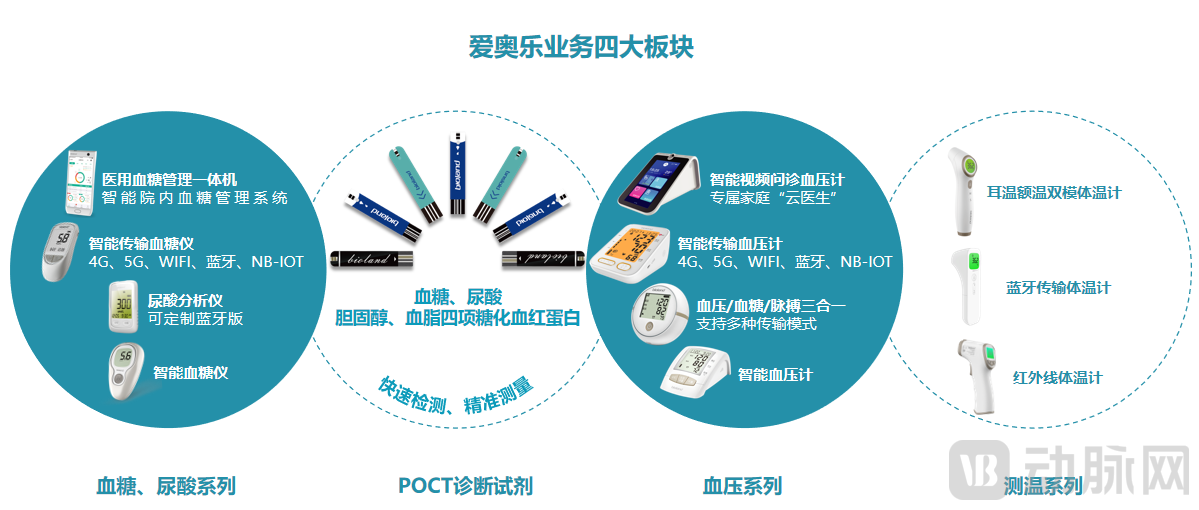
Bioland's Four Major Business Segments
At present, blood glucose monitoring systems are increasingly being recognized as tools capable of rapid, point-of-care blood glucose monitoring.
According to data from a CICC research report, the global market size for blood glucose monitoring devices was approximately $29.5 billion in 2021, with the Chinese market accounting for about $1.5 billion. Meanwhile, the market for blood glucose test strips, which are consumables used with glucometers, reached $20 billion globally, with the Chinese market valued at approximately $3 billion, indicating significant growth potential.
However, at the time of Bioland’s establishment, the blood glucose test strip industry was nearly monopolized by overseas companies, and the development trajectory of this sector remained unclear. Despite these challenges, Bioland recognized the opportunities and value in chronic disease management, continuously invested in the research and development of blood glucose meters and test strips, and positioned itself as a leading global supplier of blood glucose test strips.
To date, the company has established its operations at the Shangrong Science and Technology Park in Longgang District, Shenzhen, boasting a production base spanning over 20,000 square meters. The facility features Class 100,000 GMP-certified cleanrooms, automated production equipment, R&D instruments for medical devices, and a fully automated workshop for biological reagent manufacturing.
。
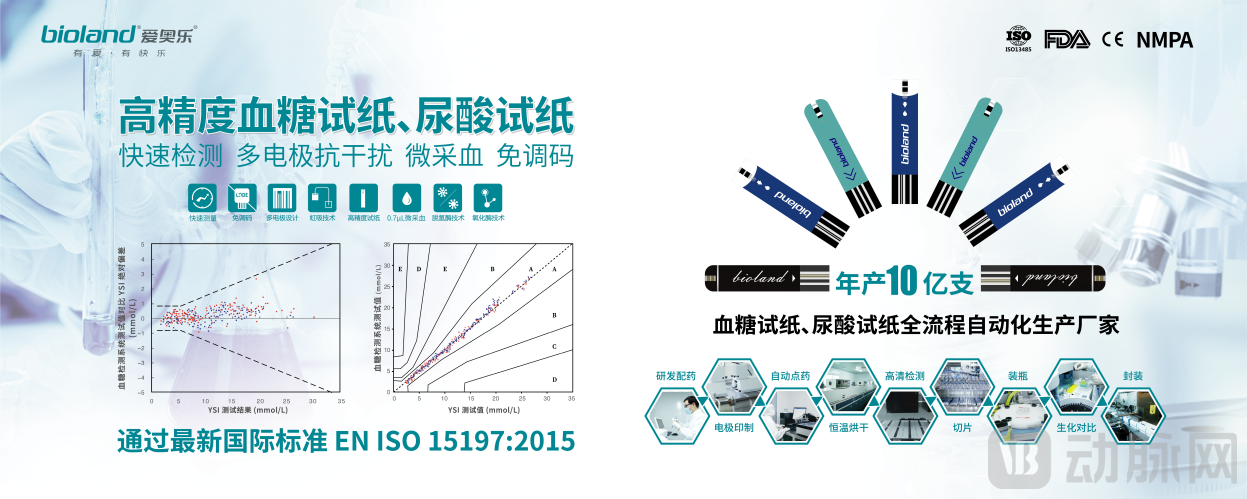
Furthermore, Bioland boasts a comprehensive manufacturing infrastructure. This includes six modern imported assembly production lines, two high-speed automated test strip lines, two professional test strip circuit printing lines, two high-speed automated test strip packaging lines, and one automated visual inspection system. The company employs a research and development team of over 100 professionals, covering departments dedicated to reagents, software, and hardware R&D. It also maintains independent laboratories for its full product range and a robust quality control system.Certified under ISO 13485, ISO 9001, IVDR, MDR, CE, FDA, and NMPA, with a comprehensive regulatory compliance system.
Based on a complete production system,Bioland has fully established automated production capabilities for the entire test strip process, with all testing equipment and test strip products featuring independent intellectual property rights and core technologies., the test strip features dual-enzyme measurement technology (oxidase and dehydrogenase technologies). ItsThe test strip product has achieved 5-second rapid detection, 0.7-microliter blood sampling, code-free operation, multi-electrode design, and dry chemistry measurement technology, with its scope of application covering neonates and pregnant women.
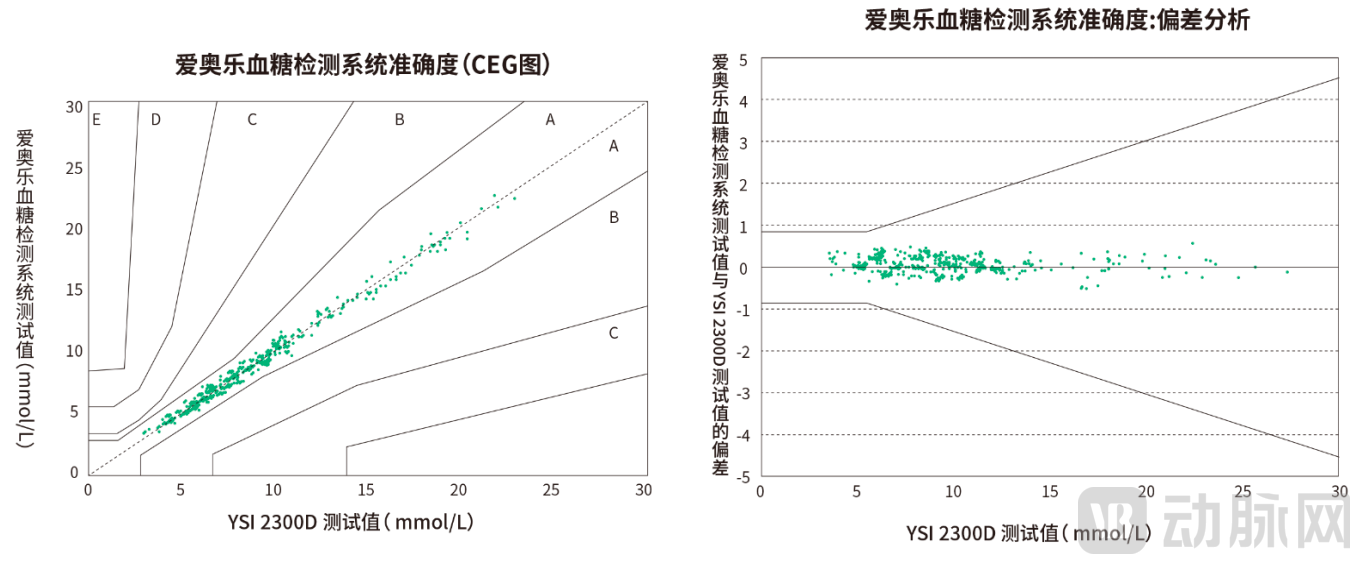
Xiao Shicheng, Chairman of Bioland Technology Limited, told VCBeat, “Inaccurate blood glucose test strips can compromise clinicians’ assessment of patients’ blood glucose levels, thereby affecting the selection of treatment regimens and clinical medication. For diabetic patients who perform self-monitoring of blood glucose, inaccurate test strips may lead to improper dosing of insulin and other medications; in severe cases, this can result in serious adverse events such as hypoglycemic shock. The blood glucose test strip segment is an overlooked niche, yet it presents a substantial unmet need. Given the high frequency of use of these complementary consumables, we must leverage domestic capabilities to enhance product performance while reducing costs, thereby making them more accessible and affordable to the general public.”
In the process of deepening its core business, Bioland Technology Limited continues to explore new physical transmission modes for smart blood pressure monitors and glucose meters. While iteratively upgrading its intelligent hardware, the company has embarked on the research and development of chronic disease medical management software, building a closed-loop health ecosystem that spans from intelligent medical devices and in vitro diagnostic reagents to chronic disease management.
In early 2013, Mr. Xiao Shicheng realized that hardware devices lacking service capabilities would become obsolete. He believed that traditional blood glucose monitoring would inevitably achieve data sharing and analysis between home users and physicians via the Internet of Things (IoT) within the next few years, thereby improving diagnostic outcomes and enhancing medication adherence and patient care. Consequently, he initiated the development of the first generation of intelligent chronic disease monitoring devices, namely blood pressure monitors and blood glucose meters equipped with Bluetooth, Wi-Fi, and 2G communication capabilities for data transmission.and became one of the first companies in the industry to obtain the “Telecommunications Network Access License” for blood pressure monitors and blood glucose meters.
During this period,Bioland jointly developed the “TengAi · Tang Daifu Blood Glucose Meter” with Tencent, launching it in 2015. This marked Bioland’s transition from traditional home-based chronic disease medical testing devices to intelligent medical devices.Bioland Technology Limited continuously explores new IoT transmission models for smart blood pressure monitors and glucometers, developing blood pressure monitors, glucometers, and uric acid analyzers equipped with wide-area communication capabilities such as 4G Cat1, Wi-Fi, NB-IoT, and 5G. By redefining standard communication interface protocols and opening data ports free of charge to other manufacturers and chronic disease management partners for seamless integration, Bioland is further advancing intelligent hardware for chronic disease management into a new phase.
During the iterative upgrade of smart hardware, Bioland simultaneouslyInitiated the research and development of chronic disease management software, and founded Yundu Health Technology Co., Ltd. to achieve integration between the chronic disease management system, hardware, and consumables.
Through continuous development and improvement, BiolandSuccessively launched the Yundu Health In-Hospital and Out-of-Hospital Management System and the Yundu OTC Chronic Disease Management System solution, and closely integrated with the company’s smart hardware for chronic disease management, therebyA comprehensive disease management solution for blood glucose, blood pressure, and uric acid, integrating in-hospital and out-of-hospital care, online and offline pharmacy services, home-based patient testing, real-time monitoring by family and friends, and physician backend administration.
Beyond this, Bioland has developed a variety of solutions to drive digital innovation in chronic disease management. These include innovating the medical consortium model to facilitate the decentralization of medical resources; reducing patient burdens through Yundu Health’s integrated in-hospital and out-of-hospital chronic disease management programs; and launching in-hospital glucometers and video-consultation-enabled blood pressure monitors with online consultation capabilities. These innovations enable consumers to access online medical consultations from home, allow physicians to prescribe evidence-based treatments based on patients’ backend monitoring data, and automatically match patients with nearby pharmacies for 24-hour medication delivery services. This truly establishes a comprehensive health ecosystem encompassing personal healthcare, home healthcare, clinical healthcare, and internet-based healthcare.
In the “14th Five-Year Plan” for National Health, “comprehensive prevention and control of chronic diseases” has been elevated to a national strategy. Key priorities include promoting “Internet+ chronic disease (diabetes, hypertension) management” to enable online follow-up consultations, prescription circulation, medical insurance settlement, and medication delivery for chronic diseases, as well as supporting the deep integration of health management services tailored to the elderly.
As can be seen, digital technology, as a new force driving disruptive industrial transformation, continues to reshape the industrial ecosystem. The “Hundred Glucose Meters War” between 2015 and 2016 further corroborated this point by reshaping diabetes management models.
For enterprises, the imperative is to seize opportunities, align with prevailing trends, proactively pursue innovative transformation, and build a digital ecosystem for diabetes management. The case of Bioland Technology Limited demonstrates that surviving companies must cultivate unique competitive advantages to sustain their progress in this sector.