

Xingxing Technology Enhances Psychological Services with ABCD-IoT-Powered Mental Health CT Platform in Support of China's 'Integration of Mental Health and Rehabilitation' Initiative
“Even after starting work, I still feel unworthy of even a 5-yuan snack. No matter what I buy, I end up endlessly berating myself afterward.”
“Fear of being criticized and mocked leads to anxiety; a lack of love and a deficient sense of self force one to succumb to anxiety, resulting in addiction as a means of avoiding emotional confrontation.”
“The arrival of the pandemic completely derailed all my plans. For over half a year, I have been plagued by anxiety and helplessness, unable to secure a satisfactory job while experiencing various physical health issues. I found myself taking medication while grappling with self-doubt. This feeling was truly worse than death; each day was spent in tears and unease.”
These are three comments excerpted from the comment section of a popular psychology-focused public account. In the comment sections beneath nearly every article published by this account, one can find readers’ similar analyses of their own psychological issues.
“Career gap” individuals who have yet to secure new employment after being laid off; middle-class professionals retreating from the intense competition in first-tier and mega-cities to third- and fourth-tier cities; “severe social anxiety sufferers” who prefer living in cramped rental rooms of just a few square meters and taking on odd jobs to make ends meet due to social phobia; parents and children outside child and adolescent mental health clinics, either locked in confrontation or sitting in silent mutual misunderstanding... Mental health issues are becoming increasingly prevalent, with terms like depression and anxiety mentioned more frequently. They have clearly become an indispensable factor in today’s social development and stability.
Against this backdrop, the Chinese government has frequently issued policies to promote the development of a domestic mental health service system. The construction of both public and private mental health service systems is becoming increasingly important, with public institutions—such as public hospitals and mental health centers—playing an indispensable role. Given their critical position and the limitations of traditional assessment and intervention methods faced by public hospitals, numerous health IT vendors have entered the market, launching mental health-related software applications to help public hospitals deliver more efficient and accessible mental health services.
Hunan Xinxing Technology Co., Ltd. (hereinafter referred to as “Xinxing Technology”) is such an enterprise. It primarily leverages ABCD-IoT technologies—Artificial Intelligence (AI), Blockchain, Cloud Computing, Big Data, and the Internet of Things (IoT)—to provide psychological CT services and corresponding technical support to hospitals.
The so-called "Psychological CT" refers to a mental health assessment system that integrates psychological measurement, symptom identification, personality assessment, and auxiliary diagnostic functions. In the medical field, Psychological CT can serve as an adjunctive tool for examining psychological disorders, enabling systematic evaluation of psychological abnormalities, symptom recognition, personality disorders, and classificatory diagnosis. It is applicable in various settings, including psychiatric specialty hospitals, departments within general hospitals, obstetrics and gynecology hospitals, traditional Chinese medicine hospitals, community hospitals, prison administration, and drug rehabilitation centers.
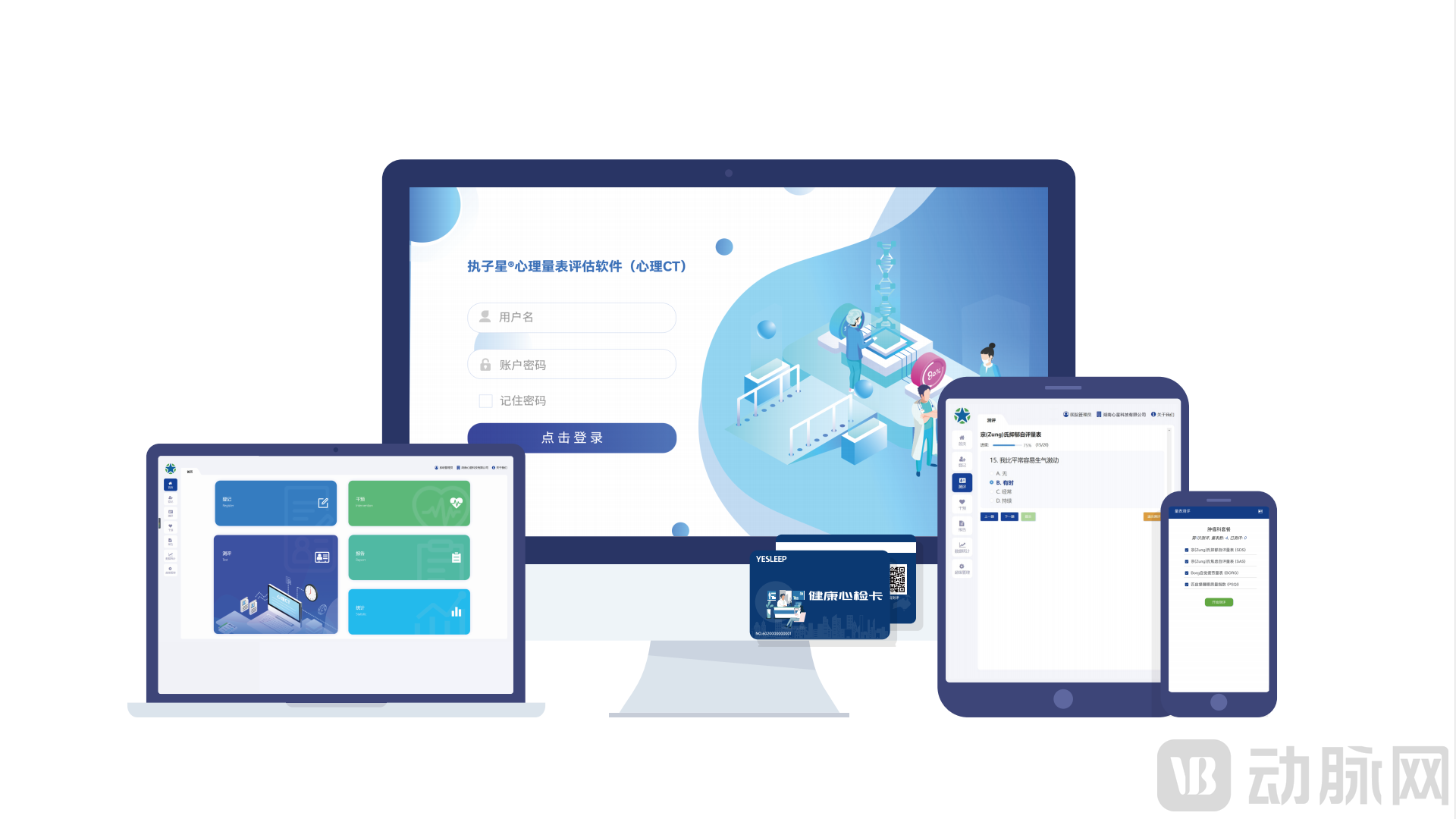
Currently, Hunan Xinxing Technology Co., Ltd.’s “Zhizixing Psychological CT” has obtained a Class II Medical Device Registration Certificate and has established collaborative partnerships with multiple institutions, including Renji Hospital Affiliated to Shanghai Jiao Tong University, Shanghai Sunshine Rehabilitation Center, Fudan University Shanghai Cancer Center, and Jing’an District Mental Health Center of Shanghai.
“It is estimated that nearly 1 billion people worldwide suffer from mental disorders, meaning almost one in every eight individuals is affected.” This statement stands out prominently in the “2022 Blue Book on the Digital Mental Health Services Industry” released by Haixinqing.
In the "Report on the Development of National Mental Health in China (2019–2020)" released by the Chinese Academy of Sciences in 2021, taking depression as an example, the average prevalence of depression nationwide was approximately 17%, with the Central Region having the highest rate at 20.6%.
Perhaps we cannot accurately estimate the true size of the domestic market for psychological services; indeed, referring to it as a “market” may even seem somewhat inhumane. Yet, even without quantitative statistics on market scale, we can vaguely sense that there are countless individuals in need of professional psychological support.
However, the reality is that China faces a significant shortage of professional mental health service resources. First, there is an insufficient number of core practitioners, such as psychiatrists, psychological counselors, and psychotherapists. (According to VCBeat’s “Digital Mental Health Industry Research Report,” China currently has fewer than four psychiatrists per 100,000 people on average, which falls short of international standards.)
Second, there is a shortage of mental health service institutions, which serve as the primary providers of psychological services. According to the "2022 Blue Book on the Digital Mental Health Service Industry" by Haoxinqing, China has only 1,650 specialized mental health institutions, and 80% of general hospitals in the country do not have psychiatric departments. Nevertheless, the number of outpatient visits by patients with depression has been growing by at least 20% annually.
Consequently, some enterprises have begun to establish digital mental health service platforms that directly serve individual consumers (B2C), thereby becoming a socialized force within China’s mental health service system. Meanwhile, public hospitals and mental health centers remain indispensable components of the national psychological service system. Numerous policies have issued guidance on building mental health service prevention and control systems in public hospitals and mental health centers. Furthermore, certain regions have initiated pilots to include psychotherapy costs in medical insurance coverage—for example, Guangdong Province officially began reimbursing psychotherapy services in August 2021—thereby alleviating patients’ concerns while supporting hospitals in generating reasonable revenue.
Furthermore, on December 29, 2022, the Ministry of Civil Affairs, in conjunction with the Ministry of Finance, the National Health Commission, and the China Disabled Persons’ Federation, jointly issued the Notice on Launching the “Action for Integration of Mental Health Community Rehabilitation.” This initiative aims to enhance the quality and level of community-based rehabilitation services for individuals with mental disorders over a three-year period, providing more equitable, accessible, systematic, and continuous basic rehabilitation services, and has established specific targets. For instance, by 2025, more than 80% of counties (cities, districts, and banners) are expected to extensively implement community-based rehabilitation services for mental disorders.
However, the importance of its status does not mean that there are no difficulties in implementation, nor does it mean that hospitals do not need help from third-party companies. So, what specific challenges has Xinxing Technology helped hospitals solve?
Within China’s psychological prevention and control system, a critical task is psychological screening. After all, early detection enables early prevention.
However, faced with a vast population and limited human resources, how can this task be accomplished efficiently? Xinxing Technology’s Psychological CT System enables “ubiquitous operations.” Supported by IoT physical network cards and a central card issuance system, it facilitates seamless deployment across outpatient clinics, inpatient wards, grassroots communities, and enterprises and public institutions.
Specifically, Xinxing Psychological CT enables synchronization of user data across multiple devices, including computers, smartphones, and tablets. It is compatible with various network environments, such as standalone systems, local area networks (LANs), and the internet, allowing for flexible deployment based on user requirements to achieve ubiquitous operation and accessibility.
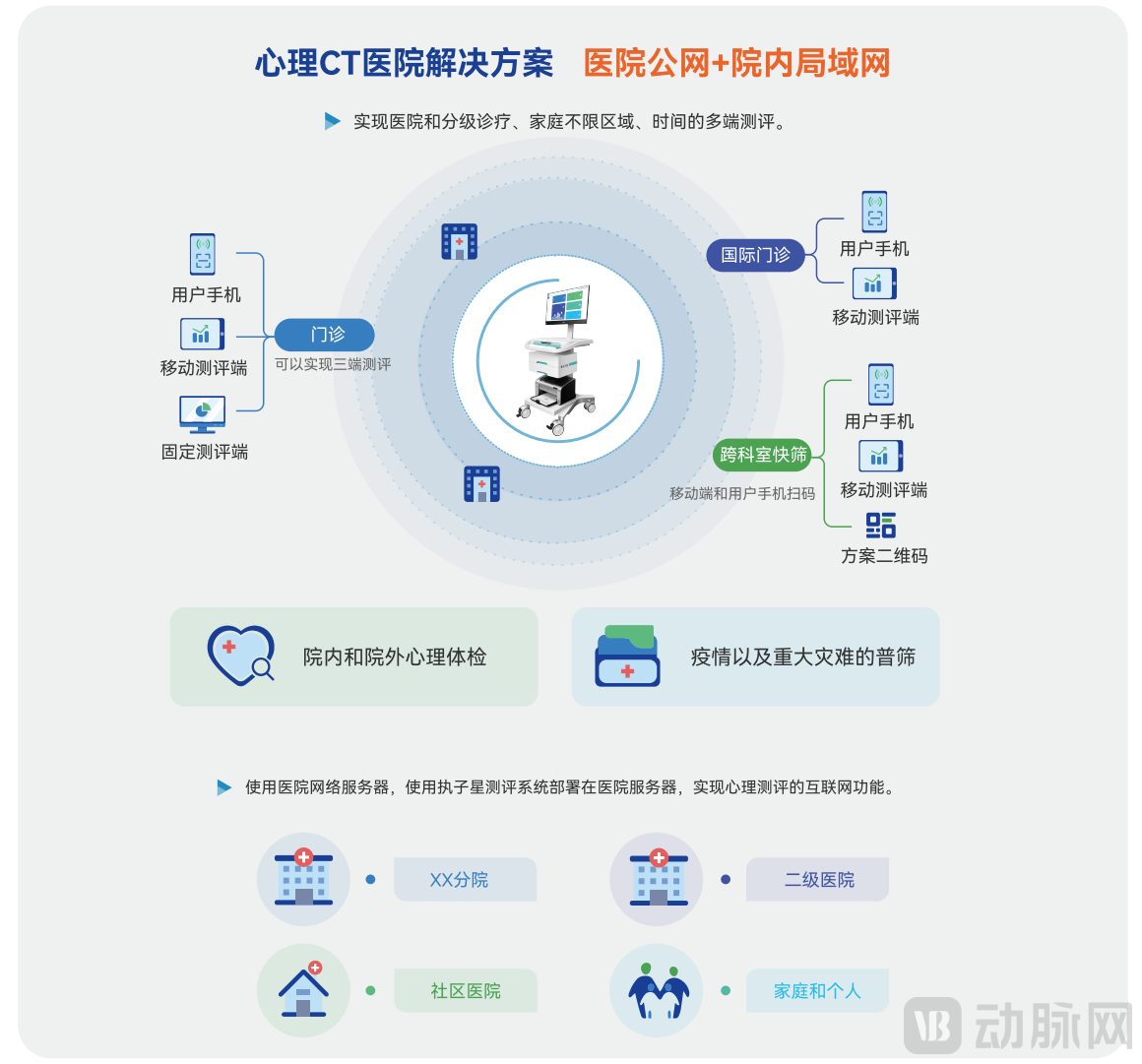
“In layman’s terms, ‘ubiquitous operation’ means that psychological assessments can be conducted via Xinxing Technology’s system using IoT devices in any scenario, at any time, and in any location. This personalized solution is tailored to the distinct needs of various hospitals, mental health centers, and related institutions, enabling psychological screening to be carried out conveniently and efficiently across society (in theory),” said Xiao Junfeng, CEO of Xinxing Technology.
VCBeat has also learned that, to date, Hunan Xinxing Technology Co., Ltd. (Xinxing Tech) has provided technical support for the construction of psychosocial care systems in numerous hospitals and mental health centers, facilitating large-scale psychological screening initiatives. Notable examples include the “Yuexin Ting” project for universal psychological screening in Putuo District, Shanghai, and the “Psychological Hut” mini-program developed under the auspices of the China Maternal and Child Health Association.
In the hospital setting, Xinxing Technology has also made significant contributions to helping hospitals establish a mental health prevention and control system.
It is undeniable that, given the shortage of healthcare professionals and the inability to achieve significant improvements in the short term, enhancing service efficiency has become one of the effective solutions.
In this regard, Xinxing Psychological CT can help hospitals achieve "high efficiency" in three dimensions.
First, during the assessment phase, Xinxing Technology’s “Psychological CT” can automatically generate psychological evaluation reports based on professional norms to provide diagnostic support for physicians. The results are analyzed using tabular and graphical representations, offering an intuitive and vivid presentation while also supplying scientific, quantified psychological indicators for disease diagnosis. Compared with traditional paper-based assessments, electronic assessments undoubtedly enhance the speed of evaluation, making the service “efficient” from the outset.
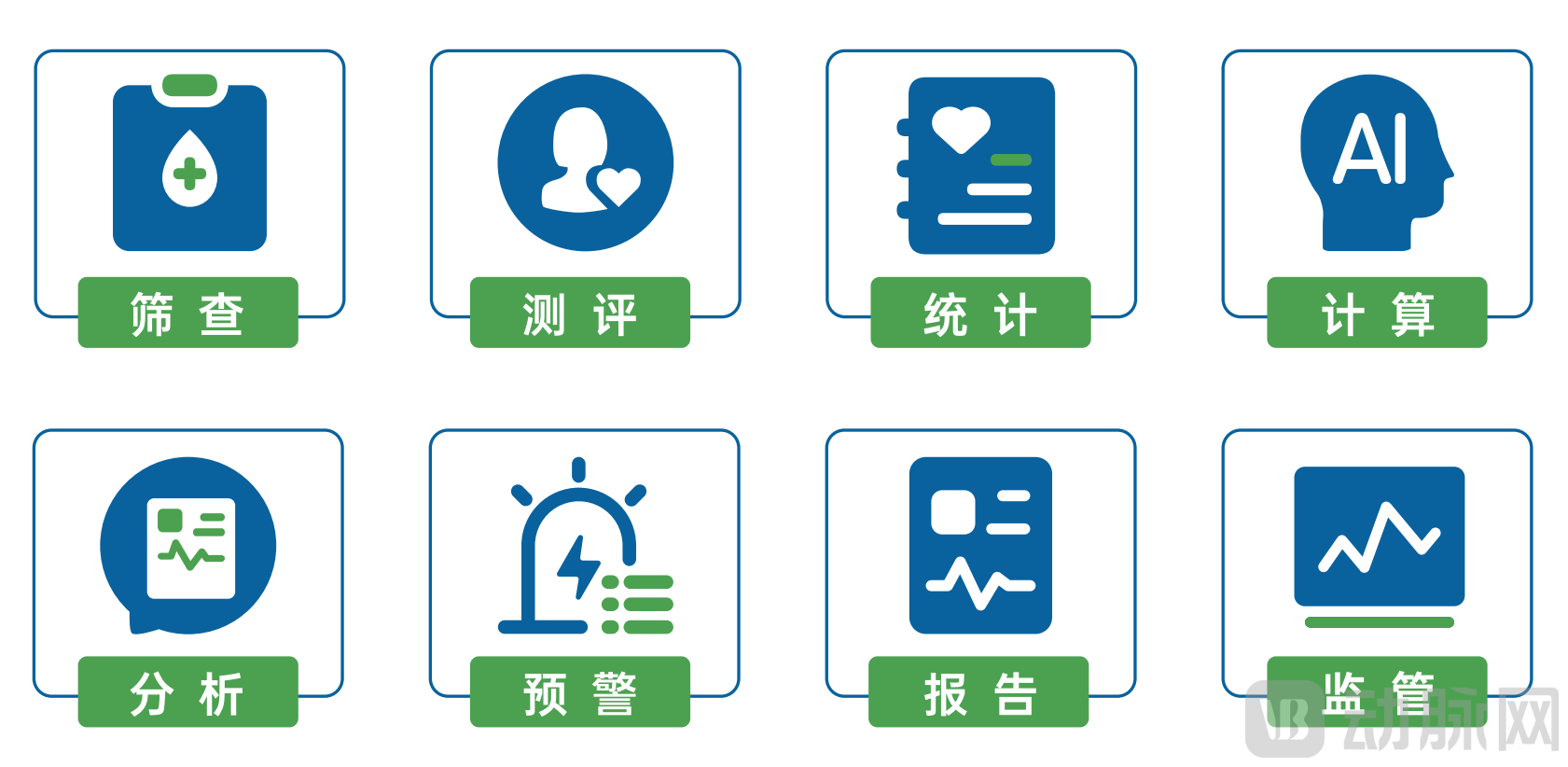
Secondly, a “referral” mechanism is inherently embedded within the hospital mental health prevention and control system. This requires achieving data interoperability among hospitals at all levels and across various departments. Xinxing Psychological CT can accurately record and maintain patients’ medical records. More importantly, Xinxing Psychological CT can integrate with the Hospital Information System (HIS), thereby enabling horizontal connectivity among in-hospital departments (such as obstetrics, pediatrics, and rehabilitation) and vertical connectivity among hospitals at different tiers.
Finally, leveraging the data processing technology of Hunan Xinxing Technology Co., Ltd., the resulting data can be utilized for departmental efficiency analysis and broader data analytics applications. The former facilitates more efficient resource allocation within hospitals, while the latter not only supports scientific research but also streamlines physicians’ daily clinical workflows.
Specifically, Xinxing Psychological CT enables statistical analysis of overall data, as well as separate analyses by department and scale, or stratified by dimensions such as gender and age, thereby facilitating clinical analysis and research by healthcare professionals. Additionally, Xinxing Psychology features efficient data query capabilities, allowing physicians to retrieve required patient records according to their actual work needs.
Of course, data management is inseparable from data security.
Xiao Junfeng is highly confident about this—data protection is Hunan Xinxing Technology Co., Ltd.’s key competitive advantage. “The Xinxing Psychological CT system complies with the Level 3 Classified Protection standards. In the Class A tertiary hospital assessments conducted this year and last year, among system vendors serving over 100 such hospitals, the systems co-developed by Xinxing Technology ranked within the top 10.”
Beyond Efficiency and Coordination: What Other Key Elements Are Essential for Building Mental Health Prevention and Control Systems in Public Hospitals? Precision May Well Have a Place.
In July 2020, the National Health Commission issued the Notice on Comprehensively Promoting the Construction of Community Hospitals, and in March 2020, it released the Notice on the Work Plan for Psychological Counseling during the COVID-19 Pandemic. These documents encourage the establishment of specialized departments based on public needs and require relevant authorities to provide care, social support, psychological counseling, and other services tailored to the characteristics and mental health service needs of key populations.
The terms “Specialized Departments” and “Based on the characteristics of key populations and their psychological service needs” can be interpreted as delivering “precise” psychological services tailored to different population groups. In response, Xinxing Technology can provide “resilient delivery” solutions customized to the distinct psychological service requirements of various hospital departments, thereby enabling personalized configuration.
“At the same hospital, Xinxing Technology’s Psychological CT can simultaneously serve departments including psychiatry, psychology, sleep medicine, pediatrics, obstetrics and gynecology, and oncology. Although each department has distinct needs, our years of ongoing communication with clinical teams enable us to adopt a ‘case-by-case’ approach, striving to provide hospitals with the most convenient and rational usage solutions,” said Xiao Junfeng.
This also aligns with the demands of precision diagnosis and treatment. By providing targeted, personalized configuration services to hospital departments and patients, it will ultimately better assist physicians in diagnosing patients and accelerate patient recovery.
“Holistic experience will be the future trend of mental health services,” said Xiao Junfeng with great certainty.
What Is a “Comprehensive Experience”? In short, the “Comprehensive Experience” represents an advanced evolution of the “Multidimensional Experience,” achieving holistic enhancements across usability, efficacy, professionalism, safety, and support.
For instance, in terms of user experience, Xinxing Technology’s software features a more intuitive interface and streamlined workflow compared to traditional products. Regarding efficacy, it offers personalized customization to meet diverse user needs. Professional experience is ensured by providing robust normative references suitable for clinical applications. Security experience, as previously mentioned, involves adopting secure and effective data processing and storage methods to safeguard user privacy and data security. Lastly, support experience refers to the provision of comprehensive technical support and customer service, enabling users to obtain assistance readily during use.
“The growing prevalence of mobile, virtual, and distributed interactions demands that enterprises adopt a comprehensive experience strategy. A holistic experience approach will enhance every component of the customer journey, driving transformative business outcomes. These interconnected experiences will become the key differentiator and competitive advantage for Xinxing Psychology’s CT services,” stated Xiao Junfeng with conviction.
Xinxing Technology’s confidence may stem from its strong, multidisciplinary team.
According to VCBeat, the core executive team of Xinxing Technology includes overseas-educated master’s graduates in psychology, a marketing director with over ten years of experience in mental health and psychological well-being, and management elites who have previously served as senior executives at publicly listed companies. Its strategic partners and supporting institutions include Huawei, Renji Hospital Affiliated to Shanghai Jiao Tong University School of Medicine, and the Cloud Computing Center of the Chinese Academy of Sciences.
Indeed, Hunan Xinxing Technology Co., Ltd. leverages ABCD-IoT technologies to empower hospitals’ psychiatric and mental health diagnostic and treatment services, helping them address challenges in efficiency, service coverage, data management, and the development of specialized departments. However, building a comprehensive mental health prevention and control system in hospitals remains a long and arduous journey, with many issues yet to be resolved. We will wait and see how Hunan Xinxing Technology, and indeed the entire To-H (To-Hospital) market, performs in this endeavor.