The $200 Billion Antibody Drug Market: Where Lies the Key to Breakthroughs in Antibody Discovery?

DPBIO
Microfluidic chip, instrument, and reagent developer
Since the approval of the first therapeutic antibody, muromonab-CD3, in 1986, the FDA had cumulatively approved 119 new antibody drugs by the end of January 2023. Antibody drugs approved each year account for approximately one-fifth of all newly approved drugs.
Antibody drugs offer superior efficacy and high specificity, yet their development is fraught with challenges and is by no means an easy task. Unlike small-molecule chemical drugs, antibody therapeutics feature more complex structures, present greater R&D difficulties, and involve more intricate manufacturing processes. Even minor variations in technical processes during development can directly impact drug quality and therapeutic efficacy.
Antibody screening is a critical step that directly determines the success of antibody drug development. To develop superior antibody therapeutics, it is essential to broaden the pool of candidate antibodies as much as possible and precisely isolate high-quality candidates. This process involves key factors such as underlying theories, technologies, equipment, and operational procedures.
To address this key technical issue, the recently released"Antibody Screening Industry Research Report"Provides a comprehensive overview of mainstream antibody screening technologies and conducts an in-depth analysis of the global and Chinese markets for antibody discovery.
Antibody-based therapeutics primarily include monoclonal antibodies, bispecific antibodies, antibody-drug conjugates (ADCs), fusion proteins, antibody fragments, and polyclonal antibodies. Among these, monoclonal antibody drugs have witnessed the most rapid development in recent years. Owing to their high specificity and favorable safety profile with low incidence of adverse reactions, antibody-based therapies have provided effective solutions for cancer, immune-mediated diseases, and a significant proportion of rare diseases in recent years.
According to the Report, 37 antibody-based drugs ranked among the top 100 global pharmaceutical products by sales in 2022, generating a combined revenue of approximately $189.614 billion and accounting for 38.81% of the total sales of the top 100 drugs. Antibody-based therapeutics have become one of the “mainstays” in the treatment of human diseases.
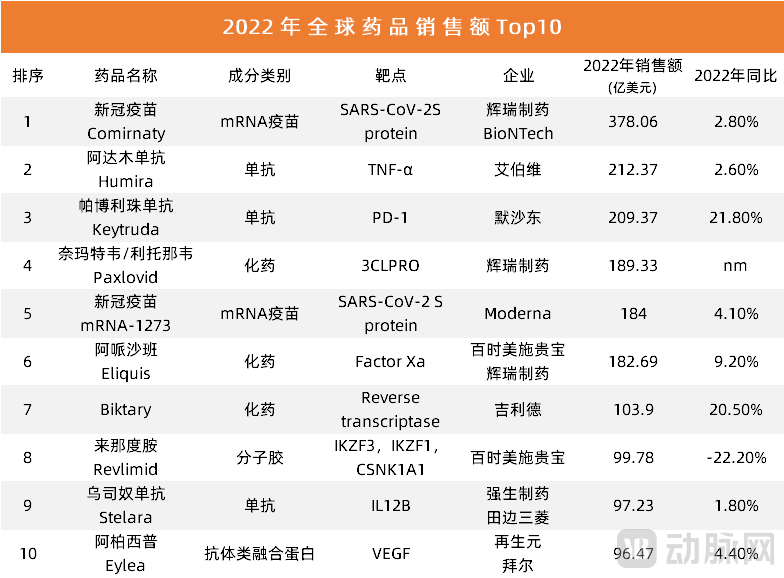
Among the top 10 best-selling drugs, four are antibody-based therapies, comprising three monoclonal antibodies and one antibody fusion protein. Notably, adalimumab (Humira) and pembrolizumab (Keytruda), which are used to treat melanoma, non-small cell lung cancer, esophageal cancer, head and neck squamous cell carcinoma, and colorectal cancer, have each generated over $20 billion in revenue.
Additionally, ustekinumab (Stelara), the only globally approved monoclonal antibody for the treatment of Crohn’s disease (CD) that also treats psoriasis, jointly developed by Johnson & Johnson and Mitsubishi Tanabe Pharma, and aflibercept (Eylea), an antibody fusion protein drug for the treatment of wet age-related macular degeneration, jointly developed by Regeneron and Bayer, have each generated nearly $10 billion in sales.
It is evident that antibody drugs have garnered immense interest in both research and therapeutic applications.
So, what are the key steps involved in developing an antibody drug?
— Antibody Discovery, Antibody Production, and Clinical Registration.
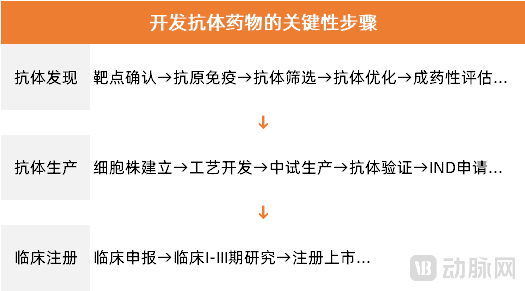
As the initial step in antibody drug discovery, antibody discovery directly influences druggability and therapeutic efficacy, while antibody screening, as a critical component of this process, plays a decisive role in determining its outcomes.
An effective antibody screening strategy can identify superior antibodies as lead drug candidates, which typically translates to better druggability. Conversely, an inappropriate screening approach may yield molecules with high affinity but poor druggability, akin to planting a “time bomb” that risks “exploding” at any stage during subsequent development.
Antibody screening primarily consists of two steps: “preparation” and “selection.” This Report provides an in-depth analysis of the four most common monoclonal antibody discovery technologies—hybridoma technology, phage display antibody library technology, cell surface display antibody library technology, and single B-cell screening technology—and conducts a comparative analysis across these techniques.
In 1975, Milstein and Köhler at the MRC Laboratory of Molecular Biology, University of Cambridge, UK, developed the first-generation antibody preparation method—the monoclonal antibody hybridoma technology.This technology involves fusing myeloma cells, which possess unlimited proliferative capacity, with mouse B cells capable of secreting antibodies, thereby generating mouse hybridoma cells that can be subcultured and continuously secrete monoclonal antibodies. It has currently become the most widely used technique for antibody production. However, the murine-derived antibodies obtained through this technique exhibit limited affinity for human targets, compromising their safety profile as therapeutic agents. Furthermore, the workflow—ranging from immunization, which can take several months, to the identification of specific hybridomas—results in significant loss of B-cell diversity during the fusion process, a persistent challenge for scientists utilizing hybridoma technology.
In 1985, George P. Smith developed an in vitro antibody preparation and screening method—phage display antibody library technology.This technology involves directly inserting antibody DNA sequences into appropriate positions within the structural genes of phage coat proteins to enable antibody expression, followed by multiple rounds of rapid screening of the phage-displayed antibody library against the target protein, ultimately yielding peptides or proteins that recognize the target molecule. However, because bacteriophages cannot accommodate excessively long protein sequences, and fragmented combinations often fail to fold and translate effectively, the resulting monoclonal antibodies may exhibit loss of affinity or induce autoimmunity.
To address these issues encountered in phage surface display technology, cell surface display technology has emerged.This technology employs yeast cells to achieve the expression and display of target proteins. In 2020, eptinezumab, an antibody drug approved by the U.S. FDA, became the first therapeutic antibody based on yeast surface display technology. Additionally, other techniques such as mammalian cell surface display and cell-free ribosome display have been proposed for the construction and screening of fully human antibody libraries. Beyond screening for specific antibody fragments, this technology also enables directed evolution of antibodies to enhance properties such as affinity and stability, thereby optimizing antibody libraries.
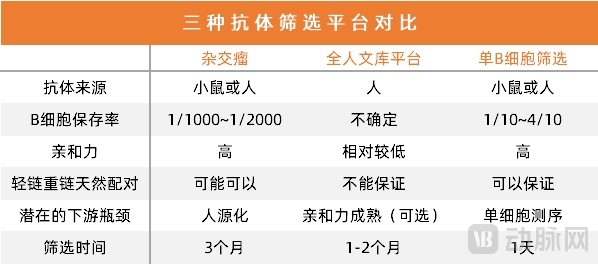
The aforementioned antibody preparation and screening technologies have consistently failed to achieve high efficiency and diversity. With the development and accumulation of biotechnology and its basic research, a fully human monoclonal antibody preparation technology has emerged over the past decade, which may become the long-term ideal technology for future antibody screening:Single B Cell Screening Technology。
Single B-Cell Screening is a technique that involves isolating individual antibody-secreting cells (ASCs) or memory B cells directly from the peripheral blood of immunized animals or humans, and identifying B cells that secrete target antibody molecules. When combined with single-cell sequencing technology, this approach enables rapid acquisition of antibody genes from individual B cells, followed by expression, purification, screening, and characterization to obtain effective functional antibodies.This technology enables the rapid acquisition of antibodies with ensured natural pairing of heavy and light chains. Compared to traditional antibody preparation techniques, single B-cell screening technology offers advantages such as greater B-cell diversity, shorter screening cycles, and higher quality of screened antibodies.
Compared with the hybridoma platform, single B-cell screening technology can screen tens of thousands to even millions of B cells within a single day, significantly improving efficiency while well preserving B-cell diversity. In contrast to fully human library platforms, the single B-cell platform predominantly utilizes samples from antigen-immunized subjects. The B cells that have matured in vivo secrete antibodies with higher affinity and maintain natural pairing of heavy and light chains, thereby greatly enhancing the efficiency of antibody discovery.
After B-cell preparation, the next technical challenge emerged: how to perform high-throughput sorting and obtain monoclonal cells?
Currently, the mainstream single B-cell sorting technologies worldwide include: fluorescence-activated cell sorting (FACS), droplet microfluidics, micropatterning technology, and microfluidic chamber technology.
This Report introduces the aforementioned four major technologies one by one through case studies of relevant enterprises, and compares and outlines the differences among various technology platforms in terms of throughput, automation, sensitivity, and experimental capabilities.
Among these, the earliest cell sorting technology dates back to the 1960s, when Len Herzenberg’s team developed Fluorescence-Activated Cell Sorting (FACS) based on flow cytometry.This technology is now highly mature, with multiple companies both in China and abroad having deployed single B-cell antibody screening technologies based on this platform. The advantages of this platform include high throughput (capable of processing tens of thousands of cells per second), technological maturity, and an overall workflow that is easy to establish. However, the limitations of this technology are also evident. Since it cannot detect the binding and functional properties of secreted antibodies, flow cytometry-based fluorescence-activated cell sorting (FACS) is only suitable for detecting and screening memory B cells, and cannot directly assess plasma cells with secretory function. Compared to plasma cells, memory B cells express antibodies with immature affinity, leading to a high false-positive rate and a substantial workload for downstream validation. Furthermore, FACS-based antibody screening is limited to using soluble proteins as antigens, and the fluorophores and other labels used for antigen tagging can induce certain non-specific binding interactions, thereby further increasing the burden of downstream validation.
Another common sorting technique is droplet microfluidics.It utilizes water-in-oil microdroplets to encapsulate candidate cells individually, ensuring monoclonality, while simultaneously co-encapsulating the reaction substrates required for detection. After incubation, each droplet can be analyzed and screened based on fluorescence excitation. This platform offers exceptionally high screening throughput—processing hundreds of microdroplets per second—and enables highly sensitive single-droplet sorting within an automated workflow. Furthermore, by adjusting the reaction system, it can also meet the requirements of cell-based assays.
Christopher Love and his team at MIT used soft lithography to develop a microimprinting sorting technology, also known as SCAN.This technology primarily relies on antibodies secreted by monoclonal B cells to react with detection reagents on the surface of glassware, generating signals for recognition and subsequent screening. However, this method suffers from low automation, a relatively long screening cycle, and an inability to meet cell-based detection requirements.
Microfluidic Chamber Technology: Another Technique Capable of Simultaneously Achieving High Automation, High Sensitivity, and Multi-Channel Assays, While Enabling Cell-Based Experiments.This technology currently meets the requirements for functional screening, but its high-throughput sorting capacity is limited, and the efficiency is less than ideal.
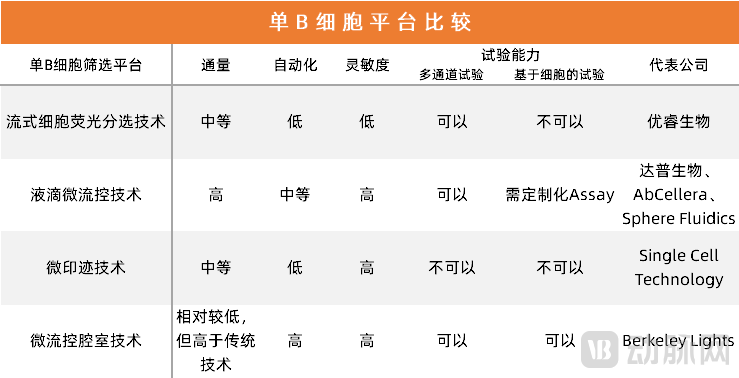
In summary,Droplet Microfluidics TechnologyCompared across multiple dimensions such as efficiency, quality, and functionality, it is currently the more ideal single B-cell sorting technology. There are many representative companies in this field, ranging from life science enterprises focused on droplet microfluidics to AI companies, biochip manufacturers, and biopharmaceutical firms. While their business models are diverse, most of these companies are based overseas.
AbCellera’s AI-driven antibody discovery platform integrates cutting-edge hardware and software, leveraging microfluidics technology to pioneer nanoliter-scale single-cell antibody screening methods.
Sphere Fluidics, a University of Cambridge spin-off that started with biochips, officially launched its single-cell screening system, Cyto-Mine®, in 2018. Leveraging technologies such as droplet control, analysis, sorting, and imaging, the system can process approximately 10 million heterogeneous mammalian cells within a few hours. Furthermore, it enables the selection and dispensing of individual droplets into 96-well or even 384-well microtiter plates, ensuring a high degree of true monoclonality—a requirement for FDA approval of all monoclonal antibodies.
It is worth noting that innovative biopharmaceutical companies in the industry have also invested heavily in developing their own single B-cell sorting technologies, underscoring the critical importance of this technology for antibody drug discovery. Amberstone Biosciences focuses on developing novel targeted immunotherapies for solid tumors and other diseases. Its proprietary droplet microfluidics-based single-cell functional discovery platform, AmberFlow, enables the isolation of rare, high-value single cells secreting therapeutic candidates within microdroplets. To date, the company has successfully developed four drug candidates using this technology.
The French biopharmaceutical company HiFiBio is experiencing even faster growth. The company’s technology platform integrates multiple innovative technologies, including microfluidics, single-cell isolation and sequencing, and droplet-based reactions. By conducting in-depth analyses of cellular phenotypes and genotypes at the single-cell level to characterize individual cells, HiFiBio accelerates the advancement of its drug pipeline. Over the past four years since its establishment, HiFiBio has developed more than 10 innovative drug candidates, three of which have entered clinical trials, further underscoring the critical role of antibody screening technologies in antibody drug development.
The domestic company that can be mentioned in the same breath as the aforementioned leading overseas enterprises is ThunderBio Innovation Limited, a pioneer in droplet microfluidics in China. Since its establishment in 2018, ThunderBio has commercialized multiple scientific instruments based on droplet microfluidics technology, including the Comet High Throughput Sorting System, the Galaxy Single Cell Analysis System, and the Nebula dPCR System.
ThunderBio Innovation Limited Comet Single-Cell High-Throughput Screening PlatformIntegrating droplet microfluidics, fluorescence-activated detection, and dielectrophoretic sorting technologies, this platform enables functional assessment and sorting of millions of plasma cells in a single run. By simultaneously performing ELISA detection and sorting within droplets, it eliminates the traditional, time-consuming, and labor-intensive well-plate ELISA screening method. This screening platform significantly simplifies the single B-cell antibody development workflow. Furthermore, its flexible system design allows individual positive droplets to be sorted into 96-well plates according to downstream processes, with automatic capture of corresponding well images for true monoclonality verification.
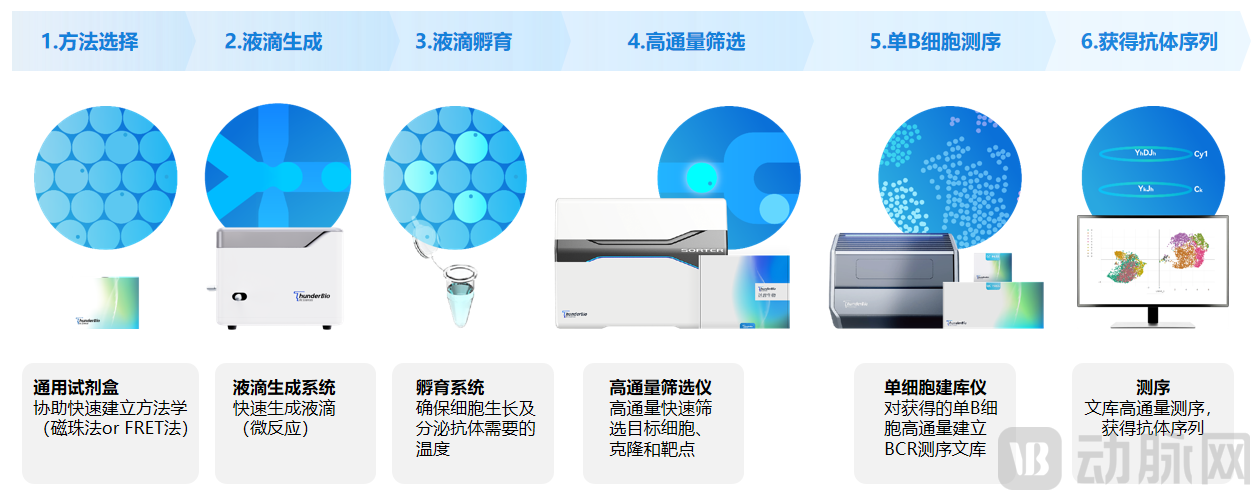
The streamlined process reduces the traditional six-to-eight-week hybridoma screening workflow to just 1–2 days, significantly accelerating antibody drug development while lowering reagent costs to one ten-thousandth of those associated with hybridoma technology. The Comet high-throughput single-cell screening platform supports microdroplet screening via FRET, microbead, magnetic bead, and reporter cell assays, catering to diverse customer needs in single B-cell antibody development. Post-screening, positive B cells can be directly integrated with our proprietary single-cell sequencing platform. This provides a comprehensive end-to-end solution for antibody drug discovery based on single B cells, filling a global gap.
Although the antibody screening process is complex and a variety of technologies are available, the extremely high technical barriers make it exceedingly difficult and costly to translate theoretical concepts into practical applications. This is also why intense competition (“involution”) has not yet emerged among companies in this sector.
"The Report" points out that, in fact, to develop efficient novel antibody molecule discovery technologies, it is necessary to consider that antibody drug development is a holistic engineering process. It requires evaluating not only the single metric of antibody affinity but also incorporating the assessment of other functional indicators during screening, which is a key consideration.
If a single B-cell platform can achieve screening from specificity to functionality while ensuring the accuracy of assay results, it will improve overall screening efficiency, reduce the workload for downstream expression validation, and shorten the antibody discovery cycle.
In addition, both CROs and biotech/biopharma companies need to comprehensively consider factors such as cost control and customer price sensitivity in an increasingly competitive market environment, so as to select appropriate platforms for antibody drug development and related services.
According to the Report, over $2 billion was invested globally in antibody discovery-related services and platforms during 2019–2020. Notably, more than 40% of this investment came from capital markets, reflecting strong market confidence in the commercial prospects of the antibody discovery industry.
The antibody discovery industry is expected to maintain its rapid growth momentum, with the global market projected to expand at a compound annual growth rate (CAGR) of over 10%, reaching $6 billion by the end of 2030. China is poised to become a key driver of this high growth rate, capturing existing market share in North America and Europe by expanding into emerging markets.
The broad prospects for antibody drugs in China stem, on one hand, from the rising incidence and mortality rates of diseases such as cancer and autoimmune disorders, which have generated substantial clinical demand for antibody therapies. More importantly, national policy guidance has played a crucial role. In recent years, China has successively introduced policies such as the Outline of the 14th Five-Year Plan, Made in China 2025, and the Guideline for the Development Planning of the Pharmaceutical Industry, explicitly identifying antibody drugs as a key area for development, thereby further driving growth in the antibody market.
In China’s antibody drug market, generics and imported drugs dominate, while the share of self-developed innovative drugs remains low, ultimately due toChinese enterprises currently lack innovation in antibody screening methods, thereby facing the dilemmas of “difficulty in discovering new antibodies” and “difficulty in developing antibodies against challenging targets.” This is also one of the core factors that have prevented Chinese antibody drugs from becoming competitive players in the global innovative drug market.。
Looking at the global high-throughput screening (HTS) market, North America is undoubtedly a major contributor to current market share. This is driven by North American pharmaceutical companies’ emphasis on research and development, their adoption of drug testing technologies, and supportive capital and policy environments. Meanwhile, fueled by positive developments in chemical assay technologies, automated testing technologies, the establishment of related research institutions, and the application of HTS data processing software, the European market is also gradually capturing a larger share.
Notably, high-throughput screening (HTS) technology is becoming increasingly prevalent in the Asian region, a trend significantly accelerated by its application during the COVID-19 pandemic. The expanding use of HTS products in drug discovery, coupled with the growing number of therapeutic development projects for various diseases, will drive steady market growth.
High-throughput screening technology is currently a key focus in the field of drug screening. As research into high-throughput screening continues to deepen, with the standardization of evaluation criteria and ongoing innovation in screening technologies, high-throughput screening is poised to play an increasingly important role in future drug discovery.
Although high-throughput screening technology was introduced later in China, the burgeoning biopharmaceutical industry has driven greater demand for this technology, significantly advancing high-throughput screening research for innovative drugs in the country.
As a typical representative of high-throughput screening technologies, droplet microfluidics-based high-throughput screening enables functional screening of primary plasma cells directly, owing to its capabilities for in vitro compartmentalization and ultra-high screening throughput. This approach preserves greater B-cell diversity, facilitating the discovery of novel antibody therapeutics and particularly aiding the development of antibodies against challenging targets. Furthermore, this technology offers lower operational costs, significantly reducing corporate R&D expenditures. By providing enterprises with an advanced technological platform, it also helps enhance their market competitiveness.
Currently, eight drugs developed using droplet-based microfluidic high-throughput screening technology have entered clinical trials and yielded positive supporting data. As a leading Chinese microfluidics company, ThunderBio Innovation Limited launched its independently developed droplet-based microfluidic high-throughput screening platform in 2022. It now offers multiple solutions for single B-cell antibody development, holding promise to help Chinese pharmaceutical companies break through the current impasse and spark a new wave of growth in China’s antibody drug market.
The above is an excerpt of the main content of the report. Scan the QR code below,Access the full report.