

How Danke Jiyin Breaks Through the Chain Expansion Dilemma in China's Billion-Dollar Light Aesthetic Market with a 'Small Frontend + Large Middle Office' Model
How Should Light Medical Aesthetic Clinics Pursue Chain Expansion?
Is it akin to opening a convenience store, adopting a model of “60% self-service retail of medical-grade skincare products + 40% minimally invasive aesthetic services,” or is it merely applying an IT tool and a set of standard operating procedures (SOPs) for services to claim service standardization? In recent years, with the booming development of minimally invasive aesthetic medicine, discussions on the chain-store model for such institutions have appeared in numerous articles.
Among these, the “small front-end + large middle-platform” model is the most anticipated by the industry. Liu Tengfei, Founder and CEO of Fanxing Light Medical Aesthetics, once candidly stated, “Unlike traditional medical aesthetic institutions, small yet refined light medical aesthetic clinics are highly suited to the ‘large middle-platform, small front-end’ model.”
What Is the “Small Front-End + Large Middle-Office” Model? Specifically, in chained light medical aesthetics clinics, the “Large Middle-Office” assumes multiple functions such as regional customer acquisition, marketing, centralized procurement, and human resources management, while the front-line stores are solely responsible for delivering user services. The “Small Front-End + Large Middle-Office” model can further reduce a brand’s store-opening and customer acquisition costs, standardize store management, and enhance operational efficiency.
VCBeat has learned that some companies in the industry have already taken the lead in implementing the “small front-end + large middle-platform” chain model. Among them is Danke Jiyin, which recently announced the completion of a RMB 30 million Series A+ financing round.
Currently,Danskejiyin currently operates 14 chain clinics in the light medical aesthetics sector, with 12 being self-operated and 2 jointly operated. The annual revenue of a standard store has reached RMB 6-7 million (according to company disclosures).Perhaps even more encouraging for the industry is that,Leveraging its distinctive private-domain traffic conversion methodology (which relies on its middle-platform capabilities), Danke Gene has achieved a 60% conversion rate from private-domain traffic to offline paying users, with a repurchase rate reaching 80%.
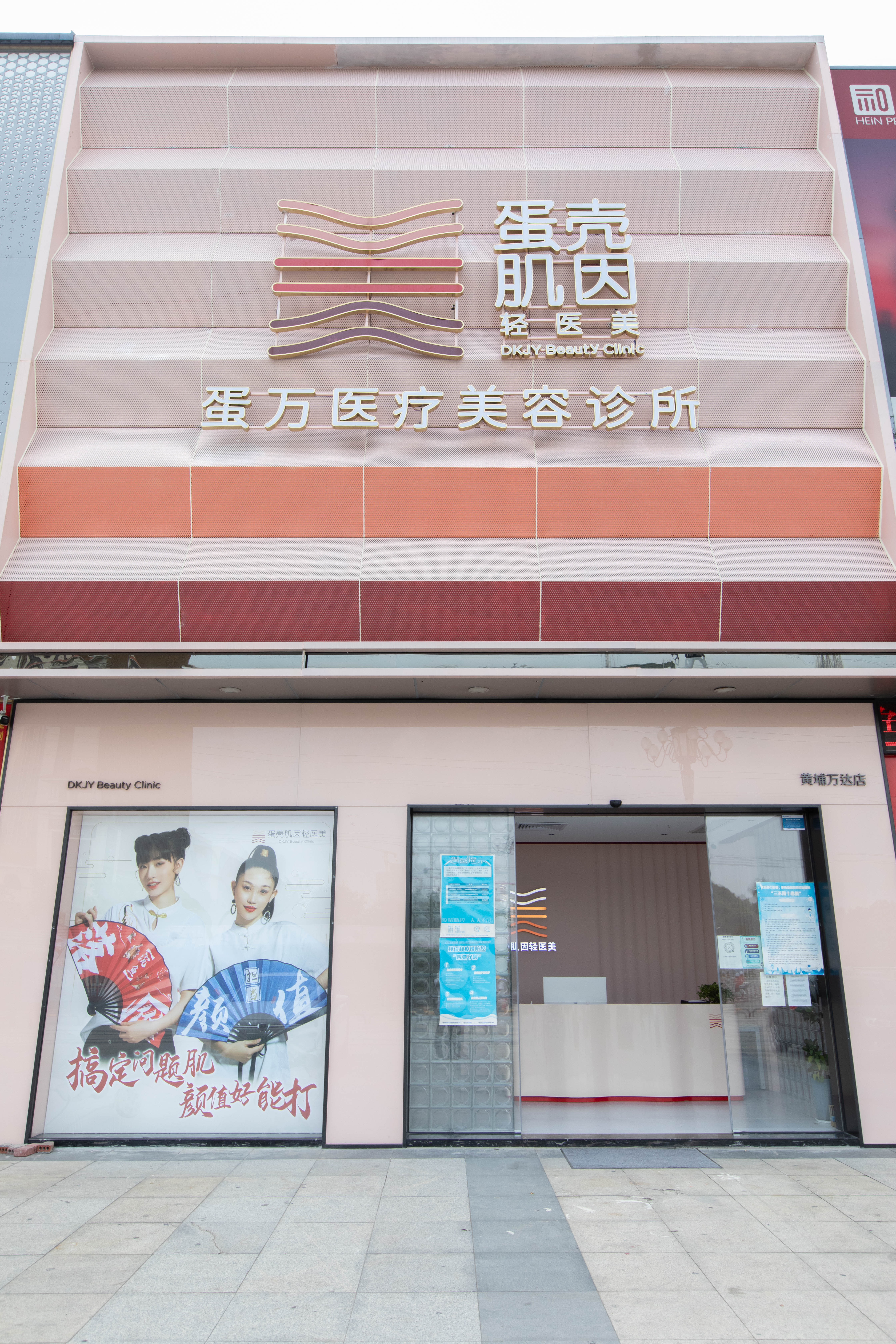
“Through AI, non-surgical medical aesthetic clinics can achieve a higher ROI. Likewise, AI offers better solutions to challenges such as staff instability, recruitment difficulties, and various issues arising during clinic chain expansion,” said Huang Hongdong, founder of Danskin Gene, in a media interview.
What is the magic behind AI technology, or more specifically, the “large middle platform,” that alleviates the customer acquisition challenges faced by light medical aesthetic institutions? Why has it been hailed by most industry insiders as a key strategy for chain expansion? In the following article, VCBeat will use Danke Ji Yin as a case study to elaborate on the advantages and practical outcomes of the “small front-end + large middle platform” model.
This is not Huang Hongdong’s first entrepreneurial venture, nor is it his first foray into the light medical aesthetics industry.
Before joining Danske Gene, Huang Hongdong served as the CEO of Blue and White Porcelain Beauty, a company operating 200 directly-owned stores. This experience exposed him to the non-surgical medical aesthetics industry and provided him with in-depth knowledge of every aspect of the sector, ranging from supply chain management and store operations to talent training and customer acquisition through marketing.
Prior to his involvement with Qinghuaci Beauty Industry, Huang Hongdong was also a co-founder of Zhangbei, a membership and marketing system provider for China’s brick-and-mortar sector. This may well be the original source of Danke Jiyin’s strong marketing conversion capabilities.
The reasons behind Huang Hongdong’s decision to re-enter the non-surgical medical aesthetics sector need no elaboration—the rapid growth of this market in recent years has been evident to all.
Specifically, according to iResearch’s “2022 China Medical Aesthetics Industry Research Report,” the growth rate of China’s medical aesthetics market began to slow in 2019, but rebounded in 2021 to reach RMB 217.9 billion, and is projected to reach RMB 410.8 billion by 2025 (CAGR of 17.2% from 2021 to 2025).
Meanwhile, China’s non-surgical medical aesthetics market has maintained robust growth, reaching RMB 75.2 billion in 2021 and is projected to reach RMB 227.9 billion by 2025. Notably, the compound annual growth rate (CAGR) of this segment from 2021 to 2025 stands at 31.9%, surpassing the overall growth rate of the broader medical aesthetics market.
In Huang Hongdong’s own words,“This is a market with significant scale and rapid growth.”
CausesIn addition to the consumption upgrade driven by rapid economic growth,It owes its success to two key contributors: first, the upstream sector of minimally invasive aesthetic medicine; and second, diverse marketing channels.The development and increasing diversity of upstream industrial inputs, such as regenerative medicine materials in recent years, have made it possible to address a variety of skin concerns for consumers. Meanwhile, the rise of social media platforms like Weibo, Xiaohongshu (Little Red Book), and Douyin (TikTok), along with marketing channels such as SoYoung, has significantly enhanced the efficiency of consumer education.
The abundance of upstream materials and equipment has enabled non-surgical aesthetic medicine to become one of the few segments within the medical aesthetics industry capable of generating independent profitability. This has laid a practical foundation for the chain expansion of non-surgical aesthetic clinics.
“In the past, non-surgical aesthetic medicine relied solely on products like hyaluronic acid fillers, which was insufficient to establish it as a distinct category separate from the broader medical aesthetics industry. However, the diversification of upstream products has enabled it to become an independently profitable branch of medical aesthetics. This explains why non-surgical aesthetic medicine has theoretically become amenable to chain-based expansion in recent years,” stated Huang Hongdong.
However, the establishment of a foundation does not mean that light medical aesthetics can be easily scaled through chain operations.
The key constraints on chain expansion are twofold: first, the competitive landscape in the midstream of the non-surgical aesthetic medicine sector is relatively fragmented, with a low chain penetration rate and no enterprises having established sufficiently strong brand influence; second, there is a shortage of multidisciplinary teams.“Chain expansion of light medical aesthetic institutions requires teams to be well-versed in physical store operations, chain management, medical practices, and digitalization, while also possessing expertise in traffic acquisition and capital operation. Frankly speaking, such multidisciplinary teams are relatively scarce in the light medical aesthetics sector.”
The road ahead appears fraught with thorns, yet it is not without its “turning points”—after all, the industry is currently in the spotlight; at the very least, one of the chain models has gained recognition from some industry insiders.
This model is the "small front-end + large middle-platform" structure.
The basic concept of “small front-end + large middle-end” has been mentioned earlier. At this point, let us first focus on why this model is inherently suited for the chain expansion of light medical aesthetic institutions.
First, from the perspective of project characteristics, compared with plastic surgery projects which are time-consuming and have low consumption frequency, the general characteristics of light medical beauty projects are short recovery time and high consumption frequency (because most light medical beauty projects require multiple and regular treatments to maintain the effect). Therefore, for light medical beauty stores, what they pursue is not large stores like traditional plastic surgery institutions, but mostly "small stores" of about 300 square meters.
andFrom the perspective of medical risk, cosmetic procedures carry higher medical risks and impose stricter requirements on physicians and even team composition, butLight medical aesthetic procedures carry relatively low medical risks, entail a lower dependence on physicians’ professional expertise, and have modest requirements for team staffing. This explains why traditional plastic surgery clinics may employ over 100 staff per location, whereas light medical aesthetic outpatient clinics typically operate with only around ten employees.
Secondly, from the perspective of decision-making characteristics, non-surgical medical aesthetic procedures are marked by long decision cycles and a reliance on high-trust relationships, which can be summarized as slow conversion. However, due to conversion cost considerations, it is difficult for offline standalone clinics to maintain long-term, continuous follow-up with a large or even massive pool of potential customers. Meanwhile, establishing a robust traffic team to handle user acquisition and conversion is clearly not cost-effective.In other words, the conversion of more potential users and a higher conversion rate are indispensable foundations for the chain operation of light medical aesthetic institutions. Unfortunately, most current offline standalone stores lack this capability.
Finally, although non-surgical aesthetic procedures have a higher consumption frequency, their prices are relatively lower compared to surgical plastic surgery procedures. This leads to another question—The midstream segment of the light medical aesthetics industry is, in fact, a business characterized by "high gross profit margins but low net profit margins."(In the entire medical aesthetics industry chain, upstream enterprises achieve an average gross profit margin of 90% and an average net profit margin of 30%, while midstream players record an average gross profit margin of 50% and an average net profit margin of merely 10%) Therefore,If the “front-end” of light medical aesthetics is too heavily weighted, it may only barely cover the operating costs of a single store, leaving no room to speak of chain expansion.
In general,Given the characteristics of non-surgical medical aesthetics, such as high repurchase rates and short recovery periods, the requirements for clinic scale are relatively modest. For functions critical to chain expansion, such as customer acquisition and conversion, an overly heavy “front-end” structure is not only incapable and unnecessary but may also “slow down” the chain expansion process.
Therefore, whether for the purpose of cost reduction and efficiency improvement or for providing higher-quality services, the “front-end” and “back-end” (referring to the middle platform) of light medical aesthetics should each fulfill their respective roles.
From an overall logical perspective, Danske Jiyin’s “small front-end + large middle-platform” model is no different from those adopted by other industry players. The “front-end” is responsible for service delivery and driving user repurchase conversion, while the “middle-platform” centrally standardizes all modules that can be standardized, including talent recruitment, product development, service processes, and supply chain management. This approach not only enhances operational efficiency but also addresses the key challenges in chain expansion—standardization.
However, in the practical application of Dike Jiyin’s “small front-end + large middle-platform” model, two aspects have drawn VCBeat’s attention: product development and marketing-driven customer acquisition.
What is “product development”? In fact, it refers to the research and development of service offerings. Or, more precisely,Dankejiyin is committed to providing a comprehensive set of solutions tailored to the specific skin concerns of each user.“Behind each treatment protocol lies a variety of combinations, such as which injectables to use, which adjunctive agents to add, and which devices to employ. This protocol should be a personalized solution tailored to the consumer’s specific skin concerns,” explained Huang Hongdong in a previous media interview.
Meanwhile,Huang Hongdong has also repeatedly emphasized, “Providing consumers with comprehensive solutions for skin concerns will be the core competitiveness of future light medical aesthetic institutions, but regrettably, this is a capability currently lacking in the industry.”
How does VCBeat respond to this?
According to Huang Hongdong, on one hand, Eggshell Myofactor is continuously seeking collaborations with upstream enterprises in the light medical aesthetics industry to jointly iterate solutions for skin problems; on the other hand, Eggshell Myofactor will also leverage AI to generate multiple solution combinations based on predefined conditions.
Iterating on solutions for skin concerns enables non-surgical medical aesthetic clinics to better serve consumers and address their skin issues more precisely. However, it is evident that services require clients to exist, and problem-solving requires consumers with actual skin concerns. In other words, having a consumer base is the foundation for the existence of service activities.
However, the difficulty of customer acquisition has become an indisputable consensus among light medical aesthetic institutions. Institutions of all types and scales are seeking solutions to this challenge. At this moment, please turn your attention to the opening of this article: “Danke Ji Yin has achieved a 60% conversion rate from private-domain traffic to offline paying users, with a repurchase rate reaching 80%.”
This inevitably raises the question—HOW?
The logic is equally straightforward: channel public-domain traffic into private-domain pools for secondary conversion. “While every company can advertise in the public domain, converting that traffic once it has been funneled into private channels presents a barrier—and therein lies the challenge,” said Huang Hongdong.
More specifically,The challenges of private-domain conversion still revolve around two key issues: long decision-making cycles and the establishment of trust.
In this regard,Danke Ji Yin has demonstrated considerable patience and adopted a rather sophisticated approach—guiding consumers from public-domain platforms to private-domain channels. Rather than adding customer service accounts with strong official branding, the company connects users with “Beauty Stewards” who possess professional knowledge in medical aesthetics, thereby establishing a professional image from the very first interaction. Furthermore, these Beauty Stewards’ WeChat Moments do not solely feature promotional content for specific treatments; this strategy helps mitigate consumer aversion to overt marketing. Instead, they strategically post about ongoing promotions to “incidentally” spark consumer interest.
Undoubtedly, the journey from initial contact to successful conversion may involve a relatively “prolonged” process. Theoretically, relying solely on the manual efforts of the Appearance Management Concierge could result in imprecise maintenance or the loss of potential users due to missed follow-ups.
To prevent such scenarios from occurring, the middle-platform capabilities of Danske Genomics once again came into play—During the initial engagement between potential clients and the Appearance Consultant, these clients are assigned a series of specific tags, enabling the consultant to communicate with them more precisely. Furthermore, throughout the relatively “prolonged” communication process, the system sends reminders at predefined intervals for the Appearance Consultant to follow up with each potential client, thereby maintaining consistent contact.
Additionally, according to Huang Hongdong, Danske Jiyin will establish an AI customer service team in the future to acquire customers through private-domain channels and improve the overall efficiency of its team.
As a customer acquisition system is established and matures, the service capacity of offline stores is put to the test.
This challenge stems not from the scale of individual clinics, but from their quantity. Given the high-frequency consumption pattern of non-surgical aesthetic procedures, consumers often consider proximity when selecting a clinic. Therefore, under the premise of strong marketing capabilities, only a sufficiently large number of clinics with extensive coverage can effectively meet the substantial demand for services.
In response, Danskin Jiyin has adopted a joint-venture store expansion strategy, leveraging the financial strength and customer resources of partners such as high-net-worth individuals and beauty industry institutions to accelerate its chain expansion process.
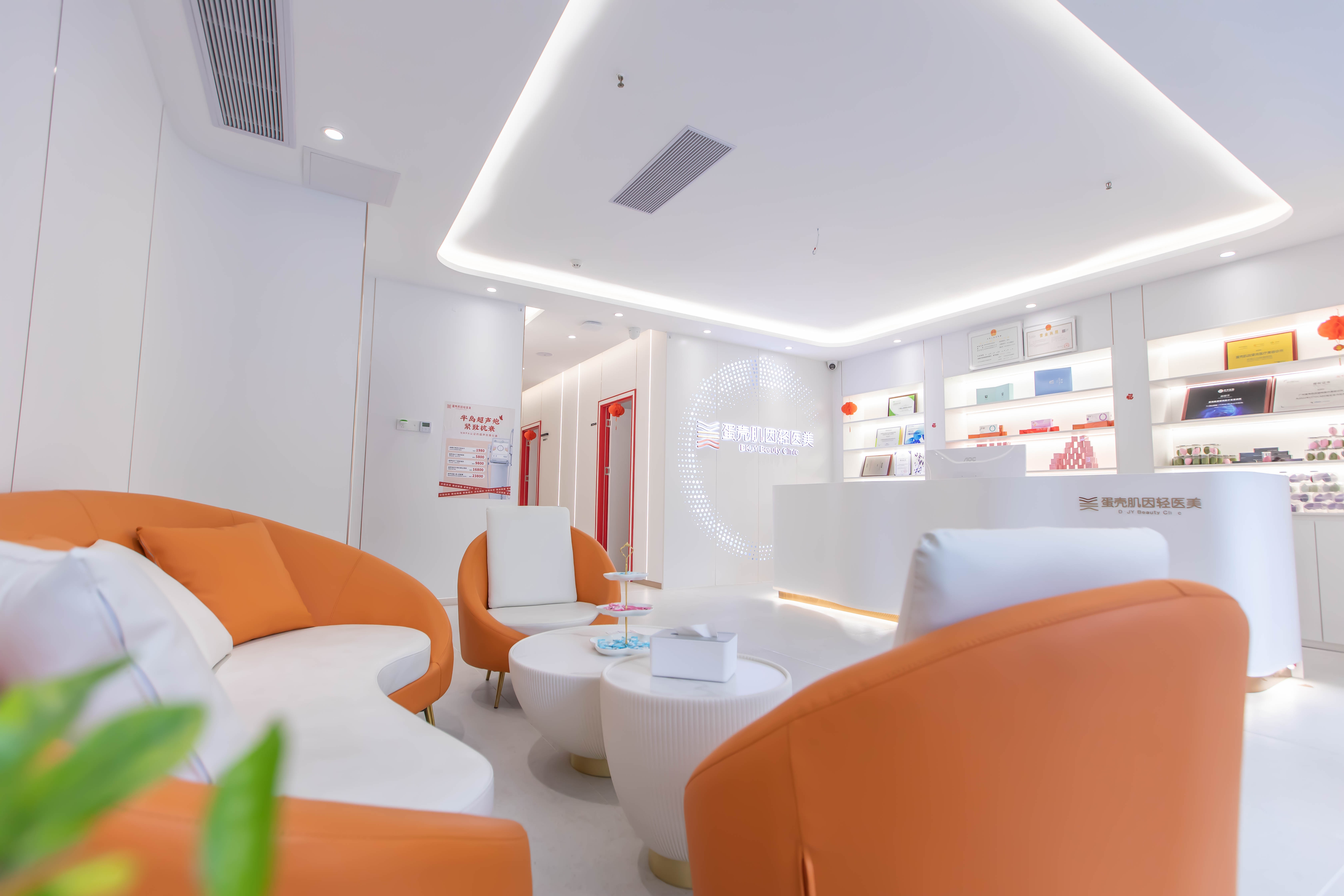
Regarding the future plans for Danske Genomics, Huang Hongdong is very clear:In 2023, the company continued to deepen its roots in the Pearl River Delta region, building regional brand influence and extending its reach into lower-tier markets; it aims to have 80–100 clinics within the next two years. Eggshell Genomics’ long-term vision can be best summarized by a statement Huang Hongdong repeatedly emphasized in interviews: “What Eggshell Genomics truly aspires to become is the Beike of the non-surgical medical aesthetics industry.”
Reference Article:
“With Such a Large Market, Why Are There No Nationwide Chain Leaders in the Light Medical Aesthetics Industry?”
“Why Does the Light Medical Aesthetics Industry, with Gross Margins as High as 90%, Lack a National Chain Leader?”