

From Robot Competition Champion to Rehab-Tech Pioneer: The Rise of 85s-Generation Scientist He Chen and Aisino Robotics
AVIC Creative Robotics
Developer of Intelligent Medical Robots
This year marks the eighth year that He Chen has been dedicated to smart rehabilitation.
In March 2023, AVIC Chuangshi launched a new product—the NovoELF EMG Biofeedback Therapy Device. Equipped with multiple training modes, it leverages electromyography (EMG) acquisition and low-frequency electrical stimulation to provide therapeutic and training interventions for patients. This marks AVIC Chuangshi’s introduction ofEnd-to-End & Full-Lifecycle Smart Rehabilitation Integrated SolutionAnother strong addition.
As the founder and CEO of AVIC Chuangshi, He Chen and his team spent several years accumulating expertise to transform their concept into a tangible rehabilitation robot. From this foundation, they expanded into the broader field of smart rehabilitation. Only after navigating countless pitfalls did they truly complete the entrepreneurial journey from “0 to 1.”
To date,AVIC Chuangshi, focusing on neurological rehabilitation and adhering to the goal of “whole-process, full-lifecycle” care, has launched a range of intelligent hardware products, including lower-limb rehabilitation training robots, intelligent lower-limb rehabilitation training systems, upper-limb rehabilitation training robots, combined upper- and lower-limb motor rehabilitation training systems, spinal function assessment and rehabilitation training systems, and electromyographic (EMG) biofeedback therapy devices. The company has also deployed several software solutions, such as the “Chuangshi Rehabilitation Cloud Platform,” which features rehabilitation data collection and assessment as well as recommended rehabilitation treatment plans, and “Squirrel Rehabilitation,” which breaks down barriers linking regional, institutional, and individual rehabilitation services.
After securing orders from multiple hospitals for intelligent hardware devices and a whole-process & full-lifecycle smart rehabilitation management system, AVIC Chuangshi has also attracted significant capital interest. As a high-tech enterprise specially approved for establishment by the Aviation Industry Corporation of China (AVIC), it received an investment of over RMB 10 million from the Group at its inception. In December 2020, the company completed a Series A financing round amounting to tens of millions of yuan, led by Haitong Innovation Capital, with participation from Xi’an Jiaotong University 1896 Venture Capital Fund and Xi’an Huanda University-Local Integration Venture Investment Fund. In May 2022, it secured another tens of millions of yuan in Series A+ financing through a capital increase by existing shareholders.
However, the entrepreneurial journey is by no means smooth; its challenges far exceeded He Chen’s initial expectations.
At the outset of his entrepreneurial journey, He Chen viewed it merely as a corporate mandate, believing that if the rehabilitation robots delivered sufficiently strong performance, favorable outcomes would naturally follow. He did not anticipate this path to be particularly challenging, yet the further he progressed, the longer the road ahead seemed to become.
He Chen’s foray into rehabilitation robotics was, to some extent, a matter of serendipity.
In 2015, He Chen, who was then working at the Aviation Industry Corporation of China (AVIC), reached a turning point in his career. His exoskeleton robot project took first place in AVIC’s Innovation and Entrepreneurship Competition. Following an assessment of the project’s technology and market prospects, AVIC planned to develop it into a “triple benchmark”: a benchmark for the “Mass Entrepreneurship and Innovation” initiative, a benchmark for mixed-ownership reform, and a benchmark for military-civilian integration through the civilian application of military technologies and the industrialization of aviation technologies.
Thus, He Chen was “pushed” onto this entrepreneurial path. “Looking back now, if I hadn’t won first place or received the group’s impetus, my career might have turned out completely differently,” said He Chen.
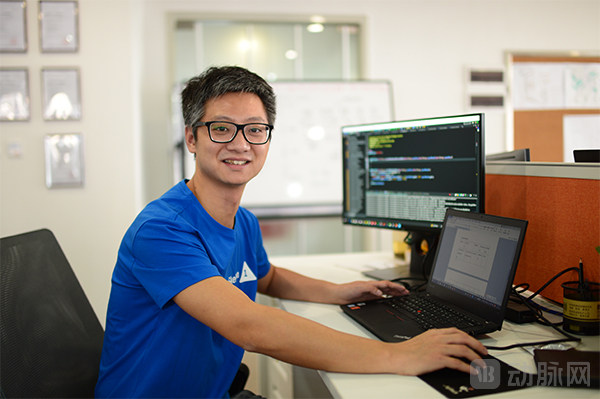
He Chen, Founder of AVIC Chuangshi
Driven by the mission to establish “three benchmarks,” He Chen initiated a survey of the domestic robotics market. After investigating and evaluating sectors such as industrial robots, service robots, and medical robots, He Chen’s team ultimately selected rehabilitation robots as their niche focus.
This entrepreneurial journey, driven by the group’s support, is also closely tied to He Chen’s background. He graduated from Northwestern Polytechnical University with a major in Automation, pursuing his studies from bachelor’s through to his doctoral degree. During this period, he was sent on a government-sponsored scholarship to the University of Hull in the UK, where he studied under Professor Ron J. Patton, an IEEE Fellow, renowned expert in fault diagnosis, and one of the founders of fault-tolerant control theory. After graduation, He Chen joined the Xi’an Flight Automatic Control Research Institute (Institute 618) of the Aviation Industry Corporation of China (AVIC), where he participated in two national-level projects, one local government project, and one pre-research project on exoskeleton robots commissioned by the General Armament Department.
"This provided him with the technical background to develop rehabilitation robots, while launching a startup requires harnessing the collective strength of a team. He initially considered his former classmates. 'Hard work and the pursuit of excellence are two key criteria. Entrepreneurship is not easy; if you embark on it, you must strive for perfection, which demands resilience and diligence. For a founding team, the most important factor is shared vision—everyone must share the dream of developing rehabilitation robots,' said He Chen."
Through He Chen’s efforts, he brought in teams focusing on cloud computing, big data, and social networking.Ma RuiServed as R&D Director, specializing in the research and development of smart devices and quality management.Dan DingServed as Quality Director, with experience in power design and the promotion of multiple government-cooperative projects.Yang BaojiangServed as Marketing Director. As the company grew and expanded, the core team also welcomed a Chief Technology Officer.Chen Decaiand the CFOSu Yinthe addition of.
Furthermore, in He Chen’s view, the research and development and production of rehabilitation diagnosis and treatment equipment require not only innovation in industrial technology but also integration with clinical diagnostic and therapeutic methods. Therefore, he also hiredAcademician Jian'an Li, International Fellow of the U.S. National Academy of Medicine, and other experts in the rehabilitation industry, including committee chairs, serve as medical advisors.
By 2017, AVIC Chuangshi Robot (Xi'an) Co., Ltd. had officially completed its registration, embarking on the lengthy process of project initiation, prototype finalization, product validation, and regulatory certification. “To enter this industry, one must start with fundamental product design, where technology poses the greatest challenge,” said He Chen. After two years of effort, in 2019, the company’s first lower-limb rehabilitation training robot received Class II medical device registration approval. The following year, its intelligent lower-limb rehabilitation training system also obtained Class II medical device registration certification.
Starting from robotic products, He Chen has keenly identified a new trend in the rehabilitation field through years of dedicated research—WisdomRehabilitation, and to begin building AVIC Chuangshi’s end-to-end & full-lifecycle smart rehabilitation integrated solution.
Having navigated this most challenging phase, the next issue is product marketing and sales.
In fact, AVIC Chuangshi’s market channel development did not begin only after product certification; strategic preparations were already in place beforehand. Since 2018, AVIC Chuangshi has successively partnered with the First Affiliated Hospital of Xi’an Jiaotong University and Xijing Hospital of Air Force Medical University to establish demonstration bases for rehabilitation robots and a Research Center for Big Data in Rehabilitation Medicine. Additionally, it jointly established the Beilin District Disabled Persons’ Federation Artificial Intelligence Rehabilitation Robot Training Center and Employment Training Base with the Beilin District Disabled Persons’ Federation in Xi’an.
However, these factors alone were insufficient to drive market sales. He Chen, who came from a technical background, lacked experience in product sales and market development. At that time, the market had limited awareness of “Zhihui” as a novel project, making market expansion particularly challenging. “At that time, hospitals lacked understanding of the application of third-generation technology in rehabilitation medicine. There were no benchmark cases in any province, making it difficult for distributors to break the ice. Therefore, we often had to take the lead ourselves.”
In the beginning, He Chen would often wait downstairs outside the director’s or departmental offices for hours on end. He frequently felt aggrieved, thinking, “Sometimes I feel that the time I spend waiting here could have been used for substantial R&D work.” Moreover, hospitals are typically not very courteous to sales representatives, and He Chen was often met with cold shoulders.
“As the waiting periods grew longer, I suddenly felt that I should get everything in order before returning to R&D; this is what I ought to do and my responsibility.” Having made peace with his sales role, He Chen would bring along a book on rehabilitation sciences or management each time he went to the hospital for appointments. “After working in the rehabilitation industry for many years, I have come to feel that my knowledge base is increasingly inadequate. To lead the company forward, I need to acquire more expertise—learning about rehabilitation, management, and sales.”
In the past, He Chen, as an automation expert, was highly respected and greeted with smiles by all; now, as an entrepreneur, he often encounters cold shoulders. The contrast could not be more stark. In He Chen’s view, this represents a process of “breaking down and reinventing oneself,” as well as a mindset shift from “passive entrepreneurship” to “proactive realization.”
But what followed was the COVID-19 pandemic.
In 2019, AVIC Chuangshi secured its first order from a hospital in Xi’an. By the end of the year, the COVID-19 pandemic suddenly erupted. The successful delivery of the rehabilitation robot project demonstrated the R&D capabilities of He Chen’s team to the hospital. In the early stages of the outbreak, when equipment and supplies were severely scarce, the hospital approached He Chen’s team with a request: “We need a contactless temperature monitoring device. Can your team develop one?”
This question deeply moved He Chen, signifying that the hospital had recognized his team’s R&D and execution capabilities. At a time when nearly everyone was under home quarantine, He Chen’s team accepted the urgent mission despite the risk of COVID-19 infection, modifying their original rehabilitation robot product for use in monitoring the body temperature of individuals entering and exiting the hospital.
“Working around the clock, we delivered the product to the hospital seven days later. ‘This experience left a deep impression on me. Our technical expertise and capabilities were recognized, which made me feel proud to have made a modest contribution to epidemic prevention and control,’ said He Chen.”
However, the impact of COVID-19 on the company was beyond imagination. Due to the nationwide outbreak in China, which led to factory shutdowns, logistics disruptions, and restrictions on personnel movement, the company’s performance plummeted after 2020, with a growth rate of only 50%.
“This is truly a critical moment for our survival. Nearly everyone in the company had to go out and explore or establish new sales channels, yet the market under such circumstances faced even greater challenges. ‘The phrase we heard most often back then was, “If you’re not considering it during the pandemic, or if delivery is difficult during the pandemic, then forget it,”’ said He Chen.”
Faced with financial difficulties, the primary consideration was to secure investment, which presented yet another new challenge for He Chen. As the leaves on the streets of Beilin District turned from green to yellow, and eventually disappeared from view, He Chen led his company to complete its Series A financing round.
Securing financing is merely the first step in resolving the crisis; the true key to breaking the deadlock lies in expanding market channels.
As ginkgo leaves once again adorned the branches, the young man who had been reading and waiting downstairs from the dean’s office finally seized his opportunity. At that time, a hospital in Xianyang had just completed its leadership transition, with a “young” dean newly appointed. He expressed strong interest in He Chen’s rehabilitation robotics project.
Initially, He Chen’s goal was simply to sell rehabilitation robots. However, as his discussions with hospitals and their directors grew more in-depth, the hospital leadership also began to take notice of efforts to build “smart rehabilitation” departments.
In August 2014, the National Development and Reform Commission, jointly with the Ministry of Industry and Information Technology and seven other ministries, issued the “Guiding Opinions on Promoting the Healthy Development of Smart Cities,” which for the first time proposed advancing the development of smart hospitals. With the onset of the COVID-19 pandemic, the importance of building smart hospitals has been further amplified. By transforming healthcare delivery models, enabling telemedicine, and establishing internet hospitals, these initiatives have allowed the majority of patients to have their medical needs addressed online.
At this time, the hospital director was building smart logistics and intelligent systems for other departments, making them the highlights and features of the hospital. When he showed interest in He Chen’s team’s smart digital solution specifically targeting the rehabilitation department, He Chen knew, “The opportunity has come.”
Upon returning to the company, He Chen, having gained a thorough understanding of the hospital’s requirements, led his team in working tirelessly for three consecutive days and nights to draft a super-Full-Cycle Smart Rehabilitation Integrated Solution (Over 50 Pages), after nearly half a year of various meeting discussions and multiple rounds of plan revisions, the hospital decided to establish a Rehabilitation Medicine Center and designate it as a key department for development, equipping it with intelligent rehabilitation equipment such as the AVIC Chuangshi lower limb rehabilitation training robot, an intelligent lower limb rehabilitation training system, and a smart rehabilitation management system.The signing of this order marks the launch of AVIC Chuangshi’s market strategy to deliver comprehensive, smart rehabilitation solutions for rehabilitation departments, covering the entire process and full life cycle.
In May of that year, AVIC Chuangshi continued its collaboration with a hospital in Xianyang, establishing the Joint R&D Center for Smart Rehabilitation Technology. This hospital has become a benchmark for the implementation of AVIC Chuangshi’s end-to-end, full-lifecycle smart rehabilitation integrated solutions.
Over the eight years of deep immersion in the industry, He Chen’s mindset has gradually evolved. At the age of 30, as he was “pushed” into entrepreneurship, he also welcomed new changes in his personal life. “My child is the same age as my company, so this is my third child,” He Chen said with a smile.
Watching his child grow has filled He Chen with confidence every day. Although the broader economic environment once led to a slump and self-doubt during his entrepreneurial journey, He Chen remains optimistic about the future. “From technological breakthroughs and product development to establishing market channels, we have essentially completed all foundational work. In other words, we have accomplished the journey from 0 to 1. Our next step is to scale from 1 to 10, and then from 10 to 100.”
AVIC Chuangshi's current launch ofEnd-to-End & Full-Lifecycle Smart Rehabilitation Solution, leveraging technologies such as artificial intelligence, robotics, and the Internet of Things (IoT) to achieve intelligent end-to-end management from patient admission to functional improvement. This primarily encompasses intelligent data collection, rehabilitation assessment, treatment plan formulation, and treatment implementation. Furthermore, by utilizing informatization, virtual reality (VR), 5G, and other technologies, it enables intelligent management across the full lifecycle of diseases, personnel, institutions, and regions.
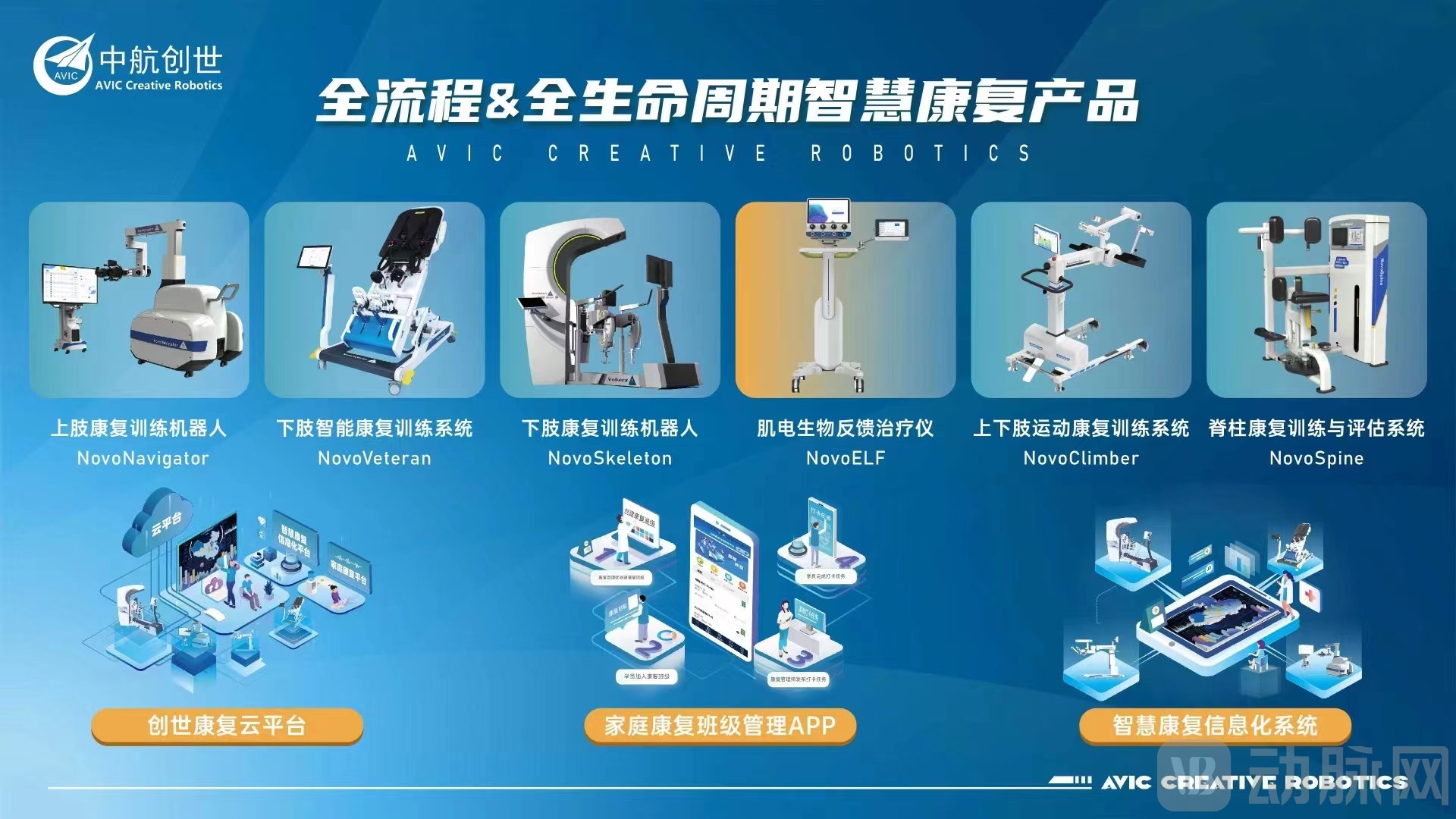 Full-Process & Full-Lifecycle Smart Rehabilitation Solution
Furthermore, AVIC Chuangshi has established a comprehensive production and R&D system centered on its four core technologies: “Yuan,” “He,” “Yun,” and “Zhi.” Currently, its products have been sold to 30 provinces and 60 cities across China, successfully implemented in over 300 hospitals, and the company has reached cooperation intentions with more than 3,000 medical institutions. To date, AVIC Chuangshi has provided rehabilitation treatment services to 100,000 patient visits. By delivering smart rehabilitation solutions to its clients, the company is fostering healthy living in the era of big data.