

Perspectum Secures Nearly $400M in Series C Funding, Expands AI-Powered Medical Imaging Solutions to 28 Countries

Perspectum
Medical Imaging Software Solutions Provider
As a patient’s life slips away, the greatest challenge lies in finding answers in time. Failure to provide timely treatment results not only in the loss of an individual life but also in the collapse of an entire family.
"In fact, diseases can be diagnosed and monitored to provide answers."
AI-Assisted Medical Imaging System: Delivering imaging assessment reports in the shortest possible time to aid physicians in determining lesion location and surgical risk. With AI assistance, clinicians can more rapidly assess whether patients meet radiological criteria for surgery, thereby gaining critical time for patient care.
London-based medical imaging company Perspectum recently announced that it raised $19 million in the second tranche of its Series C financing round. Led by Oppenheimer, this round brought the total Series C funding to $55 million (approximately RMB 379 million), bringing the company’s cumulative fundraising to $140 million. The company stated that it will use these funds to accelerate the development of its product pipeline for multi-organ diseases and oncology.
A Medical Imaging Company Born at the University of Oxford
When Dr. Rajarshi Banerjee was researching ways to improve the use of magnetic resonance imaging (MRI) in cardiology, he hoped that these advances would one day be effectively applied to the liver.
This is because the number of people with non-alcoholic fatty liver disease (NAFLD) worldwide is rising due to poor diet and lack of exercise. According to estimates by the British Liver Trust, one in five people in the UK alone is affected. This may be a precursor to non-alcoholic steatohepatitis (NASH), which can ultimately lead to cirrhosis, liver cancer, and liver failure.
Liver scans are typically performed using conventional ultrasound machines. However, traditional scanning techniques and equipment can only capture the outline of the liver, failing to provide detailed images. As Dr. Banerjee described, “It is somewhat like taking a backlit photograph, where you get far more silhouette than the detail you actually need.”
Therefore, he sought to employ magnetic resonance imaging (MRI) to obtain more detailed views—similar to those used in cardiac and neurological monitoring. This approach would enable physicians to gain a comprehensive understanding of the patient’s liver, representing a significant improvement for patient care.
Traditional liver sample collection often requires a biopsy, such as inserting a needle into the liver and rotating it 90 degrees to obtain a sample for diagnostic purposes—a process that is uncomfortable for patients. Dr. Banerjee’s approach elegantly circumvents this issue; by providing detailed images, it enables physicians to detect diseases and allows surgeons to plan procedures accordingly.
This was the initial prototype of Perspectum.
Dr. Banerjee knew he had made a significant discovery, but he did not realize just how important it was—until he received a call from Professor John Bell at the University of Oxford. At that time, Professor Bell was serving as the Head of Medicine at Oxford, so when he called to suggest that a company should be established, Dr. Banerjee knew it was time to put the idea into practice.
This phone call facilitated a meeting between Dr. Banerjee and Michael Brady, Honorary Professor of Oncological Imaging at the University of Oxford. It also made him realize that, with the rising prevalence of liver disease, his mission is to help more people; with liver scanning technology, an increasing number of patients with liver disease will benefit.
Thus, with the assistance of the University of Oxford, they founded Perspectum and developed the first mainstream artificial intelligence application that leverages magnetic resonance imaging to aid in the treatment of metabolic diseases.
A Steady Supply of Talent from Oxford
Dr. Banerjee chose to establish Perspectum at the University of Oxford, largely because he remained there after completing his doctoral degree. Between 1996 and 2002, he studied medicine at the University of Oxford, subsequently practicing in London and Southeast England. In 2008, Dr. Banerjee returned to the John Radcliffe Hospital, part of the Oxford University Hospitals NHS Foundation Trust, to pursue his PhD.
In Dr. Banerjee’s view, the University of Oxford Medical School boasts abundant research achievements and funding, and has given rise to numerous new findings and breakthroughs. Therefore, the University of Oxford is undoubtedly a qualified base for talent development.

Lis Pickles
Lis Pickles is one such student. During her studies, her research focused on using magnetic resonance imaging (MRI) to detect liver cancer. This aligns with Dr. Banerjee’s original hypothesis that MRI technology could provide physicians with clearer liver scans.
Lis believes that as the program enters clinical trials, its development prospects are becoming increasingly evident. Therefore, she pursued her doctoral degree at the University of Oxford and Perspectum. The close affiliation between the university and hospitals enables Lis’s research to be directly grounded in real-world practice, allowing her to witness the tangible impact of her work.
For Perspectum, as the company continues to expand, highly skilled medical professionals and subject-matter scientists from the University of Oxford are undoubtedly key to addressing future challenges.
With the liver as the core, expanding to the gallbladder, heart, lungs, and pancreas, all products have received FDA approval.
“At Perspectum, we envision a world of precision medicine for all.”
Since its launch in 2012, Perspectum has provided physicians and surgeons with a range of scanning services for the liver, biliary system, gallbladder, heart, lungs, and pancreas. In the post-pandemic era, the company has also participated in projects involving multi-organ scanning to assess the long-term effects of COVID-19.
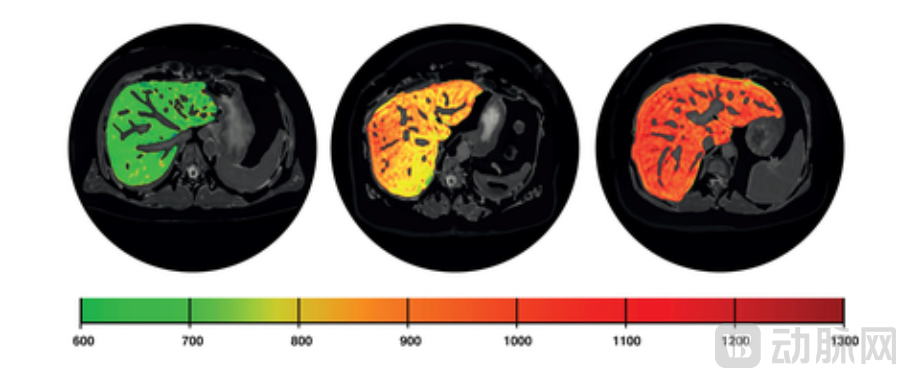
Perspectum provides objective data visualizations of three different livers, representing varying degrees of health. The sequence begins with a healthy liver (green) on the left and concludes with quantitative visualizations showing liver impairment (orange, red) on the right.
Initially, Perspectum’s flagship diagnostic tool was LiverMultiScan. LiverMultiScan is a non-invasive magnetic resonance imaging (MRI) technique that assesses signs of liver disease, provides a comprehensive overview of liver health, and ultimately generates a report composed of quantitative metrics. This report offers clinicians intuitive information for evaluating the current status of liver disease, thereby aiding in diagnosis, treatment, triage, and monitoring.
LiverMultiScan surpasses existing imaging modalities to predict clinical outcomes with accuracy comparable to liver biopsy, addressing the unmet need for scalable diagnostics. Furthermore, LiverMultiScan has the capacity to shorten the current diagnostic process from 16–32 weeks to just a few days, offering a faster and more comfortable diagnostic solution while reducing the cost of liver assessment for patients.
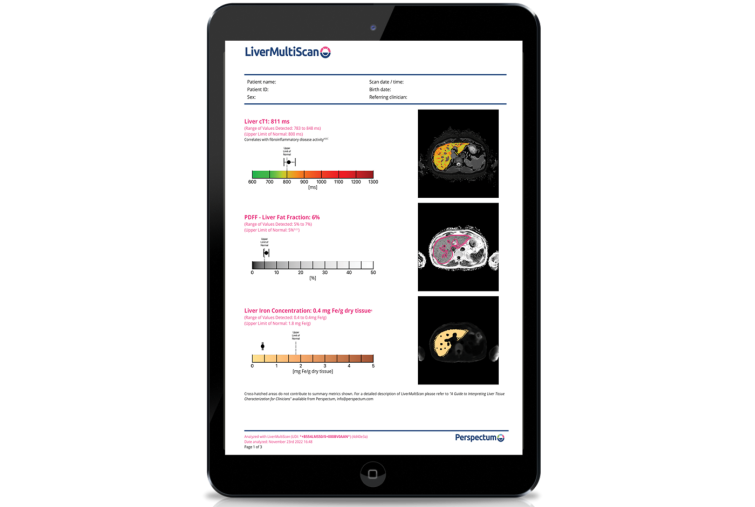
LiverMultiScan Quantitative Metrics Report
Subsequently, Perspectum capitalized on its momentum to continuously develop imaging solutions encompassing a series of products, including MRCP+, CoverScan, and Hepatica.
MRCP+ is also a non-invasive diagnostic technique, primarily applied to the biliary system to generate quantitative three-dimensional models of the biliary tract. It can measure bile duct width and automatically detect variant regions, while performing regional volumetric analysis of the biliary tree, pancreatic duct, and gallbladder, ultimately producing a report with visualized quantitative metrics of hepatobiliary structures.
Biliary complications require specialized surgical and radiological management. MRCP+ is currently the only clinically available tool of its kind, capable of providing quantitative analysis reports for biliary system visualization driven by advanced image analysis and machine learning. By offering healthcare providers in-depth assessment of the bile ducts, adjacent pancreatic ducts, and gallbladder, it raises the standard of care and supports decision-making in hepatobiliary and pancreatic diseases. Furthermore, MRCP+ can be used in conjunction with LiverMultiScan, creating a new level of liver health analysis in hepatobiliary disease.
MRCP+ has received regulatory approval for clinical use in both the United States and Europe. According to Perspectum, the market opportunity for this product in the U.S. is estimated at approximately $4.4 billion, with significant market potential also expected outside the United States.
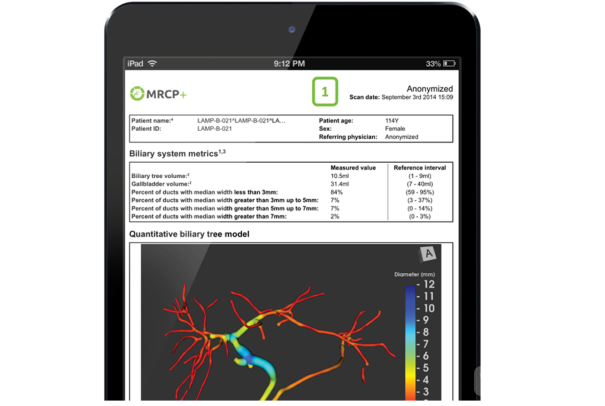
MRCP+ Visual Quantitative Metrics Report
Unlike previous technologies that could only scan a single organ, Perspectum has developed CoverScan, a multi-parametric, multi-organ imaging tool. This innovation enables clinicians to conduct comprehensive health assessments of multiple organs in a single session, with the capacity to simultaneously scan and quantify up to six different organs. Consequently, it reduces the need for patient referrals and offers greater convenience to patients.
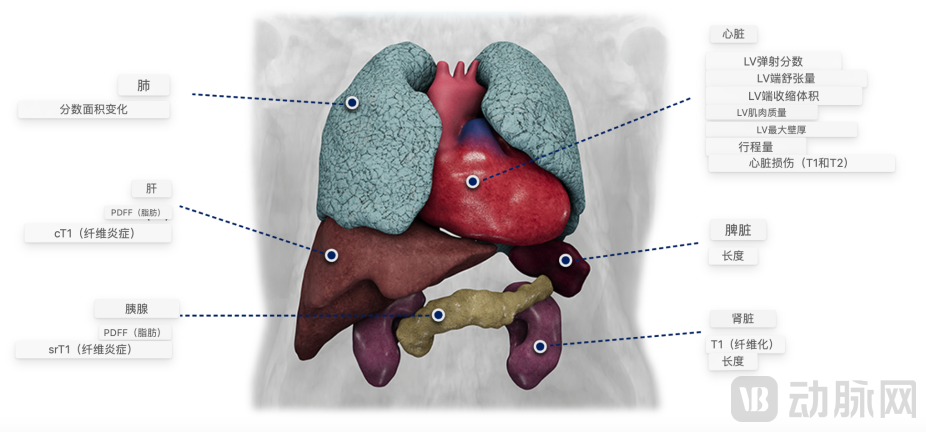
CoverScan Imaging Simulation Diagram
Empowered by the aforementioned technologies, Hepatica was launched, marking Perspectum’s entry into the liver cancer market. Hepatica is a decision-support tool developed by Perspectum that covers all stages of primary and secondary liver cancer. By quantitatively assessing liver health and volume, it enables the preoperative identification of patients at potential risk for post-surgical complications. Leveraging LiverMultiScan technology, the entire liver is first characterized using liver health biomarkers (cT1 and PDFF), and then presented in a 3D visualized and quantified format.
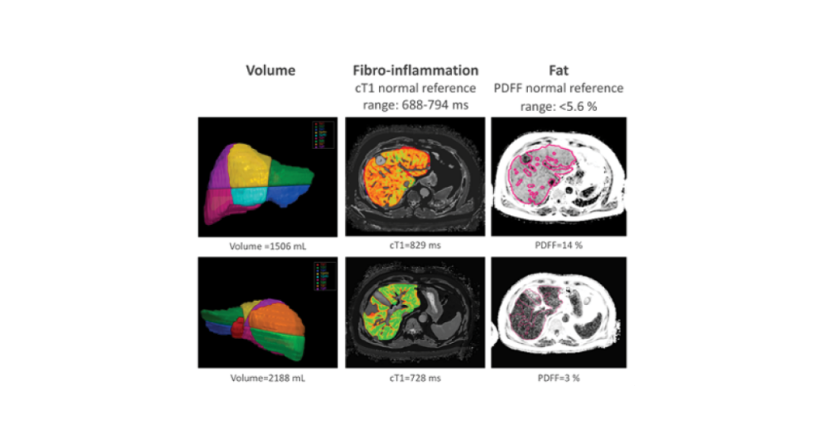
3D Visualization and Quantification of Liver Volume Based on LiverMultiScan Technology
This preoperative assessment can be used to evaluate liver tissue health and, in conjunction with existing diagnostic tests and the patient’s clinical evaluation, support surgical decision-making, thereby improving treatment outcomes. Two patients with similar preoperative characteristics received different treatment plans following Hepatica assessment.
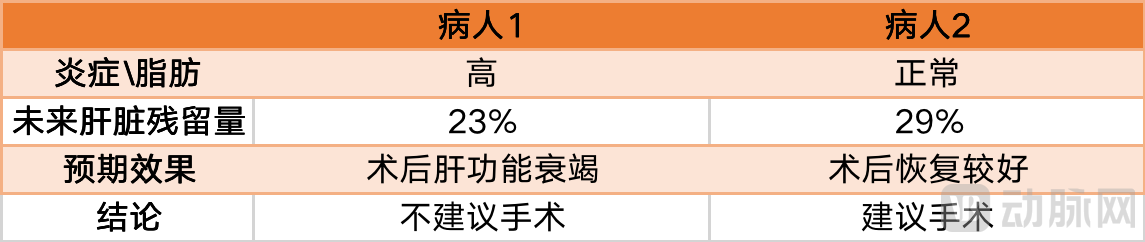
Hepatica Evaluation Comparison Chart
With the FDA approval of CoverScan, all medical devices under Perspectum have now received FDA clearance. Hepatica was approved for entry into the U.S. market within 11 months of project initiation, and CoverScan received authorization for specific use just nine months after its conception. This demonstrates Perspectum’s capability to innovate and bring devices from concept to regulatory approval within a single year.
“Government-Medical-Enterprise” Collaboration: Products Sold to 28 Countries
Initially, Perspectum drove the early commercialization of its products by establishing commercial partnerships with pharmaceutical companies. These companies were able to deploy Perspectum’s proprietary biomarkers in their drug development programs to accelerate clinical progress and build an evidence base for the regulatory approval of their drug candidates.
Subsequently, Perspectum has continued to focus on expanding the penetration and adoption of its products in clinical practice. To this end, Perspectum established an early presence in Texas and Florida and launched LiverMultiScan through collaborations with large radiology networks, gastroenterology clinics, and medical centers.
In November 2020, Perspectum established a non-exclusive global distribution partnership with GE Healthcare for LiverMultiScan, aiming to enhance the ease of acquiring LiverMultiScan for customers purchasing new MR scanners or upgrading and replacing existing ones. Furthermore, to expand its presence in outpatient imaging centers, Perspectum has been continuously conducting clinical pilots with an increasing number of large integrated delivery networks.
In terms of business model, physicians and surgeons can perform MRI scans anywhere in the world and then send the results to the nearest Perspectum laboratory, where relevant experts will process them and provide feedback.
The company has also established a community diagnostic center in Oxford, relocating essential equipment from hospitals into the community and supporting the development of the National Health Service by designing new facilities that prioritize patient care and convenience.
Outside the United States, Perspectum’s products are sold in 28 countries worldwide, and the company is actively engaging with governments and third-party payers to achieve broad product coverage.
To date, Perspectum has completed nine rounds of financing, raising a total of $1.201 billion.