

Shukun Technology Secures NMPA Class III Approval for Intracranial Hemorrhage AI Software, Establishing a Global Benchmark for Integrated Intelligent Stroke Care

SHUKUN
Provider of Intelligent Products and Innovative Solutions
According to the official website of China’s National Medical Products Administration (NMPA), on March 24, SHUKUN Technology’s CT Image-Assisted Triage Software for Intracranial Hemorrhage (StrokeDoc) officially received an NMPA Class III medical device registration certificate. This product can display, process, measure, and analyze non-contrast cranial CT images, providing triage alerts for patients with hyperacute or acute intracranial hemorrhage. This marks SHUKUN Technology’s second NMPA Class III certification in the field of cerebrovascular AI, following its receipt of the world’s first NMPA Class III certificate for head-and-neck CTA AI. SHUKUN Technology is also the only medical AI high-tech enterprise in the industry to have simultaneously obtained NMPA Class III certification, U.S. FDA clearance, and European Union MDR CE certification in the cerebrovascular AI sector.
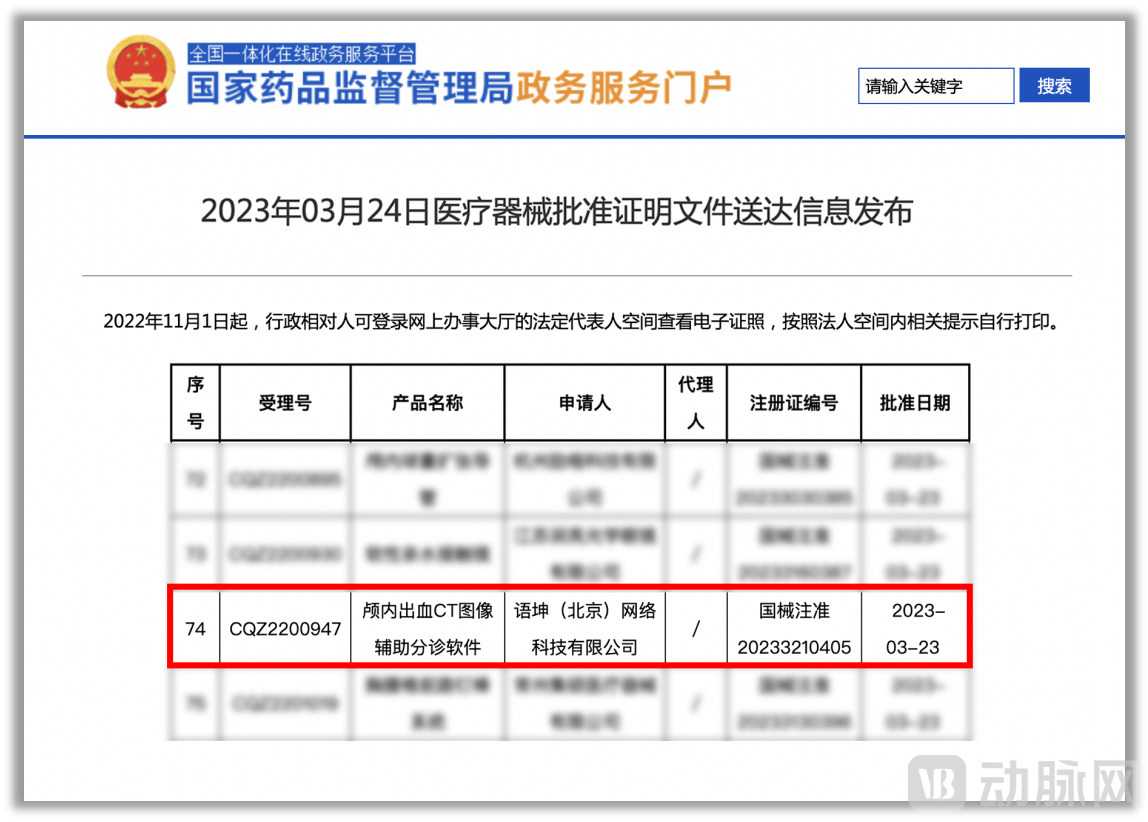
AI Empowers Intelligent One-Stop Diagnosis and Treatment of Stroke
Stroke is the leading cause of death among residents. It refers to a group of diseases characterized by brain tissue damage resulting from either the sudden rupture of cerebral blood vessels or vascular occlusion that prevents blood flow to the brain. Stroke is marked by the “four highs”: high incidence, high disability rate, high mortality rate, and high recurrence rate.
According to the "China Stroke Center Report 2020," approximately 17.8 million people aged 40 and above in China were affected by stroke in 2020, making it the leading cause of death and disability in the country. According to World Health Organization statistics, one in every six people worldwide is at risk of stroke; one person dies from stroke every six seconds; and one person becomes permanently disabled due to stroke every six seconds.
Studies have shown that following a stroke, approximately 1.9 million neurons die per minute in the ischemic region of the brain, and each minute of delayed treatment results in varying degrees of health deterioration. Stroke management is a race against time; ensuring the timeliness of high-quality imaging examinations and assessments is crucial for selecting appropriate treatment protocols and salvaging patients’ brain tissue.
Acute intracranial hemorrhage is characterized by sudden onset, severe clinical course, poor prognosis, and high mortality. The 2022 AHA/ASA guidelines for spontaneous intracerebral hemorrhage (ICH) state that qualitative, localizing, and quantitative assessment of hemorrhage, as well as evaluation of midline shift, are crucial for minimally invasive surgical procedures for ICH, craniotomy for posterior fossa hemorrhage, surgical management of intraventricular hemorrhage, and craniotomy for ICH. The Chinese Guidelines for Imaging Applications in Cerebrovascular Diseases (2019) indicate that non-contrast head CT has always been the preferred method for clinical confirmation of acute intracerebral hemorrhage. Currently, image-based hematoma quantification struggles to achieve precision and consistency, and minor hemorrhages are easily missed, representing a major challenge in the imaging diagnosis of acute intracerebral hemorrhage.
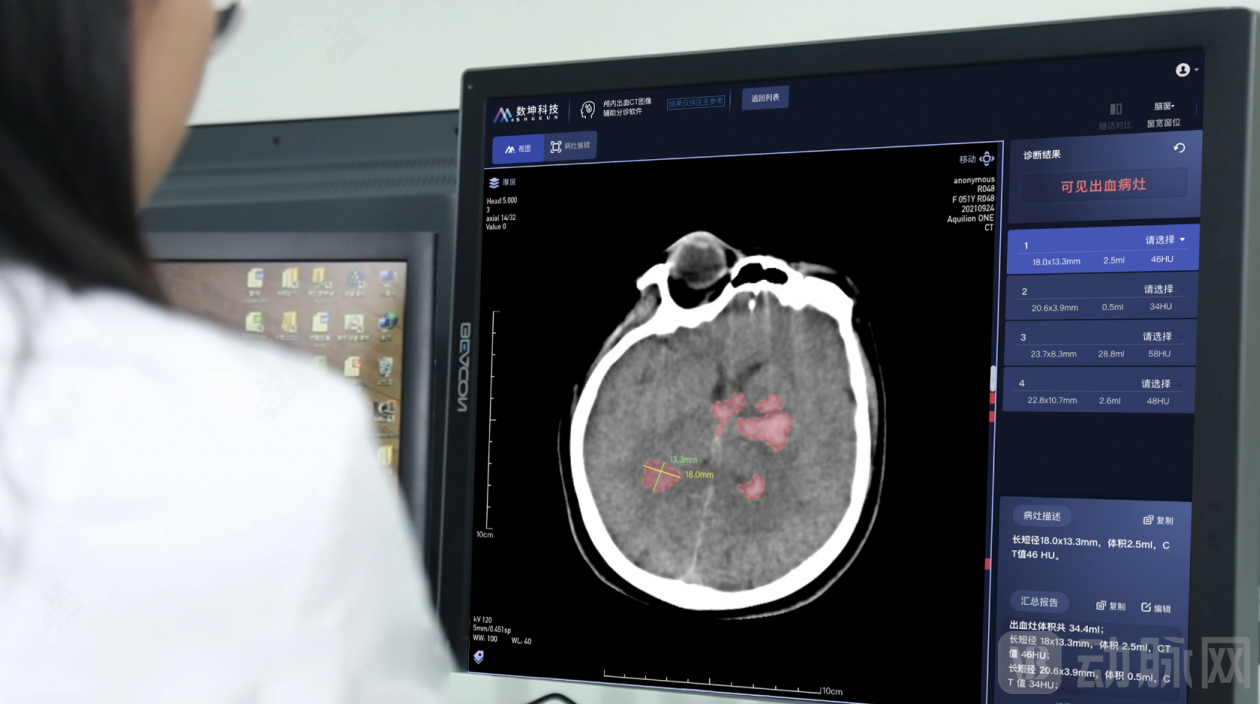 Hospitals Use SHUKUN’s CT Image-Assisted Triage Software for Intracranial Hemorrhage to Diagnose Acute Cerebral Hemorrhage
SHUKUN’s CT Image-Assisted Triage Software for Intracranial Hemorrhage can automatically locate the site of hemorrhage and quantitatively analyze hemorrhagic lesions, providing critical value alerts for patients with suspected intracranial hemorrhage. This assists physicians in efficiently triaging stroke patients, significantly improving diagnostic and treatment efficiency.
Currently, SHUKUN’s “Digital Brain” series provides a one-stop intelligent imaging assessment for stroke patients, covering scenarios such as non-contrast CT (NCCT), CT angiography (CTA), and CT perfusion (CTP). For multimodal CT scan data, all reconstruction and analysis results can be automatically generated within 3–5 minutes, reducing the time required for post-processing and image interpretation, thereby making the stroke treatment workflow more intelligent. SHUKUN’s intelligent stroke solution rapidly, comprehensively, and accurately delivers localization, quantification, and qualitative assessment information—including hemorrhage detection, hematoma volume, ASPECTS score, culprit vessel analysis, aneurysm risk assessment, core infarct, ischemic penumbra, mismatch volume and ratio, and multi-parameter threshold maps—thereby assisting clinicians in making more precise, evidence-based diagnostic and therapeutic decisions.
Boosting Efficiency at Tertiary Hospitals, Enhancing Quality at Primary Care Facilities
As a world-leading smart healthcare technology platform, SHUKUN’s Digital Doctor products are in high-frequency daily use at nearly 3,000 healthcare institutions across China. According to data shared by Professor Lu Jie, Vice President of Xuanwu Hospital of Capital Medical University, the adoption rate of SHUKUN’s Digital Brain product at Xuanwu Hospital has exceeded 90%. The hospital’s stroke green channel completes multimodal imaging examinations and diagnosis in just 15 minutes, securing precious time for the treatment of stroke patients. Currently, Xuanwu Hospital is a National Demonstration Advanced Stroke Center, and its stroke green channel serves as a national-level training base for thrombolysis and thrombectomy techniques.
General Healthcare 302 Hospital in Anshun, Guizhou Province, is also a large public tertiary hospital. Previously, diagnosing a stroke patient took over 30 minutes, and with 20 to 30 cases per day, doctors were often overloaded with overtime work, which also increased patients' waiting time. After introducing SHUKUN's "Digital Brain" product, the post-processing time for images was reduced to under 5 minutes, and the time for patients to receive reports was shortened from 48 hours to 24 hours.
Tertiary Grade A hospitals need to “enhance efficiency” to meet the demands of a large patient volume, while primary care institutions, resembling capillaries in their reach, need to “improve quality” to ensure their diagnostic and treatment capabilities, thereby addressing people’s urgent medical needs.
“In China, most stroke patients first present at county-level hospitals; however, the standard basis for stroke treatment in these facilities is typically non-contrast CT scanning, without further cerebrovascular imaging.” Professor Zhang Dong, Director of the Department of Neurosurgery at Beijing Hospital, recommends that emergency stroke patients undergo CT angiography (CTA). A key challenge for primary care hospitals lies in the inefficient and suboptimal post-processing and interpretation of CTA images. With the advent of new artificial intelligence technologies, post-processing and diagnostic interpretation of CTA images can now be performed more rapidly, accurately, and efficiently. One-stop CT imaging services offer a convenient and expedient approach to stroke management.
Rapid and accurate diagnosis and treatment decision-making for stroke patients heavily depend on the expertise and experience of radiologists and clinicians. In China, medical resources are currently unevenly distributed, with high-quality resources concentrated in major urban centers, while primary healthcare facilities remain relatively under-resourced. By leveraging data “nourishment” from top-tier specialists at leading tertiary hospitals, AI aims to help primary care institutions achieve diagnostic and therapeutic standards comparable to those of tertiary hospitals, thereby effectively alleviating the imbalance in medical resource distribution.
By introducing SHUKUN’s “Digital Brain” one-stop intelligent stroke solution, Ningxiang People’s Hospital in Hunan Province established a National Advanced Stroke Center within just three years. The system completes all image post-processing within five minutes, gaining an additional 30 minutes for the entire stroke diagnosis and treatment process during the imaging diagnosis phase. Currently, the average door-to-needle time (DNT) for patients at the hospital has been reduced to 42 minutes, the success rate of acute cerebrovascular treatment has reached 98%, and the hospital’s treatment capabilities have been significantly enhanced.
Digital Human Technology Solves Practical Innovation Challenges Worldwide
Leveraging its proprietary, world-leading AI technologies, SHUKUN has seized the opportunities of the times and aligned closely with societal needs. Starting from the field of medical imaging, the company has continuously achieved breakthrough progress in addressing the shortage of physicians and the inadequate and uneven distribution of medical resources.
By building the globally leading healthcare AI brain, "Digital Human," SHUKUN has independently developed a suite of "Digital Doctor" products covering the entire workflow of disease screening, assisted diagnosis, and treatment decision-making for major common and chronic diseases such as cardiovascular and cerebrovascular diseases and cancer. Since initiating R&D in cardiovascular AI in 2017, SHUKUN launched one new product annually from 2018 to 2022, including Digital Heart AI, Digital Brain AI, Digital Chest AI, and Digital Abdomen AI. Currently, SHUKUN is the only medical AI company worldwide to have simultaneously obtained NMPA Class III approvals and MDR CE certifications in the key areas of cardiology, neurology, and thoracic imaging.
One of the key tasks outlined in the “Action Plan for Promoting High-Quality Development of Public Hospitals (2021–2025)” is to build “three-in-one” smart hospitals. Public hospitals with the necessary conditions are encouraged to accelerate the adoption of intelligent service software and hardware, such as AI-assisted diagnosis and treatment systems, thereby enhancing the intelligence and personalization of medical services. The “Healthy China 2030” Planning Outline calls for “strengthening breakthroughs in key technologies such as chronic disease prevention and control and smart healthcare, significantly bolstering scientific and technological support for the prevention and treatment of major diseases and the development of the health industry.” Leveraging its proprietary technologies, SHUKUN continuously drives the modernization and upgrading of the healthcare industry, comprehensively empowering the digital transformation of the healthcare sector, and further benefiting patients and healthcare providers alike, making ubiquitous smart healthcare services a reality.