

Wanmu Health Secures Strategic Investment from Yuyi Health to Accelerate AIGC-Driven 'Business Flywheel + Data Flywheel' Dual Engine
VCBeat has learned that Wanmu Health, China’s first AIGC operations service provider for physicians, has completed a strategic financing round exclusively invested by Yuyi Health. Following this round of strategic financing, Wanmu Health will further accelerate the development of single-disease and individual physician knowledge databases, driving the rapid operation of its “business flywheel + data flywheel.” By leveraging AIGC to reconstruct content creation workflows in doctor-patient interaction scenarios and exploring applications of vertical large language models (LLMs), the company aims to better empower the healthcare industry. It is reported that Wanmu Health has also established a deep strategic partnership with Yuyi Health, jointly launching a comprehensive solution for the full-process digital upgrade—covering pre-examination, during-examination, and post-examination stages—for physical examination centers at public hospitals.
Since its establishment in 2021, Wanmu Health has completed two rounds of financing—It completed its angel round of financing in July 2022, and has now announced the completion of a new round of strategic financing.Amid the widespread discussion surrounding ChatGPT, what distinguishes Wanmu Health, which has taken the lead in achieving commercial implementation in the creation of digital physician avatars and their digital operations? Why has it continuously garnered investor favor? Wanmu Health’s founder, Cheng Jin, and co-founder, Lu Weiming, provide us with answers.
AIGC Creates Time for Physicians and Better Builds the “Trust Flow” Between Doctors and Patients
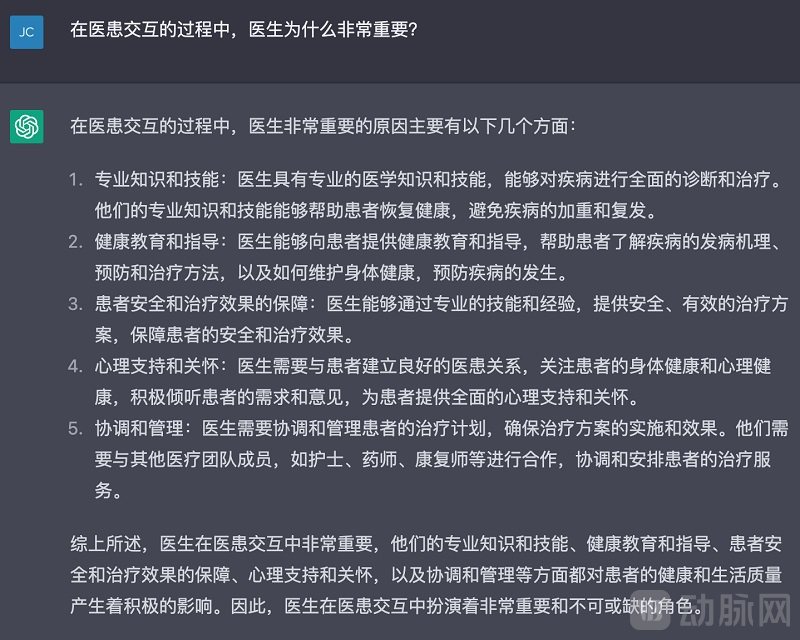
With the evolution of AI technology, ChatGPT can now articulate viewpoints in a clear and systematic manner.
As is well known, physicians play a critically important and indispensable role in doctor–patient interactions. We have employed ChatGPT to provide a more comprehensive elaboration of this common knowledge (as shown in the figure above). However, in the majority of real-world clinical encounters in China,Before and after offline hospital visits, patients may spontaneously seek assistance from online sources, friends and family, fellow patients, and even overseas information channels, which can lead to interference. This often causes them to hesitate, doubt, or even resist the medical decisions and recommendations for rehabilitation and healthcare provided by their attending physicians.
Meanwhile, senior attending physicians are already overwhelmed with their daily routines, often leaving them unable to personally provide patient-centered, lengthy, and patient explanations to patients, their families, or even primary care team members. It is even less feasible for them to deliver personalized, precise information or maintain continuous interaction throughout every stage of a patient’s journey—pre-diagnosis, during diagnosis, and post-diagnosis.
If such a situation occurs, it is highly likely to cause patients to miss the optimal treatment plan and the best timing for intervention, or even fall into the predicament of misdiagnosis and overtreatment.
“For the vast majority of patients, establishing a robust doctor-patient trust relationship is the foundation and prerequisite (albeit only the foundation and prerequisite) for ensuring favorable medical outcomes, representing a critical first step. This is because even physicians with the lowest seniority possess professional medical knowledge, skills, and access to information channels that are not available to ordinary patients,” stated Cheng Jin, founder of Wanmu Health.
“But our team deeply understands that medical outcomes are the result of the combined effects of multiple factors. Throughout the early stages of our venture, we have been developing products, services, and a closed-loop business model centered on building a ‘trust flow’ between doctors and patients, continuously optimizing and iterating.”We are currently dedicated to leveraging AIGC to replicate the knowledge and expertise of China’s most senior attending physicians, comprehensively assisting them in “creating” new time across nearly all doctor-patient interaction scenarios through four dimensions: “voice, appearance, knowledge, and insight.”“This is what excites us the most. Staying true to our original mission, we leverage AIGC to unlock physicians’ knowledge productivity, efficiently build trust flows between doctors and patients, and effectively improve healthcare outcomes. We are honored to personally explore and witness this historic journey.”
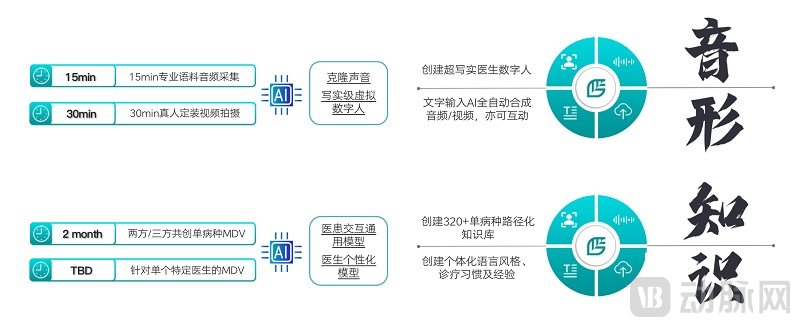
Co-developing a Single-Disease Knowledge Database with Physicians to Establish a “High-Quality Data” Moat
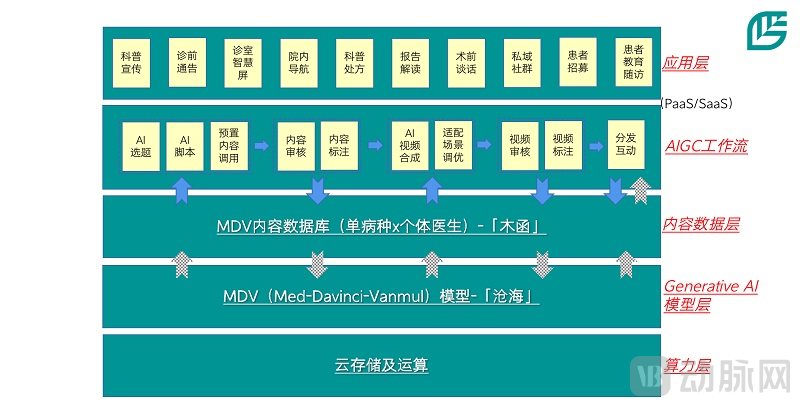
To better understand what Wanmu Health is currently doing, perhaps a diagram can provide clarification:
“ChatGPT demonstrates strong conversational and reasoning capabilities, but it is essentially an aggregation of the vast amount of existing knowledge available on the internet. Therefore, when applied to the healthcare and medical sector—where knowledge data is more rigorous and closed-source—AI language models face greater limitations. Their predictive results may carry higher uncertainty or even errors, necessitating more cautious handling. Particularly in low-tolerance scenarios such as doctor-patient interactions, no current AIGC products can fully replace physicians’ judgment and decision-making,” stated Lu Weiming, Co-founder of Wanmu Health.
It is worth noting that AIGC (AI-Generated Content) is a narrative framework predominantly used in China, serving as an extension of the earlier concepts of PGC (Professionally Generated Content) and UGC (User-Generated Content), whereas the term more commonly adopted overseas is Generative AI. Nevertheless, this narrative aptly encapsulates the incremental development path that Wanmu Health has pursued to achieve its long-term vision.
On the one hand, to effectively mitigate the aforementioned risks and address issues of liability allocation (particularly if AI language model predictions influence patient diagnosis and treatment decisions, necessitating careful consideration of responsibility assignment and assumption), Wanmu Health currently maintains a comprehensive and rigorous content moderation mechanism throughout its content production workflow. Furthermore, it has not yet officially launched real-time interaction features between doctors and patients.
On the other hand, Wanmu Health is continuously accumulating high-value data through its business model design and will continue to actively explore the application and training of large language models (LLMs) in the vertical domain of doctor-patient interaction. It is understood that, in addition to leveraging the general-purpose model interfaces offered by major Chinese and U.S. tech companies, Wanmu Health has also experimented with the training approach of text-davinci-003 and proposed several model training architecture concepts better suited for doctor-patient scenarios.
Currently,Content generated by Wanmu Health through AIGC can be applied across the patient journey, including pre-consultation, during consultation, and post-consultation phases. The content is primarily presented in the form of hyper-realistic digital composite videos featuring physicians, while also encompassing multimodal formats such as audio, illustrations, and text.Previously, physicians were often absent from content creation due to constraints on their time and energy. Today, Wanmu Health leverages AIGC (Artificial Intelligence Generated Content) to provide comprehensive support for content production, covering everything from AI-driven topic selection and scriptwriting to AI video synthesis. After creating hyper-realistic virtual digital humans, physicians need only review and annotate the text generated by AIGC and approve the final video content. This effectively “liberates” physicians from the cumbersome process of video recording. Furthermore, incorporating personalized information—such as patient names, lifestyle habits, and family genetic history—into the digital content production process significantly enhances patients’ sense of familiarity with and acceptance of the information.
Although hyper-realistic digital humans are one of the key levers Wanmu Health has used to achieve commercial implementation, the company believes that the MDV content database co-created with physicians is the true core. “It is this database that further underpins AI-driven topic selection, AI scriptwriting, and AI video synthesis,” said Lu Weiming, Co-founder of Wanmu Health. “Similar to Midjourney’s philosophy and business model, after launching its AIGC products for professional designers based on general-purpose models,”By continuously gathering feedback from its highly vibrant community to fuel data reinjection and model fine-tuning, it has ultimately created the world’s leading AI text-to-image product and a robust commercial closed-loop ecosystem.“This model is highly applicable to the healthcare industry. In doctor-patient interaction scenarios, we can even collect and consolidate patient prompts for model retraining, leveraging technology to simplify complex medical processes.”
Wanmu Health stated that in the foreseeable future, as computing power, algorithms, and general-purpose models become widespread, the competitive landscape across all industries is likely to be reshaped. In this context, only major tech giants may possess the qualifications to compete at the level of underlying general-purpose algorithms and computing infrastructure. Wanmu Health not only maintains close communication and comprehensive technical cooperation with global tech leaders such as Baidu, Tencent, and Huawei, but has also recently established technical exchanges with AI companies like SenseTime.
Cheng Jin noted that startups have greater opportunities at the application layer, which also holds substantial commercial value. The fate of enterprises will be determined by their AIGC-driven innovations tailored to their respective business scenarios. AndHow to leverage AIGC innovation to drive the dual-engine operation of the Business Flywheel and the Data Flywheel is one of the most core challenges for enterprise management in the AIGC era. The MDV content database and MDV vertical domain model, which cover the application layer of doctor-patient interactions across all domains and scenarios, will help Wanmu Health maintain sustainable competitiveness in the market.
To further enhance the construction of its MDV content database, Wanmu Health has established collaborations with over one hundred experts, including national clinical committee chairs, presidents of public Grade A tertiary hospitals, and administrative directors. Leveraging these experts’ mastery of structured knowledge on single diseases and Wanmu Health’s strengths in technical understanding and product strategy, the parties are working closely to build the MDV content database. It is reported that following this round of financing, Wanmu Health may also partner with medical content knowledge base providers to accelerate the development of its MDV content database.
Notably, Wanmu Health is featured as a representative case of AIGC in the healthcare sector in the bestselling book *AIGC: The Era of Intelligent Creation* (authored by Du Yu and Zhang Ziming), which ranks among the top three bestsellers in the economics category. This inclusion underscores Wanmu Health’s capabilities and its inherent value.
It is reported that the initial batch of diseases covered by Wanmu Health’s disease-specific content database includes breast cancer, hypertension, epilepsy, certain dermatological conditions, and rare diseases. This selection strategy is driven by two key factors: first, Wanmu Health possesses extensive physician resources in these relevant fields; second, it aligns with market demand for AIGC application layers, enabling more effective commercialization in these areas.
Leveraging its core strengths, Wanmu Health has established collaborations with numerous multinational pharmaceutical companies, domestic innovative drug developers, and medical institutions, bringing the total number of partners to over 40. Its partner portfolio includes multinational pharmaceutical firms and leading domestic medical device manufacturers. In terms of revenue, co-founder Lu Weiming revealed that 70% is derived from pharmaceutical and medical device enterprises, while the remaining 30% comes from medical institutions. Looking ahead, the company’s client base is expected to expand further into the insurance sector.
(Bonus) Are “Digital Doctors” Still Far from Us?
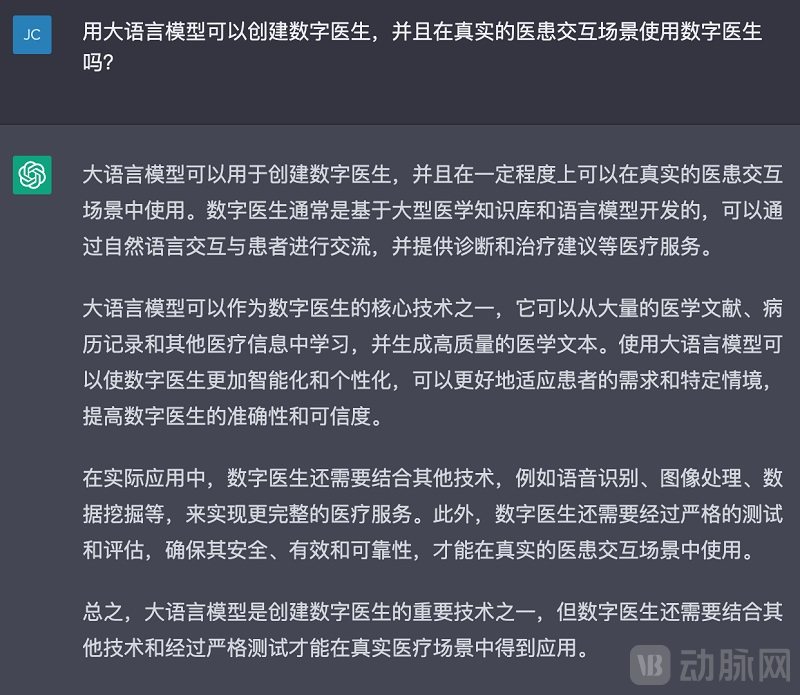
ChatGPT Response for Reference
Wanmu Health pointed out, “Many believe that OpenAI’s recently released GPT-4 can already be regarded as an early, albeit imperfect, version of AGI (Artificial General Intelligence). In fact, according to our reliable sources, the U.S. FDA has joined forces with multiple AI companies to begin developing and training digital doctors based on large language models, which will be deeply applied in numerous scenarios within the healthcare services sector. It is likely only a matter of time before we witness the day when digital doctors officially take up their posts.”
To better facilitate industry peer exchanges and promote sector development,Wanmu Health has been invited to attend the 7th Future Healthcare Top 100 event. It has confirmed its participation in the “Pharmaceutical Company Digital Marketing Forum,” scheduled for May 6 in Zhangjiang, Shanghai, where it will deliver a keynote address., we cordially invite industry professionals to attend the conference.
About Yuyi Health
Sichuan Yuyi Innovative Health Technology Co., Ltd. (hereinafter referred to as “Yuyi Health”), centered on health management and oriented toward establishing health management services for major chronic diseases and enhancing health management capabilities at the grassroots level (county/regional), is committed to facilitating the high-quality development of health management centers. Based in Southwest China and serving the entire country, it is currently one of the largest operational service providers for public hospital health examination centers in the Southwest region.
Yuyi Health is dedicated to empowering medical institutions’ physical examination centers and health management centers by providing services including construction planning, specialty operations, equipment supply, informatization development, and integrated media promotion. Following its investment in Wanmu Health and the establishment of a strategic partnership, both parties will further deepen their engagement in public hospital physical examination centers and extend into broad-scale scenarios such as disease screening, health management, and patient services, thereby empowering numerous stages across the pre-, intra-, and post-examination processes.
Yuyi Health and Wanmu Health concur that, under the strategic guidance of the New Era and the Healthy China initiative, physical examination centers in grassroots public hospitals will be entrusted with a higher mission and assume a more critical role as guardians of health for the vast grassroots population. Therefore, it is the shared vision and objective of both parties in this strategic investment to deeply integrate new technologies such as AIGC, collaborate with grassroots public hospitals by leveraging their physical examination centers as hubs, and build a “patient-centric” regional health management ecosystem serving townships, local enterprises, families, and individuals.